Netanyahu orders attacks on Beirut's Dahiyeh despite ongoing ceasefire
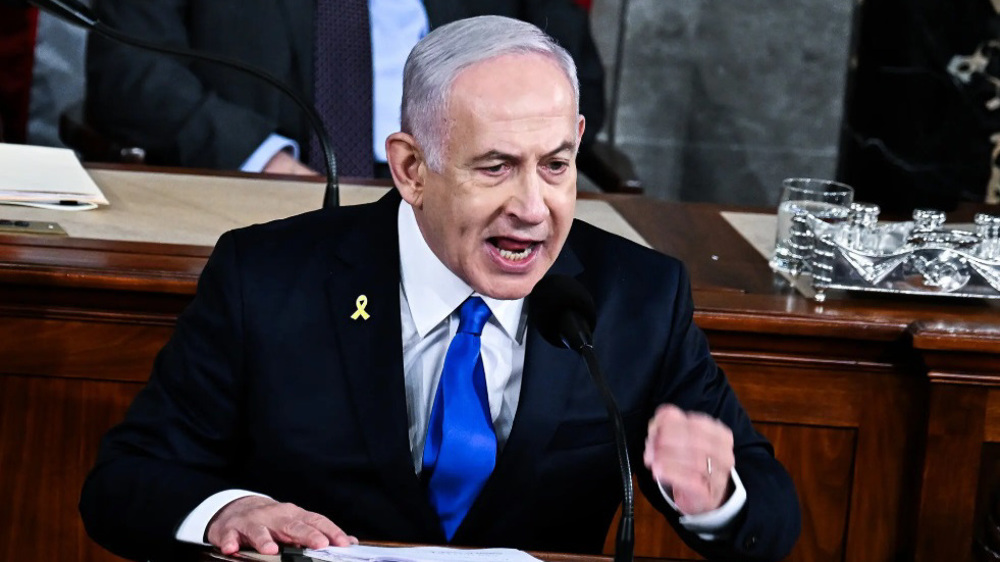
Israeli Prime Minister Benjamin Netanyahu has ordered military strikes on the Lebanese capital Beirut's Dahiyeh district, despite an ongoing ceasefire.
Netanyahu ordered the attacks on Monday, saying they were a response to what he claimed to be Hezbollah's "repeated violations" of the truce.
According to the Israeli PM, he and the minister for military affairs, Israel Katz, had instructed the army to strike "targets" in the area.
Israeli air raids kill 17 civilians in southern Lebanon after Netanyahu orders intensified strikes
— Press TV 🔻 (@PressTV) May 26, 2026
https://t.co/NYmoKdyPnt
Reporting on the developments that followed the announcement, Lebanon's MTV television station said, "Traffic is heavy on the exits of roads leading to Dahiyeh, and the security forces are working to facilitate traffic flow and manage the situation."
The truce took effect on April 17 and was later extended through early July.
According to the Lebanese health ministry, however, Israeli attacks across Lebanon during the period leading up to and following the implementation of the ceasefire have killed more than 3,400 people.
On Friday, trilateral military talks involving Lebanon, the Israeli regime, and the United States concluded at the US Department of War without reaching an agreement.
US-hosted Lebanon-Israel talks end without ceasefire agreement: Report https://t.co/8t3z3NtMdG pic.twitter.com/2uH5loq4OO
— Press TV 🔻 (@PressTV) May 30, 2026
The negotiations, which lasted for more than nine hours, failed to produce a breakthrough on Lebanon's demand for an immediate halt to hostilities, Lebanon's al-Mayadeen network reported that day, citing official Lebanese sources.
According to an official Lebanese source, the Lebanese military delegation pressed for a comprehensive ceasefire agreement during the discussions. The source said the Israeli delegation, however, repeatedly rejected that demand and refused withdrawal from the territories it occupies in Lebanon. The Israeli delegation also maintained its call for the "dismantling of Hezbollah" as part of any prospective arrangement.
Following the meeting, the Department of War also said the United States emphasizes that Lebanon should remain "free" of what it called "non-state armed groups," ignoring Hezbollah's historical contribution to Lebanon's defense and its entrenchment within the country's political establishment.
Ahead of the meeting, Hezbollah's Secretary General Sheikh Naim Qassem had called for indirect rather than direct negotiations with the Israeli regime.
Hezbollah will never accept disarmament: Sheikh Qassemhttps://t.co/DfkeEOAbqa
— Press TV 🔻 (@PressTV) May 24, 2026
"We call for the option of indirect negotiations, where the cards of power are in the Lebanese negotiator’s hand, and for withdrawal from direct negotiations, which constitute pure profits for Israel and gratuitous concessions from the Lebanese authority," he had said. Sheikh Qassem had also rejected any discussion of Hezbollah's weapons in talks with the regime.
The Israeli regime's insistence on keeping up deadly aggression against Lebanon comes despite Iran's call for urgent cessation of aggression on all fronts in the region as part of a potential memorandum of understanding between the Islamic Republic and the United States.
The MoU is expected to end the cycle arising from the unprovoked aggression that the US and the Israeli regime began jointly waging against the Islamic Republic and other parts of the region on February 28.
US President Donald Trump announced a unilateral ceasefire on April 7, but neither Washington nor Tel Aviv has meaningfully committed to its respective commitments.

US congressman: Americans should stop funding Israeli war crimes
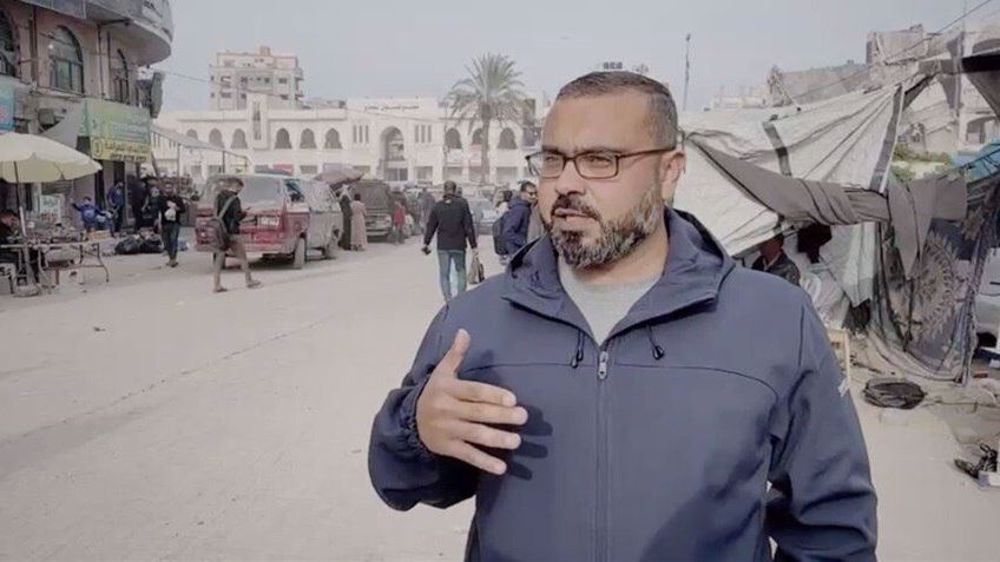
Hamas: World silence over murdered Palestinian children in Gaza is complicity in Israeli genocide
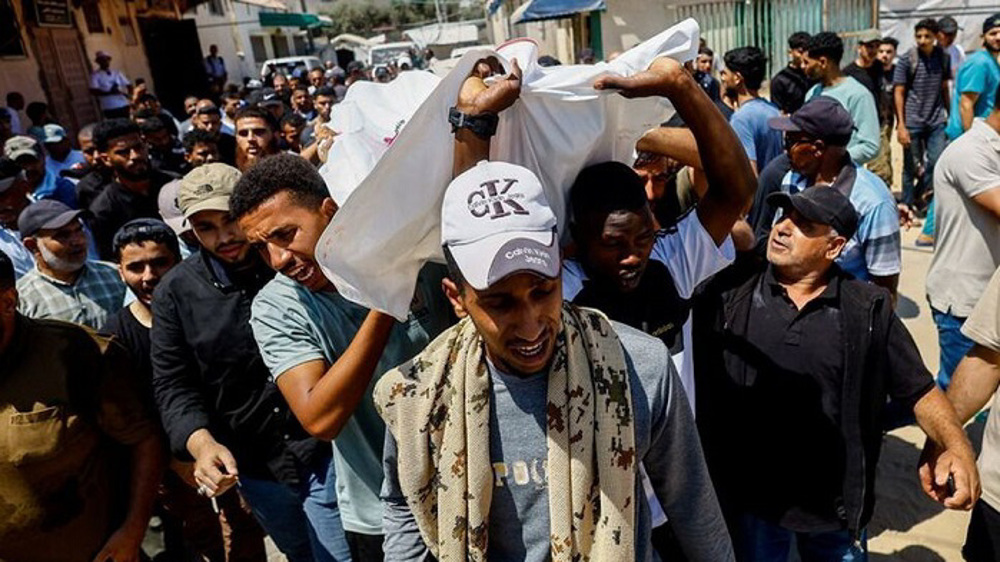
Child among 3 killed after Israel bombs tent in central Gaza



Martyred Leader's funeral to serve as global movement against terrorism, US-Zionist crimes: Army
2026 World Cup: Iran prepares to depart Mexico after warm welcome in Tijuana
At UN Security Council, Palestine envoy urges world to stop Israeli annexation
Two IRGC servicemen martyred in terror attack in western Iran
VIDEO | Pakistan launches fourth cross-border strikes inside Afghanistan
VIDEO | Pro-Palestinian activists in Paris rally to condemn ongoing Israeli genocide
VIDEO | Spain rejects US pressure as Trump intensifies criticism of NATO allies
VIDEO | Afghanistan-Pakistan tensions escalate after fresh airstrikes by Islamabad



 PressTV NEWSLETTER
now
PressTV NEWSLETTER
now
 This makes it easy to access the Press TV website
