Former Iranian envoy: Bolivian government’s potential collapse to mark another defeat for US
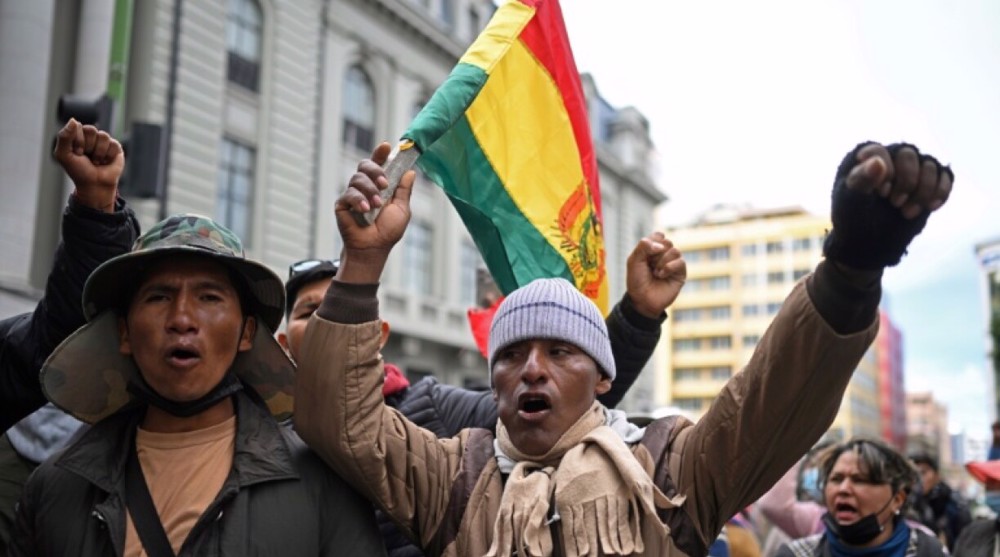
A former Iranian ambassador to Bolivia says growing dissatisfaction with Bolivia’s pro-US government marks another strategic failure for Washington in Latin America as nationwide protests call for President Rodrigo Paz’s resignation.
“The crisis is rooted in the aftermath of the coup against the popular government of Evo Morales and the rise of a neoliberal administration aligned with Washington,” Reza Tabatabaei Shafiei said during an interview on Wednesday.
The protests, which have now entered their fourth consecutive week, escalated further after reports confirmed the death of at least one protester and the failure of negotiations between the government and opposition groups.
The demonstrations are being led by the country’s largest labor organization, the Central Obrera Boliviana (COB), alongside farmers’ movements and rural activists who slam the government for imposing policies that have deepened poverty and inequality.
“After the overthrow of Morales and the installation of Rodrigo Paz’s neoliberal government, authorities failed to govern effectively due to resistance from rural communities and coca growers,” Tabatabaei explained.
According to Tabatabaei, corruption, reckless spending, theft, and mismanagement by pro-Western elites have pushed Bolivia into economic decline and triggered widespread public anger.
Evo Morales, Bolivia’s first Indigenous leader, resigned on November 10, 2019, and went into exile following what was described by many as a coup by the military and police forces. The crisis was triggered by a disputed October 20 presidential election, which Morales was declared the winner of in the first round.
The Organization of American States (OAS)—a Washington-based bloc—released a report citing “egregious irregularities” and “evidence of manipulation” in the vote count, recommending new elections be held.
Morales and his supporters have long stated that the OAS report was politically motivated. A subsequent statistical analysis by the Center for Economic and Policy Research found “no basis in fact” for the OAS’s claims of fraud.
Dozens of US lawmakers, in a letter to then-secretary of state Mike Pompeo, stated that the events “bear the hallmarks of a military coup d’état” and accused the Trump administration of “contributing to an escalating political and human rights crisis.”
Tabatabaei said that the potential collapse of Bolivia’s government represents “another political humiliation” for the US at a time when the administration of President Donald Trump is already facing growing criticism over its foreign policy failures in Latin America.
“Washington does not want another allied regime to collapse under public pressure but at the same time, Bolivia is not significant enough for the US to take major risks. That contradiction has left American policymakers trapped.”
The US has historically relied on covert influence operations and intimidation tactics rather than direct military intervention, Tabatabaei noted.
“Washington would likely seek to weaken the protest movement through internal networks, intimidation campaigns, and infiltration of opposition groups,” he added.
Tabatabaei asserted that the US will not remain a passive observer and will likely try to spread fear, infiltrate opposition ranks, and fragment the protests; methods Washington has repeatedly used in Latin America.
However, the Bolivian people have a long history of independence and social solidarity and this reality makes it harder for outside powers to impose their will on the country, he said.
The demonstrations further became tense after trade unions began protesting in early May for salary increases, stable fuel supplies and sounder economic management.
Trump's bullying in Latin America
The former ambassador’s comments come amid a broader escalation of US military and coercive actions across the region under President Donald Trump’s second administration, which critics have described as a return to gunboat diplomacy and imperial overreach.
On January 3, Trump ordered a US military raid that involved the bombing of Venezuelan air defenses and other targets, resulting in an estimated 80 casualties, including 32 Cuban military personnel.
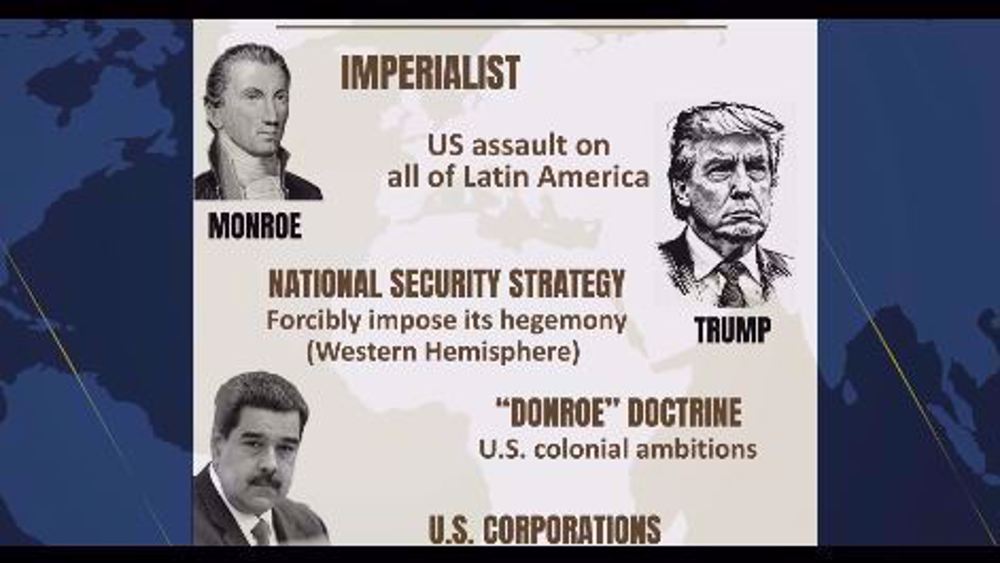
The invasion culminated in the abduction of Venezuelan President Nicolás Maduro and his wife, Cilia Flores, who were transported to New York and arraigned. Legal scholars and international law experts have widely condemned the invasion as an illegal use of force violating the UN Charter’s prohibition on aggression.
On Saturday, the US Southern Command led an evacuation drill at the US embassy in Caracas aboard two Boeing MV-22B Osprey aircraft, which landed in the embassy’s parking lot. The Venezuelan human rights organization Provea condemned the drill as a “blatant cession of sovereignty.”
Meanwhile, Trump has intensified threats against Cuba. In recent weeks, the administration has signaled that military action against the island is “on the table” after economic pressure—including an oil blockade following Maduro’s capture—failed to produce a regime change or a negotiated deal.
US Secretary of State Marco Rubio stated on May 21 that a “negotiated diplomatic settlement” with Cuba was unlikely and that Trump has “not just has the right, he has the obligation” to address perceived national security threats.
On May 21, the US announced criminal charges against former Cuban President Raúl Castro for murder and conspiracy to commit murder of American citizens. Reports indicate that options under consideration include a “smash-and-grab” raid similar to the Maduro abduction, or a full-scale invasion.
Cuban President Miguel Díaz-Canel has warned that any US military action would “provoke a bloodbath of incalculable consequences".
Trump has framed these policies under what he now calls the “Donroe Doctrine,” an aggressive reinterpretation of the 19th-century Monroe Doctrine asserting that “American dominance in the Western Hemisphere will never be questioned again”.
His administration has designated 19 Latin American organizations as foreign terrorist organizations, launched at least 32 military strikes on civilian boats in the Caribbean and Pacific killing over 124 people, and threatened leaders from Mexico to Colombia with military or economic retaliation if they fail to align with US demands.
Russia: Any attack on Bushehr nuclear power plant would be a crime
Iran Army launches retaliatory drone attack on US positions in Kuwait
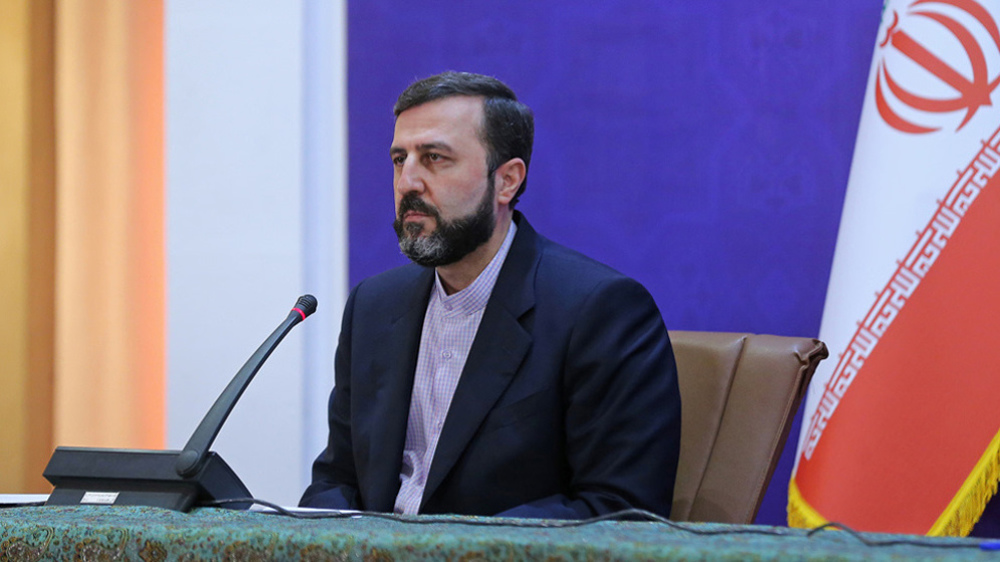
Iran must predefine 'regret-inducing' response to any threat against Leader: Deputy FM


Yemeni missiles and drones hit Abha Airport after Saudi aggression
Iranian Army delivers crushing blows: US terror bases turned into infernos
Araghchi: 'Iran eternal guardian of Hormuz; Trump's 20% toll too much, we will be fair'
Hamas slams Israeli decision to grant city status to Giv’at Ze’ev settlement
Iran’s top clerical body endorses Leader’s call for revenge
VIDEO | Press TV's news headlines
Pezeshkian: Iran will remove obstacles to implementing strategic agreements with Russia
Iran condemns Saudi attack on Sana’a airport as breach of law, Yemen’s sovereignty


 PressTV NEWSLETTER
now
PressTV NEWSLETTER
now
 This makes it easy to access the Press TV website
