Millions of Hajj pilgrims flock to Mina ahead of Arafah
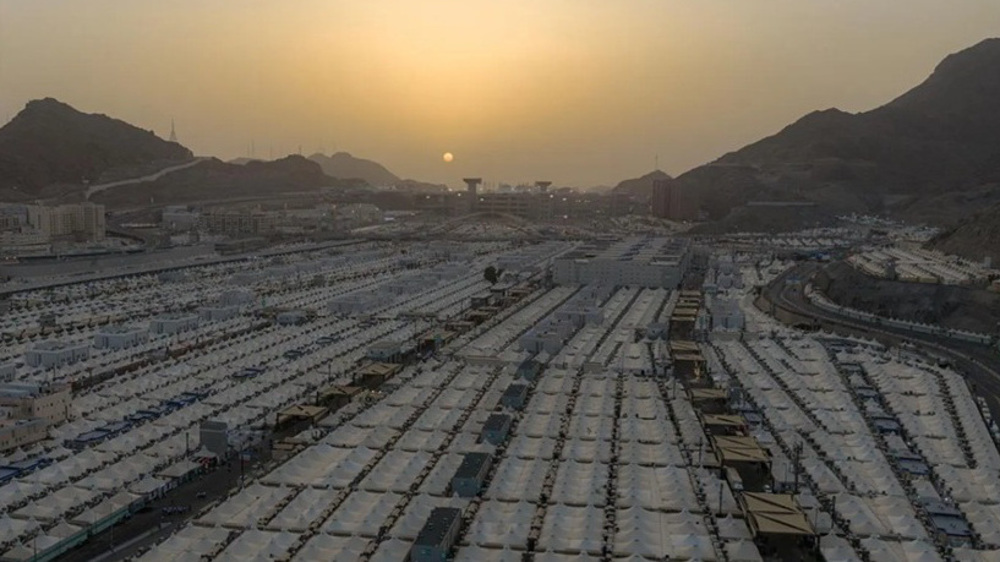
Millions of pilgrims have arrived in Mina ahead of the Day of Arafah, the ninth day of the Islamic month of Dhu al-Hijjah and the beginning of their spiritual Hajj journey.
As dawn broke on Monday, millions of pilgrims began flowing into the sacred site of Mina west of the holy city of Mecca.
Pilgrims arriving in Mina will observe the Day of Tarwiyah, the first stage of the pilgrimage within the holy sites and the official beginning of Hajj rituals.
Pilgrims also perform the five daily prayers in Mina and spend the night there before departing for Arafat after sunrise on the ninth of Dhul-Hijjah.
The Day of Tarwiyah is said to derive its name from the idea that pilgrims spiritually “nourish themselves” with faith and piety in preparation for standing at Arafat, observed on the ninth day of Dhul-Hijjah, which falls on Tuesday.
The Day of Arafah is when Muslims depart for the Mount of Arafat, east of the holy city of Mecca, and stay there to sunset, performing prayers and reading the Quran in a ritual called “Wuquf at Arafat.”
The pilgrims converged on Mount Arafat, which is believed to be where Prophet Mohammed (PBUH) delivered his final sermon, in the early hours of Friday.
Mina serves not only as the starting point of rituals but also as a site where pilgrims return on the Day of Sacrifice -- the first day of Eid al-Adha, which falls on Wednesday and includes ritual animal sacrifice.
The site is also known for several major Hajj landmarks, including the three pillars used during the symbolic stoning ritual: Jamrat al-Aqaba on the 10th of Dhul-Hijjah and the three Jamarat rituals conducted during the Days of Tashreeq on the 11th, 12th and 13th.
Located between Mecca and Muzdalifah, approximately 7 kilometers northeast of the Grand Mosque, Mina spans about 16.8 square kilometers within its designated religious boundaries.
The area is a valley surrounded by mountains on both its northern and southern sides and remains inhabited only during the Hajj season.
Mina also holds deep religious significance because it is associated with Prophet Ibrahim, who was commanded to sacrifice his son before receiving divine intervention in the form of a ram substitute.
Historically, Mina also witnessed important events in early Islamic history, including the First and Second Pledges of Aqaba during the 12th and 13th years after Hijra, when groups of Ansar pledged allegiance to the holy Prophet of Islam Muhammad (PBUH).
Mina also contains Al-Khaif Mosque, where Prophet Muhammad (PBUH) delivered his Farewell Sermon.
Nearly 2 million Muslims are expected to perform Hajj in 2026 as Saudi authorities continue to record rising pilgrim arrivals for the annual pilgrimage season.

Leader of the Islamic Revolution, Ayatollah Seyyed Ali Khamenei, who had been martyred in the American-Israeli aggression against Iran, during historic messages to the annual Congress of Hajj, said the pilgrimage was meant to reinforce unity among Muslim nations in the face of profanity, oppression, arrogance and human and non-human idols.
Ayatollah Khamenei called on the Muslim world to uphold the spirit of Hajj by standing firmly with Palestine.
He used to maintain that Hajj can annul and render ineffectual all the plans of the arrogant powers and Zionism for the moral downfall of humanity.
Saudi Arabia blocking money transfers to Emirati banks: Reports
Yemen vows to break siege regardless of cost, warns Saudi Arabia against any 'folly'
Yemen’s Ansarullah denounces Saudi coalition threats, says they reflect Riyadh’s failure



Iran strongly condemns terrorist attacks in Pakistan
Iran will respond in kind to attack on its infrastructure: Security official
Martyr Dr. Mesbah Bagheri Kani devoted a lifetime to scholarship, cultural advocacy and social servi
Rights group takes FIFA complaint against Infantino to IOC over Trump ties
VIDEO | Millions of people attend funeral of martyred leader in Mashhad
Venezuela receives humanitarian aid sent by Iran for quake survivors
VIDEO | War on Iran: Activists say EU helped US and Israel break international law
Yemen cautions regional US base host nations


 PressTV NEWSLETTER
now
PressTV NEWSLETTER
now
 This makes it easy to access the Press TV website
