Iran questions world's commitment to preventing genocide over arms exports to Israel
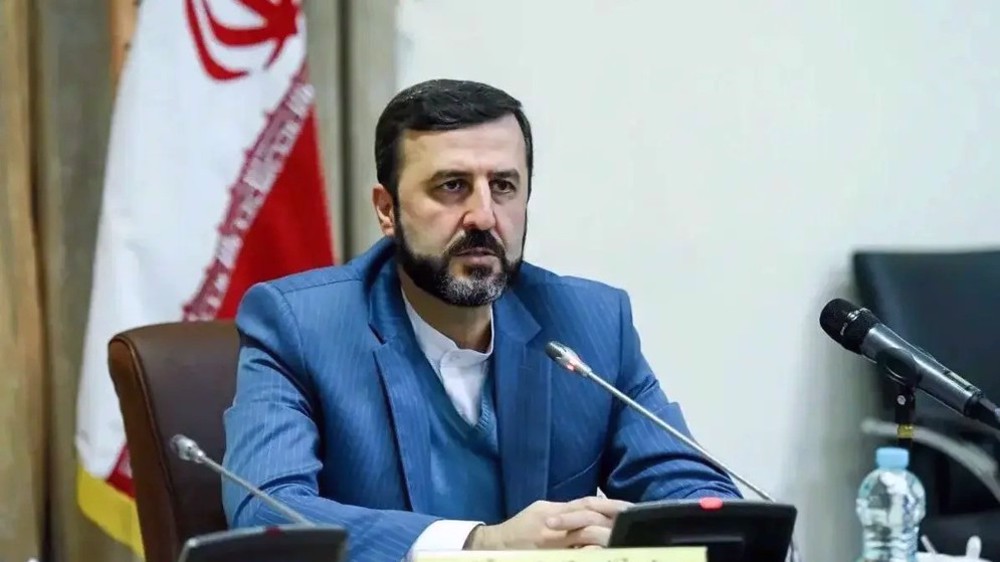
Iran’s deputy foreign minister for legal and international affairs has questioned the credibility of governments claiming commitment to international law while continuing to support the Israeli regime’s “war machine.”
Talking to X on Sunday, Kazem Gharibabadi referred to an investigative report based on official Israeli tax authority data showing that military-linked goods from dozens of countries entered the occupied territories between October 2023 and October 2025.
According to the report published on Saturday, a significant portion of those imports took place after the International Court of Justice (ICJ) issued provisional measures ordering Israel to prevent acts that could amount to genocide in Gaza.
Gharibabadi said the findings raise serious questions about whether commitments under the 1948 Genocide Convention are “real legal obligations or merely slogans for cost-free occasions.”
He argued that governments that continued supporting Israel’s military apparatus after the ICJ warnings must clarify their position regarding international responsibility and their obligation to prevent genocide.
“Gaza today is not only a moral test,” he wrote. “It is a test of states’ commitment to international law and humanitarian principles.”
The ICJ issued provisional measures against Israel in January 2024 following a case brought by South Africa accusing the regime of committing genocide against Palestinians in Gaza.
The court warned the 153 states party to the Genocide Convention of their obligation to act to prevent genocide.
Despite this, supplies linked to ammunition, weapons parts, and military equipment kept flowing to Israel during 22 months of the regime’s war on Gaza.
Gharibabadi listed several countries linked to the arms exports to Israel during the war on Gaza, including the United States, Britain, Germany, France, Canada, the Netherlands, Italy, Spain, India, South Korea, Brazil and Turkey.
Israel launched its war on Gaza on October 7, 2023. Since then, more than 72,780 Palestinians have been killed and large parts of the territory destroyed, according to Palestinian health authorities.
Gaza also faced widespread shortages of food, medicine, water and fuel under Israel’s blockade, which has been in place since 2007.
Even after a ceasefire took effect in October 2025, arms exports to Israel did not stop completely, with additional shipments recorded in the final months of the year, according to the report.
According to Gerhard Kemp, a professor of criminal law at the University of the West of England, Gaza remains the subject of Israel's ongoing genocidal campaign.
“The most recent ‘ceasefire’ did not change this,” he said, pointing to Israel’s continued killing of civilians and the imposition of life in the narrow coastal territory.
President Pezeshkian says Iran will stand by deal only if US does

Iran says talks with US contingent on implementation of key MoU provisions

Iran says only it can demine Strait of Hormuz under MoU with US



Hezbollah MP blasts ‘sell-out’ government, says Lebanon central to any Iran-US deal
Israeli army demolishes buildings across Gaza as ceasefire violations continue
VIDEO | Press TV's news headlines
VIDEO | Thousands displaced by earthquake in Venezuela receive temporary shelters
Iran will respond decisively to any ceasefire violation: Acting defense minister
Trump criticized Spain for not meeting NATO spending targets
Arab League, Arab Parliament condemn repeated Israeli attacks on Syria
Management of Strait of Hormuz solely Iran’s responsibility: Senior MP



 PressTV NEWSLETTER
now
PressTV NEWSLETTER
now
 This makes it easy to access the Press TV website
