May 16: Iran defines post-war strategy amid failing US pressure and rise of multipolar order
By Press TV Website Staff
Iranian officials on Saturday framed the country’s post-war stance as a phase of strategic consolidation and deepening international realignment, underscoring the failure of US pressure and the accelerating shift in the global order.
President Masoud Pezeshkian praised international voices critical of the war and urged a fair global response to unlawful US policies, while Parliament Speaker Mohammad Baqer Qalibaf said Iran’s over 70-day resistance has accelerated the emerging multipolar global order.
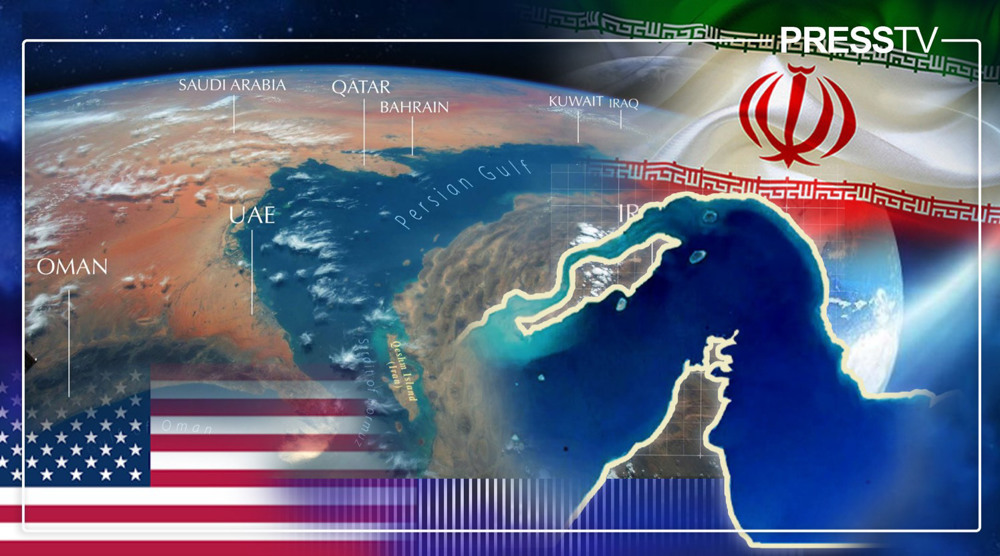
Officials outlined new measures for effective maritime governance in the Strait of Hormuz and warned regional actors against alignment with US-Israeli interests.
Meanwhile, Israeli strikes in southern Lebanon continued despite the ceasefire framework, drawing condemnation from humanitarian organisations and resistance-linked actors.
Key developments on day 78 of the war, the thirty-eight day of the ceasefire:
- Iran’s President Masoud Pezeshkian expressed gratitude for Pope Leo’s “moral stance” against the US-Israeli aggression against Iran, while urging the international community to adopt a realistic and fair approach to counter the “illegal demands and adventurous, dangerous policies” of the United States.
- Iran’s Parliament Speaker Mohammad Bagher Qalibaf said the heroic resistance of the Iranian nation for more than 70 days has become a driving force in accelerating a transformation unseen in a century, marking the dawn of a new multipolar order.
- Iran’s Foreign Ministry spokesman Esmaeil Baghaei invoked anti-colonial writer Aimé Césaire to condemn the West. “A civilization that is incapable of solving the problems it creates is a decadent civilization; a civilization that chooses to close its eyes to its most crucial problems is a sick civilization,” Baghaei wrote.
- Iran's ambassador to the United Nations, Amir Saeed Iravani, said the responsibility for the current situation in the Strait of Hormuz and its global economic repercussions lies primarily with those who started the war against the Islamic Republic and their regional allies.
- Mohammad Mokhber, Senior advisor to the Leader of the Islamic Revolution, Ayatollah Seyyed Mojtaba Khamenei, warned that the country’s patience could run out if Persian Gulf Arab states continue to serve US interests
- Iranian Interior Minister Eskandar Momeni said that Iran and Pakistan have agreed to take joint measures to facilitate border trade, transit, and exchange of goods between the two neighboring countries.
- Chairman of the Iranian Parliament's National Security and Foreign Policy Committee Ebrahim Azizi said the country has devised a new mechanism to control maritime traffic through a “designated route” in the Strait of Hormuz, which includes charging fees for "the specialized services."
- Iranian Deputy Foreign Minister Kazem Gharibabadi reacted to a recent decision by a US federal judge blocking Washington’s sanctions against Francesca Albanese, the United Nations Special Rapporteur on the occupied Palestinian territories, saying the decision has exposed US double standards on human rights.
- Mikhail Ulyanov, Russia's permanent representative to international organizations in Vienna, stated that the US resolution on the Strait of Hormuz is not right, echoing China's criticism of the draft measure.
- Yemen’s deputy foreign minister, Abdulwahid Abu Ras, said the Ansarullah resistance movement stands “shoulder to shoulder” with Lebanon’s Hezbollah in the fight against the Israeli regime’s sinister plots and acts of aggression.
- Lebanon’s Ministry of Public Health said Israeli attacks have killed at least 2,951 people and wounded 8,988 others since March 2.
- The international medical humanitarian organization Médecins Sans Frontières (MSF) condemned a series of deliberate Israeli strikes targeting frontline emergency responders in Lebanon, reporting that at least 110 paramedics and healthcare workers have been killed since March 2.
- The Israeli military launched a series of massive airstrikes against targets in southern Lebanon, despite a 45-day extension of the ceasefire agreement between the Beirut government and the Tel Aviv regime.
- A legislator from the Hezbollah political wing in the Lebanese parliament said fighters from the resistance movement will not hesitate to respond to Israel’s flagrant violations of the April 16 ceasefire deal.

Iran will respond decisively to any ceasefire violation: Acting defense minister

Two IRGC servicemen martyred in terror attack in western Iran
Mission unaccomplished – Part VI: US sought Iran’s surrender but got a new regional superpower



Iran team thanks Mexico, questions World Cup fairness in farewell message from Tijuana
VIDEO | Press TV's news headlines
Israel kills 8 Palestinians as Gaza death toll tops 73,000
'War crime': Iran FM vows legal action against US over torpedo attack on Dena frigate
IRGC dismantles armed separatist cell in northwest Iran
Venezuela earthquake death toll surpasses 1,700 as search efforts continue
US national pride lowest in two decades: Poll
Pentagon plans US ground troop deployment to force Hezbollah disarmament: Report


 PressTV NEWSLETTER
now
PressTV NEWSLETTER
now
 This makes it easy to access the Press TV website
