Why ground invasion scenario against Iran could turn into strategic quagmire for US
By Sheida Eslami
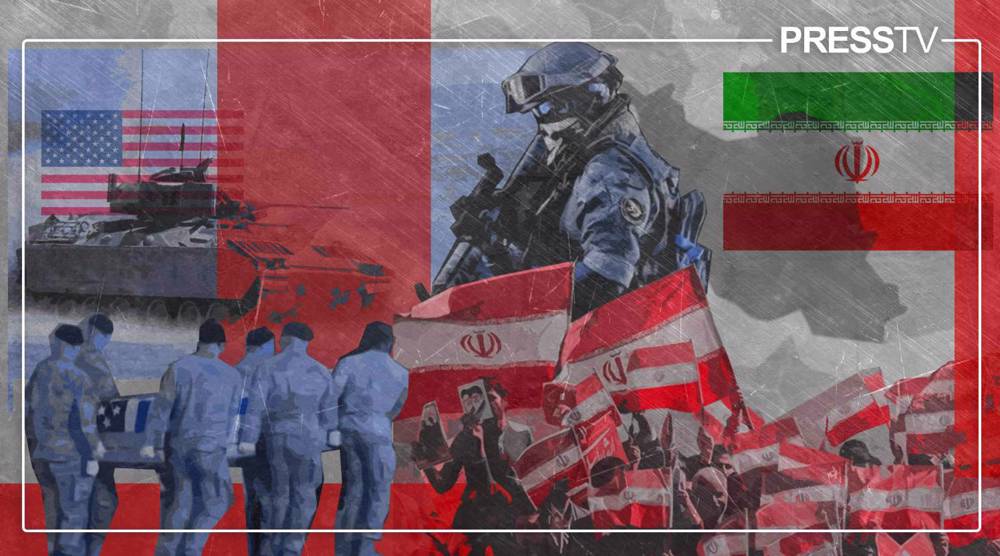
Speculation is rife about a possible ground invasion of Iran by the US forces. However, as experts acknowledge, contrary to Washington's illusions and misguided predictions, the scenario cannot replicate the patterns of the 2003 invasion of Iraq.
As regional tensions fueled by the American-Israel aggression against the Islamic Republic of Iran enter a new phase, reports have emerged regarding the readiness of Iranian special forces to execute combined operations against US interests.
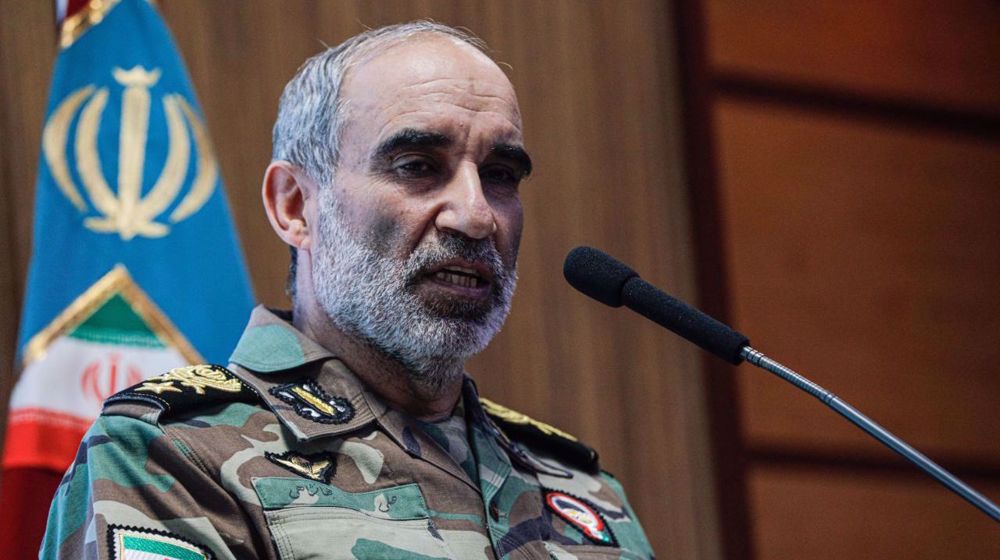
According to a report published by Mehr News Agency, Iranian guerrilla units, comprising the "65th Airborne Special Forces Brigade (NOHED)" of the Army and the "Saberin Special Forces Brigade" of the Islamic Revolution Guards Corps (IRGC) Ground Force, are planning swift and surprise operations against hostile forces.
These operations are said to aim at delivering a "hard, swift, and painful" blow to American forces and interests in the region. The report also mentions scenarios such as the abduction of American military personnel, officials, or even businessmen, modeled on incidents from the 1980s, with potential geographical scope ranging from Iraq's Kurdistan Region to Bahrain, the UAE, and Kuwait.
It comes at a time when discussions about the possibility of the US and its allies entering a new phase of confrontation with Iran are once again being raised in analytical circles.
In these circumstances, attention to historical experiences and past operational patterns, particularly the 2003 US invasion of Iraq, still considered one of the most significant examples of modern combined operations, becomes increasingly important.
The IRGC Ground Forces commander says defenders of the Persian Gulf islands are highly prepared and will deal a deadly blow to any enemy who dares to attack.
— Press TV 🔻 (@PressTV) March 19, 2026
Follow: https://t.co/mLGcUTS2ei pic.twitter.com/GKmXJyemV2
From Baghdad's "shock and awe" to hesitation toward Tehran
In 2003, Washington combined extensive air power, armored units, airborne forces, and special operations to dismantle Baghdad's military and political structure in a short period.
The famous "shock and awe" doctrine was based on achieving absolute air superiority and the rapid collapse of Iraq's command structure. Armored forces advanced from southern Iraq, airborne divisions landed deep inside Iraqi territory, and special forces undertook missions such as directing airstrikes, destroying critical infrastructure, and pursuing Iraqi military commanders.
However, what was portrayed as a swift victory in the early weeks of the war turned into a protracted and costly war in the years that followed. Armed insurgencies, urban warfare, and the emergence of resistance groups turned Iraq into a complex battlefield for years.
Now, more than two decades later, some indications suggest that certain military planners in Washington are attempting to replicate a similar model against Iran, a model combining air pressure, limited ground operations, and special forces activity.
Yet, the fundamental differences between Iran today and Iraq in 2003 make such a scenario far from easily repeatable, as per military pundits.
Iran Army says ground incursion would be 'more dangerous and costly' for UShttps://t.co/9Ip6cc8jmO
— Press TV 🔻 (@PressTV) March 26, 2026
The Southern Corridor: From paper maps to ground realities
Among the scenarios occasionally raised in analytical circles, the creation of an operational corridor stretching from Saudi Arabia, Jordan, and southern Iraq toward Basra and then Khuzestan stands out as a notable proposal.
In the view of American military planners, this route represents the shortest path to Iran's most critical energy region, and if realized, could merge the Persian Gulf and southern Iraq battlefields into a single operational theater.
But the gap between paper maps and ground realities is vast. Much of this corridor traverses open desert areas, where long supply lines become highly vulnerable.
Any armored column or logistical convoy in such terrain could be exposed to missile and drone strikes, as well as ambushes by asymmetric forces. The wars in Iraq and Afghanistan have shown that even the US military, despite all its technological superiority, faces serious challenges in securing long supply lines in hostile environments.
On the other hand, Iraq's political reality today is fundamentally different from 2003. The widespread presence of resistance forces and the organized structure of the Popular Mobilization Forces (Hashd al-Sha'abi) in southern Iraq mean that any large-scale movement of US forces through Iraqi territory could quickly escalate into direct confrontation with these groups, an issue that not only complicates military operations but also creates a political crisis for Baghdad.
Kharg and Bushehr: Symbolic targets or operational traps?
Some analyses mention Kharg Island and the Bushehr nuclear power plant as potential targets in an escalation scenario. Kharg holds significant economic and symbolic importance due to its key role in Iran's oil exports.
However, actual seizure of the island would be extremely difficult without full control of the surrounding coastlines and maritime and aerial supply lines.
Any force stationed on Kharg would be exposed to shore-to-sea missiles, suicide drones, and fast-boat attacks, conditions that would make long-term retention of the island a costly mission.
Regarding the Bushehr nuclear plant, while limited strikes have been suggested to create psychological shock, its complete destruction is considered a highly risky option due to widespread environmental and political consequences.
Such an action could provoke strong international reactions and even draw new actors, especially Russia, into the crisis. Some analysts, therefore, believe that if a direct operation were to occur, it would likely take the form of limited heliborne operations along the coasts or on islands for tactical and propaganda purposes, rather than sustained occupation.
Iran FM warns potential US ground invasion would be ‘big disaster for them’
— Press TV 🔻 (@PressTV) March 6, 2026
https://t.co/UCrlIz3JYC
Iran's mosaic defense and the challenge to air superiority
One of the most significant differences between Iran and Iraq in 2003 lies in their defensive structure. Over the past two decades, Iran has developed a framework combining layered air defense, an extensive missile arsenal, and a network of asymmetric forces, a structure sometimes referred to as "mosaic defense."
In this model, defense units are dispersed across the country and operate relatively independently; the loss of a single command center does not necessarily lead to the collapse of the entire defense system.
Alongside this structure, Iran has a network of aligned actors across the region capable of pressuring US supply lines on multiple fronts. From Iraq and Syria to Yemen, this network can expand the battlefield and disrupt the US operational focus. The experience of attacks on the Ain al-Asad airbase in Iraq or drone strikes on Saudi oil facilities has shown that even large, heavily fortified bases are not immune to missile and drone attacks.
In the aerial domain, conditions have also shifted compared to two decades ago. Advances in air defense systems and the proliferation of low-cost drones have made the battlefield more complex for advanced aircraft.
Iran, drawing on regional war experiences, has established a network of radar and air defense systems that make the country's airspace increasingly risky for enemy aircraft. In such circumstances, the US Air Force is compelled to maintain a greater distance from the battlefield, making close air support for ground forces more difficult.
Hundreds of US troops will be killed if Trump attempts ground invasion of Iran: Senatorhttps://t.co/dqqBQ14ynj
— Press TV 🔻 (@PressTV) March 11, 2026
Combined warfare and the decisive domestic variable
Taken together, these factors indicate that replicating the 2003 scenario against Iran faces serious obstacles. The country's vast geography, complex terrain, multi-layered defensive structure, and the potential for war to expand across regional fronts all make any ground operation an extremely costly undertaking.
For this reason, many analysts believe the likelihood of a full-scale ground invasion against Iran is low; in the event of escalating tensions, Washington is more likely to lean toward combined warfare, a campaign involving limited strikes, special operations, economic pressure, cyber warfare, and intelligence operations.
However, historical experience shows that the outcome of wars is not determined solely on the battlefield. The behavior of society and the degree of internal cohesion during a crisis can play a decisive role in the fate of such confrontations. If society reaches a level of unity in the face of external pressure, many military scenarios effectively lose their utility.
In such circumstances, the equation of battle is not resolved solely in the skies, at sea, or in border deserts – the shared understanding of national security and interests also becomes part of the battlefield.
For this reason, many analysts believe any attempt to replicate the Iraq invasion model against Iran will ultimately confront a different reality, one that could turn a short-term operation into a prolonged and exhausting war, the outcome and consequences of which cannot be predicted in advance.
More importantly, given the increased national cohesion in Iran, manifested during the ongoing war, contrary to the delusional expectations of Washington's leaders, through the sustained presence of people in the streets of the capital and various other cities across Iran, their high resilience in the face of attacks, the preservation of collective spirit, and the nation's defense of the country's new leadership following the assassination of Ayatollah Seyyed Ali Khamenei, the Pentagon's plan to bring Iran to its knees has so far failed.
A rational voice within the US military apparatus likely recognizes that in the event of a ground invasion of Iran, American forces would have to fight a multi-million-strong army. And the result would be catastrophic losses for the US and its proxies.
Sheida Islami is a Tehran-based writer, media advisor and cultural critic.
(The views expressed in this article do not necessarily reflect those of Press TV.)
Mission unaccomplished – Part VI: US sought Iran’s surrender but got a new regional superpower
Contrary to enemy propaganda, Iran’s defense sector continues to make progress: Top general
Iran marks 39th anniversary of Sardasht chemical massacre, demands accountability from Western enabl



VIDEO | Thousands displaced by earthquake in Venezuela receive temporary shelters
Iran will respond decisively to any ceasefire violation: Acting defense minister
Trump criticized Spain for not meeting NATO spending targets
Arab League, Arab Parliament condemn repeated Israeli attacks on Syria
Management of Strait of Hormuz solely Iran’s responsibility: Senior MP
Martyred Leader's funeral to serve as global movement against terrorism, US-Zionist crimes: Army
2026 World Cup: Iran prepares to depart Mexico after 24-day stay in Tijuana
At UN Security Council, Palestine envoy urges world to stop Israeli annexation





 PressTV NEWSLETTER
now
PressTV NEWSLETTER
now
 This makes it easy to access the Press TV website
