Op True Promise, Wave 64: Ben Gurion, Haifa, US Fifth Fleet targeted in retaliatory strikes
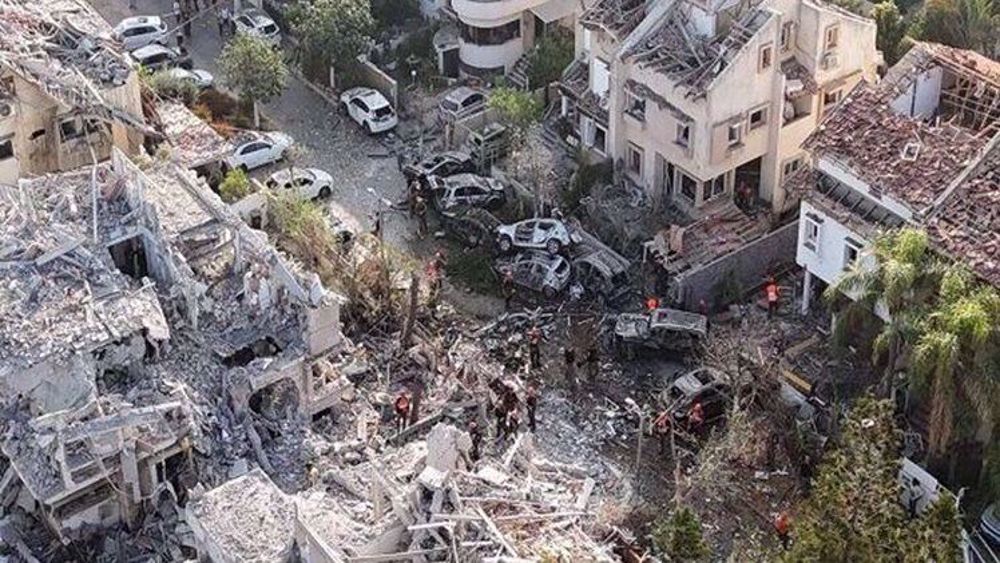
Iran has launched Wave 64 of Operation True Promise, targeting key military sites in the Israeli occupied territories, including Ben Gurion Airport, fuel supply lines, and strategic military bases in Haifa and Rishon LeZion.
The operation, which began at dawn Thursday, utilized advanced missile systems, including Qadr, Emad, Kheibar Shekan, and Khorramshahr, hitting all designated targets.
Iranian officials stated that the strikes are part of a broader response to Israeli and US military aggression in the region.
The US Fifth Fleet, stationed in the Persian Gulf, was also targeted by mid-range missiles. Iranian sources confirmed that the operation is continuing successfully.
As a result of the operations, over 5 million settlers of the occupied territories are said to be confined to shelters. Iranian authorities described the operation as a direct retaliation for Israeli and US aggression.
Meanwhile, the Islamic Revolution Guards Corps (IRGC) reported intercepting Israeli-made "Heron" and Herbiter (Harop) drones over Tehran and Karaj, which were attempting surveillance over sensitive Iranian sites.
The IRGC reported that life inside shelters has become the new normal for Israeli settlers in recent days, with residents having little to no chance to leave.
Army announces drone strikes on key Israeli targets
Separately, the Iranian Army confirmed that drone attacks were carried out in retaliation for the blood of the brave crew of the Dena destroyer and the martyrdom of Intelligence Minister Ismail Khatib.
Starting Thursday morning, the strikes specifically targeted the so-called ministry of internal security in occupied al-Quds, Channel 13 television station based in Tel Aviv, and the building and facilities of the ground forces unit at the Ar’ar base.
The ministry of internal security, a key crisis management center, and Channel 13, a major propaganda network, play pivotal roles in psychological operations against Iran, particularly in censoring news regarding Iranian successes and the resistance front, according to the Army’s statement.
The Ar’ar base, strategically located near the borders with Lebanon and Syria, serves as a key military stronghold for the Zionist regime’s ground forces.
The Army also noted that the new round of attacks made use of a new fleet of destructive drones.
Details on Wave 63 of Operation True Promise
The spokesperson for the Central Headquarters of Khatam al-Anbia offered further insights on the broader scope of Iran’s military actions.
Colonel Ibrahim Zolfaghari clarified that Iran does not intend to escalate the war to oil facilities, nor does it seek to harm the economies of friendly neighboring countries.
However, he emphasized that should further attacks occur, the response would be far stronger than previous strikes.
Col. Zolfaghari revealed that Wave 63 of Operation True Promise 4 specifically targeted US-related oil facilities in the region. The strikes, executed Wednesday, were described as a direct response to the enemy's aggression against Iran’s energy infrastructure.
He explained that the enemy, which he described as deceptive and deceitful, had targeted Iran’s energy infrastructure to escalate tensions and retaliate against the Iranian people who have been protesting in support of their nation for over 16 consecutive nights.
The aggression on Iran’s energy infrastructure, according to Zolfaghari, was a strategic move to provoke Iran into further action.
The spokesperson reiterated that Iran had no intention to widen the war to oil facilities, but after the enemy’s attack on critical energy infrastructure, the Iranian forces were compelled to retaliate.
He emphasized that the attacks on US-linked energy assets in the region were aimed at defending Iran’s national interests.
Colonel Zolfaghari also confirmed that the armed forces immediately initiated a robust offensive response, which included setting several US-linked oil facilities ablaze, following the enemy’s acts of aggression.
The spokesman further warned the enemy, declaring that they have made a grave error in attacking Iran’s energy infrastructure, and that the retaliation is still ongoing.
He cautioned that if such attacks are repeated, Iran will continue its strikes on the enemy’s energy infrastructure until it is entirely destroyed, with future responses being even more severe.
As part of the ongoing offensive, the IRGC Navy also carried out attacks on key US military bases, including the Mena Salman base of the US Navy’s Fifth Fleet in Bahrain and the al-Adiri helicopter base in Kuwait.
The attacks destroyed several critical structures within the bases. In the course of the operations, missile and drone strikes hit key infrastructure, including storage facilities, fuel tanks, and military equipment.
Colonel Zolfaghari added that the radars and central ramps of the al-Adiri base were struck with ballistic missiles, while the radar systems and fuel storage tanks at Mena Salman and US airbases in the region were targeted by a combination of drones, cruise missiles, and ballistic missiles.
In another related development, the Aerospace Forces of the IRGC launched multiple warhead strikes against military command centers in southern Israeli occupied territories, resulting in significant damage.
Colonel Zolfaghari also said two enemy drones were downed by the Iranian Army’s air defense systems over Tehran earlier Thursday.
He noted that throughout the war, advanced enemy drones have been frequently intercepted before they could launch their attacks, as part of Iran’s ongoing offensive and defensive operations.

'Mind your malnutrition rates': Parl. speaker fires back at Trump over Iran food claims
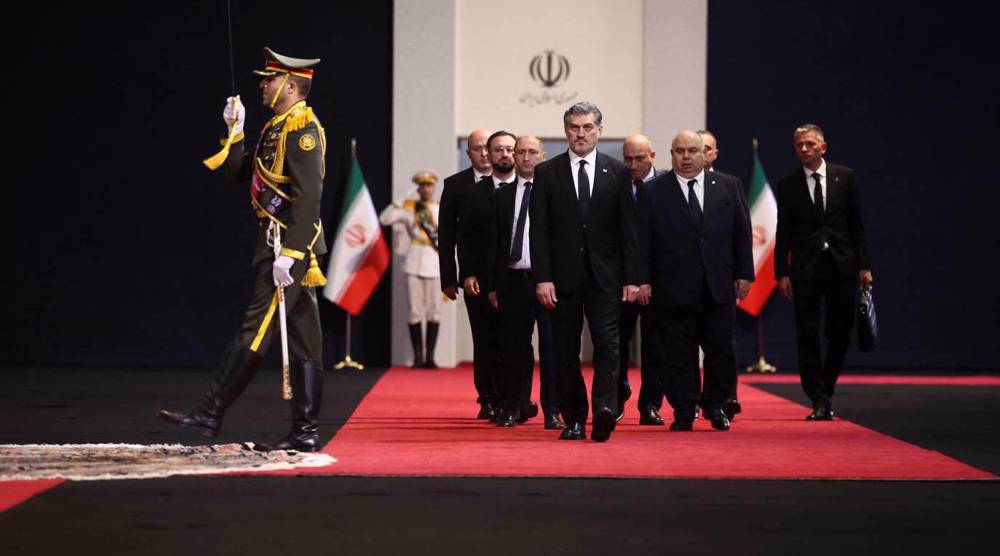
US launched global pressure campaign to deter nations from attending Leader's funeral: Report
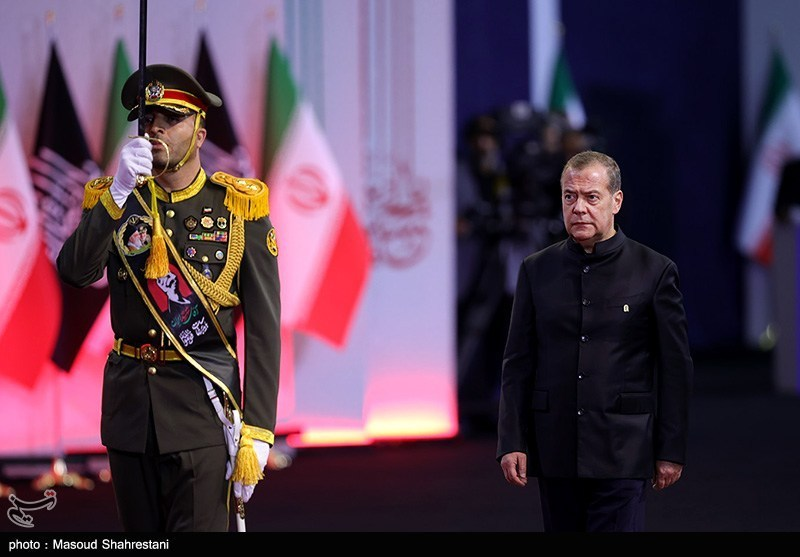
Iran to prevail over US, Medvedev says after attending martyred Leader’s funeral



US launched global pressure campaign to deter nations from attending Leader's funeral: Report
'Mind your malnutrition rates': Parl. speaker fires back at Trump over Iran food claims
VIDEO | Iran prepares historic farewell for martyred leader at Tehran Grand Mosalla
European lawmakers urge FIFA ethics probe into Infantino’s Trump ‘peace prize’ award
Iran to prevail over US, Medvedev says after attending martyred Leader’s funeral
President Pezeshkian: Iran will not bow to any bully
Yemen says it intercepted violating Saudi warplanes, warns Riyadh
VIDEO | Silent march in Paris marks 1,000 days of genocide in Gaza


 PressTV NEWSLETTER
now
PressTV NEWSLETTER
now
 This makes it easy to access the Press TV website
