Criticism directed at British Museum for removing references to 'Palestine' from displays
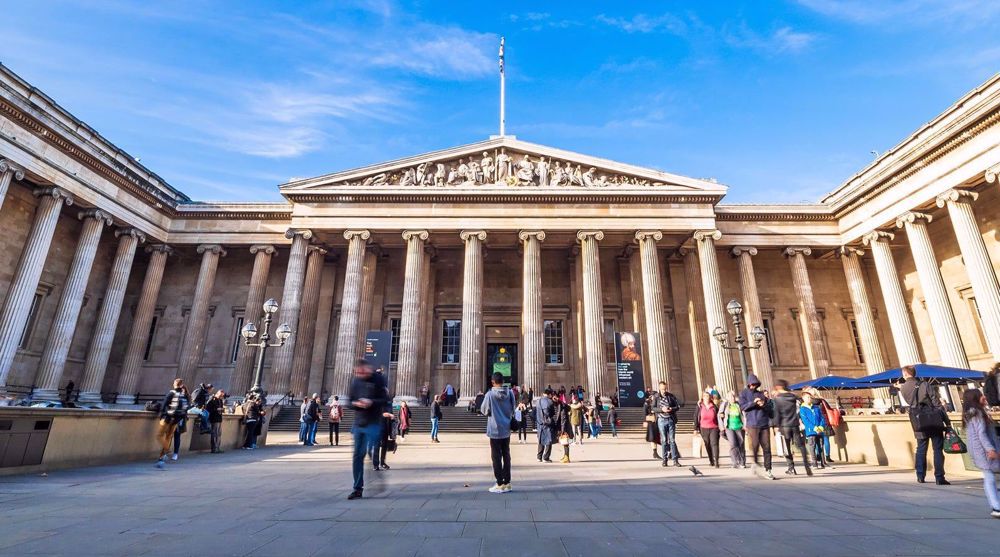
The British Museum has eliminated mentions of Palestine from its ancient Middle East exhibits, and the decision has been criticized by academics and activists as part of what they call a “systematic” assault on Palestinian cultural identity and heritage.
After a letter from the pro-Israel organization UK Lawyers for Israel (UKLFI), the museum removed the term from displays on ancient Egypt and the Phoenicians, stating that the word was not “meaningful” as a historical geographic term in that context.
In a letter to museum director Nicholas Cullinan, UKLFI contended that referring to Palestine in the exhibits “has the compounding effect of erasing the kingdoms of Israel and of Judea” and “re-framing the origins of the Israelites and Jewish people as erroneously stemming from Palestine”.
The group particularly opposed labels in exhibits from 1700–1500 BC that named the eastern Mediterranean coast as “Palestine” and characterized the Hyksos as having “Palestinian ancestry.”
Those labels have now been changed to read “Canaan” and “Canaanite descent.”
A spokesperson from the British Museum said the term – among the earliest names linked to the area near the eastern Mediterranean – is “suitable for the southern Levant” only during the later part of the second millennium BC.
“We use the UN terminology on maps that show modern boundaries, for example, Gaza, West Bank, Israel, Jordan and refer to 'Palestinian' as a cultural or ethnographic identifier where appropriate.”
Nevertheless, scholars said “ancient Palestine” is a historically precise designation for the area in ancient times.
“I use the term 'ancient Palestine' frequently in my own research and will continue to do so,” Marchella Ward, a lecturer in classical studies at the UK’s Open University, said.
She said assertions that the term is unwarranted or overdue are a “lie” intended for “the erasure of Palestinians and in support of Israel’s ongoing genocide against them.”
The campaign group Energy Embargo for Palestine criticized the museum for hypocrisy, claiming it portrays itself as a protector of artefacts and “the only institution able to preserve, protect and ‘objectively’ communicate their history.”
“And yet after looting Palestinian artefacts from across the Middle East, it is now unreluctantly preparing itself to rewrite history, to erase Palestine, and its millions of people, out of the history books,” the group said in a statement.
Researchers and activists stated that the British Museum is among a number of public institutions, such as councils and hospitals, that are being targeted by UKLFI.
Earlier this month, it was reported that Encyclopaedia Britannica had revised several entries on Britannica Kids regarding Palestine, including the elimination of the term from maps of the area, after pressure from UKLFI.
In February 2023, Chelsea and Westminster Hospital in London took down an artwork created by schoolchildren in Gaza. Caroline Turner, the director of UKLFI, stated that the decision was made due to "complaints from patients." However, a freedom of information request compelled the hospital to acknowledge that the sole complaint filed was by the UKLFI.
In January 2026, the Open University (OU) yielded to the group's request to eliminate the phrase “ancient Palestine” from upcoming educational resources and to add disclaimers to current materials due to it being newly deemed “problematic”
Earlier in February 2026, OU employees contacted the university's vice chancellor, insisting that the institution withdraw the commitments, pointing out that they might violate its responsibilities under the Higher Education (Freedom of Speech) Act 2023.
An upcoming database created by the European Legal Support Centre (ELSC) records 900 cases of anti-Palestinian repression in the UK from January 2019 to August 2025.
It was discovered that UKLFI is involved in 128 of those cases, “as either a direct actor of repression or an enabling actor whose actions prompt workplaces, universities and other institutions to further repress solidarity with Palestine.”
During the genocidal campaign against Gaza, Israeli forces have completely or partially damaged more than 316 archaeological sites and structures throughout the region, the majority from the Mamluk and Ottoman periods, along with some from the early Islamic centuries and the Byzantine era.
A UN report released in July of the previous year indicated that Israeli strikes had impacted more than half of the religious and cultural locations in Gaza.
It concluded that “Israeli security forces knew or should have known the locations and significance” of these sites and “should have planned all military operations to ensure no harm.”
Iran slams Israel's 'shameful arrogance' at UN, calls for global action
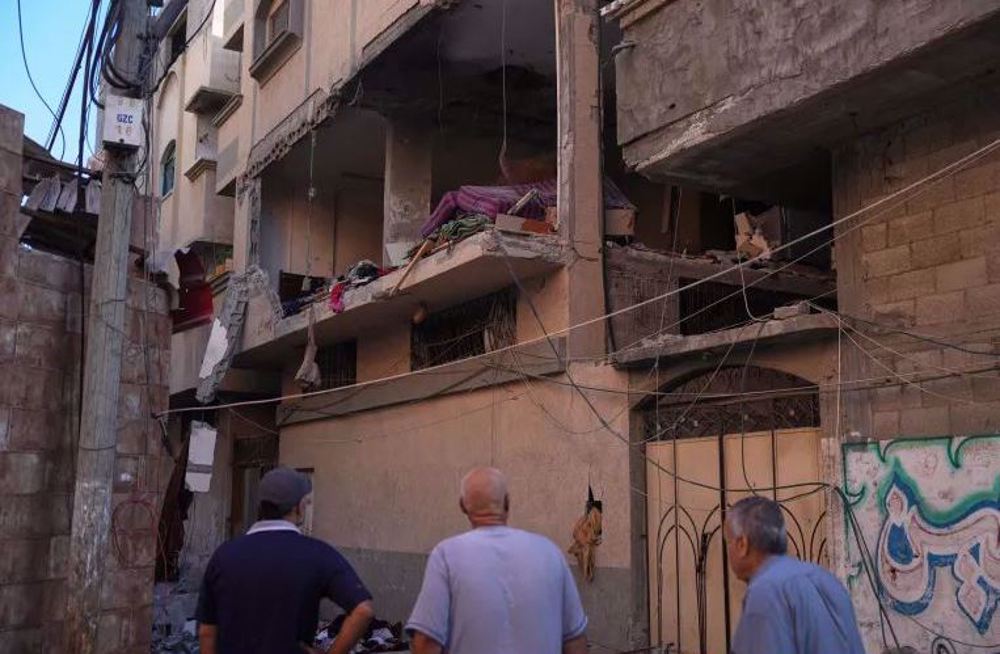
Israeli strike on Gaza home kills father and two young daughters in their sleep
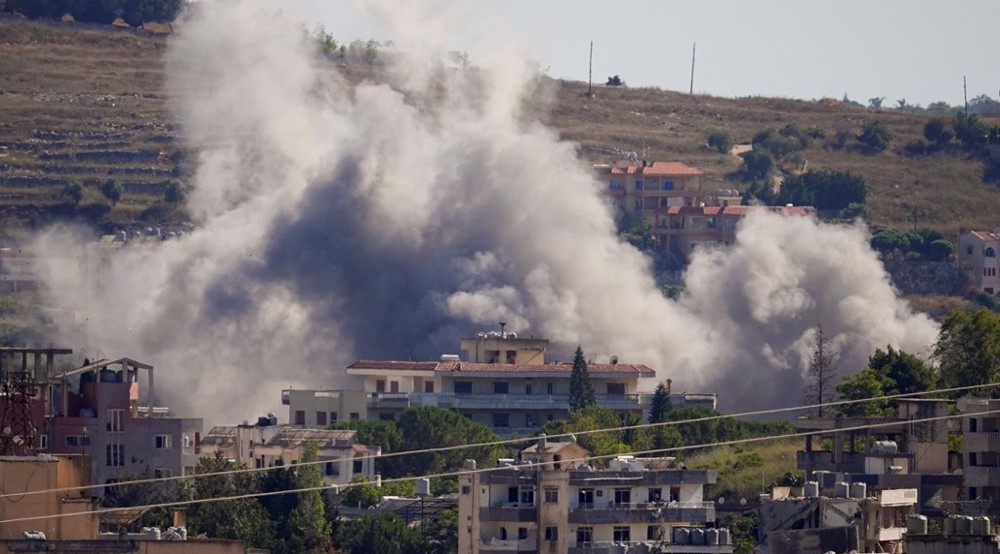
Israeli strikes kill over a dozen in Lebanon's Natabieh



Iran Parl. speaker vows fidelity to martyrs upon reaching Switzerland for Islamabad MoU talks
Iranian delegation arrives in Switzerland to follow up on Islamabad memorandum
US-Israeli war accelerates Iran's rare earth development
Iran tables draft for SCO energy consortium at Moscow meeting
At least 29 killed in new wave of Israeli attacks across Lebanon
Leader’s advisor warns of regional energy shutdown if Iran-US MoU stays on paper
Iran slams Australia for targeting doctors criticizing Israel’s war crimes in Gaza, Lebanon
First endoscopic eardrum repair surgery successfully performed in Iran's Kermanshah province



 PressTV NEWSLETTER
now
PressTV NEWSLETTER
now
 This makes it easy to access the Press TV website
