Religious diversity and social harmony in Iran

Today's world is a world of difference, and at its best, those differences are not just tolerated, but celebrated. True homogeneity is all but extinct. No society now speaks one language, shares one culture, belongs to one ethnicity, or follows one faith alone.
When diversity is guided and understood, it can be as striking as the colors of a great painting; but without the right framework, those same differences can ignite division, violence and bloodshed.
So what is the situation in Iran today regarding religious minorities?
In this episode, we'll explore this question with a special focus on Christians, the largest religious community after Muslims.
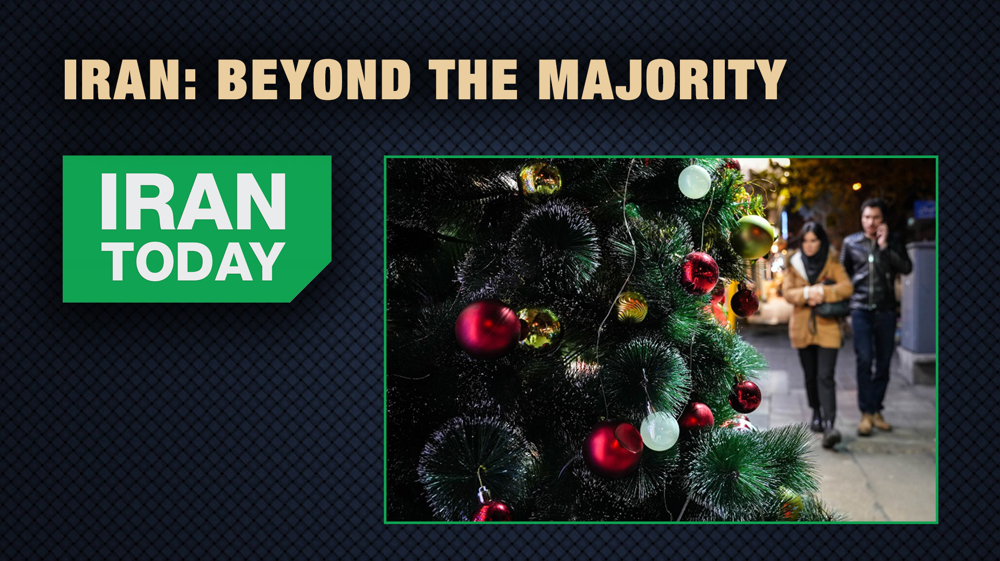
As the New Year draws near, Iran's Christian community, just like all Christians from around the world, prepares to celebrate.
This ancient religious minority, present in Iran from the earliest days of Christianity, remains an enduring and respected part of the nation's social fabric, living in security and prosperity alongside their fellow citizens.
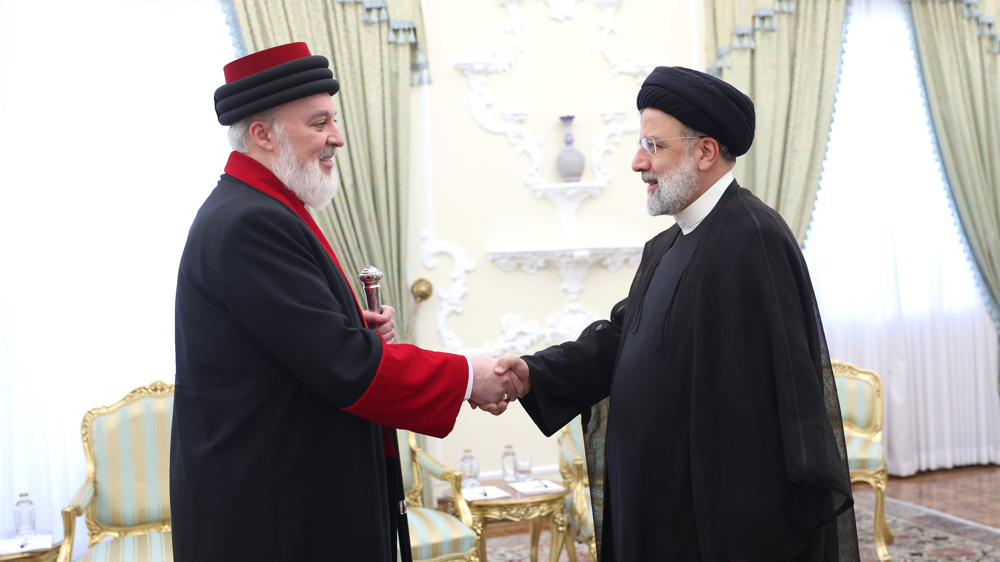
We began our journey at a church in the Heart of Tehran, where we met Priest Grigoris Nersesians of the Armenian Diocese in Tehran.
From my experience of living in Iran, I can say it's been a very sweet and positive experience, because among all segments of the Iranian people, we can truly experience affection, friendship, sincerity and solidarity.
Secondly, the golden rule of the Holy Scriptures, which exists in Judaism and Christianity and also in Islam, is very clear and evident here.
What you want for yourself want for others as well. If we could practice this golden rule across the whole world, we could turn the world into paradise.
Priest Grigoris Nersesians, Armenian Diocese, Tehran
Iran, a nation whose history reaches back to the dawn of civilization, has long been shaped by ethnic and religious diversity.
Together, these traditions have formed a living symphony, one that continues to resonate despite distortion and misrepresentation by its critics.
In this land, it makes no difference whether you are a Muslim or a follower of another divine faith, the embrace of the homeland remains open.
Here, people are meant to grow, to thrive, and to take pride in belonging.
What do the Quran and Islamic teachings say about the followers of other divine religions, and is the protection of their lives, possessions and dignity a religious duty for Muslims?
The Prophet, on many occasions, dealt with the people of the book with kindness and warmth, and he would honor them.
What's interesting is that this very expression in the Holy Quran, telling the followers of the religions before the prophet the people of the book itself, shows the respect and honoring that our religion has toward followers of other religions.
What we all share in common is that we are all people of the book. By book you could say it is, in fact, the divine teachings that have come in the form of other different sacred books of all religions.
And addressing them as people of the book shows that we see them as dignified persons, people of knowledge, people connected to divine teachings, and in a monotheistic society, our sense is that everyone is moving in the same direction.
Hojat-ol-Islam Saeed Karami, Deputy for Cultural & Political Affairs, Leader's Representation Office at Universities
With the victory of the Islamic Revolution in 1979, and under Islamic law, followers of divine religions gained a recognized and respected place in the country's governance.
Their rights and freedoms are explicitly affirmed in the constitution of the Islamic Republic of Iran, which acknowledges their political and social participation as an inseparable part of the nation.
That same year, Imam Khomeini declared in an interview with Der Spiegel that Islam grants religious minorities greater freedom than any other system of belief, affirming their God given rights and the duty of an Islamic government to protect them. These words, he said, were not theory but practice.
If we pay close attention to the statements of Imam Khomeini, may God's mercy be upon him, and the leader of the Islamic Revolution, we see that throughout their remarks, especially in their approach to Iranian people of the book and Iranians of different religions, what we consistently find is respect, affection, and proper conduct, along with an emphasis on the point that we are all one united community.
They stress that we all have our roots in a single community, and that everyone living in Iran, whatever their religion, is united and must live alongside one another.
Hojat-ol-Islam Saeed Karami, Deputy for Cultural & Political Affairs, Leader's Representation Office at Universities
Article 13 of the constitution formally recognizes Zoroastrians, Christians and Jews as official divine religions with clearly defined civil rights.
They are guaranteed economic, cultural and religious freedoms, and they participate fully in the country's political life.
Of the 290 seats in parliament, five are reserved for religious minorities.
Representatives of Armenians, Jews, Zoroastrians, Assyrians, and Chaldeans speak directly for their communities.
Our conversations continued with Mr. Homayoun Sameyah Najaf Abadi, an Iranian Member of Parliament representing the Jewish community.
How does Iran's constitution define the rights of the Jewish community?
The Jewish community in Iran comprises about 15,000 people, and the vote that I have as the representative of those 15,000 carries the same weight as the vote of a representative who speaks for 300,000 people.
On average, each Member of Parliament represents about 300,000 people in Iranian society. So compared to the 15,000 Jews living in Iran the difference is very significant.
And even so, because of the laws that are ultimately laid out in the Constitution, our community is still able to have one representative in parliament, and that's a very major privilege for our community.
Homayoun Sameyah Najaf Abadi, Jewish MP
Their presence in Parliament, equal rights in legislation, freedom of worship, preservation of language and culture, dedicated cultural and sporting institutions, and an independent budget allocation, all stand as evidence of the Islamic Republic of Iran's commitment to protecting the rights, dignity and spiritual heritage of monotheistic religious communities.
What is the role of Jewish representatives in Iran's Majles in order to meet and address the demands and needs of the Jewish community and protect their rights?
As someone who has been a Member of Parliament for about six years now and who also served in the previous term and again in this term, I have personally seen it firsthand; the respect shown by different ministers, the judiciary, the police, the armed forces and other institutions.
The reality is that the support these sectors give to our community is, in fact, even greater than what is given to the Muslim community.
Homayoun Sameyah Najaf Abadi, Jewish MP
Iran's religious mosaic extends far beyond Islam. For centuries, Jews, Christians and Zoroastrians have called this land home.
In much the same way that race has never defined human worth in Iranian society as it has elsewhere, adherence to different divine religions has never led to collective tragedy
In Iran, religious sites, whether synagogues, churches, or Zoroastrian fire temples, enjoy the same benefits as Muslim places of worship, including tax exemptions and reduced utility costs.
Religious minorities are free to practice their faith openly.
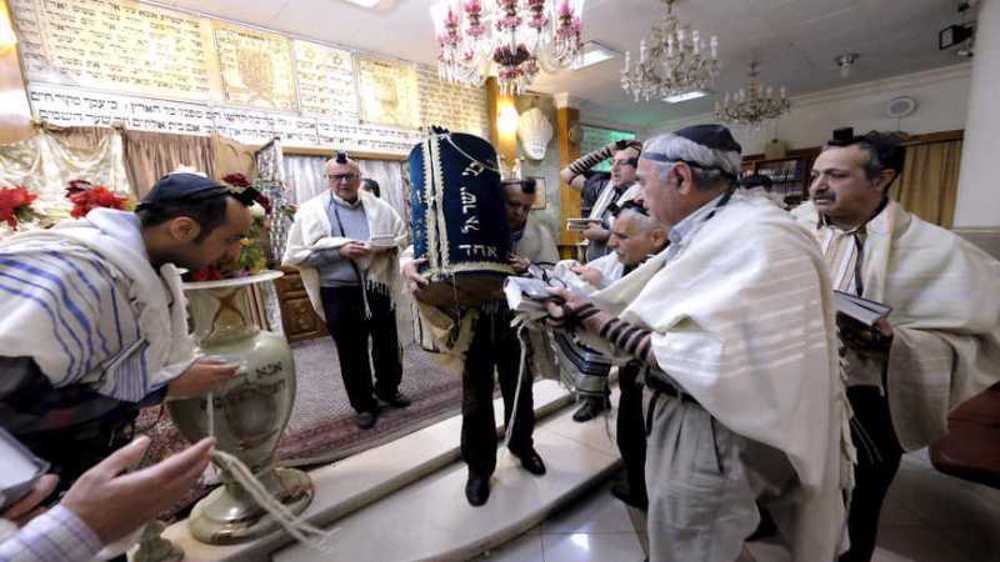
How do you view the religious freedom of the Jewish community in Iran?
When it comes to holding religious ceremonies and teaching religious matters in Iran, we as Iran's Jewish community, have a great deal of freedom.
There are no restrictions in this regard, and no one takes issue with these kinds of activities.
Teaching religious studies starts from our kindergartens, continues through our primary and secondary schools and beyond that, in our major synagogues, we hold religious classes at more advanced levels as well as the basic level.
Homayoun Sameyah Najaf Abadi, Jewish MP
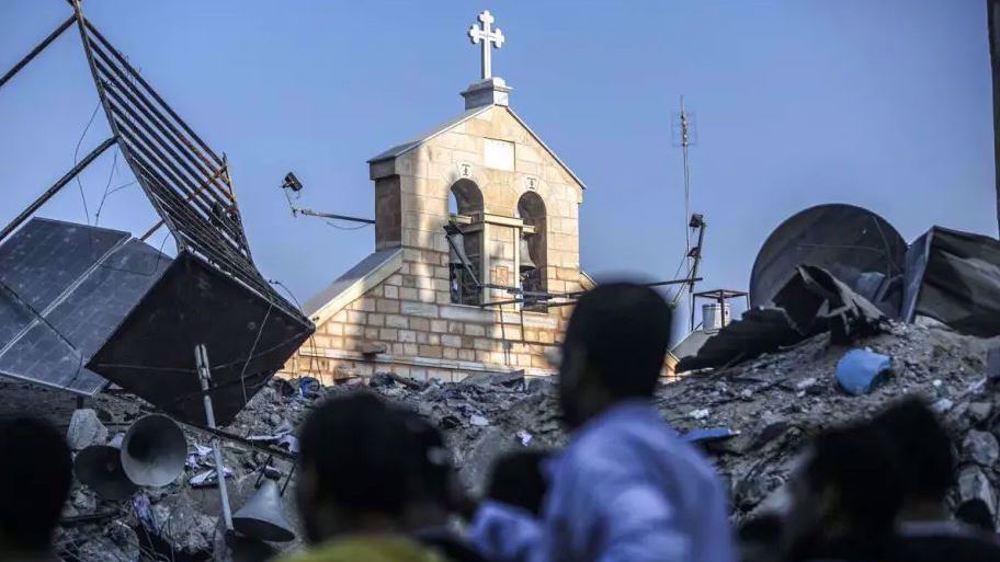
Around 300 churches across the country carry out their religious and community activities without restrictions.
40 of these have been restored with support from the Cultural Heritage and Tourism Organization, while 57 associations dedicated to religious minorities receive government funding to support social, cultural, and, welfare programs.
Mr. Nersesians spoke about the positive discrimination extended to religious minorities in Iran.
There is a kind of discrimination that they call reverse discrimination, meaning religious minorities, or followers of other faiths in general, may in some respects, have certain advantages beyond what Muslims have.
For example, under the Constitution for us Armenians, learning our mother tongue is part of schooling, and it is taught.
Religious education is also taught in Armenian in our schools.
When it comes to holding religious ceremonies, we have full freedom and overall, the Ministry of Intelligence and the police provide complete security and make the necessary arrangements for our ceremonies.
Priest Grigoris Nersesians, Armenian Diocese, Tehran
The Ministry of Culture and Islamic Guidance actively supports the cultural, artistic, media, and religious activities of all citizens.
Over the past five years, this has resulted in 376 approved gatherings for religious ceremonies and festivals, 157 publishing licenses for books by minority affiliated publishers, 107 national and provincial cultural, social and religious events, direct subsidies for media serving ethnic and religious communities.
Religious minorities in Iran can freely observe their ceremonies, festivals and traditions, including official holidays.
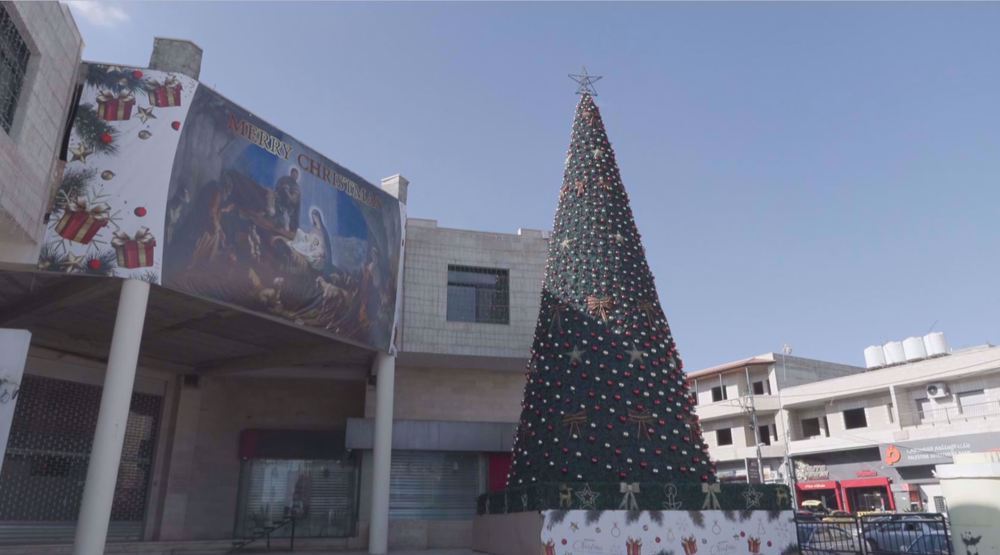
Iranian Christians celebrate Easter, Christmas and the Gregorian New Year.
Some churches hold Eucharistic services on Fridays to accommodate working worshippers since Friday is Iran's official weekly holiday.
The government has also taken steps to support religious celebrations, such as donating 5000 Christmas trees to Christian communities to help mark the holiday season.
History bears witness to this; when Armenians faced genocide in Ottoman Turkey and Jews were persecuted in Nazi Germany, the Iranian Armenian and Jewish communities continued their lives in peace, both secure in their faith and in their Iranian identity.
Iran is home to around 600 churches, with nearly 450 officially recognized and 90 registered as national heritage sites.
When looking at population versus worship spaces, religious minorities actually enjoy more than twice the per capita access compared to the Shia majority. There's roughly one church for every 500 Christians, while among Shias, there's one mosque for more than every 1000 people.
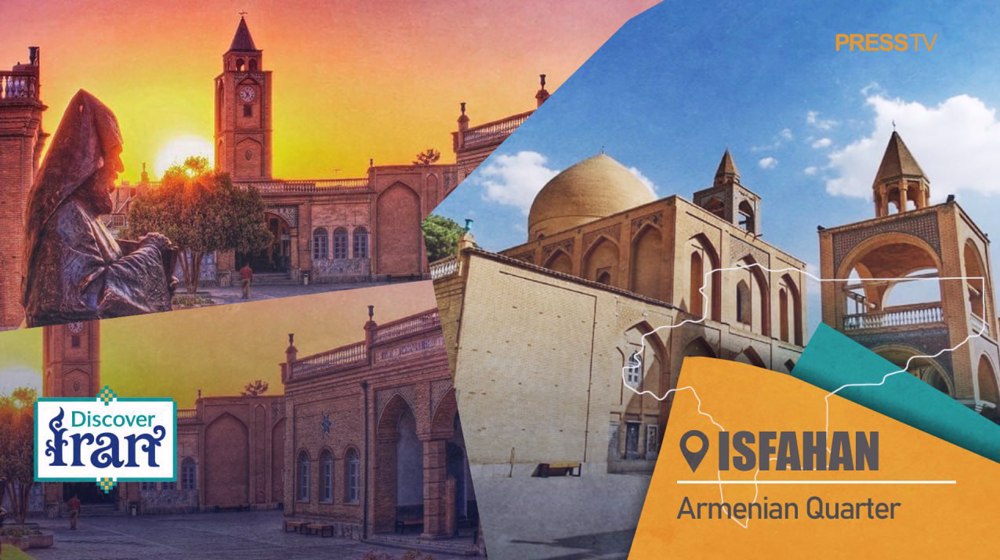
Some of the country's most important and historic churches include the Kare Kilisa Monastery of St Thaddeus, considered the world's first cathedral. The Church of St Stepanos, built in the ninth century, Iran's second most significant church. The Church of St Mary, located northwest of Kare Kilisa. The Vank Cathedral, built in Isfahan under Shah Abbas II. The Chapel of Chupan, sometimes called the Shepherd's Chapel, a 16th century church in the East Azerbaijan province. The St Sarkis Cathedral, Tehran's largest Church, built in 1970 with funding from the Armenian community. The Saint Mary Church in Tabriz, a historic site dating back 500 years.
Iranian culture rests on a timeless belief that humanity is bound together, either by shared faith or by shared humanity.
Persian literature gives a powerful voice to this idea. None more eloquently than Saadi: "Human beings are members of a whole, in creation of one essence and soul. If one member is afflicted with pain, other members uneasy will remain".
Priest Nersesians pointed out an interesting parallel, noting that a verse in the Bible closely echoes the words of the renowned Persian poet Saadi.
There is a verse in Epistles of Paul the Apostle that says, We are all members of one body, the spiritual body of Jesus Christ, and if one of those members is in trouble, that trouble doesn't belong only to that person or that one member, it becomes a concern for all the members of the community. That's exactly what we feel in Iran.
Priest Grigoris Nersesians, Armenian Diocese, Tehran
Christians are Iran's largest religious minority, numbering just over 130,000.
Having a long and deep-rooted presence in the country, Christians have contributed significantly to Iran's economic, cultural and artistic life, maintaining their own churches, schools and cultural institutions.
Their presence enriches Iran's diverse religious and cultural mosaic. Christian artists such as Mahaya Petrosian, Lorik Minasyan and Levon Haftvan are all household names across the country.
Zoroastrians, followers of one of the world's oldest monotheistic religions, are another important minority inside Iran. With around 23,000 members, mostly in Yazd and Kerman, they preserve ancient customs, language and traditions, serving as a living link to Iran's historical and cultural roots.
Iranian Jews, numbering roughly 10,000, form one of the world's oldest Jewish communities with a history dating back over 2700, years to the Achaemenid era. Concentrated in Tehran, Isfahan, and, Shiraz, they maintain synagogues and cultural centers, contributing to Iran's religious and cultural richness.
Mr. Samaya emphasized that Iranian Jews are, above all else, Iranian and have consistently demonstrated their commitment to their homeland.
How do you see the relation between the Jewish community and other religious minorities in Iran, including the Muslim majority?
We should say that, overall, we are Iranian.
When it comes to social issues and the cooperation that all Iranians need in order to advance our society, Iran's Jewish community, like other segments of the population has played its role, even before the Islamic Revolution.
If we talk about political matters, we had political prisoners. We even had people executed during the reign of Reza Shah because of political issues.
During the Islamic Revolution, we took part, just like other groups in society, and after that, during the imposed war, our young people were present on the front lines in large numbers.
We had many veterans and a significant number of martyrs, and we offered these sacrifices to the Islamic Revolution.
After the war as well, both our educated community and our business community cooperated fully in rebuilding the country.
Our doctors, our engineers, our university graduates, and our economic sectors were widely involved in repairing the damage after the war, and side by side with the rest of society, we carried out this service.
Homayoun Sameyah Najaf Abadi, Jewish MP
The respect for religious minorities is embedded in Iran's constitution and symbolized by visits from the leader of the Islamic Revolution to Families of minority communities.
Iran's recognition of these groups is also reflected internationally. For instance, the International Union of Assyrians moved its headquarters from Chicago to Tehran in 2008, highlighting the trust the Assyrian community places in Iran.
Those who live abroad, because they haven't seen Iran up close, are, in a way, looking at Iran through a foggy lens.
Archbishop Sebouh Sarkissian, the Armenian Archbishop of Tehran, because he took part in various councils and was always a voice for truth about Iran, used to say in those meetings where representatives from different countries and different churches were also present, that you need to take that foggy lens off your eyes, because what you're being told is not the reality.
You have to live in Iran to see the Iranian people and also the Iranian government and the special kindness they show towards the followers of the divine religions.
Priest Grigoris Nersesians, Armenian Diocese, Tehran
Unlike some Western countries, which produce films that fuel religious division, Iranian cinema, over the past four decades, has promoted coexistence. A notable example is ‘Cypress Underwater’, a feature film depicting the wartime unity of Zoroastrian and Muslim families, honoring religious minorities and emphasizing national solidarity.
What are some of the benefits of the Jewish community in Iran that have rarely been reflected in foreign media?
The lobbies that exist in foreign countries are certain groups whose mission and objective is to undermine the Islamic Republic in different ways.
One of the issues they raise is the question of freedom for Iran's religious minority communities.
I really like it when journalists come from abroad, because when they see the facilities and the freedoms our community has, they're genuinely surprised, because what they had heard and what they actually see are very different.
Our rights are exactly equal to those of other segments of society, and in fact, minorities even have certain rights that the Muslim community does not have.
Homayoun Sameyah Najaf Abadi, Jewish MP
Islam has long approached Zoroastrianism, Judaism and Christianity with reverence, making respect for their prophets and sacred figures a religious duty for Muslims; the protection of their lives, honor and dignity has likewise been underscored as a moral and religious obligation.
Following the Islamic Revolution, this principle was further strengthened, finding clear expression in Iran's constitution and the legal protection it provides for religious minorities.
During our discussion, priest Nersesians also recalled an intervention by the leader of the revolution, one that directly benefited the Christian community.
In legal matters, for example, inheritance, the distribution is done according to our own religious laws.
And in issues like divorce and marriage as well people's cases are handled according to our own rules.
There were also some old regulations in Iran and the leader Ayatollah Khamenei himself issued rulings on them, overturning those earlier provisions in favor of the Assyrian Christian and Jewish communities.
Priest Grigoris Nersesians, Armenian Diocese, Tehran
Religious minorities have made significant contributions to Iranian football over the years, particularly the Armenian community.
Legendary players include Vazgen Safarian, Karo Haghverdian, Markar Aghajanyan, Serjik Teymourian, Fred Malekian, Edmond Bezik, and, Andranik Teymourian.
In late December 2024 the most popular names for newborn girls in Iran reflected both religious devotion and cultural tradition.
The name Fatima led the list with 4,448,000 bearers, followed by Zahra with 2,969,000, and notably, Mariam, with 1,811,000 bearers, ranked third, an indication of enduring respect for religious figures beyond the Muslim majority.
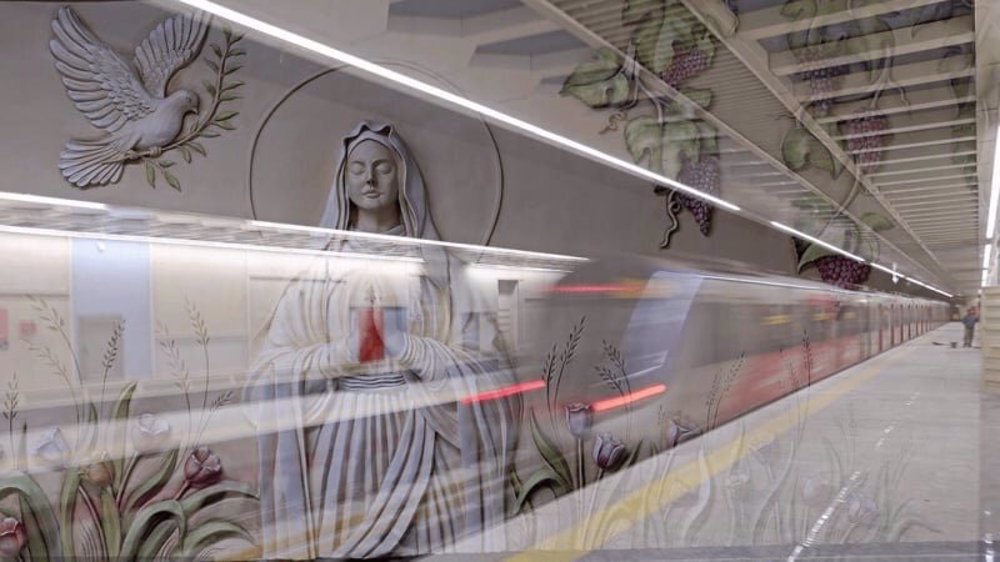
Right across from the Sarkis Cathedral, which is also the seat of the Armenian Diocese of Tehran, a metro station was established called St Mary, and if you go into that station, you can see that its architecture is a blend of Islamic and Christian elements.
The designers came and visited the church, became familiar with its architecture and then designed the Metro in line with that same Christian architectural style.
Throughout the station, you see images of the Virgin Mary and images of Jesus. Christian symbols that appear in the Gospel are clearly visible there.
So what does it show? It shows that same freedom of religion, and it shows that same affection and respect that Muslims have for Christians and Christians have for Muslims as well.
Priest Grigoris Nersesians, Armenian Diocese, Tehran
China hails MOU, urges implementation by US
Heat wave claims over 1,000 lives in France

Trump criticized Spain for not meeting NATO spending targets


Netanyahu pressured Israeli intelligence to declare Iran's nuclear program destroyed: Report
Ayatollah Khamenei’s martyrdom inspired Muslims in pursuit of unity: Pezeshkian
VIDEO | Cuba stands in solidarity with Venezuela amid tragedy caused by twin earthquakes
Martyr Ayatollah Khamenei was pillar of support for Palestine: Islamic Jihad
VIDEO | Expo highlights growing Iran-Afghanistan economic cooperation
VIDEO | Press TV's news headlines
VIDEO | Breaking the siege: Sana'a confronts Saudi aggression, asserts sovereignty
Iran doesn’t trust US, will give 'decisive response' to any MoU violation: Acting defense minister
 PressTV NEWSLETTER
now
PressTV NEWSLETTER
now
 This makes it easy to access the Press TV website
