Israeli weapons manufacturers boast about products after Gaza genocide

Representatives from Israeli weapons manufacturers have delivered some of their most straightforward remarks during a recent military technology conference, associating the worth of their products with the actual deployment of the firepower on Palestinians in Gaza.
According to the investigative news outlet Drop Site News, a recording of the conference in Tel Aviv in the central part of the Israeli-occupied territories features remarks from the president and CEO of Israel Aerospace Industries, along with statements from executives at Elbit Systems, RAFAEL Advanced Defense Systems, and other companies.
The event, dubbed DefenseTech Week, took place in early December. Drop Site has provided the audio to independent news outlets in Brazil, Ireland, Australia, and elsewhere; and the outlets are set to conduct their own investigations.
The Israeli arms industry has faced criticism for its propensity to advertise that its products are “lab tested” on individuals living under occupation – a point notably raised by Australian journalist Anthony Lowenstein, whose book, The Palestine Laboratory, was transformed into a Drop Site podcast last year.
The recently revealed comments indicate that, instead of being deterred by international denunciation regarding the genocide in Gaza, the Israeli arms industry is actually invigorated by it.
“The war that we faced in the last two years enables most of our products to become valid for the rest of the world,” boasted Boaz Levy, head of Israel Aerospace Industries (IAI), on day one of the conference. “Starting with Gaza and moving on to Iran and to Yemen, I would say that many, many products of IAI were there.”
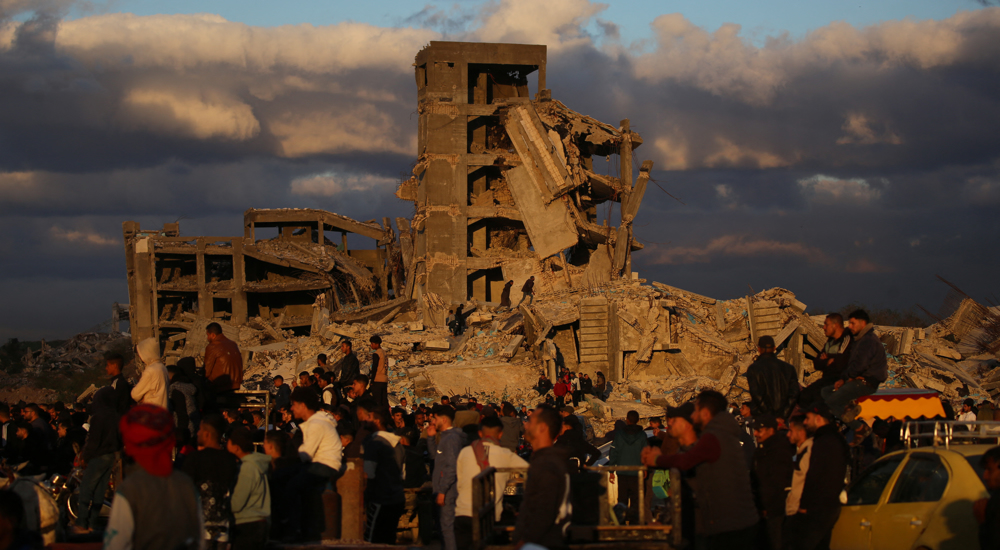
The gathering saw a strong representation from the Israeli military.
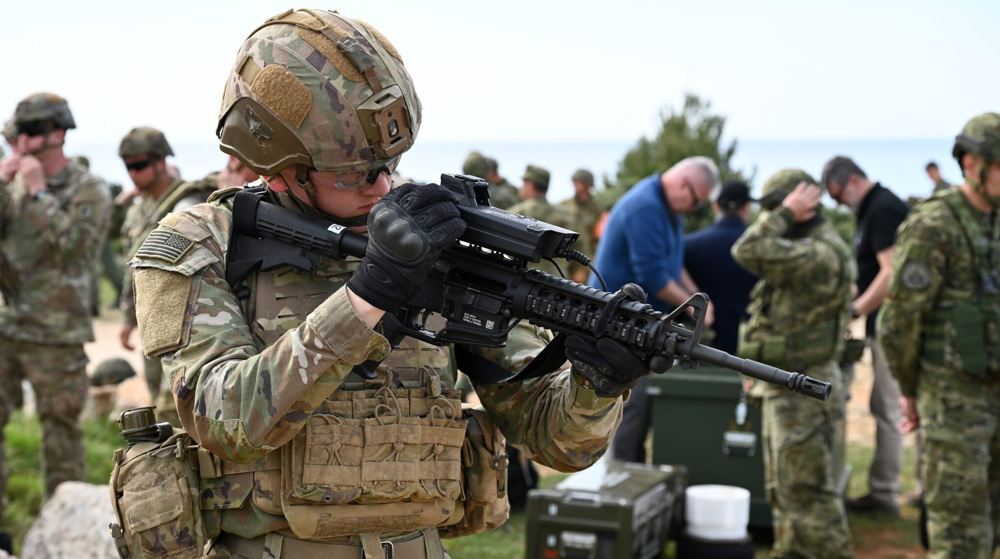
“These are not lab projects or powerpoint concepts. They are combat proven systems,” Major General Amir Baram, director general of the Israeli ministry of military affairs, said on the first day.
He added that military tech has redefined Israel’s global identity, asserting that for years the regime was known worldwide as a cyber hub, but has now evolved into a true military tech powerhouse.
Gili Drob-Heistein, the executive director of the Blavatnik Interdisciplinary Cyber Research Center, explained that the deployment of Israeli weapons technology over two years in offensives targeting Palestinians has been instrumental in transforming Israel from a startup entity into a major force within the global arms industry.
Data on global arms sales indicates that the claims made at the conference are supported by real growth in Israel’s weapons industry. According to the Stockholm International Peace Research Institute (SIPRI), three Israeli arms manufacturers have collectively boosted their weapons revenues by 16 percent, reaching a total of $16.2 billion.
“The growing backlash over Israel’s actions in Gaza seems to have had little impact on interest in Israeli weapons,” Zubaida Karim, researcher with the SIPRI Military Expenditure and Arms Production Programme, said.
Israeli weapons manufacturer Elbit Systems also had a significant presence at the conference.
Executive Vice President Yehoshua Yehuda bragged about “combat proven technologies” that allowed people to be struck even when “the targets are less than a pixel.”
Levy told the audience that Israeli weapons are becoming increasingly influential in global conflicts.
“Eighty percent of our activity is really for export—only 20 percent of our activity goes to the Israeli market,” he said. “I think that all of the things that we learned during this war in Israel impacts our future business capabilities. And IAI as of now has $27 billion of new orders and has something like $7 billion of sales every year.”
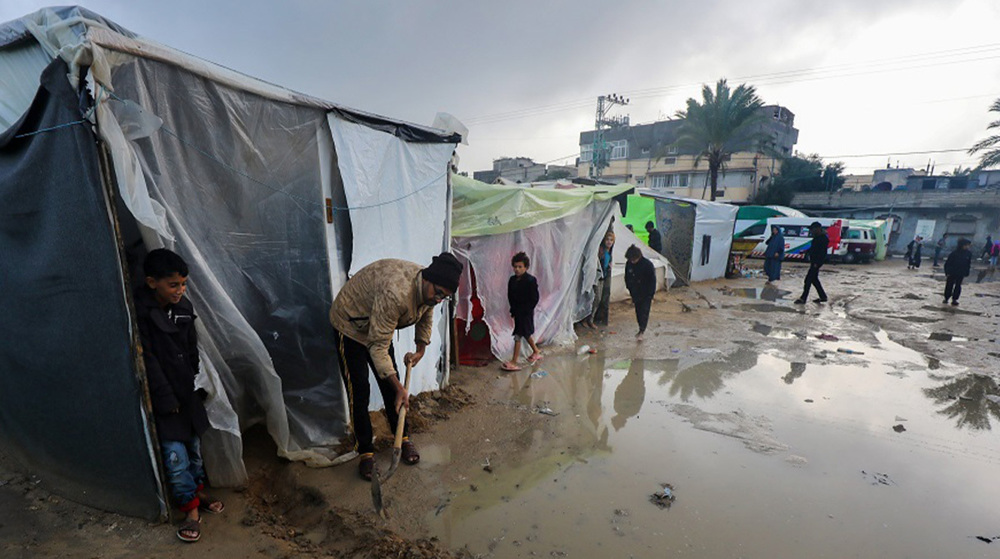
Simultaneously, the weapons manufacturers acknowledged that an increasing boycott posed a significant threat to their business.
“I think Israel is experiencing a boycott,” said Shlomo Toaff, executive vice president of the General Manager Air & Missile Defense Systems Division of RAFAEL Advanced Defense Systems Ltd. “We’ve seen it in the Paris air show last June where we were shut down by the French.”
“This is something that we have to take into account when we’re talking about what we’re doing here in the industry,” he said.
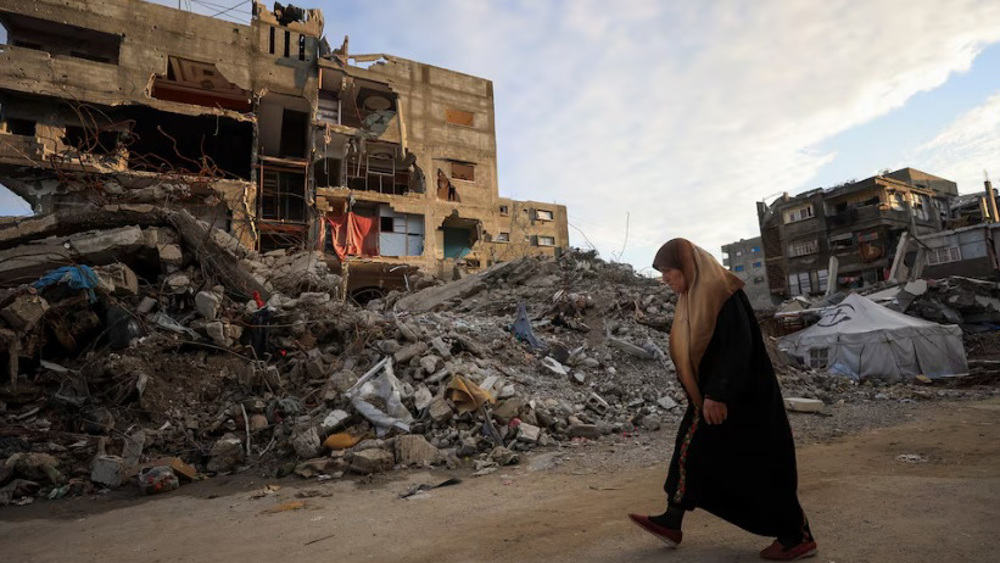
The Israeli military has killed nearly 71,000 Palestinians, the majority being women and children, and wounded over 171,000 others in Gaza since October 2023.
Israel has not adhered to the ceasefire that came into effect on October 10, restricting the entry of the stipulated amounts of medical aid trucks. This has exacerbated what the Health Ministry has labeled a dire and persistent health crisis.

Palestinian groups warn against Israeli move to strip al-Khalil of municipal powers
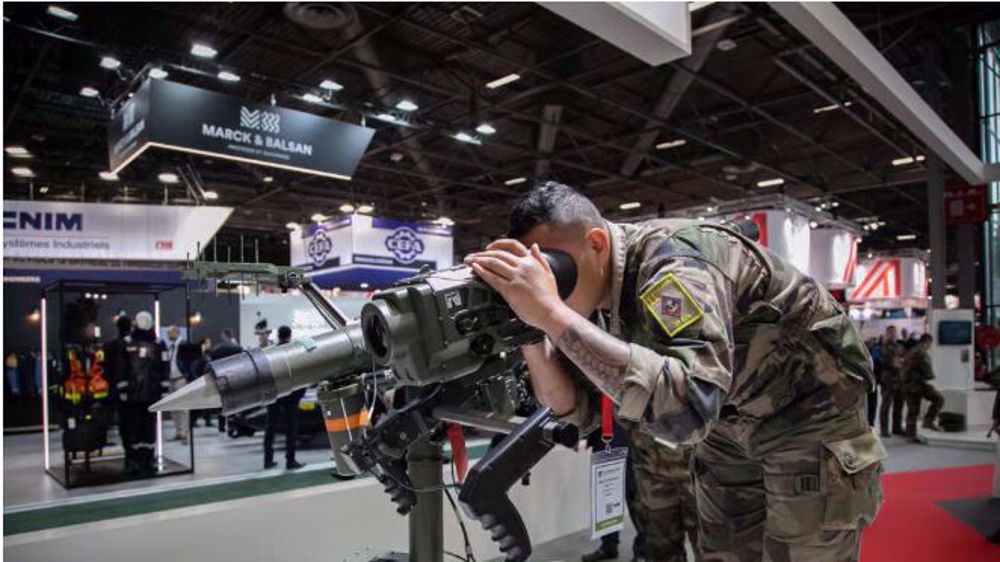
France shuts down 12 Israeli stands at major arms expo

Trump publicly slams Netanyahu over 'vicious' Beirut strike at G7



Iranian nation learned from martyred Leader never to submit to humiliation: Pres. Pezeshkian
Mass rallies in Yemen hail Iran’s victory, denounce Trump's comments on Mecca
US to waive sanctions on Iranian oil sales after signing MoU: Report
Ansarullah leader congratulates Iran on 'great victory' over US, Israel
Trump considers ousting officials who opposed Iran agreement: Report
Iran warns of ‘harsh response’ as Israel violates ceasefire 84 times in Lebanon
Iran, Russia to complete integration of banking networks within two months: CBI chief
Palestinian groups warn against Israeli move to strip al-Khalil of municipal powers








 PressTV NEWSLETTER
now
PressTV NEWSLETTER
now
 This makes it easy to access the Press TV website
