Explainer: How ‘Qualitative Military Edge’ keeps Israeli regime’s survival dependent on US
By Ivan Kesic
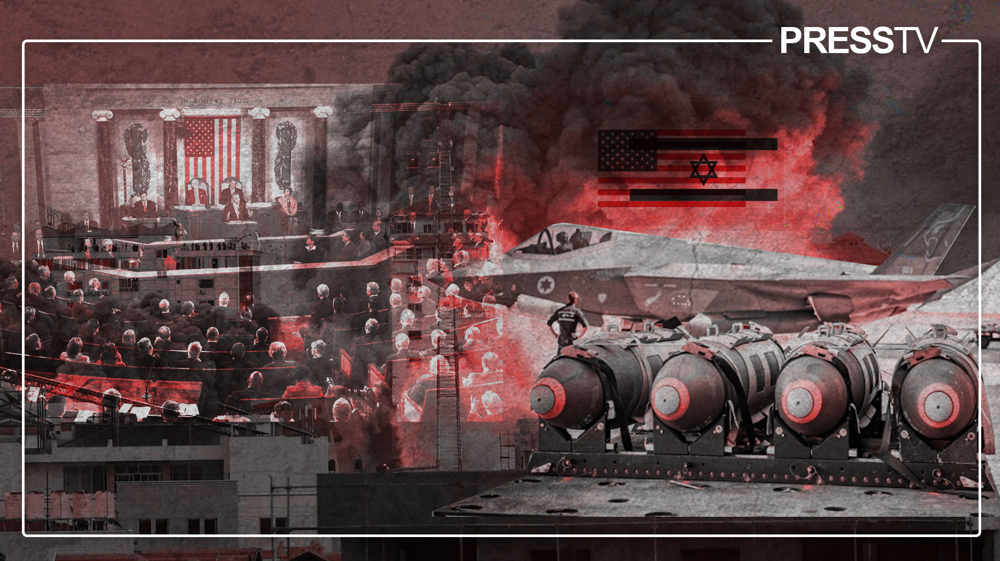
The unwavering commitment shown by successive administrations in Washington to the Qualitative Military Edge (QME) exemplifies a foreign policy that prioritizes one ally’s military dominance over principles of regional balance, sovereignty, and self-determination for all regional countries.
The Qualitative Military Edge (QME) is a formal, legally mandated doctrine within US foreign policy, designed to bolster the Israeli war machine at the expense of many American allies in West Asia.
Under this principle, the US is obligated to guarantee that Israel can deal with any conventional military threat, from a single state, a coalition of states, or resistance groups, with minimal casualties.
QME is rooted not in quantitative parity but in qualitative superiority. This means Israel’s weaponry, technology, and training must be significantly more advanced than those of Arab-Muslim states, enabling it to deal with adversaries through technological and tactical advantage.
It extends beyond a technical arms transfer policy and is a foundational principle that shapes US engagement in the region and actively sustains a power hierarchy with Israel at its apex.
While proponents frame it as a necessary measure to ensure protection of the Israeli regime, often described as the American outpost in the region, the doctrine also functions as a mechanism that limits the military and strategic autonomy of Arab states allied to the US.
Legally, it compels the US to subordinate its relationships with other regional partners to Israeli military priorities, often straining alliances and complicating the already destructive foreign policy.
QME ensures that Israel possesses advanced weaponry capable of conducting operations, such as long-range airstrikes, with impunity, thereby reducing the political cost of its actions and drawing the US into regional wars and conflicts, like the one against Palestine and Lebanon, and more recently Qatar.
As such, the doctrine remains a critical and controversial feature of US foreign policy, profoundly shaped by its strategic commitment to support the illegitimate regime in Tel Aviv and its military.
‼️ INFOGRAPHIC - The unhinged Israeli war machine, fueled by American weaponry, unleashes terror across the region — from Gaza to Doha.
— Press TV 🔻 (@PressTV) September 13, 2025
Follow Press TV on Telegram: https://t.co/LWoNSpkJSh pic.twitter.com/4aBHcV4gwE
How did the doctrine come into existence?
The doctrine was formally codified into US law through the Naval Vessel Transfer Act of 2008, later reinforced by the US-Israel Enhanced Security Cooperation Act of 2012 and the United States-Israel Strategic Partnership Act of 2014.
These laws require the executive branch to conduct formal assessments of any proposed American arms sales to regional countries, ensuring they do not impair Israel’s military advantage. In doing so, Israeli military considerations are embedded directly into US arms transfer policy and regional strategy.
The origins of the QME concept can be traced back to the 1960s and 1970s, a period shaped by Cold War dynamics and major Arab-Israeli conflicts.
During this era, the US began supplying the Israeli regime with advanced technology to counter Soviet-made equipment provided to Arab states such as Egypt and Syria.
The informal understanding of maintaining Israeli military advantage was first formally articulated by the Reagan administration in 1981, amid contentious negotiations over the sale of AWACS surveillance aircraft to Saudi Arabia.
In a letter to the Israeli regime, the Reagan administration pledged to preserve the military superiority of the occupation, setting a precedent for future policy.
This commitment evolved from a strategic understanding into a legislative mandate, reflecting the deepening American-Israeli alliance and the institutionalization of a pro-Zionist consensus within Washington.
The formalization of QME into law marked a significant victory for its advocates and underscored the extent to which US legislative machinery could be harnessed to serve the strategic objectives of a single allied state.
🔸Lebanon War: Israel's Military Censorship 🔸
— Press TV Documentary (@presstvdoc) September 14, 2025
Manufacturing Consent in the West
Israeli censorship reaches beyond its borders, shaping Western views of the war. From Tel Aviv, outlets like CNN and the BBC echoed Israel’s narrative, embedding a biased story. pic.twitter.com/wKv4mLVtgM
What are the implementation mechanisms?
The implementation of QME is operationalized through several concrete mechanisms that ensure its enforcement.
A critical component is the requirement for early consultation, whereby American officials must engage with their Israeli counterparts to discuss any potential arms sales to countries in the region before they are finalized.
This process allows the Israeli regime to voice its concerns and often results in the US authorities modifying proposed sales or offering the Zionist entity more advanced technology as compensation to maintain its edge.
Furthermore, the Israeli regime receives preferential access to America's most advanced military technology, often years before it is offered to other allies.
Notable examples include the Zionist entity being the first international operator of the F-35 Lightning II stealth fighter jet and engaging in joint development programs for advanced missile defense systems like the Arrow and David's Sling.
The substantial Foreign Military Financing (FMF) provided by the US, which exceeds $3 billion annually and is almost exclusively earmarked for purchasing American hardware, provides the Israeli regime with the financial means to acquire and maintain these superior systems.
When the US does approve arms sales to Arab allies, it frequently employs a strategy of asymmetric transfers, providing the regime with a more advanced version of the same system or countermeasures designed to defeat it, thus ensuring the qualitative imbalance is preserved.
This systematic approach ensures that even the most advanced weapons platforms sold to regional states are effectively neutralized by the capabilities provided to the Zionist entity, maintaining a permanent military hierarchy.
An alliance that cannot be relied on
— Press TV 🔻 (@PressTV) September 11, 2025
How Israel violated Qatar's sovereignty with impunity despite Doha's cozy relationship with Washington
Follow Press TV on Telegram: https://t.co/LWoNSpkJSh pic.twitter.com/3EUWR6pgLs
What is the role of the Zionist lobby in it?
The successful entrenchment of the QME doctrine in US law is widely attributed to intense and effective lobbying by influential pro-Israeli lobby groups, with the American Israel Public Affairs Committee (AIPAC) being the most prominent.
These groups played a pivotal role in building the bipartisan congressional support necessary to pass the landmark legislation that codified QME.
Their advocacy framed the policy as essential for the Israeli regime and, by extension, as a vital American national interest in maintaining a "stable and secure region."
This lobbying effort effectively positioned Israeli military dominance as a non-negotiable pillar of the bilateral relationship, overshadowing alternative perspectives that might have favored a more balanced approach to arms sales and diplomatic engagement with other regional partners.
The influence of these groups demonstrates the powerful role of domestic politics in shaping foreign policy and highlights how the priorities of a key ally can become legally binding constraints on US action in international affairs.
A US congressman introduced a bill that could potentially be used to deny US citizens the right to travel based solely on their speech, including in criticism of Israel.
— Press TV 🔻 (@PressTV) September 14, 2025
Follow: https://t.co/mLGcUTSA3Q pic.twitter.com/WYt2eUSxwZ
How does it perpetuate regional arms imbalance?
The regional consequences of the QME policy pursued by successive US governments are profound and contribute significantly to the strategic architecture of the region.
By systematically beefing up the Israeli military apparatus, the doctrine perpetuates a pronounced arms imbalance that is a central feature of regional dynamics.
This policy actively works to weaken the conventional military capabilities of Arab armies, ensuring that even Washington's closest Arab allies, such as Egypt, Jordan, and Saudi Arabia, receive downgraded or delayed versions of American weaponry.
The case of the United Arab Emirates is illustrative. Even after signing the Abraham Accords and normalizing relations with Israel, its acquisition of F-35 fighter jets was subjected to lengthy delays and conditions explicitly designed to safeguard Israeli qualitative advantage.
Attempts by regional states to circumvent these US restrictions by procuring advanced systems from Russia or China, such as Turkey's purchase of the S-400 air defense system, have been met with severe punitive measures, including sanctions.
This demonstrates Washington's unwavering commitment to preventing challenges or threats to the Israeli military, regardless of the strategic interests of other allies.
The ongoing pressure campaign against the Hezbollah resistance movement in Lebanon serves as a textbook example of the QME doctrine's broader application.
The US has leveraged diplomatic, economic, and informational tools to demand the disarmament of Hezbollah, falsely presenting this objective as a condition of the 2024 ceasefire and explicitly tying vital international financial assistance for Lebanon's collapsed economy to this political goal.
US support for repeated Israeli violations of Lebanese sovereignty, including overflights and airstrikes, which are justified as acts of self-defense, is in line with the same doctrine. The aim is the eradication of any force capable of effectively resisting Israeli aggression.
This approach effectively suppresses the right to self-defense and sovereign political choice for Arab nations, demanding their subordination to a framework dictated by Israeli and US interests.

New Israeli attacks kill five more Gazans amid relentless true violations

Doctors and nurses demand release of Palestinian pediatrician

Four Israeli settlers arrested for attacking CNN crew in West Bank



Iran’s military warns it will never allow US to interfere in Hormuz
Iranian nanocatalyst deployed at domestic refinery to produce cleaner fuels
Iran, Oman to continue political, technical talks on Hormuz Strait management
VIDEO | Analyst: Retaliatory strikes prove defensive capabilities
Yemen warns Saudi strike on Sana’a airport marks end of truce
UAE official’s move to lift ban after Trump request sparks UEFA fury
Tehran strongly rebukes Turkish FM’s ‘astonishing’ Iran-Israel analogy
VIDEO | France: Fire near Paris burns hundreds of hectares





 PressTV NEWSLETTER
now
PressTV NEWSLETTER
now
 This makes it easy to access the Press TV website
