Iran presses UN to identify US, Israel as ‘aggressors’ – What does the law say?

By Humaira Ahad
In a detailed letter addressed to UN Secretary-General António Guterres and Security Council President Carolyn Rodríguez Burkett, Iran’s Foreign Minister Abbas Araghchi condemned US-backed Israeli aggression against Iran as “a blatant violation” of the UN Charter and multiple binding international agreements.
“The Israeli regime’s military aggression deliberately targeted residential areas, civilian infrastructure, and public services, including hospitals and relief centres,” the letter stated.
Araghchi emphasized that these actions not only breach international humanitarian law but also constitute grave violations of the fundamental right to life, enshrined in Article 6 of the International Covenant on Civil and Political Rights (ICCPR).
The top Iranian diplomat further drew attention to the widespread international condemnation of the Israeli-US aggression from regional and international bodies.
“These condemnations represent the bare minimum required to uphold the rule of law at the international level,” Araghchi stressed, urging the UN Security Council to act decisively under Article 24(1) of the UN Charter to preserve international peace and security.
He called for the UN Security Council to formally recognize Israel and the United States as the initiators of a war of aggression against Iran and to hold them legally accountable, including demanding reparations for all inflicted damages.
“The attack on Iran is not only a grave breach of international norms but a direct assault on the foundations of international law,” the letter sent earlier this week stated.
“Ignoring this aggression would gravely undermine the UN’s credibility and open the door to dangerous precedents of lawlessness in global affairs.”
Iran asks UN Security Council to recognize Israel, US as ‘initiators’ of aggressionhttps://t.co/otrx7LzSOz
— Press TV 🔻 (@PressTV) June 29, 2025
How Israel violated the fundamental right to life enshrined in Article 6
“Every human being has the inherent right to life. This right shall be protected by law. No one shall be arbitrarily deprived of his life,” states Article 6(1) of the International Covenant on Civil and Political Rights (ICCPR).
This right is non-derogable, meaning it cannot be suspended, even in times of war or public emergency. The UN Human Rights Committee (General Comment No. 36) affirms that these protections apply extraterritorially, including when a state’s agents act beyond their borders.
During its unprovoked and brutal war of aggression on Iran, the Zionist regime murdered scientists, doctors, athletes, artists, students, and other civilians, without warning, without trial, and outside any recognized armed conflict. These killings meet the definition of extrajudicial executions, which are explicitly prohibited under Article 6.
Israel launched massive strikes on Iranian territory, starting on June 13, focusing on nuclear-related facilities as well as civilian sites. These attacks caused over 900 civilian fatalities.
Under Article 6, the use of lethal force is lawful only when strictly necessary to protect human life. Israeli aggression lacked a legitimate armed conflict framework, UN authorization, or Security Council mandate. They were not in response to any imminent threat and therefore constitute arbitrary deprivations of life.
The Israeli regime’s terrorist actions included planting explosive devices and inducing technical sabotage that led to civilian deaths in non-combat zones, such as residential and industrial areas.
Actions that foreseeably cause civilian death, especially without any war declaration or lawful use-of-force framework, violate Article 6’s protections against reckless and arbitrary killings.
Israeli cyberattacks on Iranian infrastructure jeopardized civilian lives, indirectly infringing on the right to life. UN legal experts acknowledge that cyber operations likely to cause death or serious harm are protected under Article 6.
“Cyber operations that foreseeably result in death or serious harm engage the state’s obligations under the right to life,” states the UN Human Rights Committee Report on Human Rights in Cyberspace (2021).
In a phone call with his Venezuelan counterpart, FM Araghchi once again condemned the US-Israeli aggression against Iran as a clear violation of principles of the UN Charter and international law.
— Press TV 🔻 (@PressTV) July 3, 2025
Follow: https://t.co/B3zXG74hnU pic.twitter.com/NJ3UmKG5No
Israeli fighter jets struck multiple Iranian cities, resulting in civilian casualties, including hospital staff and doctors. The regime targeted hospitals and ambulance convoys, none of which are legitimate military targets under international law.
These acts constitute arbitrary deprivation of life under Article 6.
During Israel’s relentless war campaign, the regime attacked a prison, a bakery, a crèche, a water facility, and a public park in the capital, Tehran. Residential areas across various provinces experienced panic due to drone activity and air defense alerts.
The use of force that endangers civilian lives also constitutes an arbitrary threat to life, violating Article 6.
Israel failed to invoke lawful self-defense under Article 51 of the UN Charter and did not justify the civilian deaths caused.
In the absence of an imminent threat or lawful mandate, such unilateral military aggression resulting in death constitutes an arbitrary deprivation of life, explicitly prohibited by Article 6 of the ICCPR.
What other international laws did Israel violate?
The Israeli aggression caused long-term, widespread environmental damage by targeting oil refineries, nuclear and chemical facilities, constituting environmental war crimes under Article 55, Protocol I to the Geneva Conventions, and the Convention on the Prohibition of Military or Any Other Hostile Use of Environmental Modification Techniques (ENMOD).
Israel bombed the Islamic Republic of Iran Broadcasting (IRIB) headquarters in Tehran, killing three journalists. Deliberate attacks on journalists are war crimes under international law, as set out in the Geneva Conventions Protocol I, Article 79 (Journalists), as well as Article 8 of the Rome Statute of the International Criminal Court (ICC).
The regime’s targeting of civilians and public amenities aimed to inflict suffering and pressure the Iranian government, amounting to collective punishment, which is strictly prohibited under international humanitarian law (IHL).
The aggression on Iranian territory lacks the UN Security Council mandate or evidence of imminent self-defence and violates Article 2(4) of the UN Charter, which prohibits the threat or use of force against the territorial integrity or political independence of any state.
▶️ Iran's UN envoy condemned the UNSC for its failure to denounce the US and Israeli attacks on Iran's nuclear facilities.
— Press TV 🔻 (@PressTV) June 25, 2025
Follow: https://t.co/mLGcUTS2ei pic.twitter.com/YuCY48SsVL
The US-Israel unlawful incursion into Iranian airspace and targeting of Iranian territory amounted to a flagrant violation of Iran’s sovereignty, a cornerstone of international law.
The relevant legal framework includes the Declaration on Principles of International Law concerning Friendly Relations.
Israel also used the airspace of Iraq and Syria during its war on Iran, violating the sovereignty of those states and breaching UN Charter Article 2(4) and customary international law prohibiting intervention.
How should the UN respond to the Iranian letter?
Article 24 of the UN Charter assigns the Security Council the primary responsibility for maintaining international peace and security. This grants the Council the authority to:
- Investigate threats
- Issue condemnations
- Impose sanctions
- Authorize the use of force
- Demand the withdrawal of invading forces
The UN Security Council has consistently exercised these powers to uphold sovereignty and respond to violations.
Historical Precedents under Article 24:
- Iraq’s Invasion of Kuwait (1990):
The Security Council condemned Iraq’s invasion (Resolution 660) and authorized a force to expel Iraqi troops (Resolution 678).
- Russia’s Annexation of Crimea (2014):
The Security Council adopted Resolution 68/262 affirming Ukraine’s territorial integrity.
- Israel’s Occupation of Palestinian and Syrian Territories:
Security Council Resolutions 242 (1967) and 497 (1981) called for Israel’s withdrawal from occupied territories and declared the annexation of the Golan Heights null and void.
- Turkey’s Intervention in Cyprus (1974):
Resolution 353 demanded foreign troop withdrawal and respect for sovereignty.
To date, no resolution has been passed addressing Israel’s terrorist attacks on Iran, raising serious questions about the impartiality and effectiveness of the international system.
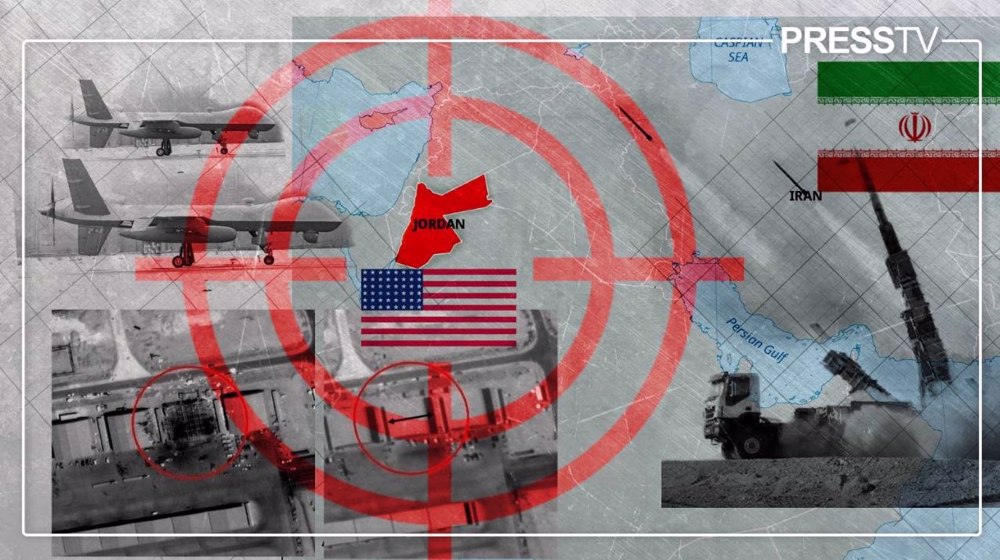
Iran’s crushing strike on US base in Jordan signals capability and will to impose costs on aggressor
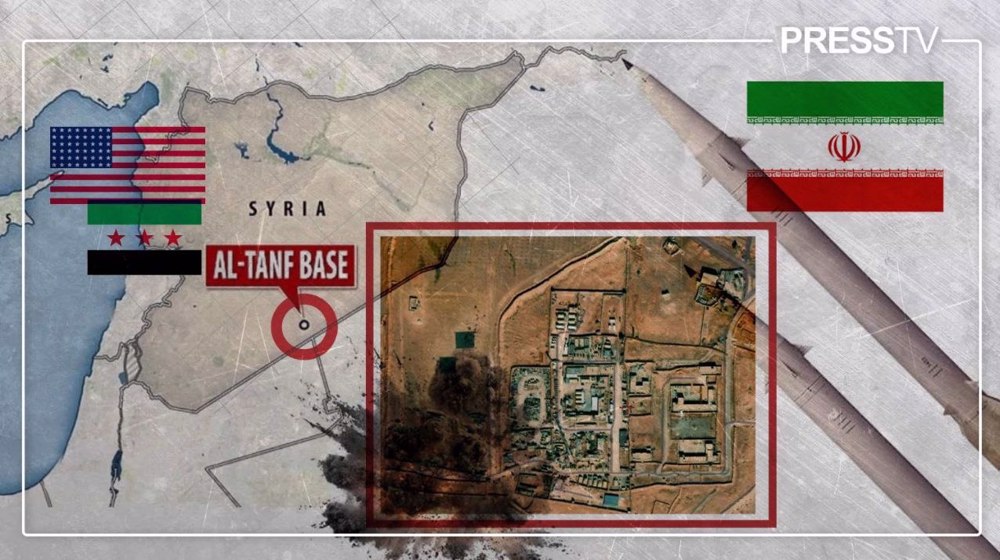
IRGC's Al-Tanf strike destroys US military assets, sends clear message to US and its regional allies
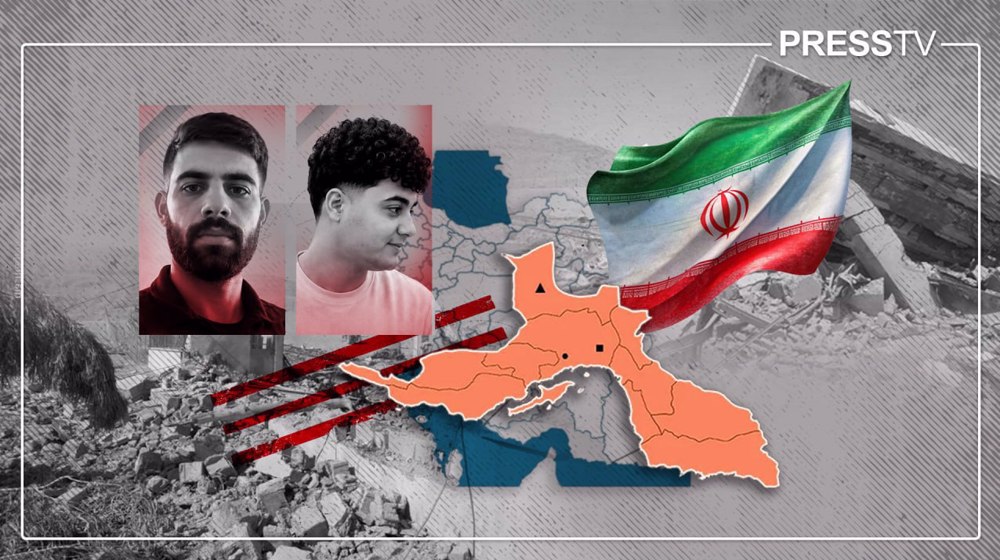
Killing of environment ranger’s family in missile strike reveals true nature of US war against Iran


IRGC vows to teach US an ‘unforgettable lesson’
Pezeshkian, Qalibaf congratulate Spain on FIFA World Cup championship
Iran has mastered the art of seeing through US games: Parliament speaker
Khalil al-Hayya elected new head of Hamas political bureau
Iran’s crushing strike on US base in Jordan signals capability and will to impose costs on aggressor
Yemen imposes naval blockade against Saudi Arabia in tit-for-tat move
Iranian students win four medals at International Economics Olympiad, claim top finance award
Strait of Hormuz as strategic fulcrum: Iran’s credible deterrence and the limits of US coercion


 PressTV NEWSLETTER now
  This makes it easy to access the Press TV website