Southern Silk Road: Iran, Turkey remap Eurasian trade
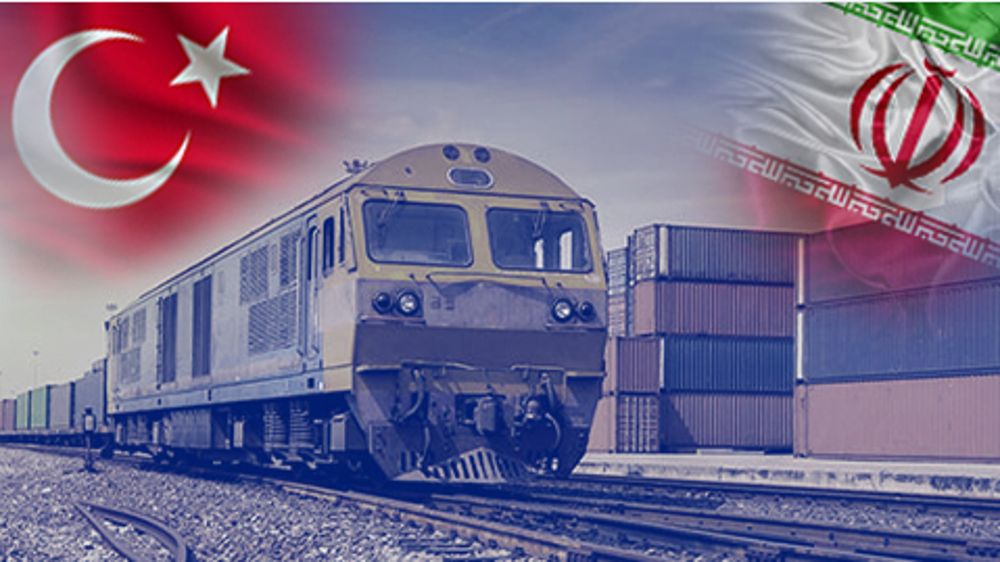
Late last month, when Turkish foreign minister Hakan Fidan visited Tehran, the two countries announced an agreement to begin construction of a new joint rail line between Iran and Turkey.
Officials described the project as a priority step toward connecting the two countries’ railways at the border and developing a strategic trade corridor linking Asia and Europe.
The agreement includes the start of work on the Marand–Cheshmeh Soraya transit line, a route of roughly 200 kilometers that will extend toward Turkey’s Aralık border region.
According to figures released by Iranian officials, the project is valued at about $1.6 billion and is planned for completion within three to four years. The line signals the return of the southern Silk Road as a serious contender in Eurasian logistics.
Rail transport is the main pillar of sustainable development in societies and a key factor in strengthening regional integration. Efficient rail transport reduces physical barriers and infrastructure bottlenecks, removes non-physical obstacles, and simplifies procedures.
Increasing the capacity of transportation infrastructure in Iran to develop transit along the east-west route, aligned with the Belt and Road Initiative strategies, is a definite policy of the Islamic Republic and holds a special place in the plans of the Ministry of Roads and Urban Development.
The development of infrastructure and removal of bottlenecks, especially in the rail sector, and lifting non-physical barriers with neighboring countries are continuously pursued within the framework of Iran’s bilateral and multilateral cooperation.
Extensive efforts are underway to develop transit cooperation on the route from China to Europe in collaboration with regional countries.
Iran, with its great and glorious civilization and abundant natural, geographical, and human capacities, has made lasting progress in developing and improving its transportation relations with neighboring countries.
With the Russia–Ukraine conflict disrupting the northern passage and the Caspian Sea adding delays to the middle one, the southern corridor has moved to the spotlight.
Rail freight between China and Europe amounts to roughly 60 million tonnes a year. Even a modest diversion of that flow, say 10%, would be enough to change the balance of transit revenues in the region.
The southern corridor offers one advantage the others cannot, which is continuity. Unlike the middle corridor, it does not require shifting containers between trains and ships across the Caspian. And unlike the northern line, it is relatively insulated from sanctions, warfare and political unpredictability.
By stitching together the Marand–Maku–Bazargan axis and pushing directly into eastern Turkey, the project fills a structural gap between two of the region’s largest rail networks.
Once connected, freight could travel from western China to Europe without the interruptions that currently slow transit across the southern arc.
That goal is reinforced by ongoing moves toward tariff simplification along the east-west corridor. A growing set of regional agreements aims to standardize rail charges and reduce dwell times at borders.
The strategy is already gaining traction amid the uptick in China-origin trains entering Iran this year, far more than in the previous several years combined. Since the start of this year, the fortieth freight train from China is now entering Iran, compared with just seven trains over the entire previous seven years.
A functioning southern route would position Iran and Turkey as the central hinge in a broader Eurasian transport system.
Transit revenue, unlike oil exports, is less vulnerable to external pressure. Both countries see the corridor as a way to secure a place in Beijing’s Belt and Road logistics map at a time when China is recalibrating its rail strategy.
The investment also has multiplier effects. Better rail infrastructure tends to stimulate trade in adjacent industries such as warehouse services, cold-chain logistics, customs operations and cross-border trucking.
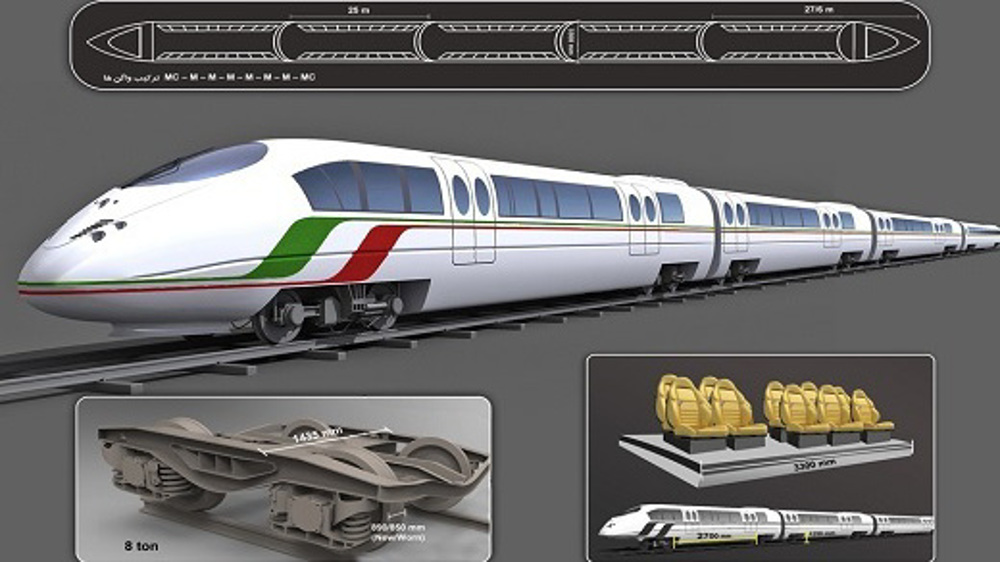
A more intensive traffic flow between Iran and Turkey also lays the groundwork for future passenger links. Rising cross-border tourism and business travel make such expansions plausible in the longer run.
Another element of the emerging picture is the revival of the Istanbul–Tehran–Islamabad (ITI) rail service, scheduled to reopen in January 2026.
Combined with the Iran–Turkey connection, the ITI route deepens the web of continental rail lines that anchor the southern perimeter of Eurasia, with south-central Asia beginning to knit itself together through infrastructure.
Longer shipping times through the Suez Canal, cost uncertainty in global container markets and the reconfiguration of Eurasian supply chains have all strengthened the case for alternative land routes.
In that context, the Marand–Cheshmeh Soraya line stands out as a strategic upgrade to a route that already exists. If the project stays on schedule, it will create the missing link in a 2,000-year-old trade artery.
In short, the southern corridor through Iran is the safest and most cost-effective route for transporting rail cargo from China to Europe.
By completing the 200-kilometer stretch, it will become a cornerstone of Eurasian connectivity, turning geography into economic leverage and opening new avenues for growth across the region.
Press TV’s website can also be accessed at the following alternate addresses:
Iran, Russia agree to fast-track strategic north–south corridor
Imam Reza (AS) holy shrine begins accepting crypto donations
Iran offering aircraft maintenance services to Venezuela: Aviation chief



 This makes it easy to access the Press TV website