US renewed attacks on Iran after being shaken by mass funeral for martyred Leader: Analyst
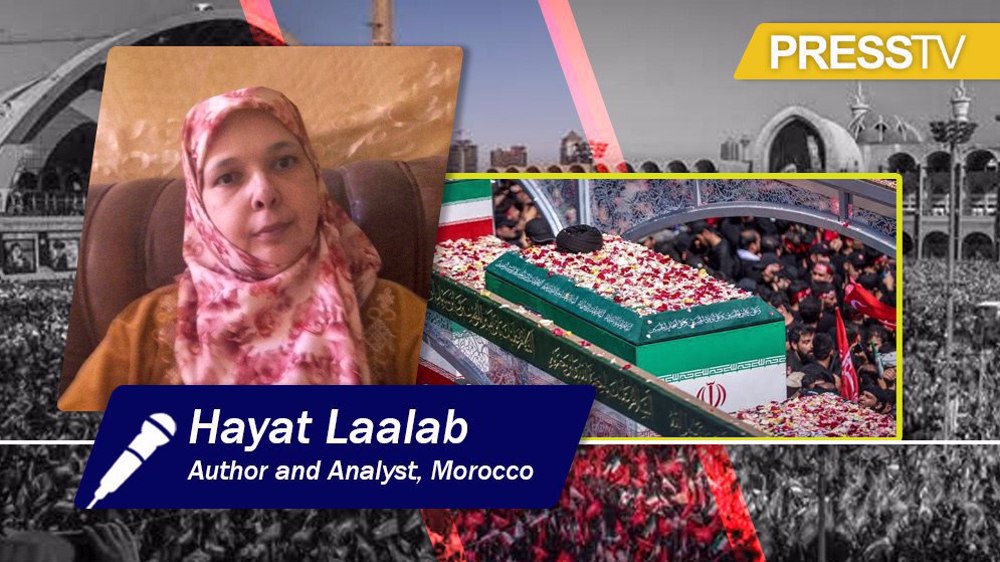
By Press TV Website Staff
The United States resumed military aggression against Iran after being shaken by the massive turnout at the multi-city funeral for Ayatollah Seyyed Ali Khamenei, says a Moroccan analyst.
Speaking to the Press TV website, Hayat Laalab, a political commentator and author, said the unprecedented public participation in the week-long funeral ceremonies across Iran and Iraq shattered Washington's expectations of internal pressure for so-called “regime change”.
She noted that the millions-strong funeral processions for the martyred Leader of the Islamic Revolution carried political and strategic messages that reached well beyond Iran's borders.
“The United States and the forces of global arrogance were shocked by the massive turnout of the Iranian people at the funeral of their martyred leader," she said.
"This shock was the main reason that compelled the US to attack parts of Iran again. Those repeated attacks came after they lost hope that the Iranian people would move to change the Islamic system.”
Her remarks came after historic funeral ceremonies for Ayatollah Khamenei and members of his family, who were martyred in a terrorist attack carried out by the US and the Israeli regime on February 28.
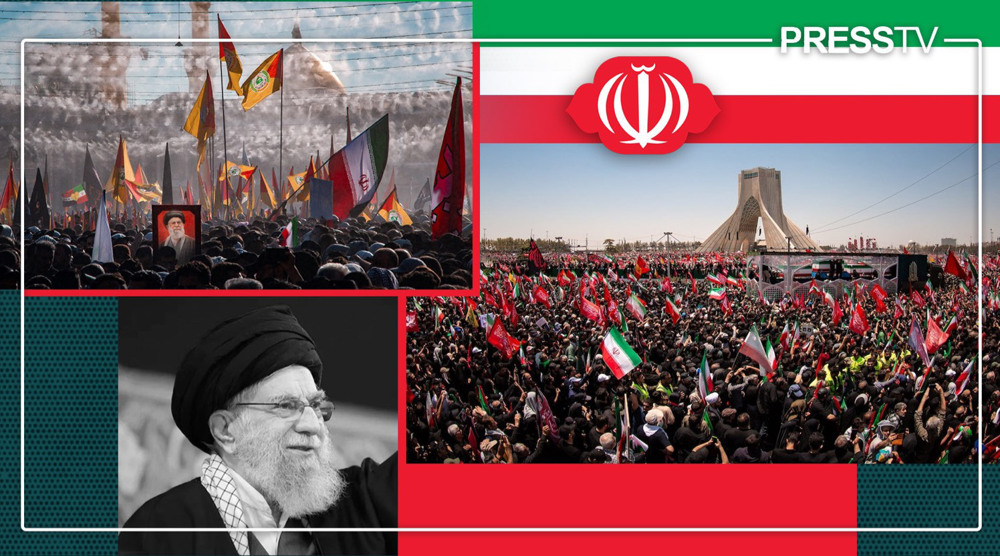
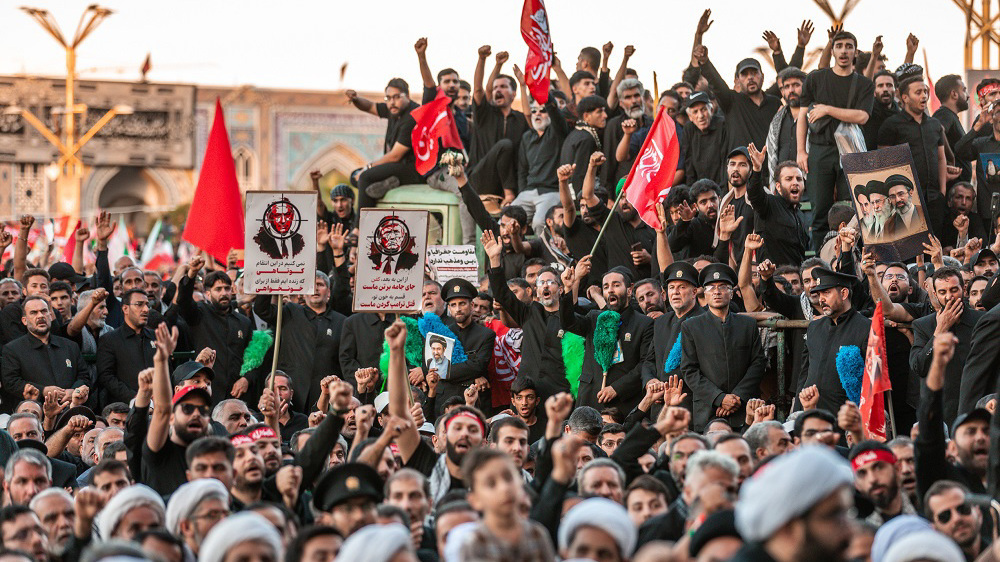
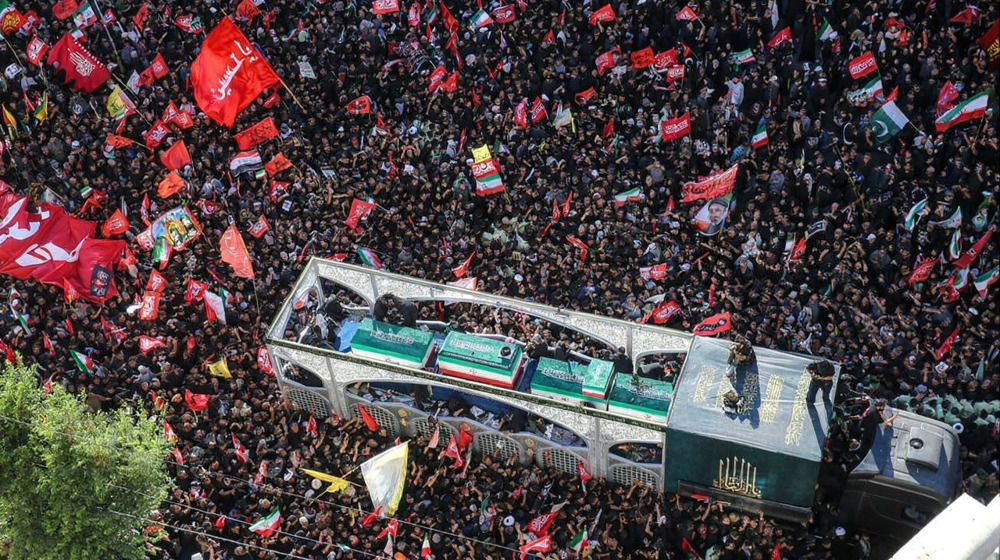
The six-day funeral and farewell ceremonies spanned Tehran, Qom, Najaf, Karbala, and Mashhad. An estimated 43 million people took part in the funeral processions across Iran and Iraq, making it the largest funeral gathering in recorded history.
Even before the burial ceremony in the holy city of Mashhad, the US military, acting on orders from senior leadership, resumed its attacks on Iranian soil since last Wednesday to illegally and forcibly enable maritime traffic through the Strait of Hormuz.
✍🏻 Viewpoint - From Strait of Hormuz to Bab al-Mandeb: Iran’s blueprint for new regional order after US breaks MoUhttps://t.co/NBy87juUjY pic.twitter.com/YUhJx8Jccj
— Press TV 🔻 (@PressTV) July 14, 2026
The Moroccan author noted that the unprecedented turnout at the funeral processions demonstrated unity within Iran while sending a message to countries that have sought to bring about so-called "regime change" in the Islamic Republic.
"The mass funeral of Ayatollah Seyyed Ali Khamenei in Iran and Iraq carried many messages, including that the Iranian people, despite their different political currents and factions, support the Islamic system and their leaders," Laalab told the Press TV website.
According to her, the scale of public participation angered the "global arrogance" as well as exiled Iranian monarchists who work in tandem with the country's enemies.
Laalab also highlighted the participation of millions of Iraqis in the funeral ceremonies in the holy cities of Najaf and Karbala, describing it as "a strong slap" to enemies in Iraq who have been trying to create divisions between the two friendly and brotherly nations of Iran and Iraq.
Asked why people from different national, religious and social backgrounds attended the ceremonies, Laalab said the broad participation was entirely expected.
She said Martyr Ayatollah Khamenei founded the World Forum for Proximity of Islamic Schools of Thought and consistently supported unity among Muslims worldwide, working to encourage Islamic sects to set aside their differences.
Laalab also pointed to his religious decree prohibiting insults or attacks against Sunni religious symbols, saying it earned him broad respect among followers of different Islamic schools.
She said the martyred Leader repeatedly warned that one of the main objectives of the enemies of the Muslim world was to provoke sectarian conflict. For that reason, she added, he sought to ensure that Iran's diverse ethnic communities lived in security and peace under the Islamic system.
✍️ Viewpoint - Silent referendum: Martyr Leader’s historic funeral shatters Western narratives of Islamic Republic
— Press TV 🔻 (@PressTV) July 14, 2026
By Maryam Bashirpour
Read more: https://t.co/Zasmw4vGyJ pic.twitter.com/RXqG6kW4ym
"The participation of different sects and ethnic groups in the funeral of the late Ayatollah Seyyed Ali Khamenei was not accidental," she said. "They know very well that the religious and political arena has lost one of the great figures of the Islamic Ummah, and therefore it is only natural that a funeral worthy of his stature should be held."
Turning to the international implications, Laalab added that Washington and Israel have failed to understand the close relationship between Iran's political system and its people.
"Anyone who harms the Islamic system is in fact harming the people, and vice versa," she said.
The United States, she maintained, was shocked by the scale of public participation in the funeral. That shock became "the main reason" behind renewed American attacks on parts of Iran after Washington abandoned hopes that Iranians would move to change the country's political system, she added.
Laalab also noted that US allies in West Asia had provided Washington with inaccurate assessments about Iran, particularly regarding the relationship between the Islamic system and the Iranian people.
In her view, the funeral processions ultimately challenged those assessments by presenting a powerful display of solidarity between the Iranian public and the country's leadership.
Martyred Leader’s massive Iraq funeral showed Iran-Iraq unity, dealt blow to US plots: Analyst

Martyred Leader championed independent foreign policy, good neighborly relations: Former FM

Ayatollah Khamenei’s spiritual leadership, commitment to justice will continue to inspire: Scholar



Iran military now stronger than during 12-day war: Senior commander
Resistance front will drag US, Israel into 'quagmire': Iranian military advisor
IRGC fires warning shots at two ships trying to illegally pass Strait of Hormuz
Scientific excellence amid war: Iran’s Olympiad students win maths championship, five physics medals
How Bab el-Mandeb closure could send oil to $200 and trigger a global economic shock
US renewed attacks on Iran after being shaken by mass funeral for martyred Leader: Analyst
Israel’s Rafael Arms engineer injured in Iranian missile strike dies of wounds
Iranian Army backs IRGC, slams UK Parliament's banning of elite force




 PressTV NEWSLETTER now
  This makes it easy to access the Press TV website