Tederox and Padynex: Iran’s entry into elite club of antibody-drug conjugate manufacturing
By Ivan Kesic
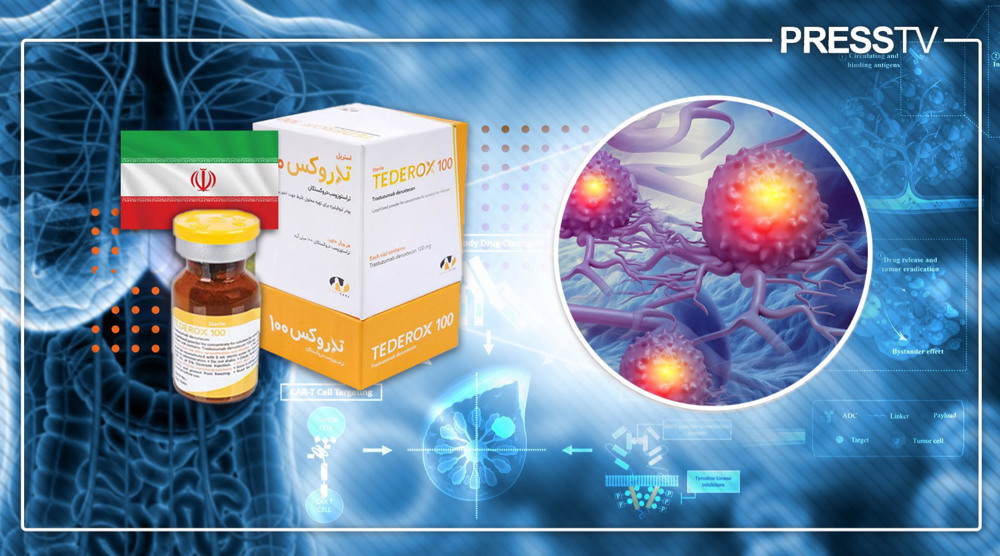
By successfully developing Tederox, a state-of-the-art antibody-drug conjugate (ADC) targeting HER2-positive cancers, Iran has joined a select group of countries that possess the capability to produce one of the most technologically sophisticated classes of oncology therapeutics in modern medicine.
Antibody-drug conjugates represent the zenith of precision oncology, merging the targeting precision of monoclonal antibodies with the potent cytotoxic effects of highly efficacious chemotherapeutic agents.
Often likened to "guided missiles" against cancer, these complex biologics are engineered to deliver toxic payloads directly to tumor cells while minimizing damage to healthy tissue.
Until recently, ADC manufacturing remained the exclusive purview of a handful of pharmaceutical giants in the West and East Asia.
That paradigm shifted in 2021, when the Iranian knowledge-based enterprise Nano Daru Pajoohan Pardis unveiled Padynex, the nation’s first domestically produced ADC, based on trastuzumab emtansine, the same active principle underlying Kadcyla.
Three years later, in November 2024, the company announced the production of Tederox, a second-generation ADC built on trastuzumab deruxtecan, the technological backbone of the globally acclaimed drug Enhertu.
Collectively, these two therapeutics signify far more than import substitution; they embody a fundamental technological leap, positioning Iran among the rare few countries proficient in the antibody engineering, linker chemistry, payload synthesis, and aseptic manufacturing essential to producing these life-saving medicines.
Understanding antibody-drug conjugates
Antibody-drug conjugates rank among the most consequential advances in cancer therapy over the past two decades. The underlying concept is elegant in its simplicity, yet formidable in execution. Conventional chemotherapy agents are highly effective against rapidly dividing cells but lack the ability to differentiate malignant from healthy tissue.
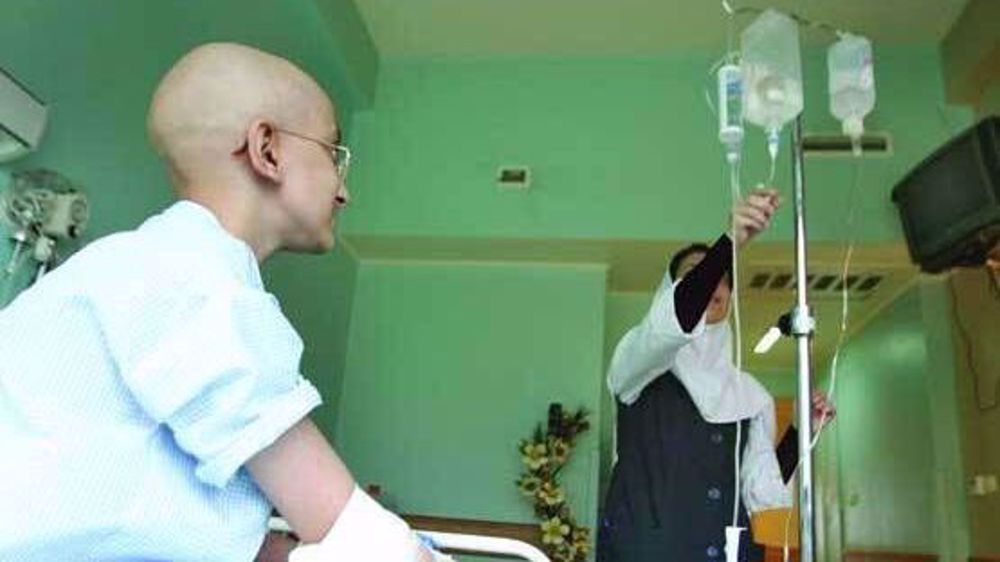
This action gives rise to the severe side effects - hair loss, nausea, immunosuppression, and organ damage - that render traditional chemotherapy so arduous for patients.
ADCs surmount this challenge through a refined biological design. A monoclonal antibody, engineered to recognize a specific protein overexpressed on cancer cell surfaces, acts as a targeted delivery vehicle. This antibody is chemically conjugated to a highly potent cytotoxic drug, or payload, via a specialized chemical bridge known as a linker.
Following intravenous administration, the ADC navigates the bloodstream and selectively binds to its target receptor on the cancer cell. The cell subsequently internalizes the entire complex; once inside, the linker facilitates the release of the cytotoxic payload, destroying the cell from within.
The technical hurdles in ADC development are immense. The antibody must be produced with exceptional purity and consistency using mammalian cell culture systems. The linker must be stable enough to avert premature drug release in circulation, which could induce systemic toxicity, yet labile enough to ensure efficient payload delivery once internalized.
The payload itself must be sufficiently potent to eradicate cancer cells at extremely low, typically picomolar, concentrations. The conjugation process must attach the drug to the antibody at precisely controlled ratios, generally two to eight drug molecules per antibody, while preserving the antibody’s binding affinity.
Moreover, the entire manufacturing workflow must adhere to rigorous quality control standards to guarantee batch-to-batch consistency and patient safety.
Given this intricate constellation of challenges, it is unsurprising that only a handful of nations have successfully cultivated domestic ADC production capabilities.
Until recently, the global ADC landscape was dominated by major pharmaceutical powers: the United States, Japan, Germany, Switzerland, and China. Iran’s successful entry into this elite circle thus constitutes a technological achievement of considerable consequence.

Tederox: Iran’s second-generation ADC for HER2-positive cancers
Tederox, unveiled publicly at the Iran Nano 2024 Exhibition in Tehran, is a trastuzumab deruxtecan biosimilar, the Iranian version of the internationally acclaimed drug Enhertu.
The drug combines the monoclonal antibody trastuzumab, which targets the HER2 receptor overexpressed in certain aggressive cancers, with the cytotoxic payload deruxtecan, a topoisomerase inhibitor that induces DNA damage and apoptosis in cancer cells.
The drug is indicated for HER2-positive metastatic breast cancer, particularly in patients who have previously received trastuzumab and a taxane, as well as for adenocarcinoma of the stomach and gastroesophageal junction.
The international scientific community has recognized trastuzumab deruxtecan as one of the most significant oncology advances of the past decade.
Clinical studies have demonstrated that the drug substantially improves progression-free survival and overall survival in HER2-positive breast cancer patients, including those who had progressed on earlier-generation ADCs such as trastuzumab emtansine.
The drug’s innovative linker design allows for a higher drug-to-antibody ratio and a “bystander effect,” meaning that the cytotoxic payload can diffuse into neighboring cancer cells even if they do not express the HER2 receptor, enhancing the drug’s efficacy in heterogeneous tumors.
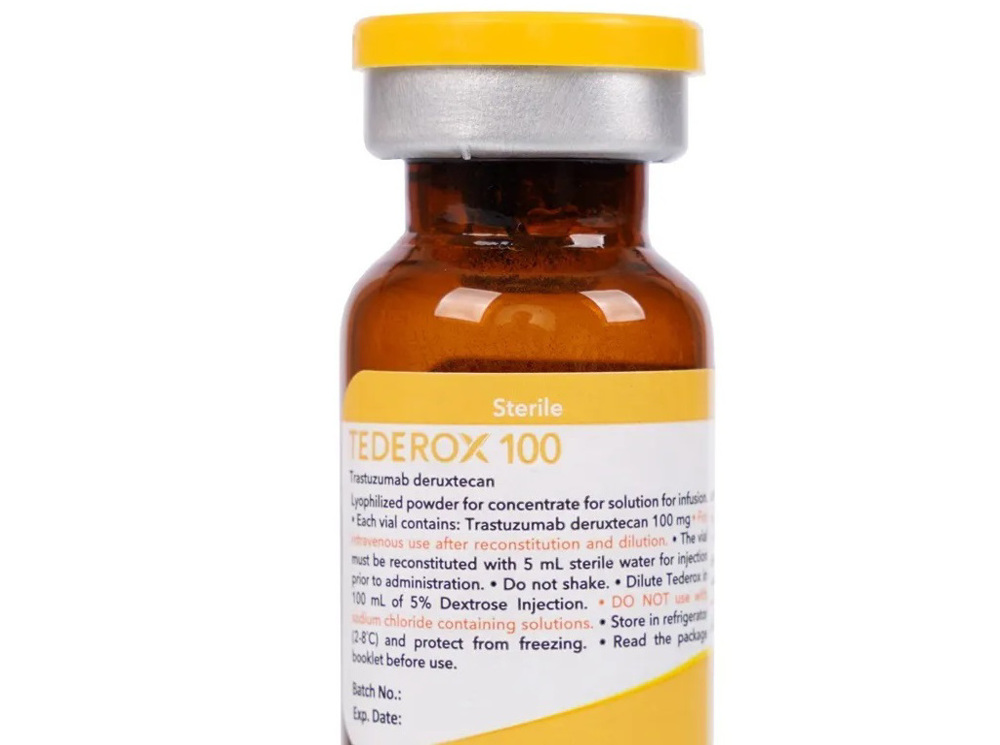
According to Iranian pharmaceutical sources, Tederox is available as a sterile lyophilized powder for intravenous injection, with each vial containing 100 milligrams of the active ingredient.
The drug is administered as a 90-minute intravenous infusion following reconstitution. Its development required mastery of complex technologies, including monoclonal antibody production, linker chemistry, conjugation technology, and sterile manufacturing.
The company’s researchers have created a stable and intelligent link between the antibody and the cytotoxic compound, dramatically increasing treatment effectiveness while minimizing systemic side effects.
The drug’s clinical significance extends beyond breast cancer. Trastuzumab-based ADCs have also shown efficacy in HER2-positive gastric and gastroesophageal cancers, as well as off-label applications in certain types of colorectal cancer, uterine serous carcinoma, biliary tract cancers, salivary gland tumors, and non-small cell lung cancer.
The presence of HER2 overexpression in these malignancies makes them potential targets for Tederox therapy, offering hope to patients with cancers that have proven resistant to conventional treatments.
Padynex: first step into ADC technology
Padynex, unveiled in 2021, preceded Tederox as Iran’s first domestically produced antibody-drug conjugate. The drug is based on trastuzumab emtansine, the same active principle as the international drug Kadcyla.
It combines trastuzumab with the cytotoxic payload DM1, a derivative of maytansine that disrupts microtubule function and induces cell death in HER2-positive cancer cells.
The drug is indicated for HER2-positive metastatic breast cancer after prior trastuzumab and taxane therapy.
From a technological perspective, Padynex represented a critical milestone for Iran’s pharmaceutical industry.
Manufacturing trastuzumab emtansine requires mastery of all the same complex technologies as Tederox, though with an earlier-generation linker and payload design.
The expertise gained in developing Padynex—cell culture systems, antibody engineering, conjugation methods, purification, and regulatory validation—provided the foundation upon which the company later developed Tederox.
In that sense, the two drugs are best understood not as separate achievements, but as successive steps in a long-term effort to build indigenous expertise in one of the most advanced fields of modern oncology.
Padynex is available as a sterile lyophilized powder in 100-milligram and 160-milligram vials, administered as a 30-minute intravenous infusion following reconstitution.
The drug is currently covered by Iranian health insurance, making it accessible to patients at a fraction of the cost of its international equivalent.
The company has reported that more than 27 pharmaceutical registration licenses have been obtained across its product portfolio, reflecting the scale of its research and development activities.

Human impact: transforming cancer care in Iran
The introduction of Padynex and Tederox has profound implications for Iranian cancer patients. HER2-positive breast cancer is an aggressive subtype that accounts for approximately 15 to 20 percent of all breast cancer cases.
It is characterized by rapid growth, higher rates of recurrence, and historically poorer outcomes compared to other breast cancer subtypes.
Before the availability of HER2-targeted therapies, patients with HER2-positive breast cancer faced a grim prognosis.
The introduction of trastuzumab in the late 1990s dramatically improved outcomes, and the subsequent development of ADCs has further extended survival.
In Iran, breast cancer is the most common cancer among women. According to epidemiological data, the age-standardized incidence rate of breast cancer in Iran has been increasing, with a significant proportion of cases being diagnosed at younger ages compared to Western populations.
This demographic profile, combined with the aggressive nature of HER2-positive disease, means that access to advanced therapies such as ADCs is critically important.
Prior to domestic production, Iranian patients had limited access to trastuzumab deruxtecan and trastuzumab emtansine.
The drugs were either unavailable due to sanctions, prohibitively expensive for most patients, or required complex importation procedures that delayed treatment.
The international price of trastuzumab deruxtecan is approximately 3,000 US dollars per vial, making a full treatment course unaffordable for the vast majority of Iranian patients. The domestic production of Tederox and Padynex has changed this reality.
The price of a vial of Tederox is approximately 17 million Tomans, which at the time of its launch was less than 10 percent of the cost of its foreign equivalent.
Padynex is priced even more affordably, with the patient co-payment under insurance coverage amounting to less than three million Tomans per treatment course.
The overall foreign-exchange savings from domestic production have been substantial, preventing the outflow of millions of dollars that would otherwise have been spent on imported drugs.
More importantly, the availability of these drugs at affordable prices has meant that thousands of Iranian patients who would otherwise have faced limited or no treatment options now have access to some of the most advanced cancer therapies available anywhere in the world.
The development of Tederox required an investment of approximately four years of research and development, reflecting the complexity of ADC manufacturing.
The company has received significant financial support, including a tax credit of 48 billion Tomans allocated in 2025 to accelerate the completion and supply of the drug.
The company has also been recognized as a Knowledge-Based Gazelle, one of the top 12 such companies out of 10,000 knowledge-based enterprises in Iran, reflecting its million-dollar exports, creation of more than 200 jobs, and sustained sales growth over five years.
✍️ Feature - Iran Cancer Institute: West Asia's largest cancer hospital marks a giant leap in advanced oncology care
— Iran First (@IranFirst_PTV) June 5, 2026
It offers advanced treatment, research and cutting-edge tech while expanding Iran’s international standing.
By Ivan Kesic#IranFirsthttps://t.co/kwi5KOEiF2
How Tederox compares to international ADCs
When compared to its international counterparts, Tederox demonstrates comparable performance characteristics and in some respects highly competitive.
The reference drug, trastuzumab deruxtecan, was originally developed by the Japanese pharmaceutical company Daiichi Sankyo in collaboration with AstraZeneca.
Enhertu, as it is marketed internationally, has been approved in the United States, Europe, Japan, and many other countries, and is considered one of the most important oncology drugs of the past decade.
The Iranian product shares the same mechanism of action, indications, and dosage form as the international reference. It uses the same monoclonal antibody, trastuzumab, and the same cytotoxic payload, deruxtecan.
The linker technology, which is critical to the drug’s performance, has been developed domestically to achieve stable conjugation and efficient payload release.
The company has publicly stated that the drug significantly delays disease recurrence and progression, improving patient outcomes by factors that align with the international clinical data.
The clinical effectiveness of trastuzumab deruxtecan is well-documented in international literature.
The drug has demonstrated substantial improvements in progression-free survival and overall survival in HER2-positive breast cancer patients, including those who had previously progressed on trastuzumab emtansine.
It has also shown efficacy in HER2-low breast cancer, a category of disease that was previously not considered treatable with HER2-targeted therapies.
The drug’s bystander effect, where the payload diffuses into neighboring cancer cells, enhances its activity in heterogeneous tumors and may explain its superior efficacy compared to earlier-generation ADCs.
While the Iranian product has not been subjected to the same large-scale clinical trials as the international reference, it has received the necessary regulatory approvals and ethical clearances for clinical use in Iran.
The company is preparing to enter the third phase of clinical studies following the receipt of the ethics code.
The drug has been manufactured in compliance with international quality standards and has received the necessary registrations from Iranian health authorities.
🇮🇷 Best of ‘Iran First’ in 2025, the year of major Iranian breakthroughs
— Iran First (@IranFirst_PTV) January 7, 2026
Iran in 2025 advanced medicine, industry, energy, education and space science, achieving big breakthroughs from cancer diagnostics to lunar research.
By Ivan Kesic#IranFirst🇮🇷 pic.twitter.com/P0zpKlqqMw
The fact that the drug is already in production and being distributed to selected pharmacies and hospitals indicates that the regulatory and quality requirements have been satisfied.
The primary advantage of Tederox over the international reference lies not in superior clinical efficacy but in accessibility. The price differential, less than 10 percent of the international price, makes the drug available to a far broader patient population.
This is not a marginal improvement but a transformative one. A drug that is scientifically established and technologically sophisticated, but priced beyond the reach of the patients who need it, is of limited public health value.
A drug that delivers the same therapeutic benefit at a fraction of the cost has the potential to change outcomes for an entire population.
The development of Tederox and Padynex places Iran in a unique position within the region. No other country has demonstrated the ability to manufacture antibody-drug conjugates domestically.
The technological expertise required to produce these drugs is not easily replicated, requiring years of investment in research infrastructure, specialized training, and sophisticated manufacturing facilities.
Iran’s achievement in this field is therefore not only a matter of national pride but also a potential foundation for regional cooperation and export.
The progression from Padynex to Tederox reflects the maturation of Iran’s biopharmaceutical capabilities. The first-generation ADC demonstrated that the country could produce a complex biological medicine.
The second-generation ADC demonstrated that the country could keep pace with the rapid evolution of global oncology, moving from trastuzumab emtansine to trastuzumab deruxtecan within three years.
This rate of technological progression is comparable to that seen in leading pharmaceutical nations and suggests that Iran’s biopharmaceutical sector has reached a level of sophistication that allows it to compete in the most advanced areas of drug development.
Tederox and Padynex are evidence that the scientific and engineering talent necessary to produce the most advanced medicines in the world can be developed and sustained even under challenging conditions.
The successful development of these drugs has required the collaboration of specialists in medicinal chemistry, nanotechnology, and biotechnology, working together to solve problems that were previously considered beyond the country’s capabilities.
The result is a domestic pharmaceutical industry that is increasingly self-sufficient in the production of cancer medicines that were, until recently, only available from a handful of multinational corporations.
Iran’s space program pressing forward with renewed momentum: Minister

Iran ranks fourth globally in advanced aircraft engine research, outpacing major aerospace powers

Iran leads Islamic world in microelectronics science, ranks among world's top 16



Iran, Oman discuss new arrangements to manage Strait of Hormuz
US congressman ‘deeply alarmed’ by Israel’s abduction of Palestinian student
Iran’s deputy FM announces successful conclusion of technical talks
Speaker Qalibaf: Strait of Hormuz will never return to pre-war status
Pakistan defense minister: Iran-US agreement marks demise of Netanyahu
Palestinian rights group calls for release of pregnant women held by Israel
Iran committed to diplomacy under international law, Pezeshkian tells Erdogan
Iran to continue IAEA cooperation under existing framework, SNSC decision: Baghaei



 PressTV NEWSLETTER now
  This makes it easy to access the Press TV website