Iran will never surrender to threats, pressure: President Pezeshkian

Iranian President Masoud Pezeshkian has reaffirmed that the Islamic Republic will never bow to threats, pressure, or military aggression.
Speaking at a memorial ceremony for the martyred leader of the Islamic Revolution, Ayatollah Sayyed Ali Khamenei, attended by families of victims of the recent imposed war on Iran, Pezeshkian said the Iranian people had demonstrated their resilience through their support for the Islamic Republic and its armed forces.
The president stated that the widespread participation of Iranians in nightly rallies held since the US-Israeli aggression in late February helped defeat enemy attempts to weaken the country and break the will of the nation.
The public response, he said, underscored the importance of social cohesion as a pillar of national strength.
“It showed that Iran's social capital is the greatest support for the country's security and progress,” Pezeshkian said.
“One of the most important components of a country's power is internal unity and internal cohesion.”
He stated that Iran’s adversaries have consistently sought to create divisions within society, maintaining that no nation can be forced into surrender through military threats or external pressure alone.
Paying tribute to the martyred Leader, Pezeshkian highlighted the late Leader’s strategic role in managing the country’s affairs, noting that the he had allowed the talks to continue to end the “no war, no peace” situation.
“We must get out of this ‘no war, no peace’ situation. War is definitely not in the country's interest, but that doesn’t mean that if they want to violate our dignity, our soil and our land, we will surrender or back down. Let them not even dream of that,” he said.

The US and Israel launched a fresh round of aerial aggression against Iran on February 28, some eight months after they carried out unprovoked attacks on the country.
Iran responded swiftly, launching waves of missile and drone strikes against the Israeli-occupied territories as well as US bases and interests across the region.
On April 8, forty days into the war, a Pakistan-brokered temporary ceasefire between Iran and the US took effect and was later extended unilaterally by Washington.
The ceasefire opened the way for negotiations in the Pakistani capital, Islamabad. However, the talks ended without an agreement, with discussions stalling amid Washington’s maximalist demands and insistence on unreasonable positions.
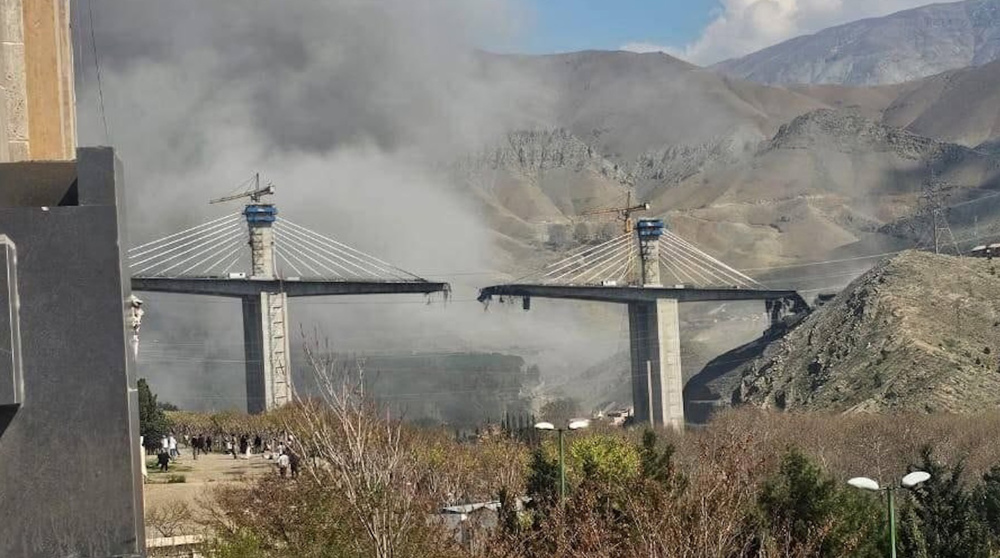
Pezeshkian: Trump’s threat to strike Iran’s infrastructure shows ‘desperation, not strength’
Iran vows to protect its rights in response to ‘flawed’ IAEA resolution

Iran MP blasts US for quick blame on copter crash, silence on school massacre



US committed 'calculated war crime' by targeting water infrastructure in south Iran: FM spox
US continues its unwarranted aggression against Iran with fresh strikes in south
India summons US diplomat, lodges 'strong protest' after tanker strike off Oman
‘Act of state terrorism’: US attack on reservoirs in south Iran cuts off drinking water to thousands
Iran says US must avoid using 2026 FIFA World Cup to settle grudges
Iran's armed forces vow ‘more crushing’ response to US threats
Pezeshkian: Trump’s threat to strike Iran’s infrastructure shows ‘desperation, not strength’
No security for Zionists anywhere if Lebanon is not secure: Hezbollah MP




 PressTV NEWSLETTER now
  This makes it easy to access the Press TV website