Iran’s strikes on Zionist entity in defense of Lebanon and the recalibration of regional deterrence

By Press TV Strategic Analysis Desk
In the volatile and unpredictable calculus of West Asian geopolitics, assumptions are the graveyards of strategy. For months, a dangerous hypothesis had taken root in Western and Israeli war rooms that Iran, weary from sanctions and war, would respond to provocations only below the threshold of full-fledged armed confrontation.
The missile strikes launched by Iran on the occupied territories – executed in direct retaliation for the Zionist regime’s violation of the ceasefire and its assault on the Dahiyeh suburb of Beirut – were not merely a military operation but a strategic earthquake.
It effectively signals a structural shift in Iran’s strategic doctrine of deterrence, escalation management, and regional engagement with adversaries.
The operation is best understood as a calibrated demonstration of resolve, one that underscores a central message: Iran’s response architecture is now decisively swift, firmly calibrated, and operationally immediate, particularly when core red lines are crossed.
This operation shattered every previous assumption. It was a public, operational declaration that Iran has not only redefined the rules of engagement but has irrevocably linked its own path to ending the war with the security of Lebanon and the people of Lebanon.
The message is that any future aggression against Lebanese territory will be met with an equally decisive, firm, and swift Iranian military response.
Operationalizing solidarity – Lebanon as Iran’s strategic precondition
For years, the concept of the “Axis of Resistance” was often dismissed by Western analysts as a loose coalition of convenience, a rhetorical flourish rather than a military reality.
Iran’s missile response on Sunday and Monday rendered that argument obsolete. The first and most profound implication of the operation is the practical and operational establishment of Iran’s first condition for ending the war imposed on it by the American-Israeli war machine: the indivisible unity of the resistance front.
Previously, Tehran’s insistence that any end to the imposed war must automatically entail an end to Israeli aggression on all resistance fronts, particularly Lebanon, was often treated as aspirational. It existed on paper, in diplomatic notes and speeches. However, the decisive operation against the occupied territories marked a radical shift from rhetoric to reality.
With this operation, Iran demonstrated that it is not only willing to threaten consequences for its allies but is fully prepared to re-enter a state of war to enforce those preconditions.
This is a transformation of immense consequence. By launching a significant missile barrage in response to a dastardly attack on Dahyieh – a Hezbollah stronghold in Beirut – Iran proved that its commitment to Lebanon is not transactional but existential. Tehran is signaling to Washington and Tel Aviv that the traditional strategy of decoupling is dead.
In the past, the United States had excelled at compartmentalizing battlefields, pressuring one front while offering ceasefires on another. Iran has now closed that loophole. The operational message now is that you cannot bomb Beirut and negotiate with Tehran. You cannot massacre civilians in the Bekaa Valley and expect Iran to remain passive.
This principle extends beyond Lebanon to other strategic arenas as well. The same emphasis on sovereignty and response applies to the Strait of Hormuz. The decisive Iranian responses to American naval harassment in recent weeks – culminating in a wide-scale, assertive reply – serve as identical proof of serious intent.
Iran has demonstrated that its red lines are not bluff. Whether in the waters of the Persian Gulf or the hills overlooking Beirut, the Islamic Republic has shown a consistent willingness to escalate proportionally and decisively. The enemy must now understand that pressuring one front is pressing all fronts and Iran is ready for all scenarios.
✍️ Analysis - The indivisible front: Why Iran rejects – and warns against – any war-ending deal that excludes Lebanon
— Press TV 🔻 (@PressTV) June 7, 2026
By Press TV Strategic Analysis Deskhttps://t.co/v5xGTU2Cb0
Shattering the “below threshold” hypothesis – The new risk paradigm
Perhaps the most critical strategic achievement of Iran’s response is the complete demolition of the enemy’s core assumption that Iran would not respond, or would only respond in a symbolic, “below the threshold of war” manner.
This hypothesis was the bedrock of Israeli and American limited provocations. The thinking was that an airstrike on Dahiyeh, or a targeted assassination, would elicit a sluggish and performative condemnation, allowing the war to simmer without boiling over.
Iran has permanently discarded that calculation. By choosing to re-enter active warfare as an operational option, Tehran opted for the highest possible level of risk tolerance. In international relations, the ultimate risk is full-scale war. Iran looked at that risk and did not flinch. By doing so, it effectively stripped the enemy of all leverage that existed below that threshold.
The menu of options available to the White House and the Netanyahu regime has been drastically reduced. They can no longer rely on “controlled escalation” or “limited strikes.” Every action against Lebanon now – from Beirut to South Lebanon – carries the credible risk of triggering a direct and decisive Iranian military response.
Consider the psychological sequence of the episode. The Zionist regime’s attack on Dahiyeh was comparatively limited. It was a probe to gauge the temperature of Iranian resolve. Would Tehran issue a statement? Would it delay? Would it ask Hezbollah to respond alone? The answer came almost immediately. The swift, firm, and overwhelming missile barrage was a message of pure strategic value that you do not have permission to test our will.
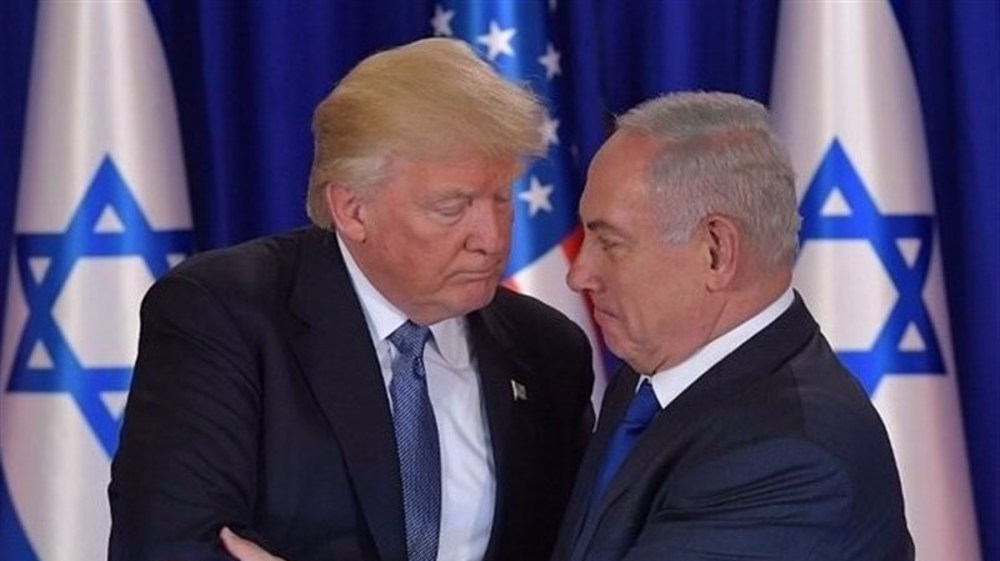
This redefinition of risk has profound implications for the Trump administration’s maneuvering. Trump, who had remained conspicuously silent when Zionist media outlets boasted of American coordination regarding the Dahiyeh attack, was forced into a chaotic retreat following Iran’s response.
He publicly disavowed the attack, describing it as a “bad act.” This was not merely diplomatic awkwardness but the visible collapse of a strategic bluff. Trump had intended to play a dual game: if the attack succeeded and Iran cowered, he would have invalidated one of Tehran’s core negotiating conditions. If Iran responded decisively, he planned to blame Netanyahu and reposition himself as the “good cop” ready for negotiations.
Iran’s response blew up that badly written script. By responding with force and immediacy, Iran revealed the rift in the enemy coalition and denied the American war machine the luxury of plausible deniability. The takeaway for Washington is that Iran is willing to accept maximal risk for what America perceives as the “weakest” condition of an agreement – support for a regional ally like Lebanon.
If Iran is willing to go to war over an issue with minimal domestic popularity (from the American perspective), what will it do regarding its nuclear program, its ballistic missiles, or its sovereign rights in the Persian Gulf? The logical conclusion is terrifying for the enemy: Iran will show at least the same decisiveness, if not more, on every other issue.
✍️ Analysis: Israeli escalation in Lebanon and US adventurism in Persian Gulf test Iran's ceasefire red lines
— Press TV 🔻 (@PressTV) June 1, 2026
By Press TV Strategic Analysis Deskhttps://t.co/StXHpttO4C pic.twitter.com/KHsbbkfYMl
The coordinated trap – Exposing American-Zionist psychological war
The timing of the Dahiyeh attack was not coincidental. It occurred simultaneously with a high-profile, publicized diplomatic overture: the delivery of a written message from the Americans (via Pakistani intermediaries) addressed directly to Leader of the Islamic Revolution Ayatollah Seyyed Mojtaba Khamenei.
The overture was accompanied by unprecedented optimism from Trump regarding a potential nuclear deal, creating a false atmosphere of imminent rapprochement.
This was not diplomacy but a sophisticated psychological warfare operation designed to fracture Iran’s domestic consensus. By flooding the media with stories of a breakthrough while simultaneously bombing Iran’s ally in Lebanon, the US-Israeli axis sought to place the Iranian system in a dilemma. They wanted to force Iranian public opinion, tired of sanctions and eager for relief, to ask a toxic question: “Why should we risk a historic nuclear deal for the sake of a foreign militia in Lebanon?”
This was an attempt to separate Lebanon from Iran in the public mind. The long-term strategic goal is to hollow out the first clause of any future ceasefire agreement, making the end of the war against Iran independent of the end of aggression against Lebanon.
If Tehran had failed to respond decisively and powerfully this time, the precedent would have been set. The United States would have proven that Iranian support for the resistance is conditional, subject to the whims of domestic economic pressure.
Iran’s missile response thwarted this design completely. By striking the occupied territories forcefully at the very moment psychological pressure was peaking, Tehran sent a counter-signal: domestic public opinion, while important, does not dictate strategic doctrine. The top leadership demonstrated that the “Axis of Resistance” is not a bargaining chip to be traded for sanctions relief. It is the core of the national and regional security architecture.
Furthermore, the enemy misjudged the internal Iranian situation. Based on erroneous signals, the United States believed that sanctions had so weakened the Iranian economy that the leadership had “no choice but to negotiate at any cost.”
They saw public statements from senior officials about the necessity of a deal and interpreted them as desperation. Iran’s missile launch proved this was a catastrophic miscalculation. The Iranian decision-making apparatus is not a linear calculator of economic pain. It is a strategic actor willing to sacrifice short-term economic gain for long-term strategic survival and regional influence. By exposing this error, Iran has made it much harder for America to reduce its commitments in future negotiations.
✍️ Analysis - Beirut retreat: Credible Iranian deterrence ends US-Israeli impunity to escalate unchecked
— Press TV 🔻 (@PressTV) June 2, 2026
By Press TV Strategic Analysis Deskhttps://t.co/S154GN9KYJ
Lebanon and the regional calculus – Strategic necessity for national security
For Western analysts, the concept of risking a war with the United States to defend Lebanese soil often seems irrational. This stems from a fundamental misunderstanding of Iran’s strategic culture and the nature of asymmetric warfare.
Iran is not fighting a conventional war against a single enemy. It is engaged in a prolonged, multi-front campaign against a unified enemy coalition. In this struggle, the components of the resistance front – Hezbollah in Lebanon, the Popular Mobilization Forces in Iraq, Ansarullah in Yemen, and the resistance groups in Palestine – are not proxies but integral parts of Iran’s asymmetric defense network.
To explain this to a domestic or international audience, one must look at the geometry of power. In a conventional, regular war against an enemy with numerous allies (the US, NATO, Israel, Gulf states), Iran’s geographical and demographic position is defensive.
However, by supporting a network of allied forces surrounding Israel and American bases, Iran creates strategic depth. When Hezbollah holds thousands of precision-guided missiles on the northern border of the occupied territories, it diverts enemy resources. When Yemen closes the Red Sea, it imposes costs on Western shipping. When Iraq hosts various resistance factions, American logistics become vulnerable.
Destroying one part of this network relieves pressure on the rest. Therefore, supporting Lebanon is not charity but the destruction of a threat at a distance. As the Persian idiom goes, supporting the resistance front is like “killing the cat at the wedding party” (an act of high risk performed at a critical moment).
It is dangerous, but the celebration cannot continue without it. If Iran is negligent regarding the first clause of its security doctrine, which is the defense of its regional allies, it will fail in all subsequent clauses.
Moreover, there is a binding moral and strategic contract within the front. If Iran were to abandon Hezbollah or Hamas to the whims of the enemy in a future war, the necessary motivation for those allies to bleed for Iran’s security would evaporate. Trust is the currency of asymmetric coalitions and Iran’s missile response reinforced that trust. It demonstrated to every member of the resistance that their fate is shared, that Tehran will not cut a deal at their expense – not one and not ever.
Consequently, Iran has redefined the end-of-war conditions for the enemy. There will be no separate peace and Lebanon will not be abandoned or sidelined. The war ends for Iran only when the bombs stop falling on Lebanon.
The missile attack was the enforcement mechanism for that condition. It was a public proof-of-concept that Iran has both the will and the capability to impose costs on the Zionist regime directly and immediately in response to aggression against Lebanese territory.
WATCH: The moment of announcing the launch of Iranian missiles toward the Zionist regime in Tehran
— Press TV 🔻 (@PressTV) June 7, 2026
Follow https://t.co/B3zXG73Jym pic.twitter.com/vGpVZksgyT
Operation Nasr: Iran Seizes the initiative and redefines rules of war
For long, Iran's enemies operated on a simple assumption that they could strike, threaten, and provoke with impunity, while Iran would respond within predictable, self-imposed limits.
The third imposed war shattered that assumption. And now, with Operation Nasr, launched on Sunday and ended on Monday, Iran has done something unprecedented – seizing control not just of the battlefield, but of the very narrative of when war begins and ends.
The announcement of the suspension of military operations against the Zionist regime was not a ceasefire negotiated under duress, but a declaration. It was Iran that fired the first missile and it was Iran that fired the last missile.
And in between, it demonstrated something the enemy had convinced itself was impossible: a decisive, credible, and punishing military response.
This matters because credibility is the currency of deterrence. For years, the enemy doubted whether Iran would cross certain thresholds. Operation Nasr answered that without doubt.
The message is now clear: any future aggression will be met not with strategic restraint or diplomatic niceties, but with decisive and strong military action.
Iran's emphatic victory in the third imposed war has fundamentally altered the strategic calculus. The enemy no longer operates from a position of assumed superiority. Every threat it issues, every move it considers, is now measured against one critical question: What is Iran's threshold?
And Iran has demonstrated that its threshold is not fixed. In the recent war of aggression, Tehran entered without regard for previously observed limits. That willingness to act – to set aside considerations that once constrained Iranian decision-making – is the long-term blessing of the authority Iran has earned on the battlefield.
The enemy is now trapped. It cannot predict Iran's red lines because Iran has shown that those lines are not static. They are whatever Iran decides them to be.
One of the most profound insights to emerge from this war is the relationship between perception and action. Doubt, fear, and despair embolden the enemy, and conversely, decisive and timely action creates the upper hand.
It has been tested in war and proven effective. Every hesitation on Iran's part would have been interpreted by the enemy as weakness and every delay would have been exploited. Instead, Iran acted decisively and swiftly.
The enemy now knows that violating its commitments will bring a harsh and immediate response. Operation Nasr has imposed a new equation on the enemy. The first condition for ending the war – the integrity and indivisibility of the resistance front – has been solidified through military action. The enemy has learned that it cannot separate Lebanon from Palestine, or Palestine from Iran or Yemen from Iran. The resistance front is one body, and an attack on any part of it will be met as an attack on the whole.
Iran did not ask for permission to defend itself, nor does it wait for international approval to take any action. It acted and rewrote the rules of engagement.
The most important takeaway from Operation Nasr is what it means for the future. Any potential agreement with the enemy will now be judged by its enforceability.
And Iran has shown that the only practical guarantee of any future understanding is its own decisiveness, self-confidence, and initiative, qualities rooted in the inherent capabilities and authority earned in the third imposed war.

Iran’s army chief says US responsible for new Israeli aggression

Intelligence forces dismantle four terrorist cells in southeast Iran

Iran says US bears responsibility for regional escalation



Hormuz to Bab el-Mandeb: Qaani announces new resistance belt to choke Israeli aggression
Africa’s best referee denied entry to US despite being picked by FIFA for World Cup
Lebanon condemns repeated Israeli attacks on historic landmarks
Iran to pursue both war and diplomacy to defend people’s rights: Qalibaf
Senior Yemeni official: Ansarullah won't allow Netanyahu to bully West Asia
Iran upended equation of ceasefire on paper, violations in practice: Qalibaf
Iran attaches no value to EU’s ‘fraudulent’ sanctions: Gharibabadi
Hamas hails Iranian response to Israeli aggression on Lebanon






 PressTV NEWSLETTER now
  This makes it easy to access the Press TV website