Iran’s president urges Islamic unity against US-Israel in pre-Eid calls to Muslim leaders

Iranian President Masoud Pezeshkian has called for greater unity and cooperation among Muslim countries, saying solidarity across the Islamic world is essential to confronting threats and crises in West Asia.
In a series of phone calls with the leaders of several Muslim countries ahead of Eid al-Adha, Pezeshkian stressed the importance of Islamic solidarity and expanding regional cooperation.
Millions of Muslims mark Eid al-Adha on the 10th day of Dhul Hijjah to honour Prophet Abraham’s devotion to God, demonstrated by his willingness to sacrifice his son, Prophet Ishmael. In recognition of his faith, God is believed to have intervened and provided a ram to be sacrificed instead.
Call for stronger ties between Muslim states
In a call with Kyrgyz President Sadyr Japarov, Pezeshkian described Eid al-Adha as a symbol of faith, solidarity, and unity among Muslim nations, saying Islamic countries could draw inspiration from the occasion to strengthen regional cohesion and deepen friendly relations.
He also thanked Bishkek for opposing a recent anti-Iran resolution at the United Nations Security Council, describing the move as evidence of “friendly relations, mutual respect, and an independent and responsible approach” to international developments.
Pezeshkian called for expanded cooperation between Tehran and Bishkek in political, economic, trade, transportation, energy, and regional fields, particularly within the framework of the Shanghai Cooperation Organisation.
'New chapter' in regional relations
In a separate phone call with Egyptian President Abdel Fattah el-Sisi, Pezeshkian said the region would overcome current tensions that, he said, escalated following joint US-Israeli actions against the Islamic Republic.
He added that “a new chapter” in relations between Iran and regional countries would emerge once current tensions subside, expressing confidence in a more stable future for the region based on unity within the Islamic Ummah and the rejection of foreign interference.
Pezeshkian also reiterated Iran’s commitment to diplomacy and dialogue in resolving regional issues, saying recent retaliatory operations against US bases in the region were carried out within the framework of its legitimate right to self-defense.
'Muslims will stand united against enemies'
In a separate conversation with Malaysian Prime Minister Anwar Ibrahim, the Iranian president said unity across the Muslim world could enable collective action to stop the crimes of Israel and the United States.
He praised Malaysia’s stance against illegal US-Israeli actions in the region and thanked Anwar for his efforts to promote global peace.
Pezeshkian also emphasized the need to expand bilateral relations between Tehran and Kuala Lumpur in the economic, cultural, and social fields, and invited the Malaysian prime minister to visit Tehran to discuss strengthening cooperation.
Anwar Ibrahim, for his part, expressed hope that “Muslims will stand united against enemies.”
Need to confront 'divisive plots by enemies'
In separate calls with Iraqi President Nizar Amidi and Prime Minister Ali Falih al-Zaidi, Pezeshkian described Eid al-Adha as a symbol of sacrifice, unity, and brotherhood among Muslim nations.
He said the values of the Islamic holiday could help strengthen regional cooperation in addressing shared challenges and confronting the “divisive plots by enemies.”
Pezeshkian also highlighted the “deep historical, cultural, religious, and popular ties” between Iran and Iraq, calling for expanded cooperation in political, economic, scientific, security, and regional fields.
Tajikistan slams strikes on Iran as violation of international law
Pezeshkian also spoke by phone with Tajik President Emomali Rahmon, exchanging Eid al-Adha greetings and reaffirming the deep ties between the two nations.
The Iranian president also thanked Rahmon for his expressions of sympathy following the US-Israeli aggression on Iran, noting that such gestures reflected the "deep, historical, and brotherly relations" between the two peoples.
On bilateral ties, Pezeshkian said the Islamic Republic is ready to expand cooperation with Tajikistan "in all areas, especially in the economic, energy, transport, and cultural sectors."
Rahmon, for his part, said military strikes against Iran are contrary to the principles and norms of international law, and stressed his country's support for the positions of the Islamic Republic of Iran.
Rahmon also described the ongoing negotiation process related to Iran as "promising," expressing hope that peace and stability would be strengthened in the region and the Persian Gulf.
Iran ready to pursue 'dignified mechanism' to end war
In a phone call with Qatar’s Emir Sheikh Tamim bin Hamad Al Thani, President Pezeshkian said Tehran is prepared to pursue a “dignified mechanism” to bring an end to the war.
Pezeshkian stated that Iran has already demonstrated its commitment to dialogue and is now waiting for the United States to show comparable political will and to adhere to its international obligations in both rhetoric and action.
He added that intensive technical and expert-level discussions are currently underway to finalize key documents and draft agreements aimed at establishing a clearer framework for regional stability.
The Qatari Emir, for his part, reaffirmed Doha’s readiness to continue playing a constructive mediating role and said Qatar would spare no effort to support peace, security, and stability in the region.
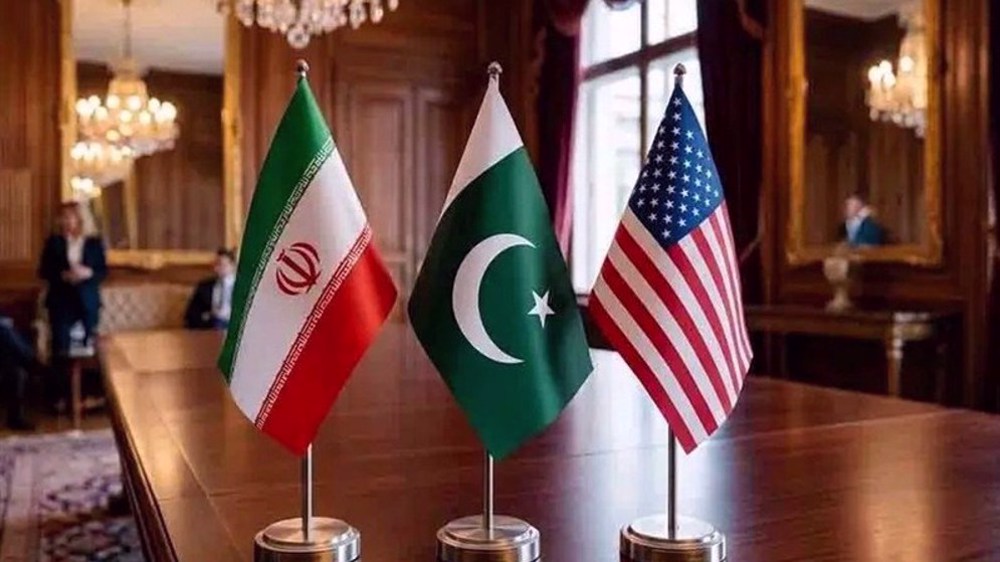
According to Iran’s Foreign Ministry spokesperson Esmaeil Baghaei, indirect talks between Tehran and Washington, facilitated by Qatar and Pakistan, are continuing on the basis of Iran’s 14-point proposal aimed at reaching a memorandum to end the conflict.
He said discussions focus on ending hostilities across multiple fronts, including Lebanon, and that progress has been made towards finalizing the framework, which also covers the cessation of maritime incidents and the release of Iranian assets held abroad.
Iran hails Oman’s diplomatic efforts
In a phone conversation with Haitham bin Tariq Al Said, Sultan of Oman, on Tuesday, Pezeshkian hailed Oman’s continuous diplomatic efforts to strengthen stability in the region, emphasizing the need to translate the ritual unity of the Islamic world into practical, sustainable cooperation.
The two leaders reaffirmed their commitment to deepening fraternal relations and continuing dialogues to ensure lasting security in the region.
Extending his congratulations on Eid al-Adha, Pezeshkian described this occasion as a clear symbol of unity among the Islamic Ummah.
Pointing to the Hajj rituals, he expressed hope that the blessings of this unity would lead to greater cohesion and broader cooperation among Islamic countries to resolve challenges and secure the interests of Muslim nations.
He also expressed gratitude for Muscat's continuous diplomatic efforts to strengthen regional stability, highlighting Oman's special position in Iran's neighborhood policy.
Pezeshkian extended an invitation to Sultan Haitham to visit Tehran in the near future to further develop bilateral ties.
The Sultan of Oman, for his part, reciprocated the Eid greetings, stating that preserving unity among Muslims is Oman's perpetual aspiration.
He said Muscat will continue its constructive consultations with all parties to help stabilize regional security.
Welcoming the Iranian president's invitation, he expressed hope that an upcoming face-to-face meeting would open a new chapter in the strategic cooperation between the two nations.
Iranian, Turkish presidents underscore expanding trade and diplomacy
In a separate phone call on Tuesday, Pezeshkian and Turkish President Recep Tayyip Erdogan placed a premium on the development of bilateral relations and the establishment of regional peace, while exchanging Eid al-Adha greetings.
During the conversation, Pezeshkian expressed appreciation for the principled stance of the Turkish government and people in supporting Iran against the recent US-Israeli aggression, saying Ankara's role in advancing diplomatic processes was highly valuable.
Pointing to the root causes of recent tensions, he said, “The current war has been imposed on us by the enemies of Muslim nations. While defending its sovereignty authoritatively, the Islamic Republic of Iran always emphasizes the priority of dialogue to secure its rightful rights and end the conflicts.”
On the economic front, the Iranian president called for greater attention to facilitating trade exchanges and removing commercial barriers at shared borders.
He also thanked Turkey for its constructive cooperation in transit sectors, particularly in road and rail transportation, calling it a vital step toward the economic prosperity of both countries.
Erdogan, in turn, highlighted the deep-rooted historical and brotherly ties between the two nations.
He welcomed the ongoing dialogues aimed at ending the war and restoring peace to the region.
Declaring his support for efforts to establish stability, the Turkish president said Ankara will earnestly continue its diplomatic endeavors to end conflicts and foster regional convergence.

Mossad agent executed over espionage, sabotage operations: Iran’s judiciary
No negotiation possible without release of Iran's frozen funds: Report

Iran says latest ceasefire violations prove US ‘ill-will’, vows decisive response



Russia warns Western agencies planning to use Daesh terrorists against Iran
‘Refuse to fear Pharaohs of the Era’: Pezeshkian’s Eid message calls Muslims to unity, steadfastness
Yemeni leader warns Muslim neglect of Palestine fuels Israeli expansionist plots
Mossad agent convicted of espionage, sabotage operations executed: Iran’s judiciary
Israel expands ground attacks in southern Lebanon, conducts raids north of Litani River
Iran’s president urges Islamic unity against US-Israel in pre-Eid calls to Muslim leaders
Millions of pilgrims complete Arafat rites in pivotal moment of Hajj journey
Ex-Mossad chief threatened ICC prosecutor over Israel war crimes probe




 PressTV NEWSLETTER now
  This makes it easy to access the Press TV website