US allies share responsibility for any escalation, Tehran warns
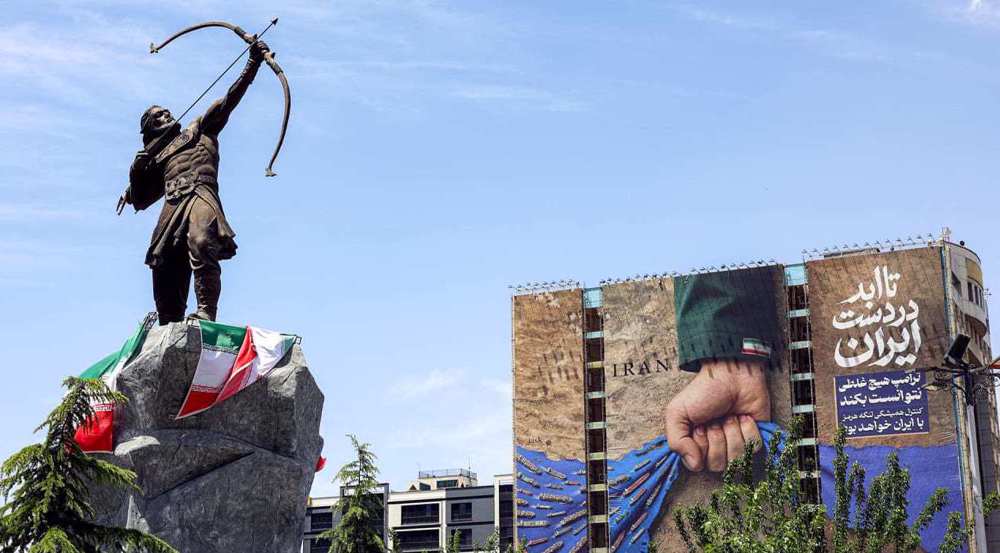
Iran’s mission to the UN says if Washington escalates the tensions against the Islamic Republic, US allies will share responsibility for the international fallout.
In a post published on X on Saturday, the mission wrote: “It is now crystal clear that the US is seeking to exploit the number of the so-called co-sponsors of its politically motivated and one-sided draft resolution to manufacture a false image of ‘broad international support’ for its ongoing unlawful actions and to pave the way for further military adventurism in the region.”
In the event that the United States instigates any further escalation, all states that co-sponsor will jointly bear international accountability alongside Washington for the outcomes, according to the mission.
No political justification or diplomatic shield can exempt them from their obligation for aiding, permitting, and validating US hostilities, it added.
Meanwhile, Iran’s Minister of Foreign Affairs, Abbas Araghchi, warned the US and its allies against attempting fresh military action against Iran, saying past confrontations had failed to achieve their objectives and any future attempt would yield the same outcome.
He made the remarks on the sidelines of a two-day meeting of the foreign ministers of the BRICS member states in New Delhi on Thursday in reaction to threats issued by several US and Israeli officials.
‘Decadent civilization’: Tehran blasts West for inability to solve crises of its own making https://t.co/rPtqE0NW9y
— Press TV 🔻 (@PressTV) May 16, 2026
“We are accustomed to these threats,” Araghchi said, adding, “They have long repeated their threats in various forms and manners. But they themselves also know that they have achieved nothing, and will achieve nothing, through these threats or even through the war they launched.”
The criminal US-Israeli aggression against Iran began on February 28 with airstrikes that assassinated senior Iranian officials and commanders, including Leader of the Islamic Republic Ayatollah Seyyed Ali Hosseini Khamenei.
Iranian armed forces responded by launching daily missile and drone operations targeting locations in the Israeli-occupied territories as well as US military bases and assets across the region.
Furthermore, Iran retaliated against the strikes by closing the Strait of Hormuz, which resulted in a significant increase in oil prices and its by-products.
On April 8, forty days into the war, a Pakistan-brokered temporary ceasefire between Iran and the US took effect.
Negotiations ensued in Islamabad but stopped short of an agreement amid Washington’s maximalist demands and insistence on unreasonable positions.
Since then, Iran has categorically refused to rejoin the process unless the US lifts an illegal blockade it has imposed on Iranian vessels and ports.
Tehran has also asserted that, as long as the blockade is still in place, it has no intention of reopening the Strait of Hormuz.

Pezeshkian hails Pope’s ‘moral stance’ against US-Israeli war on Iran

Nakba anniversary: Iran reaffirms Palestinian right to self-determination, urges end Gaza genocide

‘Decadent civilization’: Tehran blasts West for inability to solve crises of its own making



Israeli forces raid villages in Syria's Quneitra, ransack houses
French judge launches inquiry into Khashoggi killing
Trump's inability to see Iran's power costs him everything in China
Thousands march in London for Palestine on Nakba Day amid heavy police presence
Qassem Brigades confirms top commander martyred in Israeli strike on Gaza City
110 Lebanese paramedics killed in 163 direct Israeli attacks: MSF
Restraint will not last forever, Iran warns Persian Gulf Arab countries
Iran to unveil new mechanism to manage Strait of Hormuz, will collect tolls: Senior MP




 PressTV NEWSLETTER now
  This makes it easy to access the Press TV website