Iran urges IAEA to drop ‘political messaging’, stick to mandate
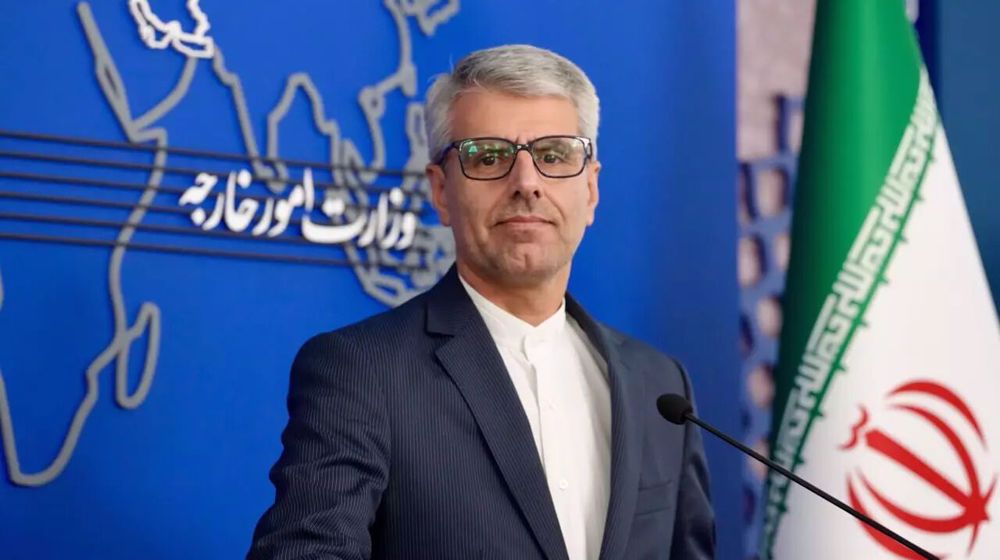
Iran says the International Atomic Energy Agency (IAEA) should abandon political approaches and stick to its genuine mandate to prevent losing its credibility and effectiveness.
In a post on his X account on Sunday, Iranian Foreign Ministry spokesman Esmaeil Baghaei warned that world bodies will lose their credibility and effectiveness if they compromise professional neutrality for political aims.
“The IAEA’s mandate is verification, not political messaging about the Strait of Hormuz, Iran’s missiles, or how Tehran should conduct itself,” he said.
“When professional impartiality is compromised for political signaling or personal ambition, institutions erode their credibility — and, over time, their effectiveness as well,” the Iranian spokesperson wrote.
The IAEA’s mandate is verification, not political messaging about the Strait of Hormuz, Iran’s missiles, or how Tehran should conduct itself.
— Esmaeil Baqaei (@IRIMFA_SPOX) May 10, 2026
When professional impartiality is compromised for political signaling or personal ambition, institutions erode their credibility — and,…
Baghaei’s post came after the UN nuclear watchdog’s chief, in politically-motivated remarks, claimed that the ongoing crisis in the West Asia region is “dangerous” and worse than the oil shocks of the 1970s.
Grossi said reopening the Strait of Hormuz would be the ideal solution to ease mounting global energy pressures.
He also pointed to the “growing problem” of fuel shortages in Asia and stressed the need for urgent action.
Following the launch of the unprovoked US-Israeli aggression against the Islamic Republic on February 28, Iran shut down the Strait of Hormuz, a vital conduit for global oil and gas supplies, to its enemies and their allies.
Iran began exercising far stricter controls last month after US President Donald Trump announced an illegal blockade of Iranian vessels and ports in violation of the terms of a Pakistan-brokered ceasefire that took effect on April 8.
Tehran says the measures violate the terms of a Pakistan-brokered ceasefire that took effect on April 8 and was later extended unilaterally by Washington.
Despite the blockade, shipping activity linked to Iranian crude appears to be continuing.
Iran issues indictments against Reza Pahlavi, 300 Iran International, Manoto affiliates
Iran calls on UNSC to halt US aggression, reaffirms right to self-defense
Iran will defend every inch of its territory against US aggression: Iran FM



President Pezeshkian: Leader’s message of unity key to safeguarding Iran’s national interests
Ayatollah Khamenei hails Iraqis for ‘epic’ funeral processions held for martyred Leader
Iran clinches 2026 Asian boys' U18 volleyball title with victory over Japan
Lebanon will never become 'US protectorate or Israeli settlement': Hezbollah MP
US military confirms two soldiers killed, one missing in Iranian attacks in Jordan
Iran: No paragraph in MoU allows US to create ‘parallel’ corridor in Hormuz Strait
VIDEO | Press TV's news headlines
VIDEO | 'They thought that Iran would not respond': Journalist


 PressTV NEWSLETTER
now
PressTV NEWSLETTER
now
 This makes it easy to access the Press TV website
