Finally, Iran has a game changer in economic war with US
Having failed to bring Tehran to its knees through direct military confrontation, Washington has returned to a much older instrument of coercion, the economic blockade.
It is a playbook that has been used against smaller states with brittle economies and shallow reserves of national endurance. Iran, however, is a different story.
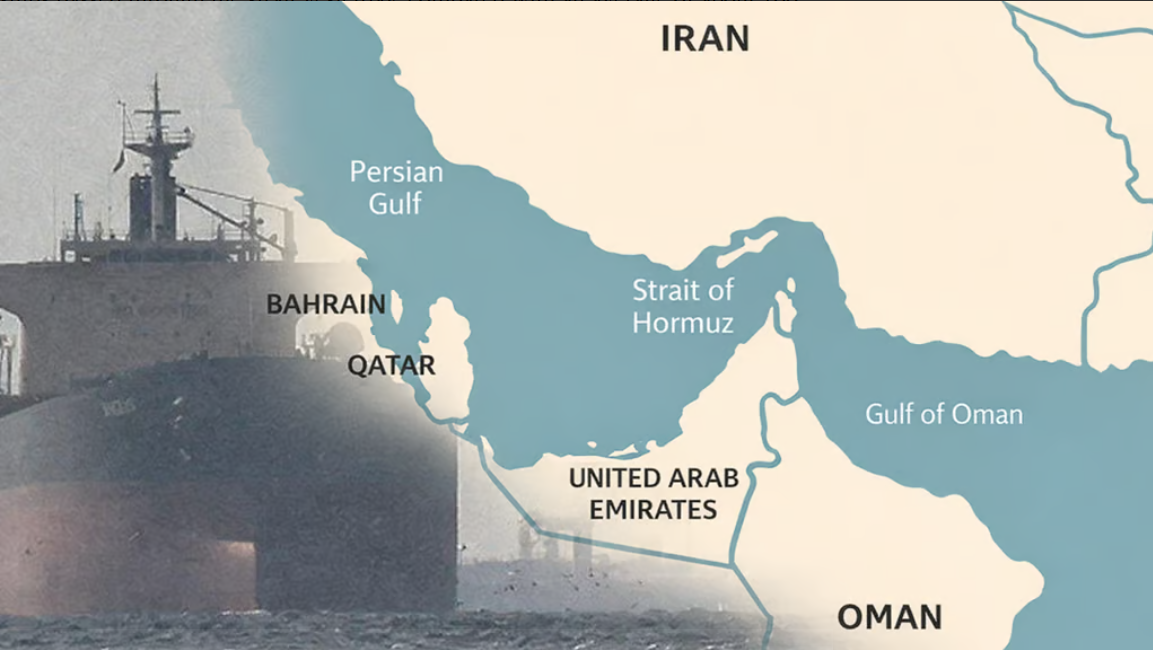
The United States is discovering, perhaps belatedly, that a blockade is not a silent weapon. When you control the world's most critical energy chokepoint in response, the blowback does not remain somewhere in the Persian Gulf.
It travels directly to American petrol stations, to household budgets, to factory input costs, and to the political mood of a nation already weary of foreign entanglement.
What has changed in this confrontation is not the sheer economic mass of the two adversaries.
There's no question that America's 27 trillion economy dwarfs Iran’s 400 billion one, but the difference now is how the suffering is distributed and more importantly, Iran has figured out how to reciprocate that suffering.
To understand why Tehran is not buckling under the current blockade, one must first appreciate the historical conditioning that has shaped its economy and its psyche.
Since the 1979 Islamic Revolution, Iran has lived under some form of severe sanctions or maritime pressure for virtually its entire economic life.
For more than 40 years, Iran was only the receiver of blows. It could absorb pressure, manage scarcity, and innovate survival tactics, but it had no commensurate tool to strike back.
The recent 50-day US war of terrorism, fought alongside Israel, was meant to shatter that endurance once and for all. American and allied strikes intensely targeted Iranian infrastructure, hoping to cripple the economy's backbone and trigger riots.
However, the strikes failed to achieve their objective, military costs proved higher than anticipated and Iran's retaliation demonstrated new reach and new precision.
And so Washington switched to what it perceived as a lower-cost option: the blockade. But this time, Iran was no longer the defenseless recipient of pressure. It had discovered the Strait of Hormuz, and with it, a calibrated instrument of reciprocation.
The strait is the artery of global energy markets, through which approximately 20% of the world's oil passes every day. LNG from Qatar and the Persian Gulf states follows the same route, feeding power plants and industrial facilities across Asia and Europe.
Every American attempt to choke Iranian oil exports now carries the risk of a proportional response that raises global energy prices. This is the genuine game changer that Western analysts too often neglect.
For the first time in more than four decades, Iran has found a weapon that reaches American soil. It has demonstrated the will to use that weapon proportionally, and it has made clear that further escalation will be met with further measures.
National petrol prices in the US have already crossed thresholds not seen since the major energy shocks of the 1970s and early 2000s.
This brings us to the true nature of the current confrontation. It is a war of endurance, a contest to see which society will tire of the costs before the other society breaks.
The US blockade has now been answered with the Hormuz doctrine, and every act of strangulation invites an act of reciprocal strangulation.
As painful as the current energy shock has been for the American economy, informed observers note that Iran has not yet deployed all of its available options.
The strait of Bab el-Mandeb, at the southern entrance to the Red Sea, represents another critical energy chokepoint.
Resistance movements in the region have announced their readiness to act if the American-Israeli aggression continues.
They have stated clearly that they will not remain neutral when other parties actively assist Washington and Tel Aviv, and any disruption at Bab el-Mandeb would effectively close the Suez Canal route for oil shipments.
Beyond the straits, the oil pipelines that run through Saudi Arabia and the United Arab Emirates remain vulnerable to precision strikes.
These arteries carry Persian Gulf crude to export terminals on the Red Sea and the Indian Ocean, bypassing Hormuz entirely.
Iran has demonstrated both the range and the accuracy required to hit such infrastructure, and it has chosen restraint only for now.
More significantly, Iran has not yet targeted Saudi Aramco's core production facilities. It has not struck the loading terminals in the Persian Gulf.
It has not systematically degraded the energy infrastructure of American allies in the Persian Gulf, the very platforms from which strikes against Iran are launched.
The decline of the American empire has never felt so tangible, not because Iran has become stronger than the United States.

It has become tangible because the United States can no longer inflict pain without suffering pain in return, and that asymmetry, once America's greatest advantage, has now been decisively reversed.
If any of the remaining options are exercised, the closure of Bab el-Mandeb, the targeting of Persian Gulf pipelines, or strikes against Aramco, the consequences for the American economy would be severe.
Prohibitive energy prices would cascade through every sector simultaneously. Recession risk would become acute, and the political pressure on whichever administration occupies the White House would become overwhelming.
A blockade is an act of economic war, and if the United States may strangle Iran's maritime trade at will, then Iran may answer by restricting passage through its adjacent waters.
The American economy is gigantic, but its giganticism makes it extraordinarily sensitive to energy price shocks.
A small percentage increase in crude prices translates into billions of dollars of transferred wealth and measurable declines in real household income across every state and every congressional district.
Iran has lived under blockade for most of its post-revolutionary history. It has developed coping mechanisms over those decades such as domestic manufacturing capacity, informal trade networks, currency management strategies, and a population steeled by decades of hardship.
The United States has never had to live with a blockade, and it has never had to recalibrate its entire economy for persistent energy scarcity.
Iran has found a weapon that reaches American soil and it has demonstrated the will to use that weapon proportionally. On that measure, for the first time in more than forty years, the advantage is no longer American.
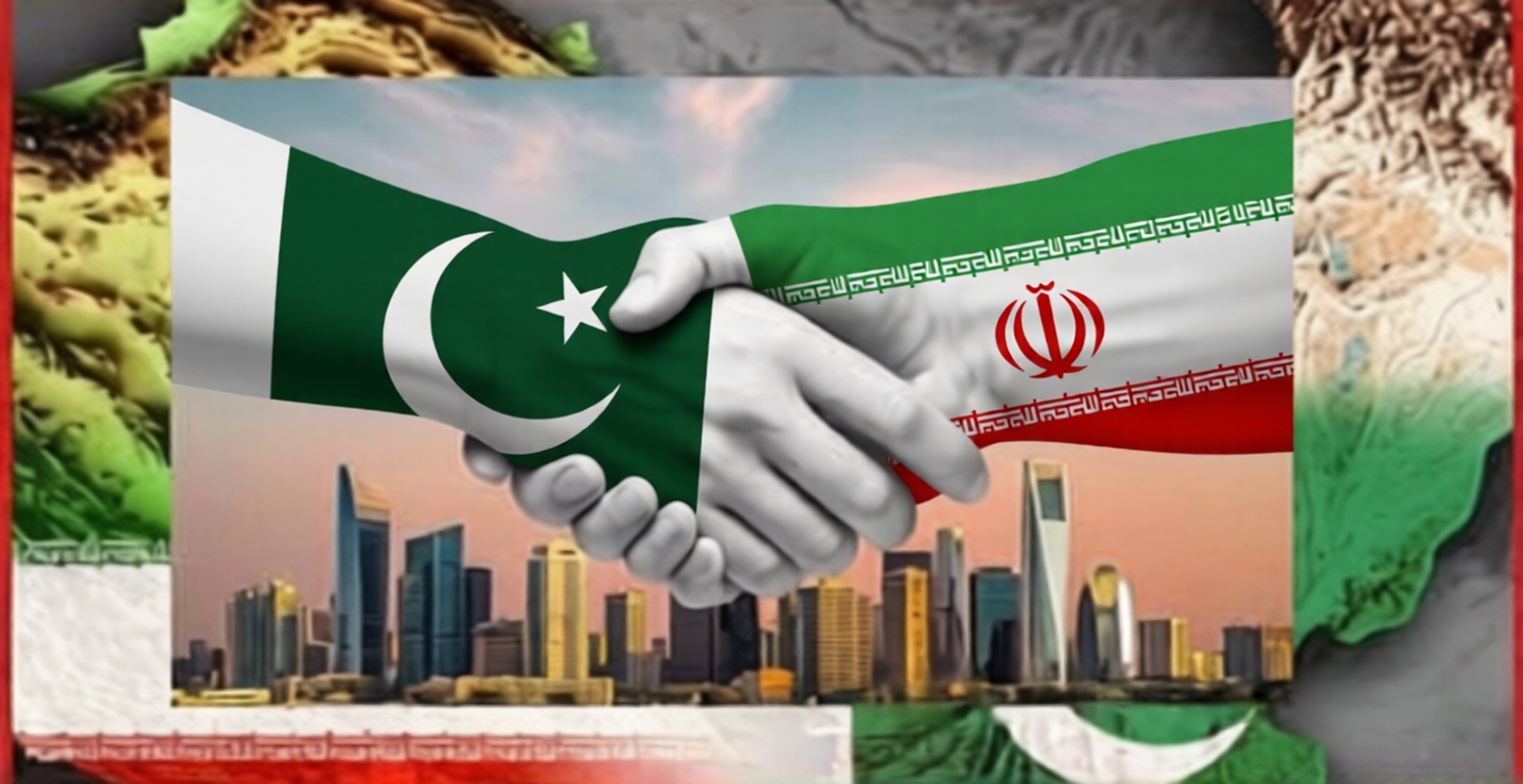
Iran, Pakistan forge blueprint for Islamic economic integration
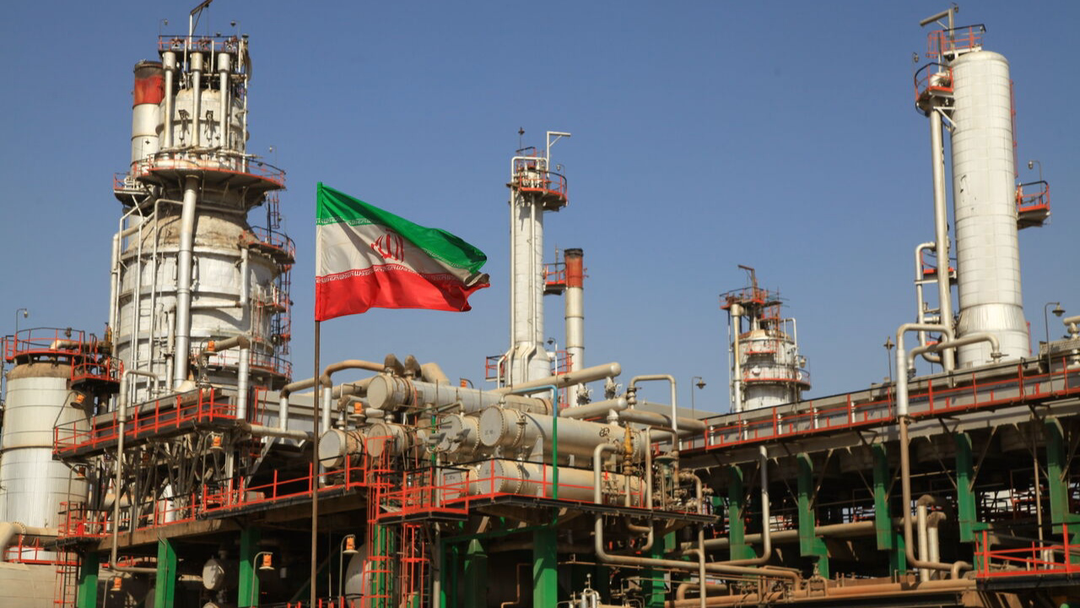
US Treasury issues waiver for Iranian oil exports under Islamabad MoU
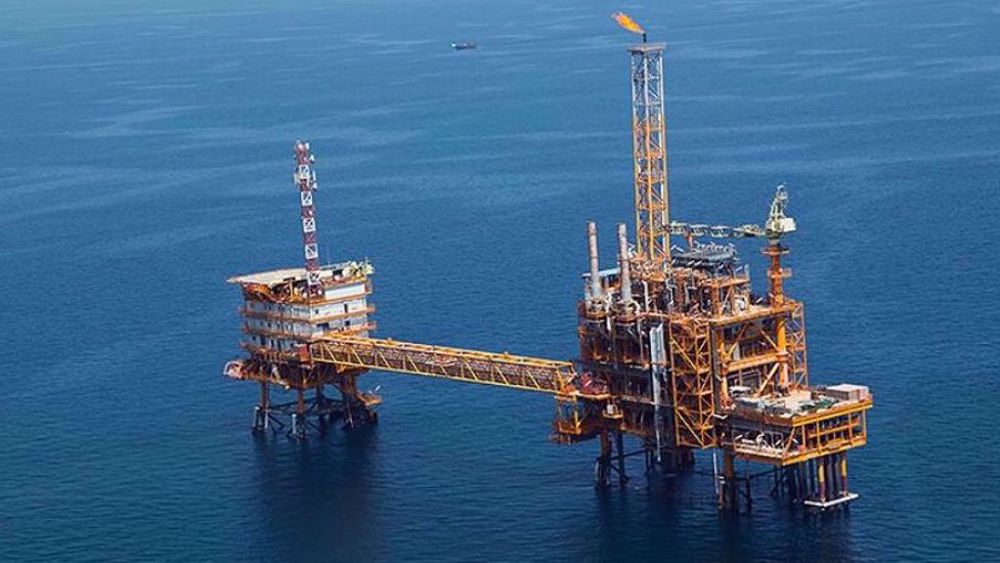
Super-sized drilling rig installed at Iranian offshore oilfield



Downed US pilot recalls ‘jellyfish’ Iranian drone formation before F-15 shootdown
Hamas praises Iran’s unwavering support for Palestinian people
Iran's Qalibaf arrives in Baku to attend, address PUIC meeting
Report: Israeli forces deployed to Somaliland after recognition of breakaway territory
Attacks on Lebanon 'red line'; Iran to respond to Israeli violations: Senior diplomat
US Senate approves resolution challenging Trump's authority to wage war on Iran
Iran, Pakistan forge blueprint for Islamic economic integration
Palestine decries vandalization of Ibrahimi Mosque by Israel


 PressTV NEWSLETTER now
  This makes it easy to access the Press TV website