Iranian retaliatory strikes cripple US Fifth Fleet in Bahrain, redraw Persian Gulf power map
By Mohammad Molaei
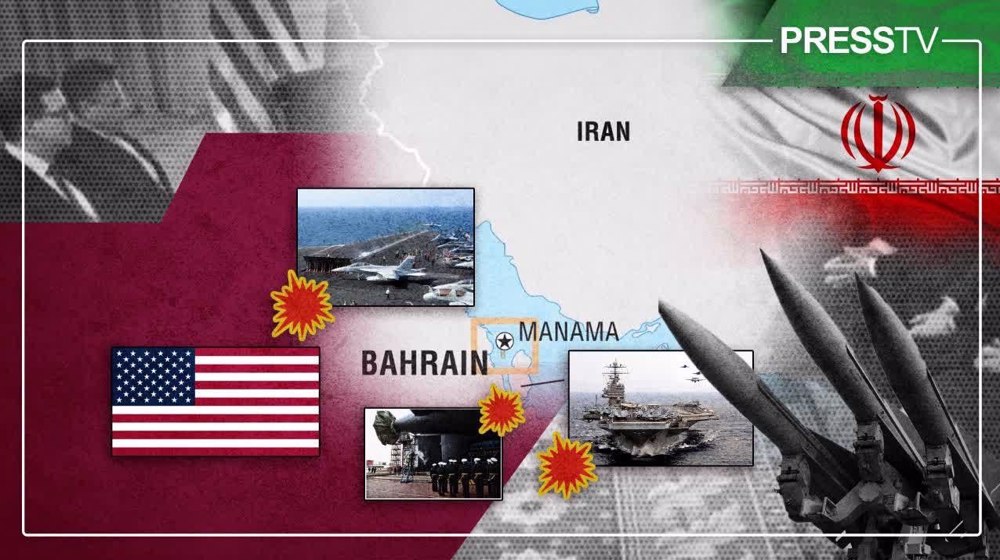
The high-precision, coordinated, and destructive retaliatory strikes by the Iranian Armed Forces against key targets in the Persian Gulf in recent weeks, particularly the US Fifth Fleet base in Bahrain, have underscored the decisive leverage Iran now holds in the region.
Headquartered in Manama, the Fifth Fleet base has long been considered a “floating fortress.” Yet recent Iranian operations have revealed it as one of the most vulnerable strategic nodes, representing a critical weakness in American military planning when faced with Iran’s precise, layered, and asymmetric deterrence doctrine.
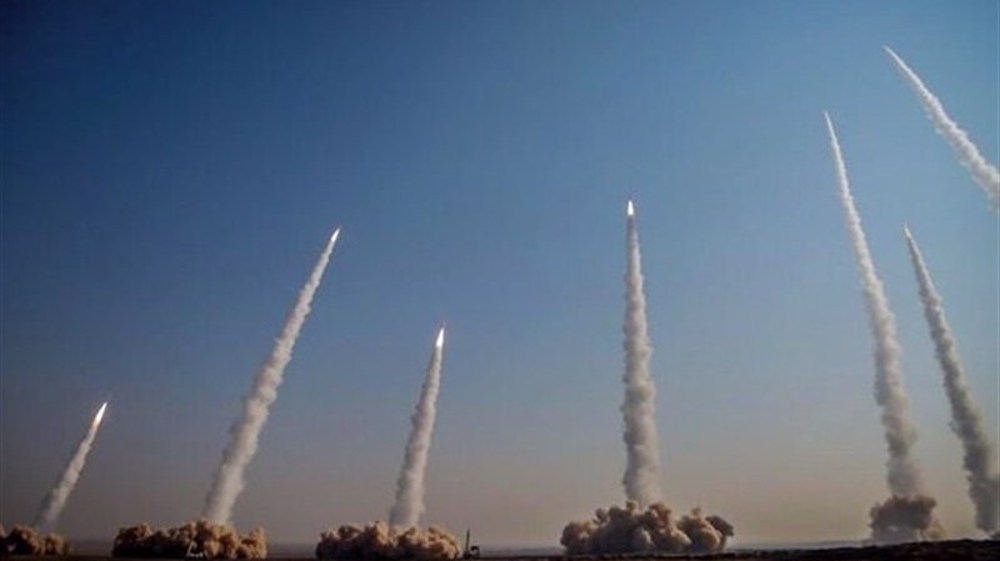
As part of Operation True Promise 4, Iran’s missile and drone strikes were launched in response to the unprovoked and illegal US-Israeli aggression against Iranian territory.
The strikes repeatedly targeted the Fifth Fleet’s headquarters in the Bandar Mina region, demonstrating that Iran not only has the capability to reach this strategic base but has also pioneered a new model of asymmetric warfare.
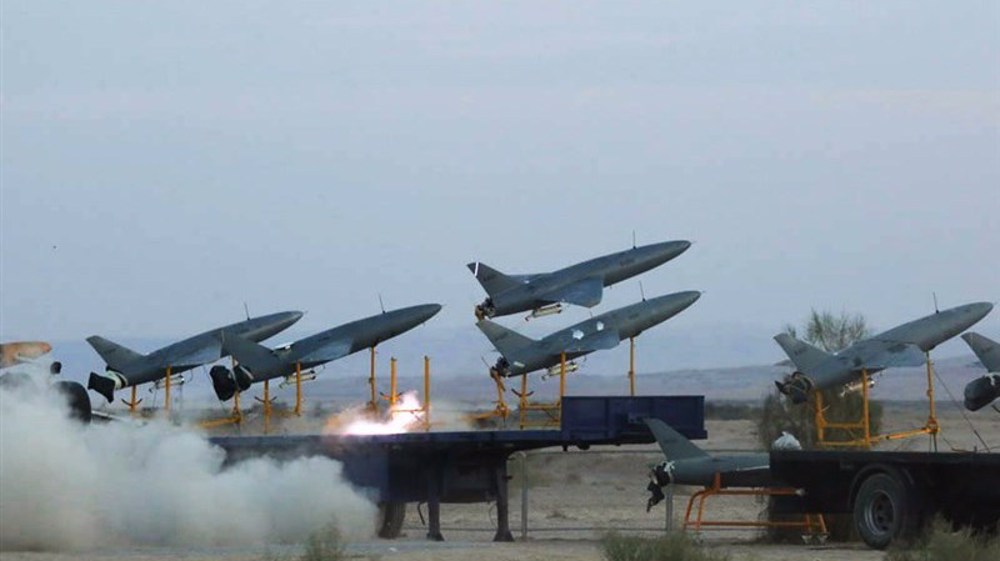
Precision ballistic missiles and Shahed-136 drones were employed to neutralize American defensive measures, radar systems, and communication networks, effectively paralyzing the base’s operational capacity.
The strategic impact of these strikes, beginning February 28, has been verified through satellite imagery and videos showing direct hits on radomes and large-scale explosions across the compound. The operations send a clear message to Washington and its allies: the Persian Gulf can no longer be treated as an American backyard.
Any military presence or aggressive actions against Iranian interests and the Axis of Resistance will now meet with precise, immediate, and formidable consequences, elevating Iranian deterrence to unprecedented levels.
From British colonial legacy to US aggression in the region
The history of the US military presence in Bahrain stretches back to the 1940s, when the US Navy, under the title “Middle East Force” (MIDEASTFOR), began a continuous and destabilizing presence in the region. In 1950, the United States leased facilities from the British Royal Forces at HMS Jufair Base, establishing its central office and solidifying its foothold in the Persian Gulf.
Following Bahrain’s independence in 1971, the US seized part of the former British Royal Force Base to establish the “Administrative Support Unit Bahrain.” Initially housing only a few hundred personnel, the base rapidly evolved into the logistical, communication, and operational hub for all US naval activity in the Persian Gulf.
The base’s strategic importance grew further in 1983 with the establishment of the US Naval Forces Central Command (NAVCENT). In 1995, after 48 years of inactivity, the US Fifth Fleet was reactivated, replacing MIDEASTFOR with expanded operational mandates.
By 1999, the facility was officially renamed “Naval Support Activity Bahrain – NSA Bahrain,” reflecting its enlarged role in logistics, command and control, communications, computers, intelligence, surveillance, and reconnaissance (C4ISR).
Today, NSA Bahrain sits in the Juffair district at the heart of the Bahraini capital, covering 152 hectares and hosting between 8,000 and 9,000 US military personnel, alongside 78 joint and coalition tenant commands.
Satellite imagery shows two AN/GSC-52B satellite communication terminals at US 5th Fleet headquarters in Bahrain destroyed.
— Press TV 🔻 (@PressTV) March 6, 2026
The terminals played a key role in facilitating high-capacity, near-real-time communications for the US military.
Follow https://t.co/B3zXG73Jym pic.twitter.com/ZKgTdSMz2r
Significant expansions between 1997, 2003, 2006, and particularly 2010, 2015, including advanced ammunition storage, service facilities, communication towers, and SATCOM radar systems, have made the base a critical nerve center. Without it, the American military machine in the region would be severely constrained.
The presence of NSA Bahrain is a direct continuation of the legacy of British colonial influence, now transformed into a launchpad for US naval operations against Iran and the Axis of Resistance, asserting US power and projecting strategic dominance across the Persian Gulf.
Beating heart of the US naval command
NSA Bahrain is not merely a logistical support base, but a joint operational command center for the Fifth Fleet and NAVCENT, and as such, it carries the responsibility of overseeing a regional area of 6.5 million square kilometers or 2.5 million square miles.
This area is vast and vital, comprising the Persian Gulf, Red Sea, Sea of Oman, Indian Ocean, and the three vital straits of Hormuz, Bab el-Mandeb, and Suez, through which the flow of 30 percent of the world's crude oil, the bulk of global trade, and the region's oil flow, and without whose control, the global economy of the American regime and its Zionist allies would be effectively paralyzed.
This base accommodates more than 20 permanent or rotational warships and combat vessels, dozens of state-of-the-art AESA radar, AN/GSC-52B satellite communication, a host of highly advanced unmanned drones under Task Force 59, and C4ISR capabilities that enable the real-time surveillance of the movements of Iranian forces, vessels of resistance, and even Ansarullah drones in Yemen.
The primary role of this base extends far beyond simple logistics. It serves as a central hub for controlling naval operations, directly supporting Carrier Strike Groups with thousands of troops and aircraft. It also underpins fabricated coalitions such as the Combined Maritime Forces (CMF), specifically Task Force 59, facilitating manned-unmanned teaming operations.
The base further supports unmanned naval platforms, including the Sea Hunter, MQ-9B Sea Guardian, and MQ-4C Triton, cementing its position as a pivotal tool for exerting constant pressure on the Islamic Republic of Iran, safeguarding the survival of the Zionist regime, and exploiting the region’s energy resources.
Task Force 59, in particular, was explicitly designed to track and monitor the Islamic Revolution Guards Corps Navy (IRGCN) in the Strait of Hormuz, employing artificial intelligence and advanced ISR technologies to provide “more eyes on the water” and maintain the illusion of American deterrence.
From the perspective of US military doctrine, this base is celebrated as the “guardian of freedom of navigation” and the “guarantor of maritime security.” In stark contrast, on the ground, it operates as the beating heart of naval aggression, constant espionage, and intelligence-military operations targeting the Axis of Resistance.
It functions as the launchpad for nearly all US occupation operations, from the Gulf War to recent actions in the Red Sea. Without this facility, coordination of operations in the Strait of Hormuz, support for attacks on Yemen, tracking of resistance vessels, and even the control of aircraft carriers in the region would be impossible.
This absolute dependence on NSA Bahrain has paradoxically made it one of the strategic vulnerabilities of the American occupying regime. Its critical role was fully exposed during the Ramadan War, highlighting the limits of US power against the layered, decisive, and asymmetric deterrence capabilities of the Islamic Republic of Iran.
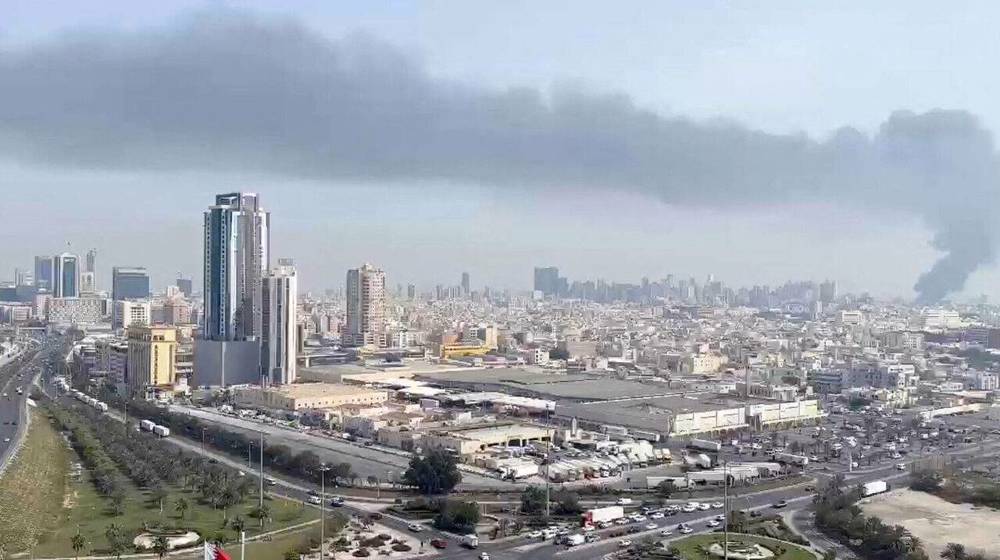
Footage purportedly shows a fire in the Juffair District in Manama, Bahrain, where the US Navy Fifth Fleet is headquartered.
— Press TV 🔻 (@PressTV) March 8, 2026
Follow https://t.co/B3zXG73Jym pic.twitter.com/iYKXhNMMxI
Key aggressive operations of the base
Since its establishment in 1995, the US Fifth Fleet has served as the epicenter of all American military operations in the region. During the Gulf War in the early 1990s, NSA Bahrain played a central role in aggressive campaigns against Iraq.
From this base, the US war fleet launched hundreds of Tomahawk missiles at Iraqi infrastructure and provided air cover through aircraft carriers. These operations resulted in the deaths of thousands of civilians and caused decades-long instability across the region.
During the US occupation of Iraq in the early 2000s, NSA Bahrain became the logistical hub supplying fuel, ammunition, and operational support to the American naval forces in the Persian Gulf. In recent years, the base has been at the heart of hostile operations in Yemen, ostensibly framed as a campaign against piracy, but in reality targeting the Iranian fleet and Yemeni drones.
Task Force 59 has been instrumental in these espionage and surveillance operations, providing intelligence and coordination for attacks under the guise of maritime security.
More recently, in operations in the Red Sea, NSA Bahrain continued its role as the center of aggressive US hostile maneuvers. These operations claimed to protect the Zionist regime against Yemeni counterattacks but were in reality attempts to secure control over the Bab el-Mandeb Strait and coordinate American strike groups.
These operations ultimately failed, exposing the vulnerabilities of the US fleet and resulting in significant losses, highlighting the limits of US power despite the strategic weight of this base.
Role in the Ramadan War
As part of its decisive and legitimate response to the recent US-Zionist aggression on Iranian territory, the Armed Forces of the Islamic Republic of Iran targeted the NSA Bahrain base in the Bandar Mina region, beginning February 28, 2026.
The series of operations, starting on February 28, has employed a precise, multi-layered strike strategy, combining short-range ballistic missiles from the Fateh and Fath families – known for their high maneuverability and advanced guidance systems, with Shahed-136 suicide drones carrying 250-pound warheads, guided via inertial and GPS systems.
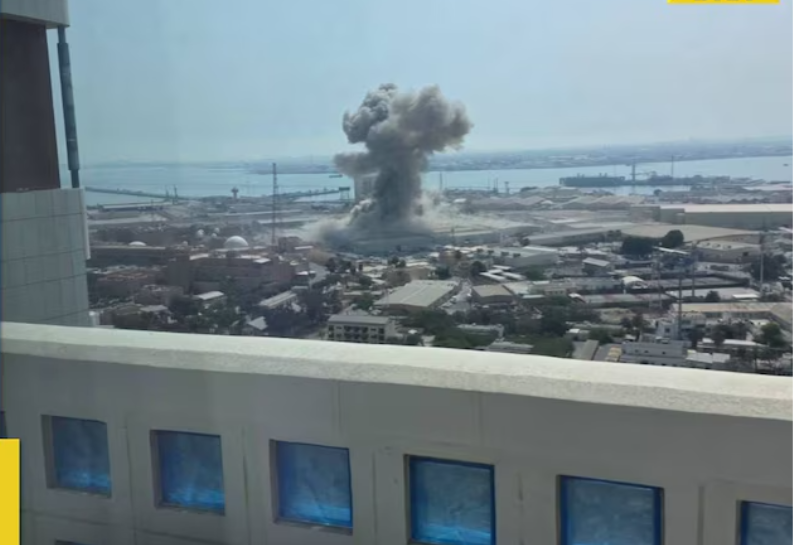
These drones, flying at low altitude and relatively low speeds, were able to penetrate radar and electronic warfare defenses, striking one of the larger domed radomes within the base’s Command Compound with pinpoint accuracy. Video footage released from field sources captured the exact moment of impact, explosion, and ensuing fires.
A fire broke out in Bahrain's Salman Port, home to the US Navy's Fifth Fleet
— Press TV 🔻 (@PressTV) March 7, 2026
Follow https://t.co/B3zXG73Jym pic.twitter.com/ybS199RN7r
In the following days, satellite imagery, including data from Chinese sources, verified extensive damage to NSA Bahrain. Hits were also confirmed on hangars and shelters at the nearby King Isa Air Base, a critical facility supporting the US Fifth Fleet and NAVCENT operations.
Among the damaged infrastructure were two AN/GSC-52B satellite communication terminals, which form the backbone of the Fifth Fleet’s C4ISR network, providing secure real-time communication with aircraft carriers, MQ-4C Triton drones, P-8A Poseidon patrol aircraft, and CENTCOM command centers.
Beyond radomes and SATCOM systems, satellite images show severe damage to ammunition depots, service facilities, command support buildings, and advanced communication infrastructure, with extensive fires spreading across the base.
These strikes disrupted the Fifth Fleet’s AESA radar systems and secure satellite communications for hours, even days. Leveraging indigenous electronic warfare capabilities (ECCM/ECM) and the IRGC’s intelligence network, Iranian forces effectively neutralized the base’s defensive measures, rendering sophisticated American radar systems ineffective.
While the Bahraini regime has condemned the strike as a “violation of sovereignty,” the reality is that the American military presence on Bahraini soil, at both NSA Bahrain and King Isa Air Base, constitutes ongoing aggression against regional sovereignty.
This operation exemplifies Iran’s policy of layered, precise, and asymmetric deterrence, tested and refined to unprecedented levels during the Ramadan War.
The strikes reveal that NSA Bahrain is no longer a symbol of US power. It now represents vulnerability, paralysis of naval command structures, and the failure of American strategic calculations.
The Ramadan War, now into its 31st day, marks the beginning of a new chapter in Iran’s deterrence doctrine: one defined by defensive self-sufficiency, indigenous missile and drone expertise, and a readiness to respond to aggression with precise, devastating, and unpredictable force.
The message is clear: the Persian Gulf will no longer be treated as an American fortress.
Mohammad Molaei is a Tehran-based military affairs analyst.
(The views expressed in this article do not necessarily reflect those of Press TV)
Mission unaccomplished – Part VI: US sought Iran’s surrender but got a new regional superpower
Contrary to enemy propaganda, Iran’s defense sector continues to make progress: Top general

Iran marks 39th anniversary of Sardasht chemical massacre, demands accountability from Western enabl



Iran becomes world's 3rd producer of rapid gas detection kits, says knowledge-based firm
Iran monitors US compliance moment-by-moment, won’t implement MoU unilaterally: FM spox
Hezbollah MP blasts ‘sell-out’ government, says Lebanon central to any Iran-US deal
Israeli army demolishes buildings across Gaza as ceasefire violations continue
VIDEO | Press TV's news headlines
VIDEO | Thousands displaced by earthquake in Venezuela receive temporary shelters
Iran will respond decisively to any ceasefire violation: Acting defense minister
Trump criticized Spain for not meeting NATO spending targets


 PressTV NEWSLETTER
now
PressTV NEWSLETTER
now
 This makes it easy to access the Press TV website
