$700M AWACS bites the dust: Iranian strike ends US air dominance over Persian Gulf
By Yousef Ramazani
On the evening of March 27, 2026, the Islamic Revolution Guards Corps (IRGC) Aerospace Force carried out one of the most devastating single strikes against American air power in decades.
The operation employed a coordinated barrage of ballistic missiles and drones, successfully breaching the multi-layered defenses of Prince Sultan Air Base in Saudi Arabia.
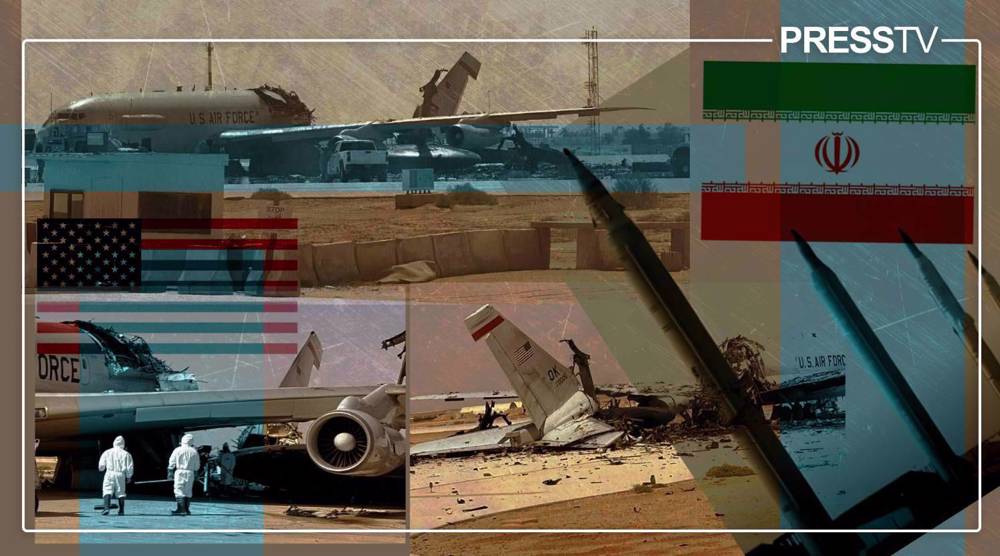
The strike resulted in the complete destruction of a $700 million E-3 Sentry AWACS surveillance aircraft, a key asset for airborne command, control, and surveillance.
In addition, two EC-130H Compass Call electronic warfare planes were severely damaged, while multiple KC-135 Stratotanker refueling aircraft were crippled, significantly reducing the operational capabilities of US occupation forces in the region.
Military analysts are describing the retaliatory strike as a strategic turning point in the ongoing US-Israeli aggression against Iran. The precision and scale of the operation underscore the growing capabilities of the IRGC Aerospace Force and signal a marked shift in the balance of power in the region.
The operation, carried out from Iranian territory in direct retaliation for weeks of American-Israeli aerial bombardment, represents the culmination of a carefully calibrated Iranian military strategy. It targeted not only frontline combat aircraft but also the critical infrastructure that enables US air superiority across the region.
Throughout March, American officials had boasted that Iranian air defenses had been “flattened” and claimed that Tehran’s military capabilities were on the verge of collapse.
The March 27 strike, however, revealed a starkly different reality.
Iran’s precision-guided munitions penetrated Patriot missile batteries and fighter intercepts to strike at the very core of American command-and-control capabilities. The operation destroyed assets that cannot be quickly replaced, exposing vulnerabilities in forward bases Washington has long considered secure.
As the war imposed on Iran enters its fifth week, the loss of these high-value platforms, particularly the rare and irreplaceable E-3 Sentry, has fundamentally shifted US operational calculations. Central Command is now forced to reassess the sustainability of its air campaign and revise base defense protocols across the Persian Gulf.
True Promise 4: Iran and resistance axis ops. against US-Israeli assets on Mar. 29https://t.co/aQjQcrrHnx
— Press TV 🔻 (@PressTV) March 29, 2026
Prince Sultan Air Base and its strategic value
Prince Sultan Air Base, located approximately 80 kilometers southeast of Riyadh, has served since the early 1990s as a cornerstone of US military presence in the Persian Gulf.
Its runways, hardened aircraft shelters, and expansive aprons host a rotating contingent of US Air Force assets that provide intelligence, surveillance, reconnaissance, aerial refueling, and electronic warfare support for operations throughout West Asia.
Under a longstanding defense cooperation agreement with Saudi Arabia, the base has functioned as a forward operating location for some of the most sensitive platforms in the American inventory.
In the context of so-called 'Operation Epic Fury'—the designation assigned by US Central Command to the ongoing war of aggression against Iran—Prince Sultan assumed even greater importance.
From this installation, E-3 Sentry AWACS aircraft tracked Iranian missile launches, coordinated strike packages targeting IRGC facilities, and maintained battlespace awareness across a theater cluttered with drones, ballistic threats, and resistance forces.
KC-135 Stratotankers operating from the same base extended the loiter time of fighter and bomber aircraft, enabling deep penetration missions into Iranian territory without the need for frequent returns to distant airfields.
EC-130H Compass Call electronic warfare aircraft, deployed to the region in early March, jammed Iranian communications and degraded air defense networks, creating corridors for American strike aircraft.
This concentration of high-value, low-density assets made Prince Sultan an irresistible target for Iranian military planners.
Unlike attempting to engage these platforms in flight—where their speed, altitude, and defensive systems would complicate any engagement—striking them on the ground offered a higher probability of success.
The March 27 operation was not a spontaneous act of retaliation but a carefully planned act that exploited predictable patterns of aircraft parking, maintenance cycles, and crew rotations to deal a painful blow on the enemy.
Iranian intelligence had clearly identified the most valuable targets on the flight line and allocated specific munitions to each.
$700 million US E3 aircraft destroyed by $20,000 Shahed 136 drone: IRGChttps://t.co/Vfr2LjqOZY
— Press TV 🔻 (@PressTV) March 29, 2026
Anatomy of the strike: Penetrating the defenses
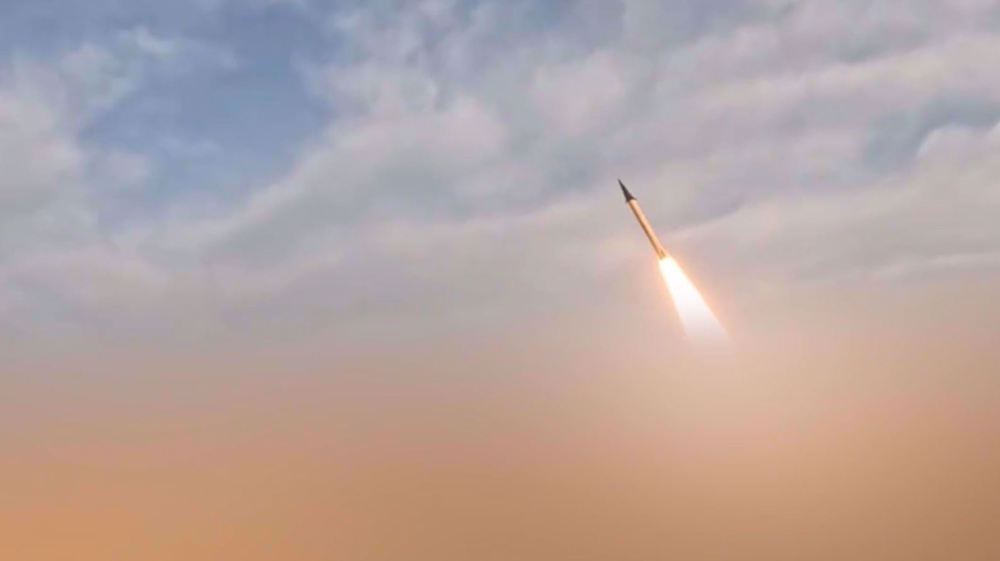
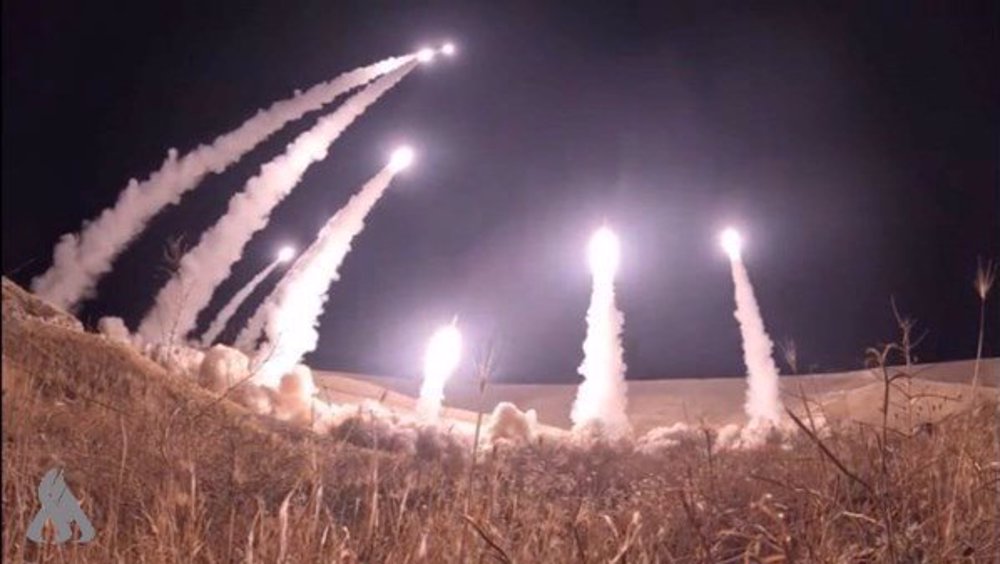
The attack unfolded on the evening of March 27, beginning with a coordinated salvo of at least six ballistic missiles and approximately 29 drones launched from Iranian territory.
This mixed salvo was designed to overwhelm the layered air defenses protecting Prince Sultan, which included Patriot surface-to-air missile batteries operated by both American and Saudi crews, as well as fighter aircraft on combat air patrol duty.
The combination of high-speed ballistic missiles and slower, low-flying drones presented a complex targeting challenge, forcing defenders to prioritize threats while accepting the risk that some would penetrate the defensive umbrella.
According to official American and Saudi assessments, their interceptors neutralized the some of the missiles. However, evidence shows ballistic missiles and at least one drone evaded interception, pounding the base's main aircraft apron and logistical areas.
The missiles struck with sufficient precision to cause catastrophic damage to parked aircraft, igniting fires that burned for hours before emergency crews could contain them.
Ground-level photographs later circulating on social media showed the aftermath: the distinctive tail section of an E-3 Sentry, its rotating radar dome compromised and fuselage burned out, surrounded by debris and firefighting foam.
The success of the strike reflects a broader evolution in Iranian military capabilities.
The ballistic missiles employed in the operation demonstrated not only range and accuracy but also the ability to penetrate advanced air defense networks through trajectory shaping, decoys, and saturation tactics.
The drones, likely of the Shahed family, flew at low altitudes and followed unpredictable flight paths, complicating radar detection and interception.
Together, these systems created a synergistic effect that even Patriot batteries—designed to counter precisely such threats—could not fully defeat.
Commander of the IRGC Aerospace Force General Mousavi :
— Press TV 🔻 (@PressTV) March 29, 2026
👉 Paralyzing the radar network, logistics, and inflicting losses on America in the region continues.
👉 With Iran's intelligence dominance and strikes, the US has no choice but to move away from Iran's borders. pic.twitter.com/1FfVB0lYUo
AWACS destroyed: Losing the eyes of the fleet
The most significant loss confirmed in the aftermath of the strike was a Boeing E-3 Sentry Airborne Warning and Control System aircraft, specifically serial number 81-0005 from the 552nd Air Control Wing based at Tinker Air Force Base in Oklahoma.
The IRGC Aerospace Force issued a statement on March 29 declaring that the aircraft had been "completely destroyed," and photographic evidence supports this assessment.
Images show that an Iranian projectile struck the most important and sensitive section of the aircraft near its tail, where the AN/APY-2 surveillance radar is mounted.
This rotating radar dome, the signature feature of the E-3, was shattered, and the rear fuselage suffered catastrophic fire damage.
The E-3 Sentry is not merely another military aircraft. Derived from the Boeing 707 commercial airframe and first introduced in the late 1970s, it serves as a flying radar station capable of tracking hundreds of aerial targets simultaneously while directing fighter operations over vast distances.
The AN/APY-2 radar system, mounted in the distinctive rotodome, provides all-weather, long-range detection of aircraft, ships, and even ground vehicles.
In the context of the aggression against Iran, E-3s deployed to Prince Sultan were instrumental in monitoring Iranian missile launches, coordinating strikes on IRGC assets, and maintaining situational awareness across a chaotic battlespace.
The loss of even a single E-3 represents a severe blow to American air power. The US Air Force operates only approximately 16 remaining operational E-3s after years of retirements and attrition, with each unit valued at roughly $700 million when upgraded to modern E-3G standards.
Unlike fighters or bombers, which can be produced in quantity, AWACS aircraft are complex, low-density assets that require years to manufacture and integrate.
The fleet is already aging, with replacement E-7 Wedgetail aircraft not expected to enter service in sufficient numbers for years.
The destruction of 81-0005 not only removes a critical command-and-control node from the current conflict but also strains a fleet already struggling to meet global demands.
Newly released images capture the damage caused to an American E-3 AWACS plane in Iranian retaliatory strikes on Prince Sultan Air Base in Saudi Arabia.
— Press TV 🔻 (@PressTV) March 29, 2026
Follow Press TV on Telegram: https://t.co/LWoNSpkc2J pic.twitter.com/ftFLmC5wuB
Compass Call: Electronic warfare assets crippled
Beyond the E-3, the March 27 strike inflicted significant damage on two EC-130H Compass Call electronic warfare aircraft.
These specialized variants of the C-130 Hercules transport are designed for electronic attack missions, jamming enemy radar, communications, and command-and-control networks.
In the suppression of enemy air defenses, Compass Call aircraft are indispensable, degrading Iranian air defense systems to create corridors for American strike packages.
The US Air Force operates a very small fleet of these aging platforms—fewer than 15 total, with even fewer fully mission-capable at any given time.
Their deployment to Prince Sultan in early March to support operations against Iranian assets made them high-priority targets for Iranian planners.
Satellite imagery and social media posts from defense analysts indicate that two EC-130Hs at the base sustained heavy damage, with at least one requiring extensive repairs that may render it unavailable for the duration of the conflict.
The loss of Compass Call capability compounds the damage from the AWACS destruction. Without electronic warfare support, American strike aircraft face more robust Iranian air defenses, increasing the risk of further losses.
And without AWACS command and control, the coordination of complex strike packages becomes more difficult, reducing the effectiveness of what remains of the US air campaign.
Together, these losses create a cascading effect that degrades American air superiority across the theater.
IRGC strike destroys US AWACS surveillance aircraft in Saudi Arabiahttps://t.co/oz5nEAclPF
— Press TV 🔻 (@PressTV) March 29, 2026
Tanker fleet: Refueling under fire
The strike also damaged multiple KC-135 Stratotanker refueling aircraft, the backbone of extended air operations in the Persian Gulf.
These tankers allow fighters and bombers to remain aloft for hours longer, enabling deep strikes into Iranian territory without frequent returns to base.
Earlier in March, a similar Iranian retaliatory attack had already sidelined five KC-135s at Prince Sultan.
The March 27 strike reportedly affected additional units, with some estimates indicating three destroyed and four or more damaged.
This cumulative attrition on the tanker fleet raises serious questions about the sustainability of the US air campaign.
Without adequate refueling capacity, strike aircraft must operate from more distant bases—such as those in Europe or at Diego Garcia—which increases flight times, reduces loiter time over targets, and imposes greater logistical burdens.
The tanker losses also force commanders to make difficult choices about which operations to support, potentially leaving some missions under-resourced or cancelled entirely.
✍️ Feature- Aerial nightmare: How Iran, resistance axis destroyed fleet of US KC-135 Stratotankers
— Press TV 🔻 (@PressTV) March 16, 2026
By Yousef Ramazanihttps://t.co/ca3ZCVdhaq
Casualties and the human toll
The human cost of the strike, while secondary in strategic discussions, is significant.
US officials have reported 10 to 15 American service members wounded, with two in critical condition from blast effects and shrapnel.
Cumulative injuries from related incidents in the preceding week have reportedly reached approximately 30, many involving ‘traumatic brain injuries’ from nearby explosions.
No fatalities have been officially confirmed, but the incident has prompted heightened alerts across US bases in the region and calls for enhanced force protection measures.
Saudi Arabia, which hosts the US base, has downplayed the breach while claiming its own air defenses intercepted numerous threats.
Satellite image reportedly shows the destroyed US AWACS aircraft at Saudi Arabia’s Prince Sultan Air Base before and after Iran's strike.
— Press TV 🔻 (@PressTV) March 29, 2026
Follow: https://t.co/mLGcUTSA3Q pic.twitter.com/FFK6lvUeNX
Cost imbalance: Asymmetric warfare at scale
The March 27 strike exemplifies a central dynamic of modern asymmetric warfare: the dramatic cost imbalance between attacker and defender.
Iran employed relatively inexpensive ballistic missiles and drones—costing perhaps a few hundred thousand dollars in total—to inflict billions of dollars in damage on American assets.
The E-3 Sentry alone is valued at approximately $700 million. The EC-130H Compass Call aircraft, while older, is irreplaceable in the short term. The KC-135 tankers, though more numerous, require extensive repairs that will take months.
This cost imbalance favors the defender in protracted conflicts. Iran can continue launching missile and drone salvoes at a fraction of the cost required for the United States to defend against them.
Each Patriot missile fired to intercept an incoming threat costs approximately $4 million, while the drones it targets cost as little as $20,000.
Even when intercepts succeed, the economic exchange favors Tehran by a factor of 200 to 1. When strikes penetrate defenses, as they did on March 27, the imbalance becomes catastrophic.
IRGC:
— Press TV 🔻 (@PressTV) March 29, 2026
In response to hostile US actions, the IRGC Aerospace Force carried out a joint missile-drone strike on Saudi Arabia’s Al-Kharj Air Base, destroying at least one E-3 AWACS aircraft and seriously damaging other nearby planes.
Follow: https://t.co/mLGcUTSA3Q pic.twitter.com/uFuYft9gjP
American denials and the information war
In the aftermath of the retaliatory strike, American officials sought to downplay the damage, acknowledging impacts on the E-3 and tankers while avoiding confirmation of the Compass Call losses.
Official statements emphasize that most incoming threats were intercepted and that Iranian capabilities have been degraded overall.
This pattern of partial acknowledgment and selective denial is consistent with American information management throughout the war, according to experts.
However, photographic evidence, satellite imagery, and independent analyses have painted a clearer picture, debunking American claims.
The IRGC Aerospace Force issued a detailed statement on March 29, taking full responsibility and celebrating the destruction of the AWACS aircraft.
Iranian military sources have amplified these claims, portraying the strike as a precise retaliation that breached US defenses and neutralized key surveillance and support elements.
The circulation of ground-level photographs showing the wreckage has made it impossible for American officials to deny the scale of the damage entirely.
Israel rations advanced interceptors amid relentless Iranian missile barrages: Reporthttps://t.co/HzkhhqWRTA
— Press TV 🔻 (@PressTV) March 28, 2026
Strategic implications: Turning point in the aggression
The March 27 strike on Prince Sultan Air Base represents more than a tactical success for Iran. It signals a shift in the strategic balance of the ongoing aggression.
For the first time in the conflict, Iran has demonstrated the ability to strike high-value, low-density American assets on the ground with precision and effect.
The loss of an E-3 AWACS—an asset so rare and valuable that its destruction was considered almost unthinkable at the start of the aggression—forces American commanders to reconsider every assumption about base security, asset dispersal, and operational tempo.
In the days following the strike, US forces have implemented heightened force protection measures across the region.
Aircraft have been dispersed to alternative bases where possible, and patrol schedules have been adjusted to reduce predictability.
But these measures come at a cost: reduced operational efficiency, increased crew fatigue, and longer response times to emerging threats.
For Iran, the strike reinforces the credibility of its deterrent posture.
The message to American planners is clear: no base within range of Iranian missiles is safe, and no high-value asset can be considered secure.
The cost of continuing the aggression has risen sharply, and the prospect of a sustainable American air campaign has become more remote.
✍️ Conversation - Iran dealt ‘heavy blow to Epstein empire’, something not seen since Vietnam: @susanabulhawa https://t.co/RDGMRY2hgV
— Press TV 🔻 (@PressTV) March 28, 2026
Broader context: a pattern of Iranian success
The March 27 strike did not occur in isolation. It is part of a broader pattern of Iranian military successes since the aggression began on February 28.
Earlier in March, an Iranian attack on the same base damaged five KC-135 tankers.
The IRGC has also taken responsibility for a missile operation in Dubai that destroyed a warehouse storing Ukrainian anti-drone systems, with 21 Ukrainians present at the location whose fate remains unknown.
These operations demonstrate a level of coordination, intelligence, and precision that contradicts American claims of degraded Iranian capabilities.
Far from being "obliterated," as American officials have asserted, Iran's missile and drone forces appear to be operating at full capacity, selecting targets with care and executing strikes with effect.
The Axis of Resistance has also intensified its operations against US positions across the region, creating a multi-front challenge that stretches American resources thin.
The destruction of an American E-3 Sentry AWACS aircraft will be studied by military analysts for years to come.
It represents the first confirmed combat loss of an AWACS platform to enemy action since the Cold War, and it demonstrates that Iran's military capabilities have been consistently underestimated by American planners.
For the United States, the strike exposes vulnerabilities that cannot be easily remedied. Forward bases that were considered secure are now understood to be within range of precision-guided Iranian munitions.
High-value assets that were parked in predictable patterns have proven to be inviting targets. And a fleet of aging, irreplaceable aircraft—AWACS, Compass Call, and tankers alike—has suffered losses that will take years to recover.
For Iran, the strike is a validation of decades of investment in domestic missile and drone technology.
The systems that destroyed the E-3 were not imported from foreign powers but developed indigenously, under sanctions, and against overwhelming odds.
The IRGC Aerospace Force has proven that it can not only defend Iranian airspace but also project power deep into the Persian Gulf, striking at the heart of American military infrastructure.
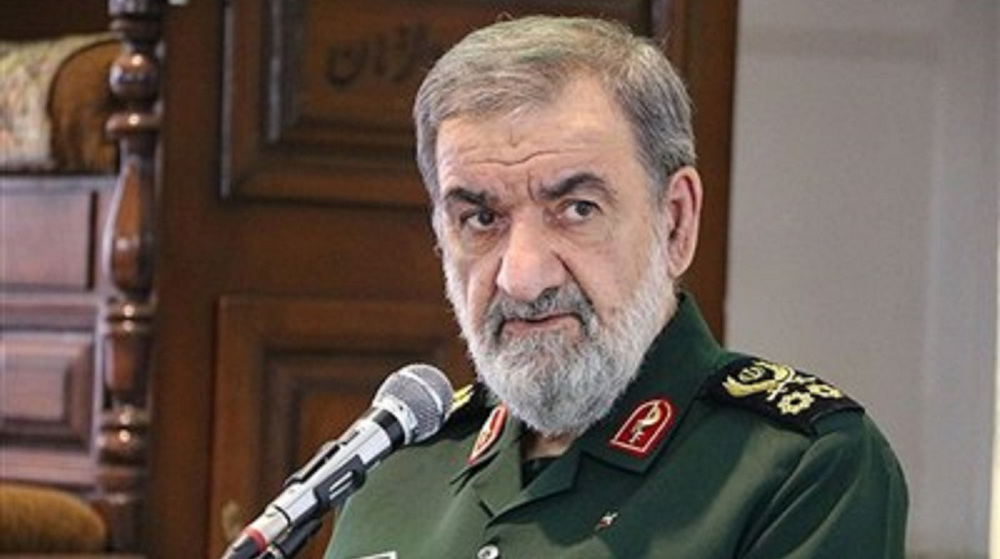
New world order's rules no longer US-centric: Ex-IRGC chief cmdr.
May 15: Leader lauds third sacred defence as Iran charts new political and diplomatic course
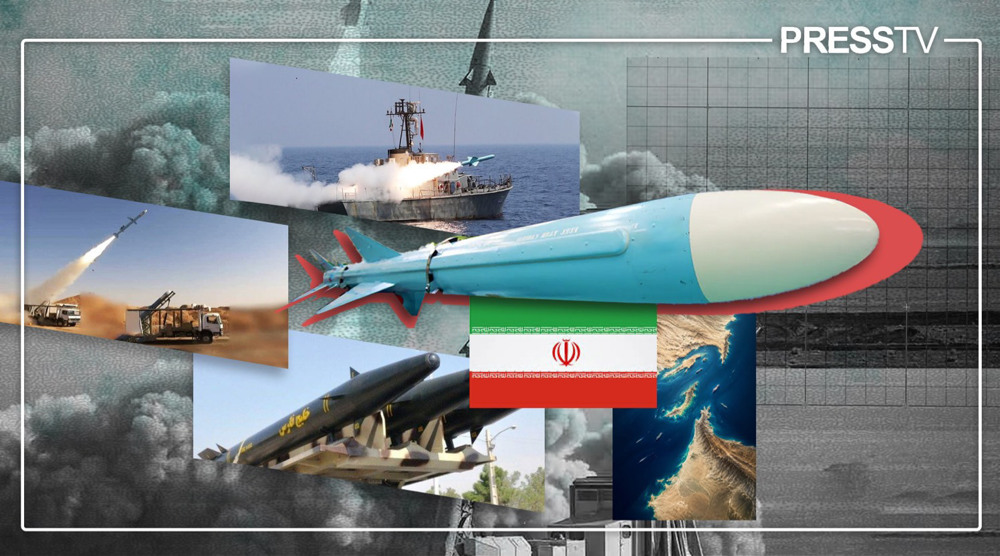
Iran's anti-ship missile arsenal: A formidable naval deterrence powerhouse in Persian Gulf



French judge launches inquiry into Khashoggi killing
Trump's inability to see Iran's power costs him everything in China
Thousands march in London for Palestine on Nakba Day amid heavy police presence
Qassem Brigades confirms top commander martyred in Israeli strike on Gaza City
110 Lebanese paramedics killed in 163 direct Israeli attacks: MSF
Restraint will not last forever, Iran warns Persian Gulf Arab countries
Iran to unveil new mechanism to manage Strait of Hormuz, will collect tolls: Senior MP
Trump leaves Beijing empty-handed as defeat to Iran shifts power balance, reshapes world order




 PressTV NEWSLETTER now
  This makes it easy to access the Press TV website