Voices from the frontline: Colleagues recall fearless legacy of slain Lebanese journalists
By Hiba Morad
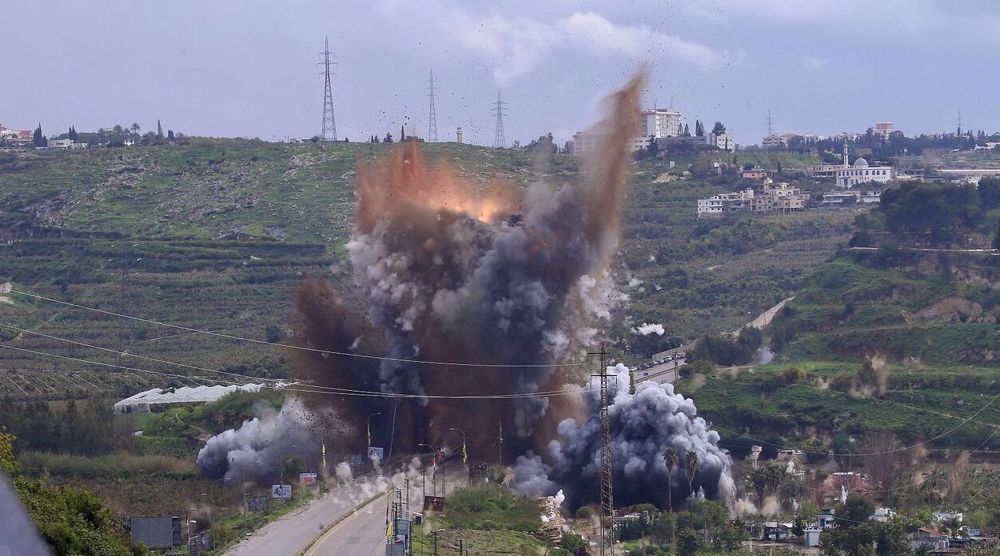
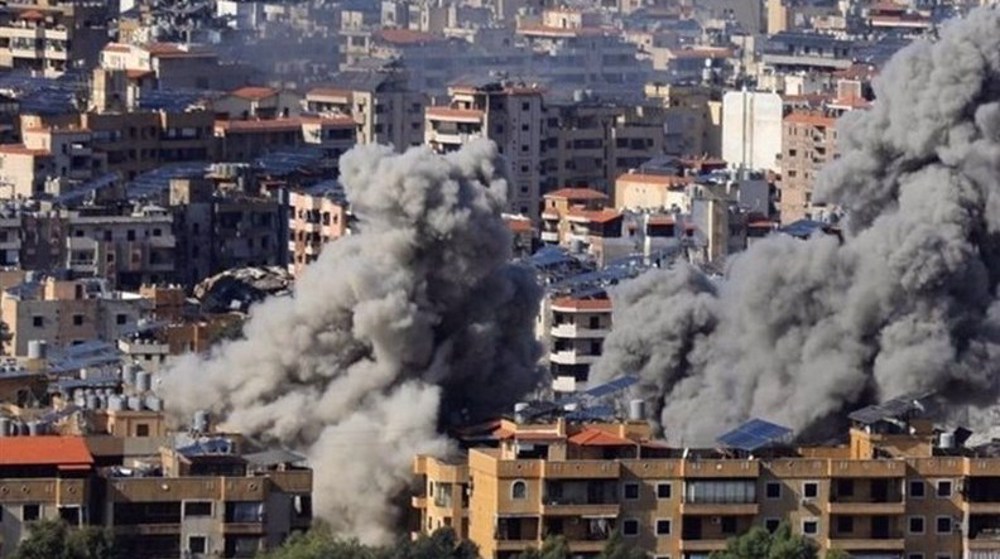
Southern Lebanon has long been a frontline for war between the Israeli regime and Hezbollah, but on Saturday, it became the site of a devastating blow to press freedom.
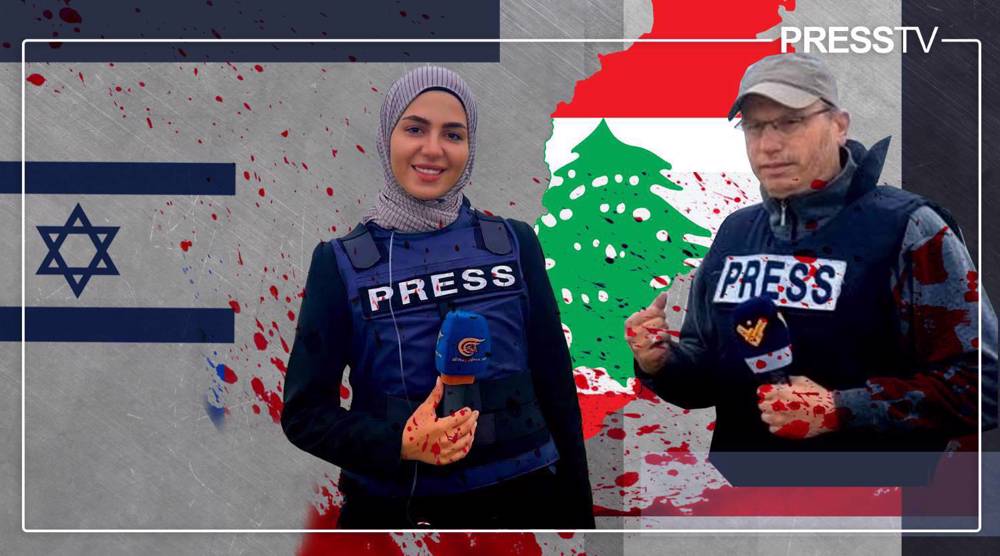
An Israeli airstrike struck a vehicle clearly marked as a press car, killing several journalists, including Al-Mayadeen correspondent Fatima Ftouni, her brother and cameraman Mohammad Ftouni, and Al-Manar’s veteran journalist Ali Shoaib.
The attack also claimed the life of a paramedic who rushed to the scene, underscoring the peril faced not only by reporters but also by those who attempt to save them.
A legacy of frontline reporting
Shoaib, a seasoned war correspondent who covered the Israeli wars of aggression against South Lebanon for decades, was remembered by colleagues as ‘a defining figure in war correspondence’.
Mohammad Kazan started working with Shoaib during the July 2006 war, when the latter reported from Lebanon’s frontlines in the South and Kazan was reporting from Nabatiyeh.
“As colleagues, we worked side by side, maintaining direct cooperation until my role shifted from correspondent to managing the channel’s website,” Kazan recalled in a conversation with the Press TV website.
Shoaib, he asserted, never missed anything and was always on the frontline, covering every attack and every act of aggression from the Israeli side, fearlessly and resolutely.

“His field reporting also took him to Syria and Iraq, where he documented events on the frontlines in the battles against extremist groups like Daesh. Ali was regarded as one of the most prominent figures in resistance media in Lebanon and the region,” Kazan said.
“Shoeib’s assassination is seen not only as a personal loss but as a symbolic moment that will inspire future generations of journalists committed to reporting from the frontlines.”
A voice of resistance
For decades, Shoeib was a permanent fixture in southern Lebanon’s media landscape. He reported on landmark events, including the 2000 war of liberation, the 2004 prisoner exchange, and the 2006 war that redefined the resistance against occupation.
In 2023, when Israel erected a fence cutting off the border village of Ghajar in South Lebanon, Shoaib told the Press TV website in an exclusive interview: “Whatever Israelis do, they will not prevent us from carrying out our duty as Lebanese people who seek to liberate their lands.”
His words reflected the defiance that defined his career, his colleagues and acquaintances said, commending him for always standing on the right side of history as a war correspondent.
Ftouni: Journalism as belonging
According to Abbas Zein, Ftouni’s colleague and close friend at al-Mayadeen, journalism for her was more than a profession – it was an expression of identity.
“Her work was a reflection of her identity, her roots, and her deep attachment to the land she loved. Covering the south was not simply a professional assignment—it was an expression of authenticity and belonging,” he told the Press TV website.
In the field, she became a trusted source of truth, correcting misinformation and documenting violations by the aggressor, until the last moment.

“In recent days—when rumors spread about Israeli incursions inside the South of Lebanon—her reports helped correct misinformation. Her words carried weight, quickly disseminated as a trusted source of truth, documenting violations and aggression,” Zein told the Press TV website.
According to him, her reporting carried the voice of southern Lebanon’s people, and her martyrdom is mourned as both a personal and collective loss by the people of South Lebanon in general and the media fraternity in particular.
Before moving to field reporting, she worked as an editor at Al-Mayadeen Net, where colleagues described her as warm, devoted, and uncompromising in her integrity.
Earlier this month, her uncle and his family were killed in an Israeli strike, a loss she had reported on live television, which inspired awe and admiration.
Targeting the press
On Saturday, shortly after the missile strike that killed Ftouni, al-Mayadeen's correspondent Jamal Ghourabi said the regime targeted her vehicle with four precision missiles.
After that, when ambulances arrived on the scene, paramedics were also targeted, leading to the martyrdom of at least one paramedic, reflecting an obvious attempt to assassinate press crews and even paramedics attempting to reach them, he said from the scene of the incident.
According to Zein, the incident highlights the “dangers journalists face in conflict zones, where press markings offer little protection against deliberate Israeli strikes.”
Israel, which has killed more than 270 journalists in Gaza since October 2023, often justifies its deliberate killing of journalists, claiming that they are linked to resistance groups.
It claimed the same for several Palestinian journalists who were killed in the line of duty in Gaza and the occupied West Bank, linking them with Hamas. Following the killing of Shoaib on Saturday, an Israeli military page on X posted his image, linking him with Hezbollah, without providing any evidence.

The cost of bearing witness
Reporting from the frontline is perilous and comes at a cost. Few are willing to risk their lives to document wars and occupations.
Yet for Ftouni, Shoaib, and their colleagues, the mission was clear: to bear witness, to speak for the oppressed, and to ensure that the realities of war reached the world.
“Their martyrdom marks a painful chapter in Lebanon’s media history, but their legacy endures in the determination of those who continue to report from the frontlines,” Zein stated.
They were fearless and unwavering in their work, a commitment evident in the reports they filed.
Nearly five months before her own martyrdom, Ftouni documented the killing of her colleagues by the Israeli regime, holding up their torn vests in a widely circulated video.
Shoaib was equally resolute. During a visit to Tehran in October 2024, he admitted in an interview with Press TV that he longed for martyrdom in the line of duty.
As one social media user put it, they remained on the front lines from day one, undeterred by the danger, so the world could witness the truth.
Following their killing on Saturday, fellow journalists gathered in South Lebanon, condemning the deliberate attack on them as a war crime and a blatant violation of international law.
They pledged to carry on their mission of reporting the truth from the front lines.
US Congresswoman Rashida Tlaib demands end to US-backed war crimes in Lebanon
Lebanon parl. speaker rejects deal with Israel as 'imposition' on country
Hezbollah reaffirms right to defend Lebanon amid continuous Israeli violations of truce

Management of Strait of Hormuz solely Iran’s responsibility: Senior MP
Martyred Leader's funeral to serve as global movement against terrorism, US-Zionist crimes: Army
2026 World Cup: Iran prepares to depart Mexico after 24-day stay in Tijuana
At UN Security Council, Palestine envoy urges world to stop Israeli annexation
Two IRGC servicemen martyred in terror attack in western Iran
VIDEO | Pakistan launches fourth cross-border strikes inside Afghanistan
VIDEO | Pro-Palestinian activists in Paris rally to condemn ongoing Israeli genocide
VIDEO | Spain rejects US pressure as Trump intensifies criticism of NATO allies


 PressTV NEWSLETTER
now
PressTV NEWSLETTER
now
 This makes it easy to access the Press TV website
