Iran’s steel powerhouse to forge new strength from desperate strikes
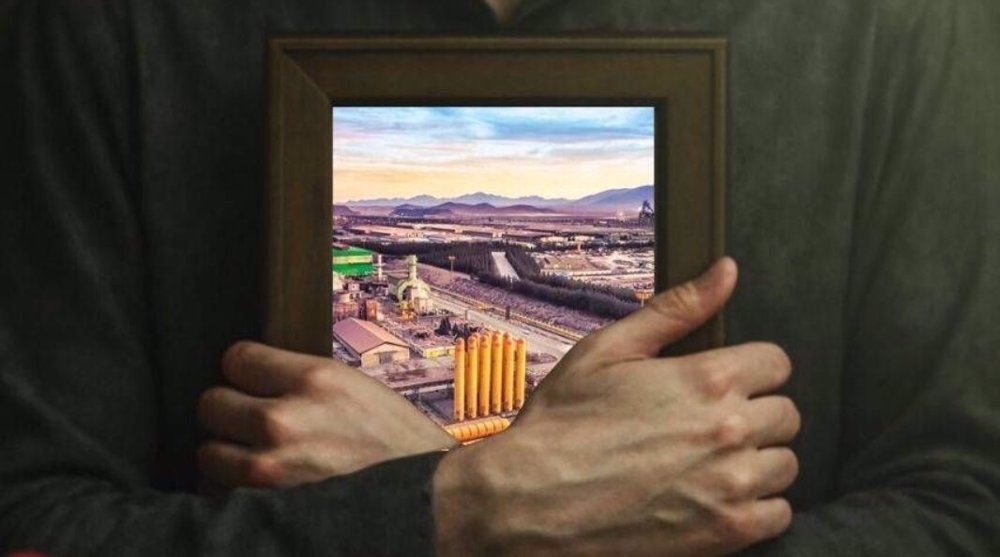
On Friday, Mobarakeh Steel in Isfahan, Khuzestan Steel, and Alghadir Aluminum in Markazi province were attacked as part of the US-Israeli war of terrorism against the Iranian nation.
According to the Ministry of Industry, Mining and Trade, specialists are examining the damage and domestic experts will restore production lines to operation as quickly as possible.
The deliberate and cowardly attack on the heart of Iran’s industry represents a futile effort to destroy the country’s core infrastructure and underscores the duplicity of the adversary’s claims that civilian facilities would not be targeted.
At Mobarakeh Steel, a power substation and an alloy steel production line were hit. At Khuzestan Steel, company warehouses were targeted.
Following the aggression, officials pledged that the companies will make every effort to resume production lines in the shortest possible time.
The attack on industrial and energy infrastructure occurred while US President Donald Trump had repeatedly claimed in recent days that attacks on energy infrastructure would cease.
Iran’s Foreign Minister Abbas Araghchi, writing on social media platform X, noted that Israel had targeted two of the largest steel factories in Iran, one power plant, and civilian nuclear sites alongside other infrastructure.
Israel claims to have coordinated the aggression with the United States, contradicting the extended diplomatic deadline set by the US president, he said.
Under widely accepted international norms, non-military industrial and production units must be protected from harm and threats. Yet, industries are not the only targets in the ongoing terrorist campaign.
In the early morning of Wednesday, the US and Israel attacked a building at Isfahan University of Technology. The assault and similar cowardly targeting of centers of science and knowledge reflect the enemy’s persistent fear of Iran’s scientific progress.
More than 50 students and prominent faculty members have lost their lives in these criminal attacks. Each of the martyrs represented an irreplaceable investment in the future of the country.
The targeting of Iran’s industrial, scientific, and knowledge infrastructure signals the enemy’s desperation and failure in the face of Iran’s growing industrial and economic strength and reflects their helplessness against the Iranian military in active combat.
The Israeli regime, through repeated cowardly attacks on industrial infrastructure, has revealed its true face to the world. The assault on steel, cement and similar industries in Iran constitutes a terrorist act and violates all principles of international law.
The steel industry, which has already fought in the economic war, overcoming sanctions one after another, is now the direct target of terrorist attacks, following prior cyberattacks aimed at halting production and development in these major steel companies.
Despite sanctions, the industry has continued to demonstrate the skill, knowledge, and creativity of its workforce, achieving successive records in production, development, sales, and exports.
The direct attack demonstrates, on one hand, the strategic fear and weakness of the US and Israel in response to Iran’s military operations, and on the other hand, the failure of sanctions and maximum economic pressure against Iran.
Steel is a mother industry and a revenue-generating sector. Over the past years, Iran’s steel sector has achieved significant progress, with even European countries now requiring Iranian steel.
Mobarakeh and Khuzestan Steel, as two of the largest producers in Iran and industrial hubs, play a key role in production, employment, and industrial energy supply. Attacks on these facilities constitute a direct assault on critical economic infrastructure.
In recent years, steel has become a symbol of economic self-belief and self-sufficiency. Even during sanctions, internal challenges such as energy constraints, export duties, and international competition have not halted production.
The sector continues to shine as a model of development and domestic capability.
After the Islamic Revolution in 1979, steel evolved from a production project to a national strategy for economic independence, surviving war, sanctions, and economic volatility, becoming a cornerstone of Iran’s economy.
In the early decades post-revolution, large industries faced severe challenges, including the war, financial limitations, the exit of foreign companies, and supply chain disruptions.
Maintaining and expanding mother industries tested managerial skill and political resolve. Steel grew in this context, from a limited capacity in the 1980s to one of the largest regional industrial chains today.
Strategic attention to base industries was essential. In Iran’s industrial development literature, steel has been recognized as the engine of sectors including construction, infrastructure, energy, transport, and defense.
Policies gradually expanded production capacity, integrated the supply chain from mine to finished product, and promoted downstream industries, moving Iran from importer to a major regional steel producer.
Khuzestan Steel exemplifies this trajectory. Founded in the early post-revolution years, it has become a key producer and a pillar of southern Iran’s industrial landscape. Its role extends beyond production to exports, employment, and the development of regional industrial chains.
Sustained strategic attention at the national level has ensured that over four decades, development of mother industries, particularly steel, remains central to economic independence.
This vision, supported by policy, investment, and planning, has positioned Iran among the world’s top steel producers.
Steel, in fact, is one of the legacies of the martyred Leader of the Islamic Revolution Ayatollah Seyyed Ali Khamenei, in which economic self-reliance evolved from a political slogan into a practical industrial policy.
Threats to the sector today are part of a broader equation regarding the country’s economic future and independence. Steel represents Iran’s ability to stand on its own and its pursuit of national self-sufficiency.
Even in the face of the recent strikes and damage inflicted on these industrial pillars, Iran’s steel workforce has long since transformed “we can” into “we did.”
With the support of the people and leadership, they will continue to rebuild, restore and sustain production, reinforcing the industry’s role as a cornerstone of the country’s economic resilience.
Iran, Pakistan forge blueprint for Islamic economic integration
US Treasury issues waiver for Iranian oil exports under Islamabad MoU
Super-sized drilling rig installed at Iranian offshore oilfield



At UN Security Council, Palestine envoy urges world to stop Israeli annexation
Two IRGC servicemen martyred in terror attack in western Iran
VIDEO | Pakistan launches fourth cross-border strikes inside Afghanistan
VIDEO | Pro-Palestinian activists in Paris rally to condemn ongoing Israeli genocide
VIDEO | Spain rejects US pressure as Trump intensifies criticism of NATO allies
VIDEO | Afghanistan-Pakistan tensions escalate after fresh airstrikes by Islamabad
Iran, France FMs discuss Islamabad MoU implementation
US congressman: Americans should stop funding Israeli war crimes


 PressTV NEWSLETTER
now
PressTV NEWSLETTER
now
 This makes it easy to access the Press TV website
