‘The world just changed’: Netizens react to Iranian air defenses ending US F-35 invincibility
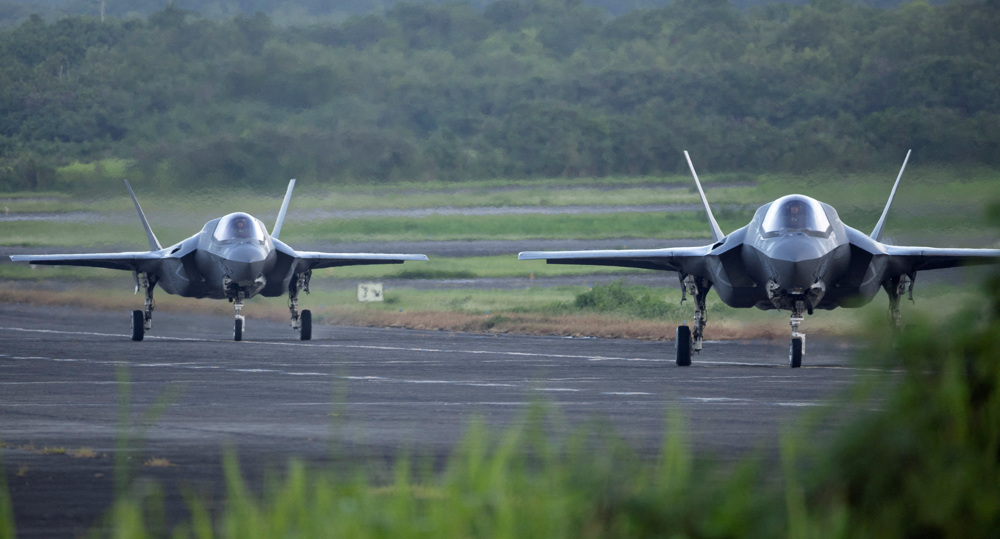
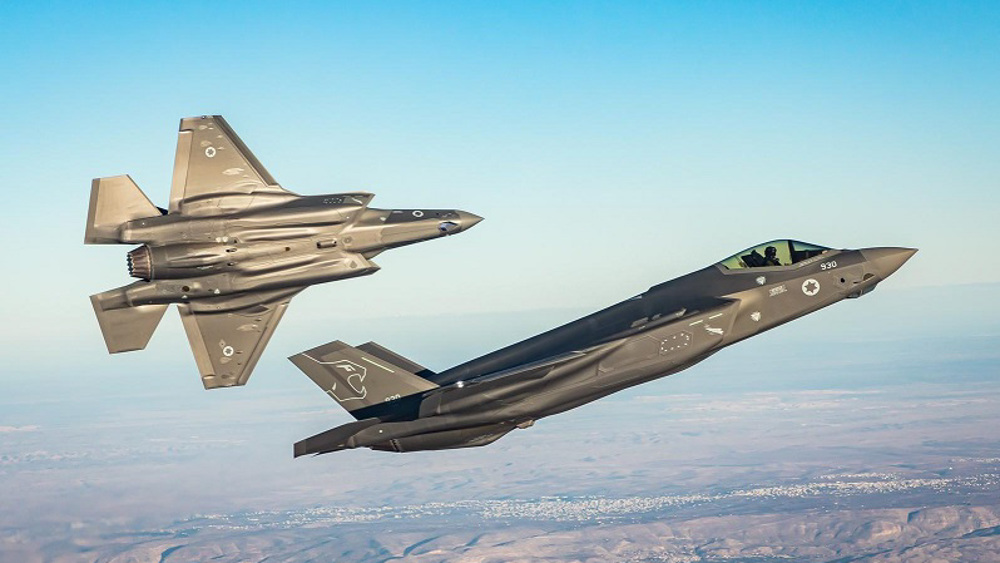
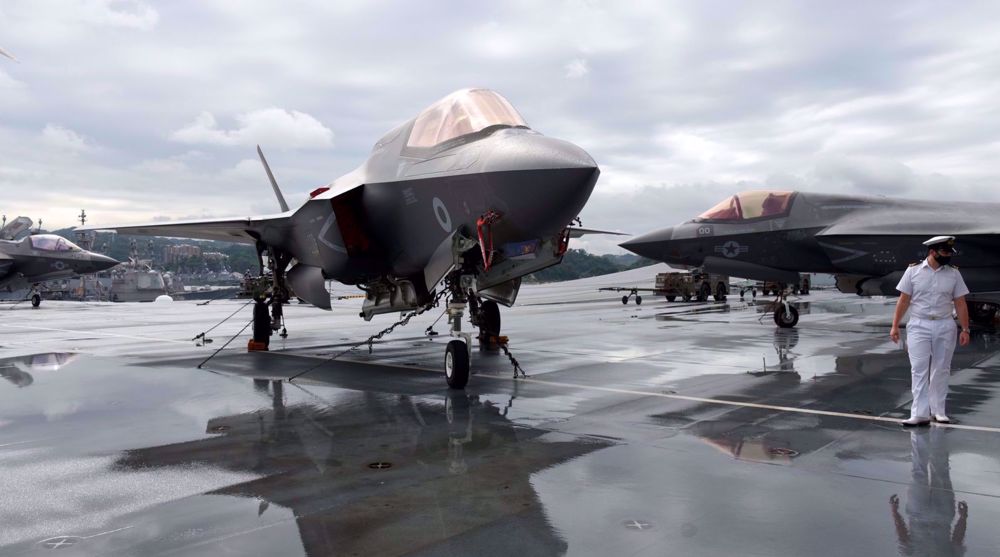
In a development that has sent shockwaves through the global military community, Iranian armed forces on Thursday successfully targeted a US Air Force F-35 Lightning II, one of the world's most advanced stealth fighter jets.
It marks a potential turning point in modern aerial warfare and has sparked intense debate about the viability of stealth technology against determined, innovative opponents.
According to military pundits, it’s the first time ever that an F-35 jet has been struck.
The first reports emerged from an open source account, which said an F-35A/B Lightning II had “made an emergency landing” after being hit by an Iranian surface-to-air fire.
“We are aware of reports that a U.S. F-35 aircraft conducted an emergency landing at a regional U.S airbase after flying a combat mission over Iran,” Navy Capt. Tim Hawkins of CENTCOM later said in a statement to Military Times.
Social media has been abuzz with reactions to the major development, which has shaken the US-military-industrial complex since Thursday, particularly regarding the staggering cost of the F-35 program compared to the means of its neutralization
Analyst Will Schryver said CENTCOM has confessed that the Iranians successfully targeted and "damaged" an F-35 flying in Iranian airspace."
While CENTCOM claimed the aircraft made an emergency landing and the pilot was in stable condition, Schryver expressed skepticism, pointing to video footage from Iran that "clearly shows a plume of flame trailing behind the jet after the strike."
⁉️ F-35 Shot Down?
— Will Schryver (@imetatronink) March 19, 2026
CENTCOM has confessed that the Iranians successfully targeted and "damaged" an F-35 flying in Iranian airspace. They claim it made an emergency landing and the pilot is in "stable condition".
Iran released a very short clip of what they claim was the strike.… pic.twitter.com/3bC1fa0Ixr
Social media user Brandon Weichert also highlighted this disparity.
"The F-35 program was billed as the most advanced stealth fighter ever. It cost us $2 trillion over 20 years. And it gets clipped by a missile belonging to a military that I have been told repeatedly by the Pentagon was totally defeated," he stated.
The F-35 program was billed as the most advanced stealth fighter ever. It cost us $2 trillion over 20 years. And it gets clipped by a missile belonging to a military that I have been told repeatedly by the Pentagon was totally defeated. LOL. Hope the pilots are OK, tho! https://t.co/FtLNEoitGC
— Brandon Weichert (@WeTheBrandon) March 19, 2026
The psychological and strategic implications were explored in depth by social media user Gandalv, who argued that the F-35 was "a theological statement and America’s way of saying: we have moved beyond the reach of your missiles, your sensors, and your prayers. Iran apparently didn’t get the memo."
He further elaborated on the technical vulnerability, explaining that the F-35's own powerful engine makes it highly detectable by infrared sensors.
"The heat signature data Iran now holds is not just embarrassing. It is a gift that keeps giving. To Moscow. To Beijing," he noted.
The F-35 was supposed to be unkillable. That was the whole point.
— Gandalv (@Microinteracti1) March 19, 2026
Lockheed Martin spent thirty years and four hundred billion dollars, the most expensive weapons programme in human history, building an aircraft that the enemy simply could not see. Not on radar. Not on infrared.… pic.twitter.com/kTvVUdbrq0
A recurring theme in the social media commentary is the nature of the system that got hit.
Francis Gaitho emphasized the domestic origin, stating it wasn’t Russian air defenses, but a fully domestically built Iranian air defense system that tracked & hit the 'stealth' F-35.
It wasn’t Russian air defenses
— Francis Gaitho (@FGaitho237) March 19, 2026
It wasn’t Chinese air defenses
It wasn’t American air defenses
It was a fully domestically built Iranian air defense system that tracked & hit the “stealth” F-35.
Built by Iranian engineers during MAXIMUM sanctions.
Necessity is the mother of… pic.twitter.com/zyZBfgYNfZ
This sentiment was echoed by Raju Parulekar, who pointed to the stark cost differential: "Iran became the first country in the world to shoot down a $190 million American fifth-generation stealth F-35 fighter jet with a $3,000 domestically-made Iranian anti-air defense system."
Iran became the first country in the world to shoot down a $190 million American fifth-generation stealth F-35 fighter jet with a $3,000 domestically-made Iranian anti-air defense system. Just locking the plane on radar was a big deal. pic.twitter.com/t1fyWhup30
— Raju Parulekar (@rajuparulekar) March 20, 2026
Experts suggest the ramifications extend beyond a single loss. Dr. Syed Mohd Murtaza noted that the successful engagement has given Iran priceless data.
"IRST lock gave heat detection range of F-35... F-35's infrared fingerprint is a priceless record for Iran now. This would be transferred to friendly countries. It will help in developing sensors to identify & target it," he stated.
He further remarked that after this event, F-35 pilots will now "fly defensively... They are no more invisible."
Hitting F-35 during a combat mission over Iran is going to change many things for this stealth aircraft.
— Dr. Syed Mohd Murtaza مرتضیٰ (@syedmohdmurtaza) March 19, 2026
IRST lock gave heat detection range of F-35. It showed at which speed & altitudes, the stealth coatings failed against infrared sensors.
F-35's infrared fingerprint is a… pic.twitter.com/4uH0ckS5sb
US-based analyst Shaiel Ben-Ephraim placed the event in a broader operational context, questioning the claimed US air supremacy. He noted that the successful engagement "raises questions about several things," including the defeat of the F-35's stealth capabilities.
He presented a troubling tally: "At least 16 US military aircraft have been lost or damaged” since the war against Iran was launched on February 28.
The US and Israel have not gained complete air supremacy over Iran as claimed. This becomes clear when you look at the F-35 hit by Iranian anti-air fire. It raises questions about several things:
— Shaiel Ben-Ephraim (@academic_la) March 19, 2026
1) It seems the F-35’s stealth capabilities were defeated by advanced Iranian air…
This cumulative impact was summarized succinctly by Umar Khayyam, who listed a litany of losses in just twenty days: "2 F-35 stealth fighters hit, 4 F-15 Strike Eagles lost, 7 KC-135 Stratotankers damaged (one lost), 10 highly expensive radar systems taken out."
2 F-35 stealth fighters hit
— Umar Khayyam (@utggondal) March 20, 2026
4 F-15 Strike Eagles lost
7 KC-135 Stratotankers damaged (one lost)
10 highly expensive radar systems taken out
All in just twenty days of war against an adversary with just a 10 billion dollar annual defense budget. Uncle Sam getting Epsteined!
The broader geopolitical significance was not lost on observers. A social media user ADAM said the achievement carries immense symbolic weight.
"One of the most sanctioned countries on earth was able to detect, lock on to, and hit an F-35. I don’t think most people understand that the world has just changed."
One of the most sanctioned countries on earth was able to detect, lock on to, and hit an F-35.
— ADAM (@AdameMedia) March 20, 2026
I don’t think most people understand that the world has just changed.
Another user, Amerikanets, charted a timeline of the F-35's mythos, from being "undetectable" in 2020 to being successfully engaged in 2026, suggesting a fundamental shift in the balance of air power.
2020: No one can detect the F-35
— Amerikanets 📉 (@ripplebrain) March 19, 2026
2023: Maybe the F-35 can be detected under certain conditions by advanced militaries
2025: One of the poorest countries in the world can detect and lock on to the F-35 but can't hit it
2026: A poor country can detect, lock on to, and hit the… https://t.co/AkytvHOTPS
While the Pentagon continues to downplay the extent of the damage, framing it as a survivable incident, the event has undeniably pierced the aura of invincibility surrounding the crown jewel of American military aviation.
As Gandalv stated, "You cannot reprogramme a pilot’s brain. Every F-35 driver who takes off from here on knows, actually knows, that someone down there might be able to see them. That changes everything."
Mission unaccomplished – Part I: America failed to achieve every war objective against Iran

Iran's Armed Forces created an 'epic' that exceeded aggressors' expectations: President Pezeshkian

Unity of arenas: Clause 1 of Iran-US MoU and future of Iran’s regional deterrence architecture



Iran warns ships off unauthorized Hormuz routes amid talks with Oman
Al-Houthi: Iran's 'great victory' over US is triumph for resistance axis
Iran rejects US plan to spend frozen assets on American farmers
Iran seeks formal Italian rejection of NATO claim on use of bases against Iran
Lebanese MPs say Iran forced US, Israel to halt aggression
Iran declares readiness to send relief teams to Venezuela quake zone
Quds Force chief warns Israel of 'humiliating retreat' from Lebanon
At BRICS, Iran says US bases must go, slams 'blind war' on global energy




 PressTV NEWSLETTER now
  This makes it easy to access the Press TV website