US-orchestrated asylum plot or homeland? Iranian women footballers make their choice
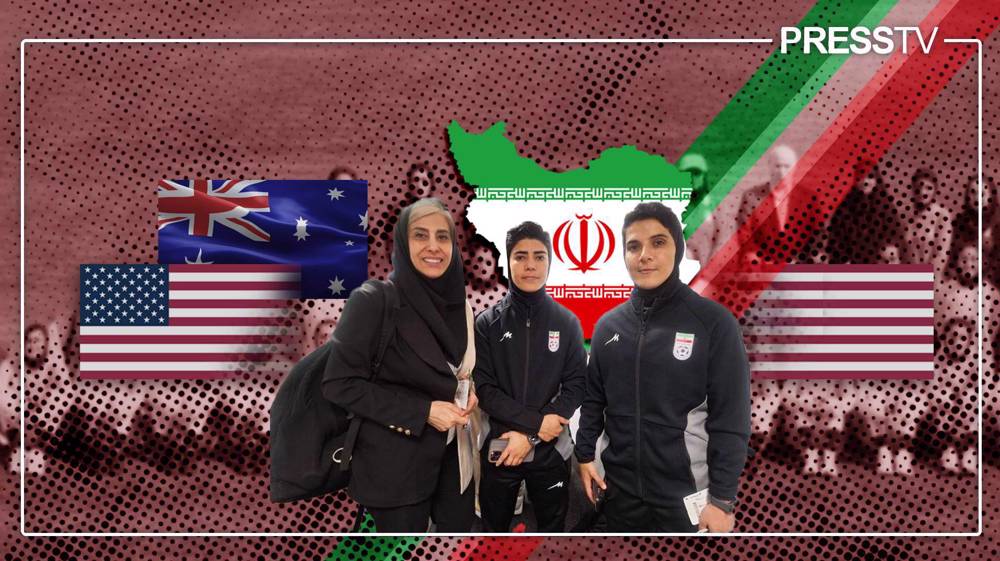
By Mina Mosallanejad
The Iranian women’s national football team’s journey in the AFC Women’s Asian Cup ultimately became a narrative far removed from the pitch.
From the outset, a shadow loomed over their participation in Australia, with persistent speculation that certain hostile elements sought to exploit the team's presence in the tournament as a stage for political theater.
These undercurrents gained alarming momentum as the tournament approached.
After the unprovoked US-Israeli aggression against Iran on February 28, the abstract speculation crystallized into a tangible and aggressive scenario. The intensifying political pressure on the Iranian women’s team appeared more like a premeditated scheme orchestrated in tandem with the escalating hostilities.
It became increasingly clear that the Trump administration had devised a plan aimed at the psychological manipulation of the Iranian athletes, with the ultimate goal of coercing them into seeking defection during the tournament.
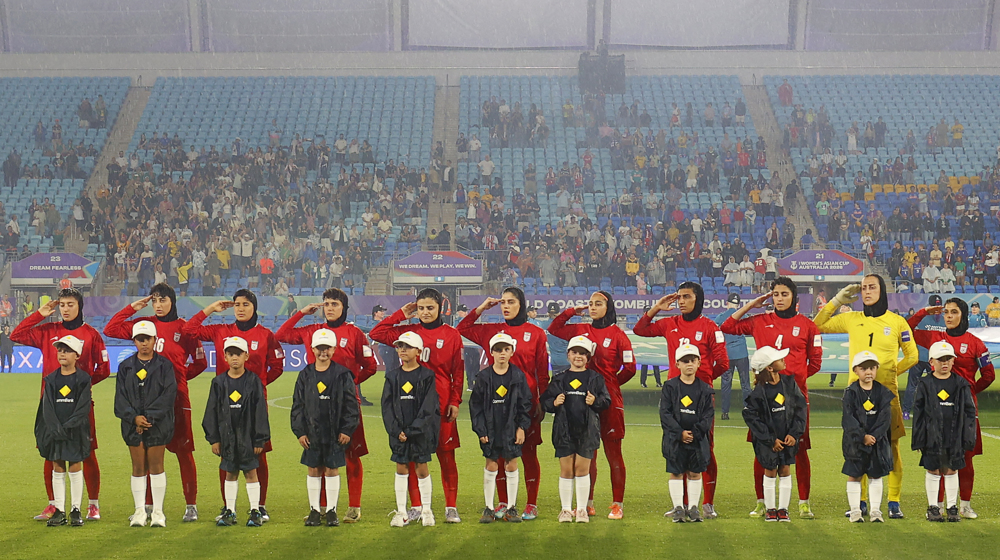
The first act of this drama unfolded with reports that five members of the squad had applied for asylum in Australia, citing "fears of persecution." This followed their initial refusal to sing the national anthem before a match, a decision they later reversed, saluting and singing in subsequent games in a demonstration of great national pride.
Seizing the moment, US President Donald Trump publicly beseeched Australian authorities to grant the players asylum, making the unsubstantiated claim that they would "most likely be killed" if they returned to Iran.
His intervention strongly implied a coordinated plot between Washington and Canberra. Less than two hours later, Trump announced that Australia had approved the requests, while simultaneously alleging that the remaining team members were "forced to return" due to threats against their families. He provided no evidence for these baseless accusations.
While the Australian government confirmed that the rest of the Iranian delegation had been offered the option to apply for asylum, no other players accepted.
The pressure campaign, however, followed the team to Gold Coast Airport during their departure. There, a group of anti-revolutionary elements targeted two more players in a last-ditch effort to persuade them to stay.
Just as anti-Iranian factions began to celebrate what they perceived as a major victory, the tide turned. Players refused to succumb to pressure. The first to reconsider was Zohreh (Mahdeseh) Zolfi, who reversed her decision and traveled to Malaysia to rejoin the national team. She was soon followed by Mona Hamoudi, Zahra Sarbali, and Zahra Moshkehkar, who withdrew their asylum requests on Saturday to reunite with their teammates.
The most significant blow to the scheme came on Sunday, when team captain and all-time leading scorer Zahra Qanbari also reversed her decision.
In a powerful testament to national pride, she chose "the homeland" for her future. Of the seven players who initially opted to remain in Australia, five ultimately returned to the fold and the remaining two will also be in Iran soon.
The team had arrived at the AFC Women’s Asian Cup in Australia with a singular focus: to deliver a performance that honored their nation and their sport.
Brimming with high energy and tremendous motivation, they were prepared for the challenges on the pitch to make their country proud. What they were not prepared for was the coordinated political assault that awaited them from the opening whistle.
From their very first match, the team found itself besieged by non-sporting pressures and targeted attacks from hostile groups bankrolled by Western spy agencies. These forces were not merely a distraction; they significantly eroded the players’ technical execution and mental fortitude on the field.
In a tournament where FIFA regulations explicitly mandate that host nations ensure peace and security for all participating teams, the Australian organizers failed in their most fundamental duty. Instead of providing a neutral and protected environment, they acted as instruments for Iran’s enemies, actively aggravating the conditions for the athletes and making the atmosphere unsafe and insecure for the visiting team.
Far from protecting the delegation, Australian authorities and FIFA representatives permitted hostile anti-Iran groups to encroach dangerously close to the team, wielding extreme political pressure that ultimately contributed to the decision by some members to seek asylum under duress.
Anti-Iranian groups seized upon these events, launching extensive propaganda campaigns designed to frame the incident as a monumental "political victory."
This project, driven by the US government and its spy networks and enabled by Australia, was a direct violation of FIFA’s own statutes, which explicitly prohibit political and racist conduct.
Yet, the Asian Cup laid bare a troubling reality: FIFA operates with a double standard. Rather than acting as a neutral guardian of the sport, the organization acts as a political ally to certain regimes. Throughout the tournament, FIFA had both the authority and the obligation to warn Australian officials and initiate strict disciplinary proceedings. It did neither.
On the contrary, the football governing body clearly sided with anti-Iranian war-mongers and hate-mongers, even organizing ceremonies that indirectly exploited the asylum cases of the players for political gain.
The episode serves as a stark reminder that when dealing with countries that champion freedom and political neutrality, FIFA refrains from enforcing its own regulations equally.
It demonstrated itself not as a fair international body, but as a cooperative partner to those very powers, undermining the principles of equality and sportsmanship it was formed to uphold and protect.
We have seen these blatant double standards in the past two years in Gaza, where hundreds of footballers have been killed by the Israeli regime in cold blood, with FIFA acting as a mute spectator, refusing to take any action against the murderers.
In this case, the narrative, however, was not defined solely by the initial defections. It was reshaped by the players who chose to return. So, the plot hatched by the US and Australia, with FIFA’s direct or indirect involvement, ultimately backfired.
Alireza Rahimi, the Deputy Minister for Youth Affairs at the Ministry of Sports and Youth, responded to the withdrawal of asylum requests by Mona Hamoudi, Zahra Sarbali, Zahra Moshkehkar, and Mahdeseh Zolfi, and their subsequent return to the national team.
He hailed their decision as a profound testament to patriotism, especially at a time when their country is under the illegal and unjustified Israeli-American war of aggression.
In a message on X, Rahimi celebrated their homecoming: "Bravo to the dear daughters of Iran—Mona Hamoudi, Zahra Sarbali, Zahra Moshkehkar, and Mahdeseh Zolfi—who, by choosing Iran, proved that honor, dignity, and love for the homeland cannot be traded for any offer, deception, or pressure."
Addressing the hostile media campaigns designed to weaponize the team's name, he added: "At a time when the enemies sought to turn the name of our national team and our daughters into a tool for psychological warfare, these lion-hearted girls courageously stood beside the flag of Iran through their decisive choice."
His statement ended with a powerful tribute to their unwavering commitment to their home and the homeland and everything associated with it.
"May I die before ever betraying my homeland; blessed are you whose names will be forever recorded in the history of our nation’s sport as symbols of loyalty to Iran."
In their return, the players not only reclaimed their own agency but delivered the ultimate defeat to a scheme that was engineered to exploit them for political ends.
Mina Mosallanejad is a Tehran-based writer and analyst.
Rights group takes FIFA complaint against Infantino to IOC over Trump ties

Belgium routs US, but FIFA's political capitulation to White House overshadows the game

Belgium outraged as FIFA clears US striker to play despite red card



Trump endorsed Saudi crown prince’s decision to bomb Sana’a airport: Report
'Lies and endless wars must stop:' Democrats denounce Trump’s renewed aggression on Iran
VIDEO | Bangkok pub fire kills at least 27 people
Iran submits detailed complaint to UN over US violations of war-ending memorandum
IRGC launches missile strikes on US Fifth Fleet in Bahrain, airbase in Jordan
IRGC Navy strikes two rogue super tankers misled by US into crossing Strait of Hormuz
VIDEO | German economy: 100,000 job cuts announced
VIDEO | EU ministers flaunt bloc's foreign policy double standards



 PressTV NEWSLETTER
now
PressTV NEWSLETTER
now
 This makes it easy to access the Press TV website
