Dozens of Lebanese paramedics killed, ambulances destroyed in latest Israeli aggression

By Hiba Morad
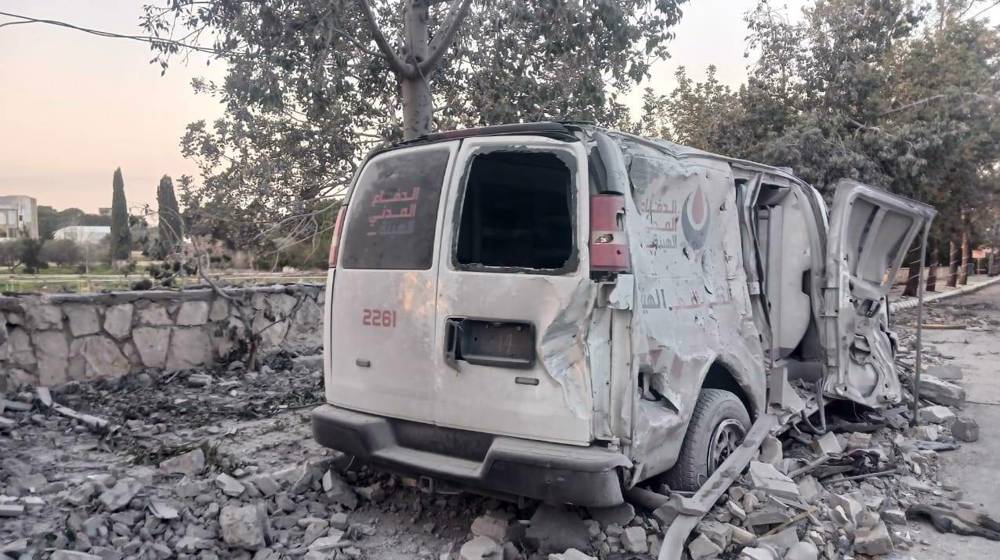
Amid relentless Israeli bombardment of Lebanon, paramedics, medical centers and ambulances have once again come under fire from Zionist fighter jets, echoing the pattern of Israeli aggression during the 2024 war on Lebanon.
In an interview with the Press TV website, Mahmoud Karaki, media spokesman for the Civil Defense Committee in Lebanon, reported that during the first two weeks of the current spell of the war against Lebanon, Israel has struck five ambulance centers, killed 26 paramedics, and injured around 50 others as of March 12.
“The current offensive mirrors past conflicts in its targeting of rescue teams and centers,” Karaki said. “During the last war, civil defense and the Islamic Health Authority lost 153 personnel and 46 centers.”
Despite the heavy toll, Karaki emphasized that humanitarian organizations remain steadfast in the field. “The Lebanese Red Cross, Al-Risala Health Association, and others coordinate closely, pooling resources to maximize rescue operations,” he noted.
The scale of the attacks was starkly illustrated on Friday, when Lebanon’s Ministry of Health reported that five paramedics were killed in a strike on the town of al-Suwwaneh, while 12 doctors, nurses, and paramedics lost their lives in a separate attack on a primary healthcare center in Burj Qalaway, both located in South Lebanon.
To date, 23 vehicles and 11 medical and emergency centers have been damaged, with a total of 23 Israeli attacks recorded against emergency services.
Israeli claims despite transparency
The Israeli occupation spokesman Avichay Adraee issued a warning earlier this week, claiming that Hezbollah is "extensively using ambulances and medical facilities for military purposes".
Karaki firmly denied the accusation as baseless, substantiated by evidence.
“This fabricated Israeli narrative mirrors long-standing Israeli propaganda used in Gaza and Lebanon to manufacture justification for attacks on medical staff and vehicles, as well as medical infrastructure,” he told the Press TV website.
“Israel creates and uses these lies and accusations as an attempt to justify and legitimize attacks on the health sector. Our work is purely humanitarian.”
Karaki noted that all operations are conducted under the supervision of the Ministry of Public Health and the International Red Cross, with ongoing coordination to ensure transparency.
Endurance and courage
According to Karaki, paramedics on the ground describe the status quo as working under conditions that test both “endurance and courage”.
“The mission of health workers begins the moment an air raid strikes: rushing into unstable, dangerous zones to rescue the wounded and evacuate the injured. Often, they arrive while the threat is still present—whether from renewed strikes on the same site or from massive destruction that blocks access to victims,” Karaki stated.
Despite the significant risks, health workers remain steadfast in their work.
“Every minute can mean saving a life,” Karaki told the Press TV website, underscoring the urgency that drives them forward.
He underlined that the strain of carrying out this duty is not only physical but also personal.
“Long hours blur into days, and during the holy month of Ramadan, many continue fasting while performing exhausting tasks. Breaking the fast often happens in the field, with nothing more than water or a few dates,” he added.
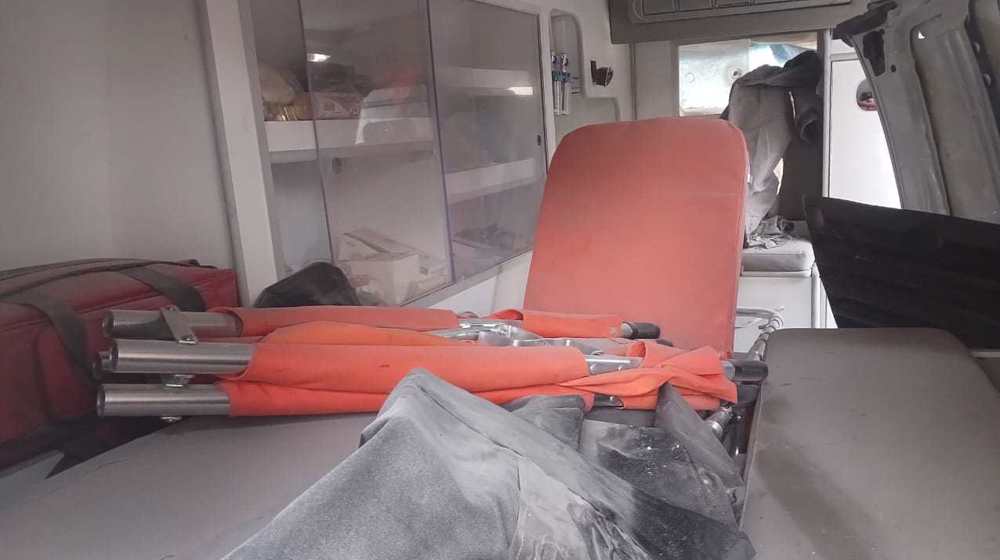
Sacrifices beyond the Battlefield
According to Karaki, the nature of the job demands constant readiness.
“Many paramedics spend days on end in field stations, with little chance to see their families. The sacrifices are heavy, but they are borne with a sense of mission,” he pointed out.
“This is a humanitarian calling, and that makes the hardship worth enduring.”
According to the civil defense media spokesman in Lebanon, the message from paramedics is clear: protecting medical and rescue teams is not optional – it is a humanitarian and legal obligation.
“Attacks on health workers and facilities violate international law. We all call for urgent international action to safeguard those who represent the first line of defense for civilian lives,” Karaki remarked.
It is worth noting the same narrative and aggression towards medical teams and ambulances was used during Israel's war on Lebanon in 2024, when Israeli occupation forces targeted a Civil Defense station in Beirut’s Bachoura area, an ambulance near Marj'youn Hospital, Salah Ghandour Hospital in Bint Jbel both in South Lebanon and near Rafik Hariri University Hospital in Beirut, to name a few.
Back then, a human rights watchdog report found no evidence to substantiate the Israeli allegations that Hezbollah utilizes ambulances for military reasons, highlighting that attacks on medical institutions without a sound military cause are illegal and may constitute war crimes.
Since late 2024, when a ceasefire was reached between the Israeli regime and the Hezbollah resistance movement, the regime has breached it thousands of times despite the Lebanese movement exercising strategic restraint.
Earlier this month, after repeatedly warning the Israeli regime against breaching the truce and urging the Lebanese authorities to take concrete measures to protect the people of Lebanon, especially in the South, from the Israeli aggression, Hezbollah finally decided to retaliate.
In the past two weeks, the resistance movement has carried out hundreds of retaliatory operations against the Israeli military targets in the occupied territories, imposing high costs on the enemy, much to the surprise of pundits who thought Hezbollah’s story was over.

Ansarullah stands ‘shoulder to shoulder’ with Hezbollah against Israel: Yemeni deputy FM

Hezbollah will not hesitate to respond to Israeli breaches of ceasefire deal: Lebanese MP

Israeli minister announces illegal settlement plans in Lebanon, mass displacement of Palestinian



Iran’s parliament speaker: ‘Future belongs to Global South’
US respects human rights as long as Israel is not implicated: Iran’s deputy FM
Israeli authorities use military infrastructure to expand illegal settlements: Report
Russia says US resolution on Strait of Hormuz 'not right'
French police arrest 6 for displaying Palestinian flag on Eiffel Tower during Nakba protest
Iran, Pakistan agree to facilitate border trade exchanges
Israeli forces raid villages in Syria's Quneitra, ransack houses
French judge launches inquiry into Khashoggi killing




 PressTV NEWSLETTER now
  This makes it easy to access the Press TV website