US Supreme Court strikes down swath of Trump global tariffs
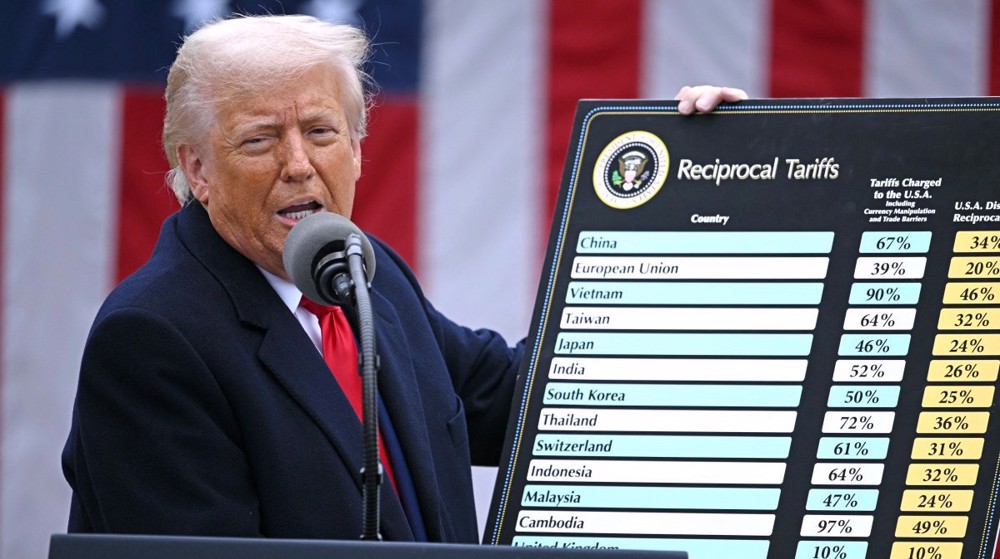
The United States Supreme Court has struck down the global tariffs imposed by the administration of President Donald Trump.
Trump's sweeping economic tariffs targeted countries across the globe that are considered US trading partners.
The tariffs imposed by the Trump administration had been lodged under the International Emergency Economic Powers Act (IEEPA).
However, the IEEPA was meant to be applied in the event of a national emergency.
The US Supreme Court justices, in a 6-3 ruling, decided that the use of the IEEPA exceeded Trump's authority.
The Supreme Court upheld the rulings by lower courts rejecting Trump's authority to impose the tariffs.
Trump had been the first president to use the IEEPA to impose sweeping tariffs on US trading partners.
The move was just one of the many ways Trump has aggressively pushed the boundaries of executive authority.
Under US law, Congress, not the president, has the power to impose taxes and tariffs.
However, by invoking the IEEPA to impose tariffs on nearly every US trading partner without the approval of Congress, Trump breached the law.
Trump has used tariffs and sanctions as a bargaining chip in US foreign policy.
The use of tariffs by Trump as an economic and foreign policy tool has antagonized numerous countries, including some that were considered among the closest US trading partners and political allies.
What changes now?
In the short term, US tariffs are likely to fall.
Analysts estimate that without the emergency-based tariffs, the average effective US tariff rate would drop to about 9 percent, compared with nearly 17 percent if they had remained.
While still high by historical standards, this would ease some pressure on consumers and businesses facing higher import costs. Economists say the ruling could push the administration toward a more structured and possibly lower overall tariff policy.
The struck-down tariffs are estimated to have generated between $130 billion and $140 billion by the end of 2025. If courts eventually require refunds to importers, the government could face an additional fiscal hit.
However, refunds would not be automatic — companies would have to sue to recover the money, and legal battles are already underway.
The decision may also reduce a president’s flexibility to impose sweeping tariffs quickly under emergency powers. Still, the ruling does not eliminate other legal tools available to impose trade duties.
Observers, meanwhile, warn that tariffs can return. US law provides alternative routes — including national security and unfair trade investigations — that could allow new or revised tariffs. However, these processes typically take more time and may result in narrower or lower duties than before.
Hezbollah MP: Potential Iran-US deal should push Lebanon to reconsider talks with Israel

FIFA World Cup 2026 in US facing boycott over wars abroad, rights violations at home
Cuba announces new economic reforms to counter US sanctions ‘criminal blockade’



US use of AI in Iran school massacre did not breach Anthropic’s ‘red lines’: CEO
VIDEO | Massive rallies in Pakistan honor Islamic Revolution's late Leader Ayatollah Khamenei
VIDEO | Security challenges test Pakistan’s regional ambitions
VIDEO | Iraqis commemorate 12th anniversary of Al-Jihad Al-Kifa’i fatwa against Daesh
VIDEO | Prominent Palestinian doctor Abu Safiya appeared at Israeli supreme court by video link
VIDEO | Gaza’s market paradox: High inflation, cash scarcity force 1.5 million into a coupon economy
US warplane crashes southeast of Mount Rainier, sparking wildfire
Hezbollah fighters successfully ambush Israeli forces in southern Lebanon


 PressTV NEWSLETTER
now
PressTV NEWSLETTER
now
 This makes it easy to access the Press TV website
