Iran’s uneven fight against US-led financial firewall
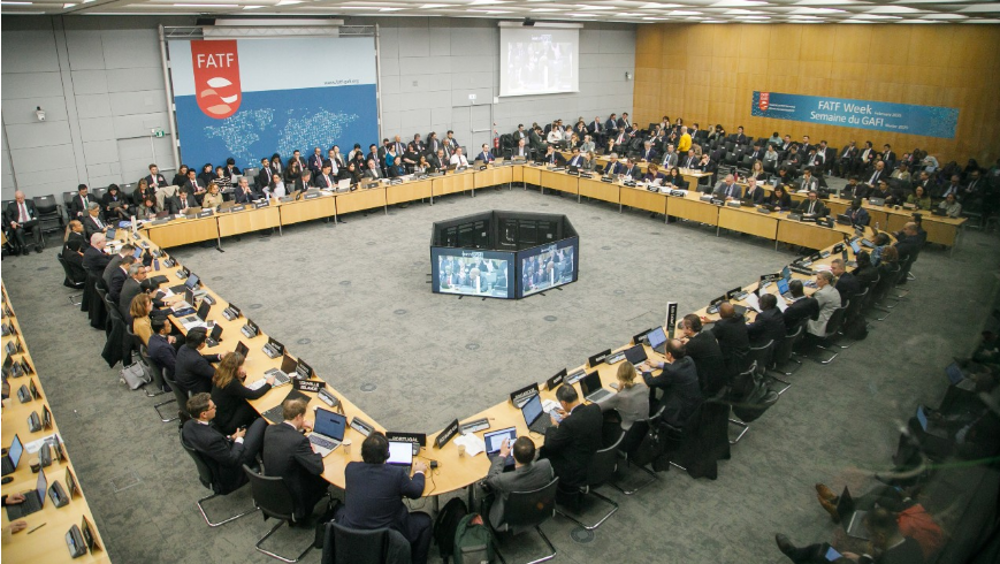
Over the past decade, Iran’s interactions with the Financial Action Task Force, the international body that sets standards on money laundering and terrorist financing, have become a barometer of how financial rules are wielded as instruments of geopolitical pressure.
This week, Iranian officials spent more than twenty hours in intensive negotiations at the FATF plenary in Mexico City to secure recognition for a series of legal reservations on two key international agreements.
The conventions in question are the Palermo Convention on transnational organized crime and the Convention on Combating the Financing of Terrorism. Tehran sought to clarify its position on certain clauses while navigating the complex political and regulatory pressures of the FATF process.
But the political equation has grown more complicated. The FATF Financial Intelligence Centre emphasized in its statement that some countries’ references to UN “snapback” resolutions and insistence on using FATF mechanisms to enforce sanctions against Iran have overshadowed the decision-making environment of the body.
In other words, the argument over the breadth of some of Iran’s reservations was raised in a context of sanctions and security concerns, making full acceptance of the Iranian delegation’s defenses difficult.
While they achieved partial success, with half of their reservations accepted, the majority of FATF members reaffirmed restrictions on Iran, reinforcing measures that limit its integration into the global financial system.
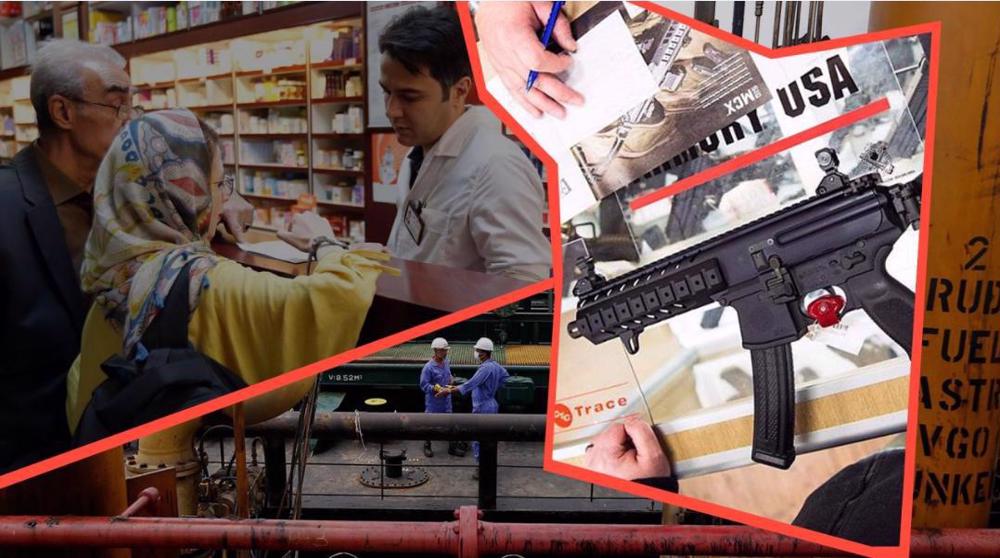
These measures extend far beyond the technical mechanics of compliance. They restrict the creation of Iranian financial institutions abroad, limit foreign banks from operating in Iran, impose heightened scrutiny on all transactions including humanitarian and diplomatic funds, and tighten engagement with virtual assets.
These rules are not abstract regulatory benchmarks but levers of pressure that affect the nation’s commercial arteries, its banking sector, and its ability to transact in the world economy.
The United States has long viewed the global financial system as an extension of national security. Following the September 11 attacks, Washington developed a strategy to identify and exploit the “soft financial underbelly” of its adversaries.
The aim was to cut off funding to states and organizations deemed threatening, restrict their operational capacity, and compel political compliance.
What makes this strategy unusual is the way it harnesses the interconnectedness of the global financial system — correspondent banking, dollar-clearing networks, and cross-border payment systems — to achieve strategic objectives without resorting to direct military confrontation.
Iran has long been vulnerable to this approach. Its banking sector, including major institutions with international branches in London, Frankfurt, Dubai, and Tokyo, forms the backbone of trade and finance for the country.
Its energy exports, particularly oil traded in dollars, create dense commercial linkages with Europe and Asia. These connections are essential for business but make the system vulnerable to political leverage.
When key banks were disconnected from SWIFT, the global banking messaging system, in 2012 under European directives, it forced Tehran to confront the tangible costs of exclusion from the global financial system.
The FATF itself, while ostensibly a technical standard-setting body, operates within this geopolitical ecosystem. Decisions are heavily influenced by major Western states, which fund the organization and shape its agenda. The standards, though neutral in form, are unevenly enforced.
Iran faces intense scrutiny for supporting resistance groups, considered terrorist by some Western members, while Western allies whose activities meet thresholds of terrorism sponsorship such as anti-Iran MKO, Jaish al-Adl, Komala and other terrorists rarely undergo the same level of enforcement.
This asymmetry underscores how international regulatory norms can be weaponized, turning compliance and technical standards into instruments of coercion.
Domestic politics in Iran compound the challenge. Government officials advocate for completing the country’s FATF action plan, emphasizing that delay carries economic and reputational costs.
Yet compliance entails exposing sensitive financial data and potentially constraining regional policies Tehran views as legitimate.
The tension between demonstrating technical progress and preserving strategic autonomy illustrates the complex calculus Iran must navigate. Legal compliance alone is insufficient to neutralize the wider pressures exerted through these financial mechanisms.
For countries like Iran, progress in technical standards may be easily offset by political decisions in foreign capitals. Compliance with international norms, though necessary for integration into global markets, cannot alone insulate a state from the strategic use of financial tools against it.
The stakes are high. Iran’s partial acceptance of FATF recommendations represents an incremental step toward meeting global norms, yet its exclusion from full integration into the system continues to constrain trade, investment, and financial operations.
In practical terms, even minor decisions by FATF members can affect the ability of Iranian banks to provide credit lines, settle international transactions, or support industrial and energy exports.
The United States and other major powers understand this leverage intimately. By shaping access to global banking, currency flows, and transaction networks, they can impose costs indirectly and continuously, without the visible escalation of traditional sanctions or military confrontation.
For the targets of these policies, the implications are such that even rigorous domestic compliance may not translate into relief if political conditions and strategic interests are not aligned.
Iran’s experience underscores the dual nature of modern financial instruments. They are both technical frameworks and mechanisms of geopolitical influence.
While the FATF emphasizes transparency, compliance, and integrity, the uneven enforcement and selective application of standards demonstrate how these frameworks can function as a subtle form of economic coercion.
Countries subject to these pressures must navigate a delicate balance between technical adherence, sovereignty, and strategic autonomy, aware that regulatory decisions made thousands of miles away can shape the opportunities and constraints within their domestic economies.
The case also raises broader questions about the role of international institutions in a world where power and regulation intertwine. How neutral can global financial standards truly be when they are shaped and enforced primarily by the most powerful actors?
Can compliance ever fully offset the economic leverage wielded by politically motivated enforcements? For states like Iran, the answers are uncertain, and the consequences of miscalculation are tangible.
In the end, the story of Iran and the FATF illustrates a larger trend in the twenty-first century: financial systems, once assumed to be neutral infrastructures for trade and investment, are increasingly used as strategic tools.
In this arena, the line between regulation and coercion blurs, and the costs of falling afoul of international norms can ripple far beyond balance sheets, affecting economies, politics, and the strategic autonomy of nations.
Iran, Pakistan forge blueprint for Islamic economic integration
US Treasury issues waiver for Iranian oil exports under Islamabad MoU
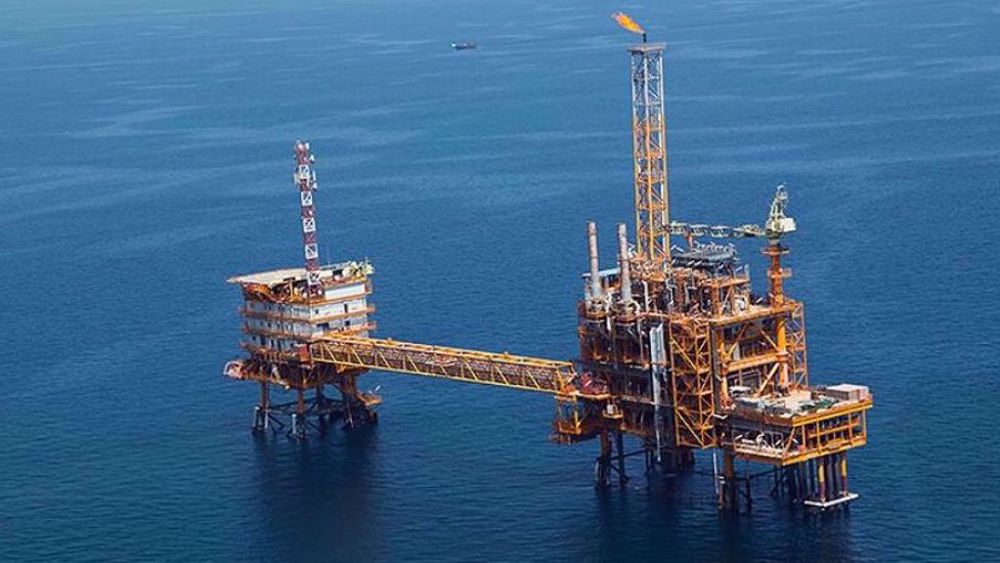
Super-sized drilling rig installed at Iranian offshore oilfield



Iran becomes world's 3rd producer of rapid gas detection kits, says knowledge-based firm
Iran monitors US compliance moment-by-moment, won’t implement MoU unilaterally: FM spox
Hezbollah MP blasts ‘sell-out’ government, says Lebanon central to any Iran-US deal
Israeli army demolishes buildings across Gaza as ceasefire violations continue
VIDEO | Press TV's news headlines
VIDEO | Thousands displaced by earthquake in Venezuela receive temporary shelters
Iran will respond decisively to any ceasefire violation: Acting defense minister
Trump criticized Spain for not meeting NATO spending targets


 PressTV NEWSLETTER
now
PressTV NEWSLETTER
now
 This makes it easy to access the Press TV website
