Explainer: Jaam-e Jam 1 – Iran’s giant leap into geostationary orbit and a new broadcasting era
By Ivan Kesic
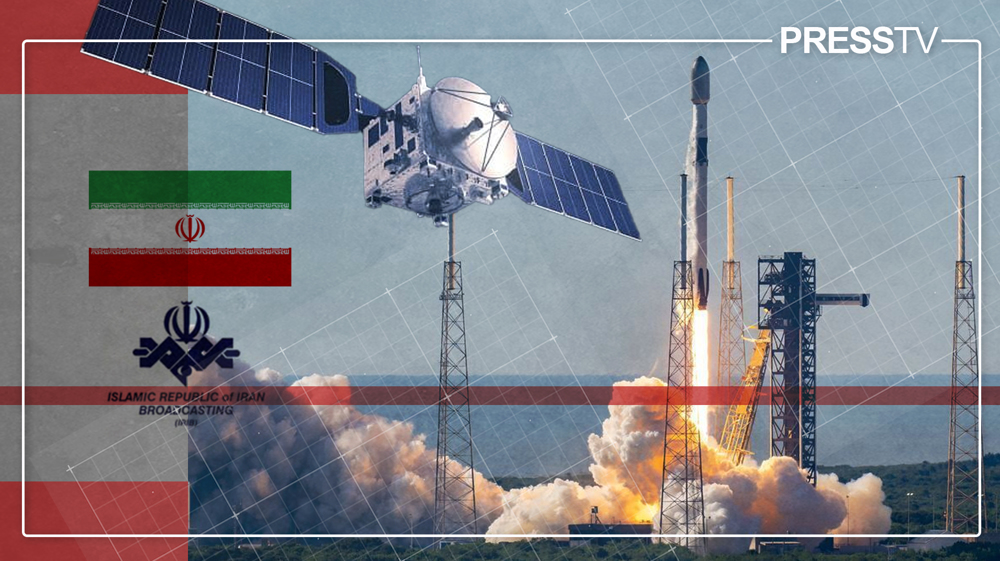
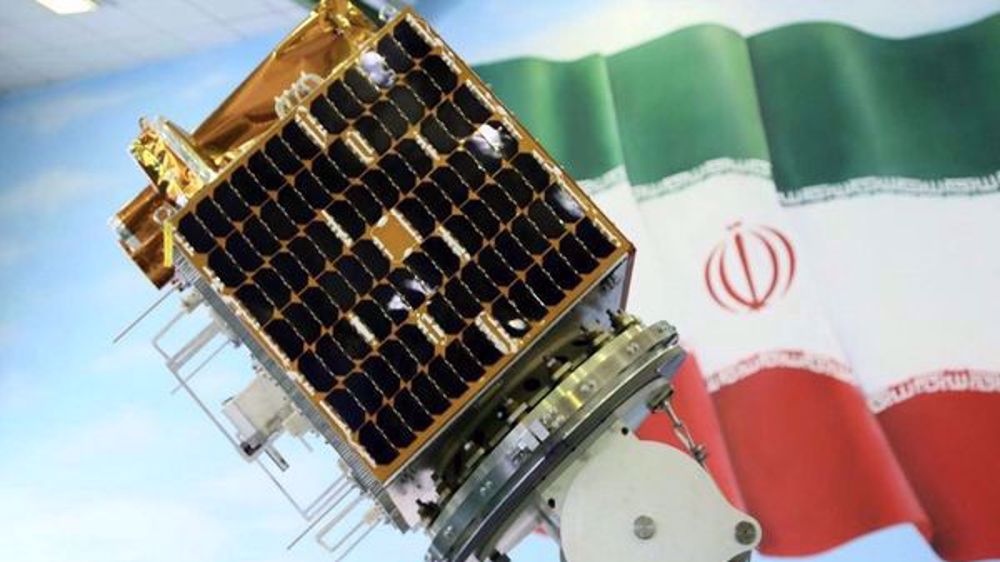
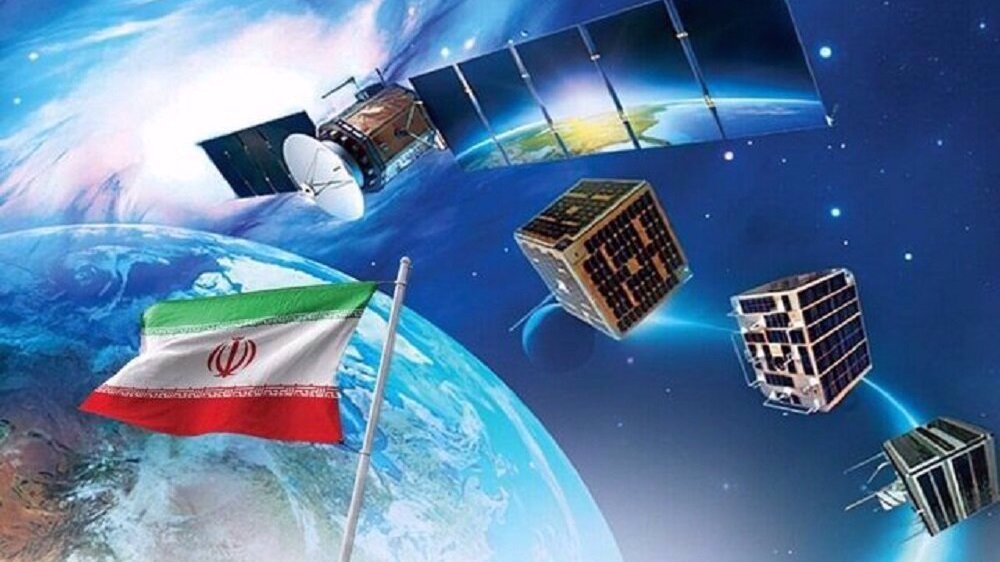
On February 12, 2026, the Islamic Republic of Iran successfully launched its first geostationary broadcasting satellite, Jaam-e Jam 1, marking a transformative milestone for the nation’s media infrastructure and advancing its long-standing ambition for technological sovereignty in space.
The successful deployment of Jaam-e Jam 1 – internationally registered as Iran DBS – represents the culmination of decades of planning, international negotiations, and incremental technological progress.
The satellite was launched from the Baikonur Cosmodrome in Kazakhstan aboard a Russian Proton-M heavy-lift rocket, which also carried a Russian meteorological satellite as part of the same mission.
Following a precisely coordinated sequence of maneuvers, Jaam-e Jam 1 was initially inserted into a geostationary transfer orbit. From there, it will use its onboard propulsion system to reach its final operational position at 34 degrees East longitude.
This achievement is not merely a technical milestone. It also marks a strategic assertion of national capability in an arena where orbital slots are finite and intensely contested resources.
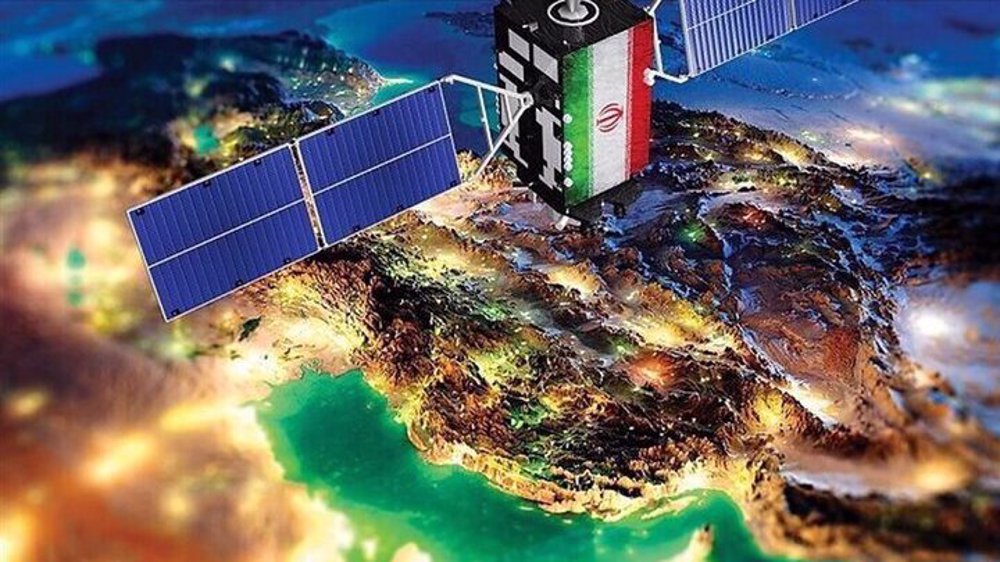
Unlike Iran’s previous satellites, which operated in low Earth orbit (LEO), Jam-e Jam 1 will function in geostationary orbit (GEO), approximately 36,000 kilometers above the equator. At this altitude, it will remain fixed over a single point on Earth’s surface, providing continuous coverage to Iran and the surrounding region.
Its mission is infrastructural rather than consumer-facing. Designed to serve as a professional broadcasting backbone for the Islamic Republic of Iran Broadcasting (IRIB), the satellite lays the foundation for next-generation interactive media services while reducing reliance on foreign satellite capacity.
Iran puts ‘Jam‑e Jam 1’ into orbit in milestone for national broadcasting https://t.co/EHOMD61LrS
— Press TV 🔻 (@PressTV) February 13, 2026
Long road to geostationary orbit
Iran’s pursuit of space capabilities began in earnest in 2009 with the launch of its first domestically produced satellite, Omid, an achievement that placed the country among a small group of countries capable of independently building and launching satellites.
In the years that followed, Iran steadily expanded its presence in low Earth orbit with missions such as Rasad, Navid, and Fajr, each building on the technical lessons and operational experience of its predecessors.
In parallel, the Islamic Revolution Guards Corps (IRGC) developed its own space program, launching the Nour satellite series using solid-fueled Qased rockets.
These accomplishments were achieved under the strain of extensive international sanctions aimed at restricting Iran’s access to global technological supply chains, making each milestone particularly significant.
Reaching geostationary orbit, however, required capabilities beyond those of Iran’s existing indigenous launch vehicles, compelling the country to adopt a different approach.
Geostationary orbit – approximately 36,000 kilometers above the equator, where satellites match Earth’s rotational speed and appear fixed over a single longitude – offers critical advantages for communications and broadcasting. Yet accessing this orbit demands heavy-lift rockets and advanced orbital transfer systems.
To position a satellite at such an altitude, Iran needed to secure an international partnership while continuing to cultivate the technical expertise necessary for future indigenous missions.
Russian connection and the Ekvator project
The path to Jaam-e Jam 1 can be traced through a series of space cooperation agreements between Iran and Russia, undertaken with notable discretion given their strategic implications.
In August 2022, Russia launched the Khayyam remote-sensing satellite for Iran aboard a Soyuz rocket from the Baikonur Cosmodrome, underscoring the deepening space partnership between the two countries.
The Khayyam satellite, built by VNIIEM Corporation, provided Iran with high-resolution Earth-imaging capabilities and was supported by ground infrastructure developed by the Russian company NPK Barl.
Even as Khayyam was being readied for launch, indications emerged of a more ambitious undertaking: a geostationary communications satellite for Iran under construction by ISS Reshetnev, Russia’s leading manufacturer of communications satellites.
The project, internally known by the Russian name “Ekvator,” appeared in environmental impact documentation associated with its planned launch aboard a Proton-M rocket.
According to the documentation, the satellite would be based on ISS Reshetnev’s Express-1000H platform, carry a payload mass of 755 kilograms, and be positioned at 34 degrees East longitude in geostationary orbit.
That orbital slot – registered with the International Telecommunication Union (ITU) under the designation IRN-30B-34E – had been reserved by Iran for decades as part of a long-term strategy to secure access to the limited and highly competitive positions along the geostationary arc.
✍️ Feature - Islamic Revolution at 45: Iranian space industry’s phenomenal feats despite odds
— Press TV 🔻 (@PressTV) February 5, 2024
By Ivan Kesic#IslamicRevolution45https://t.co/DK60FZNC2Z pic.twitter.com/DNPqoT1yPN
Strategic importance of orbital slots
The orbital slot at 34 degrees East that Jaam-e Jam 1 now occupies is far more than a coordinate in space; it represents a strategic national asset whose value extends well beyond the satellite itself.
Geostationary orbital positions are allocated by the International Telecommunication Union (ITU) through a complex framework of application, technical coordination, and strict regulatory deadlines. Countries that secure such slots must place operational satellites into position within specified timeframes or risk forfeiting their rights—a requirement that has led to the expiration of many unused filings over the years.
Iran’s interest in geostationary communications dates back to the pre-revolutionary Zohreh project, which envisioned procuring communications satellites from foreign suppliers. Although that initiative collapsed after the 1979 Islamic Revolution, the strategic objective endured.
In 2017, the Iran Space Agency (ISA) announced that it had filed applications with the ITU for five geostationary slots for Ka-band and Ku-band satellites, including positions at 24.19° East, 26° East, 34° East, and 43.5° East.
The 34-degree East slot, in particular, had long figured in Iranian planning, with earlier attempts to activate it through cooperation with French and Russian firms. Jam-e Jam 1 finally brings that decades-old reservation into operational reality, securing Iran’s foothold in a region of the geostationary arc where international telecommunications rights are measured in fractions of degrees and defended through sustained diplomatic engagement.
Satellite’s technical mission and capabilities
Jaam-e Jam 1 is not a direct-to-home broadcasting satellite intended for individual household reception. Instead, it is engineered for professional ground stations equipped with specialized infrastructure, forming the backbone of the national distribution network of the Islamic Republic of Iran Broadcasting (IRIB).
From its station at 34 degrees East, the satellite will relay audio and video feeds between central broadcasting hubs and regional stations across the country, ensuring consistent, high-quality delivery of programming nationwide.
This infrastructural function aligns with what officials have described as a strategic pivot toward interactive broadcasting, an approach that anticipates two-way services and advanced content distribution architectures capable of reshaping how audiences engage with state media.
Equipped with Ka-band and Ku-band transponders, Jaam-e Jam 1 provides the bandwidth necessary for high-definition video transmission and potentially for expanded data services beyond conventional broadcasting.
By owning and operating its own geostationary platform, IRIB reduces its historical reliance on leased capacity from foreign satellite operators. This shift carries implications not only for operational autonomy and technical control but also for the resilience and security of Iran’s media ecosystem.
Direct control over distribution infrastructure mitigates vulnerability to external political or commercial pressures and helps ensure continuity of national broadcasting services independent of foreign-managed systems.
✍️Feature - Iran poised for landmark year in space with Kowsar, Zafar, and Paya satellite launches
— Press TV 🔻 (@PressTV) September 11, 2025
By @kesic_ivan https://t.co/RMxqONrvXG pic.twitter.com/xWREPWjscV
Broader context of Iran's space ambitions
Jaam-e Jam 1 did not emerge in isolation, but as part of a sustained and accelerating space development program that has gained notable momentum in recent years.
In early 2026 alone, Iran successfully placed the Zafar, Paya, and Kowsar satellites into orbit, underscoring the increasing reliability of its launch vehicles and the growing sophistication of its satellite engineering.
The head of the Iran Space Agency, Hassan Salariyeh, has outlined plans for even more advanced initiatives in the coming years.
These include the Raad family of radar imaging satellites, designed to provide Earth observation capabilities unaffected by cloud cover or darkness, and the Martyr Qassem Soleimani satellite constellation, envisioned as the first such network in the Muslim world.
These announcements build upon earlier milestones, including the successful launch of the Sorayya satellite to an altitude of 750 kilometers aboard the IRGC’s Qaem-100 rocket, and the simultaneous placement of three satellites into orbit by the Simorgh carrier rocket, which reached an apogee of 1,100 kilometers.
Each mission incrementally expands the boundaries of Iran’s technical capabilities and contributes to the institutional knowledge base required for eventual indigenous access to geostationary orbit.
The country’s seventh five-year development plan includes objectives to consolidate low Earth orbit operations while laying the technical foundation for reaching geostationary orbit. Projects such as the Sarir and Soroush carrier rockets are intended to help achieve these goals by the end of the decade.
Path forward for Iranian space communications
The activation of Jaam-e Jam 1 at 34 degrees East creates new opportunities for Iran’s space-based communications infrastructure while also underscoring the challenges that remain.
The satellite secures Iran’s claim to a strategically valuable orbital slot and provides the Islamic Republic of Iran Broadcasting (IRIB) with a dedicated national asset. However, its launch relied on Russian assistance rather than an indigenous Iranian launch vehicle.
Efforts to develop domestic rockets capable of reaching geostationary orbit continue through programs such as Sarir and Soroush, which are designed to eventually place heavier satellites at 36,000 kilometers without foreign support.
Meanwhile, the Saman orbital transfer block, intended to enable satellites to raise their orbits from low Earth orbit to higher altitudes, has undergone preliminary testing and is being prepared for more comprehensive trials.
Together, these parallel advances in launch vehicles, orbital transfer systems, and satellite manufacturing are gradually assembling the full technological ecosystem required for independent access to all major orbital regimes.
Four additional geostationary slots reserved by Iran with the International Telecommunication Union remain available for future deployment, whether through international procurement or increasingly domestic production as capabilities mature.
Each successful mission reinforces the momentum of this long-term national project, bringing closer the point at which Iran will be able to deploy and operate geostationary satellites entirely through its own technical resources and expertise.

Iran secures place among world’s top five regenerative medicine powers

Iran’s deep brain stimulation technology for Parkinson’s treatment to enter human trials by 2027

Iran’s homegrown AlphaZa cancer radiopharmaceutical nears market launch: Nuclear chief



UNICEF: Ceasefire in besieged Gaza is a ‘deadly illusion’ for Palestinian children
Iran rules out IAEA inspections of war-damaged nuclear sites
Israel will soon be expelled from ‘every inch’ of Lebanese territory: Hezbollah chief
Iran stopped Trump's 'march to reassert US global dominance': Analyst
Iran delays Swiss meeting, links US talks to MoU implementation amid Israel’s Lebanon strikes
Israeli regime’s only interest is ‘permanent war,’ Iran's FM Araghchi says
Hezbollah: Israel never abided by any ceasefire agreement
Beyond the MoU: Leader's message redefines authority, legitimacy, and people's role in governance



 PressTV NEWSLETTER now
  This makes it easy to access the Press TV website