Two US Navy ships collide near South America amid Trump buildup
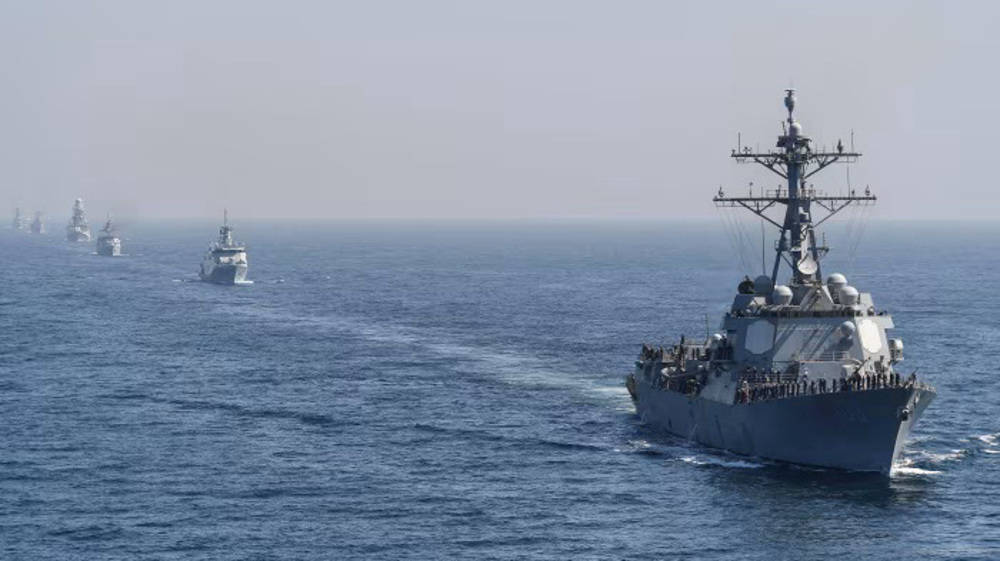
Two US Navy vessels have collided during a refueling operation in waters near South America, injuring two personnel, amid Washington’s expanding military presence in the region.
The Arleigh Burke-class destroyer USS Truxtun and the fast combat support ship USNS Supply collided Wednesday during a ship-to-ship refueling operation, the Wall Street Journal reported on Thursday.
Two personnel sustained minor injuries and were reported in stable condition, the report added.
The exact location of the collision has not been disclosed, though a US military official confirmed it took place within Southern Command’s area of responsibility, which covers the Caribbean and parts of the South Atlantic and South Pacific.
The Truxtun departed Norfolk, Virginia, on February 6 for a scheduled deployment, while the Navy-owned Supply, primarily crewed by civilian mariners, has been operating in the Caribbean.
The incident comes amid US President Donald Trump’s large-scale naval buildup in the Caribbean, ordered in recent months as part of his campaign against what he claimed to be trafficking.
Twelve warships are currently assigned to Southern Command, including the aircraft carrier USS Gerald R. Ford and its strike group.
Past incidents have proven deadly and exposed systemic failures. In 2017, two separate destroyer collisions in the Pacific killed 17 sailors - the USS Fitzgerald near Japan and the USS John S. McCain near Singapore. Investigations later concluded both were avoidable and resulted from crew failures, leading to the dismissal of several senior officials.
More recently, on February 12 last year, the aircraft carrier USS Harry S. Truman collided with a merchant vessel near Port Said, Egypt, though no injuries were reported.
Since mid-2025, the Trump administration has ordered what critics describe as the largest US military buildup in the Caribbean and South American region in decades including warships, aircraft, submarines, and strikes against targets near Venezuela.
This force posture has been justified by the White House as a fight against drug trafficking, but analysts and regional leaders see it as an aggressive projection of military power deep into South American waters.
In a dramatic escalation earlier this year, US forces launched strikes on Venezuelan territory and carried out an invasion that resulted in the abduction and removal of Nicolás Maduro and his wife.
Trump publicly stated the US would effectively “run” Venezuela temporarily until a transition is secured, signaling a level of intervention that goes far beyond routine political pressure or sanctions.
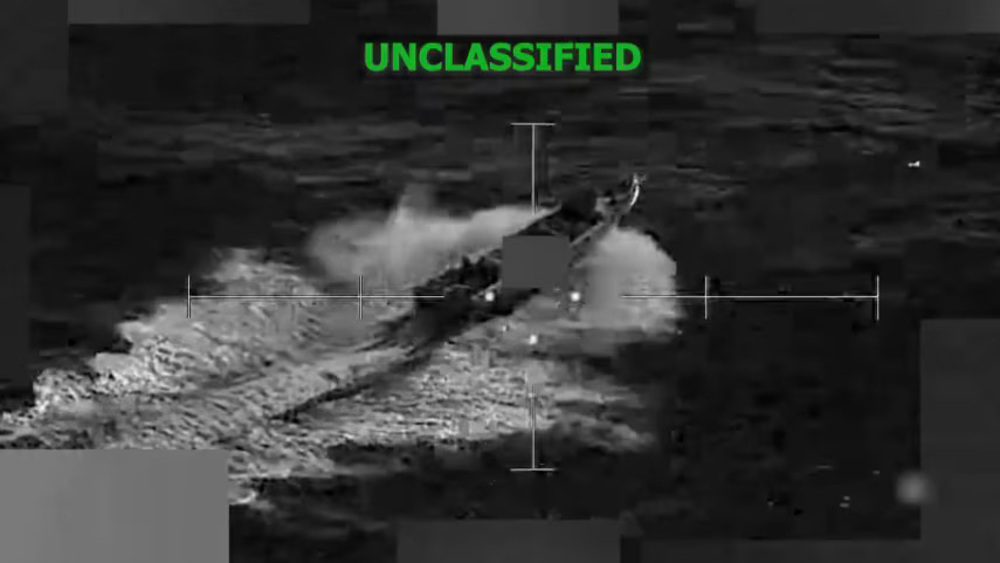
As part of what US commanders call Operation Southern Spear, American forces have been attacking vessels they allege are linked to narco-trafficking, often without independent evidence. These strikes have killed dozens and sparked legal challenges and accusations of illegal military action in peacetime.
Trump’s administration is also warning other South American countries about outside influence such as China’s investments in Peru’s ports as part of a broader “Western Hemisphere security” push, signaling another front in geopolitical competition under Trump’s doctrine.
South American leaders from Brazil to Venezuela have expressed alarm at this US military footprint, warning it could destabilize the region and reignite Cold War–style tensions. Domestic critics in the US and abroad argue that Trump’s actions amount to foreign watchdog aggression and undermine sovereignty.
Iran adapting missiles to increasingly bypass American air defenses: Report
Iran Army targets US bases in Kuwait after deadly American strikes on civilian sites

US military confirms two soldiers killed, one missing in Iranian attacks in Jordan



Israel advancing ‘crocodile prison’ plan against Palestinian abductees
New PM should change UK's Israel policy
US soldiers should flee region as soon as they can, senior Iranian MP warns
Palestinian youth footballer dies from wounds sustained during Israeli settler raid
Iran adapting missiles to increasingly bypass American air defenses: Report
VIDEO | Pro-Palestine demonstration held In Frankfurt
Iranian robotics teams excel at RoboCup 2026 in South Korea, secure multiple awards and top finishes
‘Great Satan again showed its true face’: Snippets from Leader’s message on US attacks, epic funeral


 PressTV NEWSLETTER
now
PressTV NEWSLETTER
now
 This makes it easy to access the Press TV website
