How Iranians made ice thousands of years before Europe
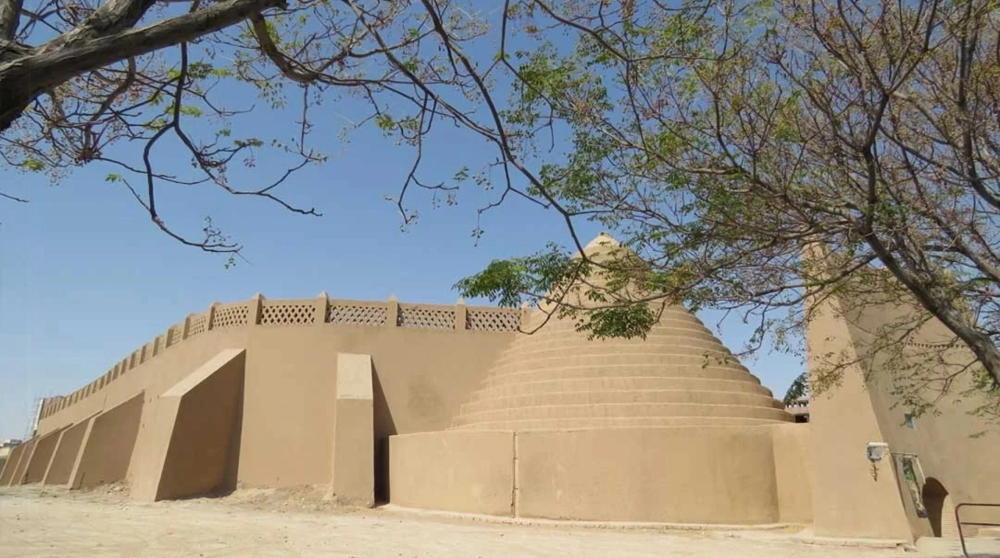
For centuries, people living in Iran’s central plateau found ways to deal with extreme heat without machines, electricity or fuel.
One of the most practical solutions was the yakhchal or ice house, a structure designed to produce, store and distribute ice in some of the hottest and driest parts of the country.
Long before refrigerators existed, ice was available year-round in cities such as Yazd, Kashan, Isfahan, Kerman and Birjand. The system depended on climate, careful construction and seasonal routines rather than technology in the modern sense.
A typical ice house consisted of three main elements: a high shading wall, a shallow freezing pond and a deep underground storage chamber covered by a thick dome.
All were built from local materials with low heat conductivity such as adobe, mud brick, stone, lime and straw that performed well in desert conditions.
Ice production took place during winter nights. Water from nearby canals or wells was poured into long, shallow ponds located behind tall walls, sometimes reaching 12 meters in height. These walls blocked sunlight during the day, preventing the ground and water from warming.
At night, temperatures often fell below freezing. The dry desert air helped accelerate heat loss through evaporation, allowing thin layers of water to freeze by morning.
The process was gradual. Only a few centimeters of water were added at a time. Once a layer froze, another layer was poured over it the following night.
When the ice reached sufficient thickness, it was broken into blocks and moved into the underground storage pit. Straw and wooden slats were placed between layers to stop the ice from sticking together and to slow melting.
The storage chamber was dug more than six meters below ground. At that depth, soil temperature remains relatively stable throughout the year, a phenomenon known today as seasonal heat delay. This allowed the interior of the ice house to stay cool even during long summer heatwaves.
The dome covering the storage pit played a key role. Its walls were extremely thick at the base, sometimes up to two meters, tapering to around 30 centimeters at the top. This mass acted as insulation.
A small opening at the peak allowed warm air to escape, while cooler air remained closer to the ice below. Meltwater drained through a small well at the bottom, preventing standing water from accelerating the melting process.
Some ice houses were large enough to hold thousands of tonnes of ice. A study of a 400-year-old ice house in Meybod estimated annual ice production at around 50 cubic meters, equivalent to roughly three million modern ice cubes.
Ice houses were usually built near fresh water sources and along major roads or caravan routes. Most were public facilities. During summer, ice was removed gradually and sold or distributed throughout the city. Ice sellers transported large blocks by donkey, breaking off smaller pieces for households, markets and shops.

Travel accounts from the Safavid and Qajar periods describe ice houses as a normal feature of Iranian towns. European visitors often expressed surprise at the availability of clear, clean ice in desert cities.
Some documented the process through drawings and early photographs, including images of ice sellers in Isfahan carrying large blocks through the streets.
The availability of ice mattered not just for cooling water or preserving food, but for making early cold desserts. Long before mechanical refrigeration, frozen treats appeared in Persian culinary life.
One of the oldest is faloodeh, thin rice noodles frozen in a syrup of sugar and rose water, often served with lime juice and pistachios. Faloodeh dates back at least to 400 BCE and was made using ice from yakhchals.
In the same historical period, Persians also created early versions of what would later be called ice-cream. Stored ice was combined with milk, sugar and flavorings such as saffron or fruit juices; the result was a creamy, chilled dessert enjoyed in summer.
Over time this evolved into what Iranians today recognize as bastani sonnati, a traditional saffron, rose water and pistachio ice cream.
Alongside ice houses were underground cisterns for water storage and, in some buildings, windcatchers that directed cooler air into interior spaces.
While windcatchers were not essential to ice houses, they reflected the same logic of using air movement, earth, shade and mass to control temperature without fuel.

The economic logic behind ice houses was straightforward. Construction relied on inexpensive local materials and manual labor. Operation required seasonal work rather than continuous energy input.
Maintenance depended on knowledge passed down through builders rather than imported equipment. This made ice accessible beyond elite households and reduced dependence on external resources.
By the early 20th century, mechanical refrigeration began to replace ice houses. As electric refrigerators spread, many structures fell into disuse. Without maintenance, adobe walls eroded and domes collapsed. Some ice houses were demolished; others survived as empty shells on the edges of expanding cities.
Today, many remaining ice houses are no longer functional, but their design remains visible and intelligible. Their geometry and construction methods show how cooling was once treated as a logistical problem rather than a technological one.
Ice houses demonstrate how daily needs such as cold water, food preservation and seasonal comfort were met through systems that aligned closely with local climate conditions.
Their continued presence serves as a record of how cooling, energy use and resource management were once handled without machinery, relying instead on time, temperature and careful design which can still inspire ways to reduce energy use in buildings today.

Iran, Pakistan forge blueprint for Islamic economic integration
US Treasury issues waiver for Iranian oil exports under Islamabad MoU
Super-sized drilling rig installed at Iranian offshore oilfield



Mission unaccomplished – Part I: America failed to achieve every war objective against Iran
US army downplaying injuries from Iran's retaliatory strikes: Wounded forces, families
Iran's Armed Forces created an 'epic' that exceeded aggressors' expectations: President Pezeshkian
Iran warns Rubio: 'No one will be fooled' by US attempt to redefine MoU
Italians outraged as NATO chief reveals secret role in US war on Iran
Israel revives Gaza expulsion plan as UN confirms genocide against children
Iran, Saudi FMs hold phone talks as Persian Gulf states rethink US ties
Unity of arenas: Clause 1 of Iran-US MoU and future of Iran’s regional deterrence architecture


 PressTV NEWSLETTER now
  This makes it easy to access the Press TV website