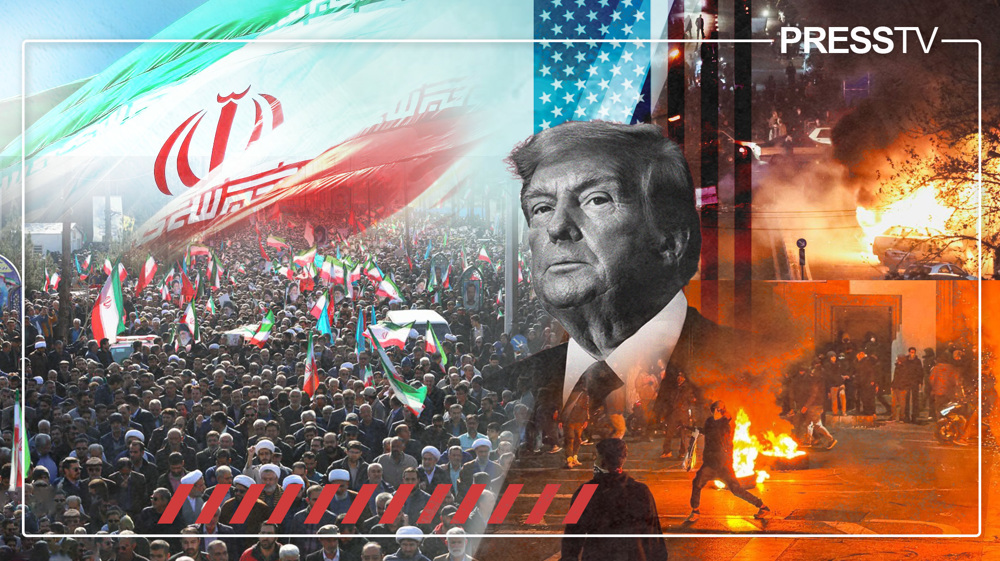
I witnessed rioters torch buses, banks, mosques in Tehran – then saw millions rally against them
By Mohammed Reza Fallah
“Don’t tickle the dragon, if you can’t take the heat,” goes a famous Chinese proverb that comes to mind as I walk the streets of the Iranian capital, Tehran, immersed in the collective silence.
Iranians, from what I have observed, are generally a very noise-sensitive people. Try honking unnecessarily or blabbering loudly in the subway and you will be met with the coldest stares.
Iranians like their ‘peace of mind’. There is an exception, though, to mass gatherings. Nowhere will you get to see such an organized scale of creative sights and sounds.
An overflowing football stadium, a martyred commander’s mass funeral, a 10-kilometer-long public banquet, various socio-cultural festivals, a routine Friday prayer meet or magnificent Muharram processions, Iranian mass gatherings are spectacular to say the least.
The fine art of sloganeering in the mellifluous Persian language; the waving flags and lofty banners; children singing in chorus; the massive participation of people of all ages; the sea of fists raised in the air; the chants; the organizational mastery of mobilizing crowds at short notice; and the unity of purpose woven into artistic choral drills – often led by a single voice on the microphone, with thousands responding in perfect synchrony and unison.
Having cracked the code long ago, Iranians have mastered the art of protest. This time, however, something felt distinctly different.
It was Thursday night in Tehran, a time usually reserved for mass supplications, friendly gatherings, or family outings, depending on one’s inclinations.
I was a stone’s throw from Tehran’s Grand Bazaar. As dusk settled, the atmosphere grew tense. The 65-year-old son of the deposed Iranian monarch had issued a protest (read: riot) call.
“Great nation of Iran, the eyes of the world are upon you. Take to the streets and, as a united front, shout your demands,” said the self-proclaimed “crown prince” who, in the words of Iranians “still takes pocket money from his mummy”.
New footage shows armed, foreign-backed rioters attacking and damaging public property during recent riots in Iran.
— PressTV Extra (@PresstvExtra) January 30, 2026
Follow: https://t.co/7Dg3b41hTx pic.twitter.com/DYTRC4xQRu
Days after the merchants or ‘bazaari’ traders of the Grand Bazaar of Tehran had protested against the rising dollar rates, as if by some algorithmic magic, his image and videos suddenly started popping up everywhere on social media.
The script started to change rapidly from peaceful “economic protests” to the quintessential “regime change” agenda of the American and Israeli regimes.
An acquaintance from Yazd, an aspiring politician, started abruptly messaging me about how it’s time to ‘wake up’ and how the “Shah” is set to return. Some other friends were concerned and called to tell me to ‘stay at home and don’t go out tonight’.
My mind then went down memory lane, to the stories and visuals of how Iranians shook the nation with chants of “Allah o Akbar”, “God is Greater,” from their rooftops and windows during the days of the Islamic revolution of 1979.
“Personalities will come and go, but this weapon of 'Allaho Akbar' that we have, will always protect us,” the late founder of the Islamic Republic, Imam Khomeini, had once remarked.
As the night progressed, the quality of the famed Iranian protests regressed drastically.
I ventured out of my traveler’s inn to see what was happening. The intermittent sounds had now turned into occasional bursts of loud noises, and there was a lot of smoke in the air.
What I saw next sank my heart.
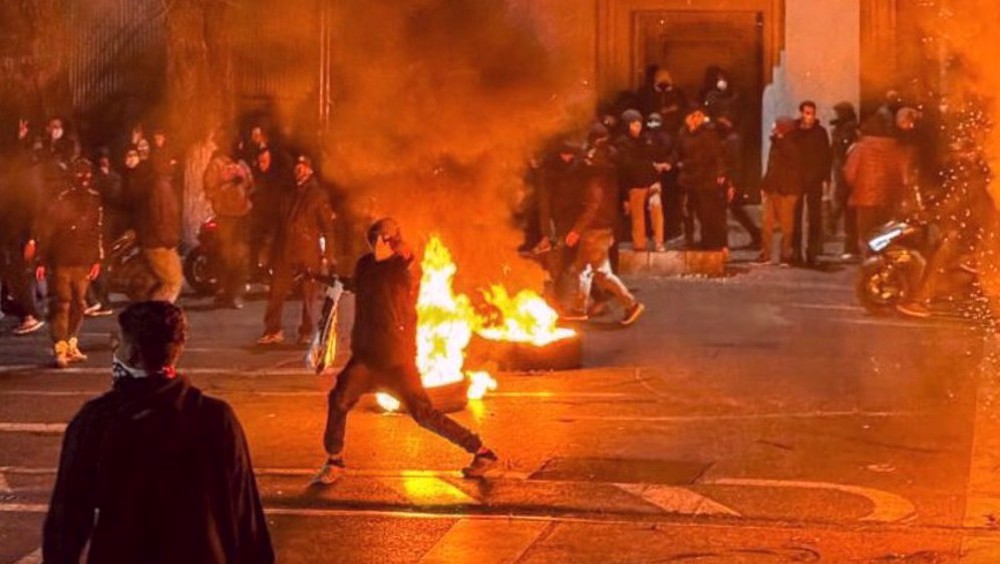
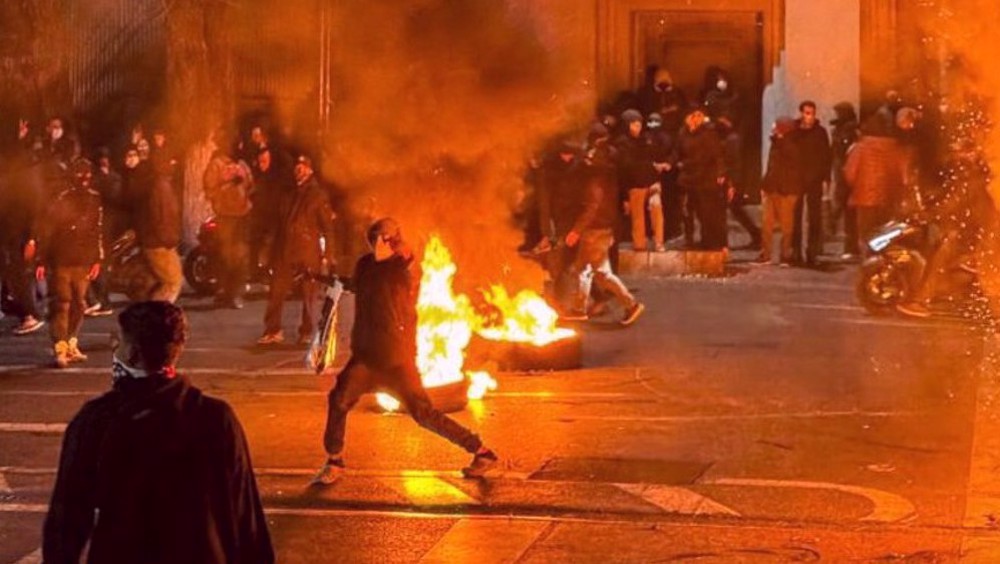
Shards of glass from a bus stop were smashed up, garbage bins had been set on fire with garbage strewn in the middle of the road, men in black with faces covered were blocking the road with whatever they could lay their hands on.
Shops were vandalized, poles were taken down, blue and yellow donation boxes for the poor that one sees all over public places in Iran, were rocked to and fro till they fell from their place, ATM screens were smashed everywhere and to top it all off, a bank at the end of the road, whose half shutters were of the kind where one could see the glass doors behind, was broken into skillfully and set on fire.
More footage is going viral showing professional anti‑Iran, armed, foreign‑backed rioters attacking police stations, throwing stones and Molotov cocktails, and setting police stations on fire with security forces inside.
— Press TV 🔻 (@PressTV) January 13, 2026
Follow: https://t.co/mLGcUTSA3Q pic.twitter.com/GYDxCZ9co9
As I reached near the ill-fated bank, which was under a public bridge, I couldn’t help but notice some bizarre scenes below.
Some 100-150 people, mostly men, all dressed in black with their faces masked had gathered under the bridge. A few women were there too, all masked. The women were mostly in the middle, going round a bonfire holding hands, singing and chanting in typical Iranian style.
What was surprising, though, was that the building of the bank nearby was up in flames and no one seemed to be bothered at all. The rising flames made me think of gas cylinders that might be there in the upper parts of the structure.
The nearby grocery shop belonged to Iranian brothers who worked hard from early morning to nearly midnight. Most of the people merely stood there, watching flames devour the structure.
Above, on the bridge, a group of bikers, again all black clad with helmets covering their faces, were busy shooting the burning bank and other scenes from their vantage positions, clearly on a mission.
Apart from the sloganeering going on in the middle of the road under the bridge, there was an eerie silence amongst the onlookers. From the rare face that was not masked, it was evident that they didn’t approve of what was happening.
It took me some time to understand the long stares and apprehensive looks in the wordless eyes of some of the masked onlookers. I was the odd one out. For the first time ever, not wearing a mask amongst masked men had made me look somewhat suspicious. Sensing that this could probably take a dangerous turn, I called it a night.
That fateful night, hundreds of buses, mosques, government buildings, hospitals, ATMs, banks and many more public and private places were burnt down and destroyed.
Washington engineered ‘dollar shortage’ in Iran to fuel December riots: US Treasury chief https://t.co/69uEldVT85
— Press TV 🔻 (@PressTV) February 7, 2026
Evidence shows foreign-backed terrorist groups used and distributed weapons and deliberately targeted civilians and security forces.
Thousands of innocent men, women and children were killed. Adding fuel to the fire, US President Donald Trump and other Americans kept egging on from the sidelines.
Things are better now, all the masks are off. The people have seen enough.
On January 12, writing history yet again, the Iranian nation came out in a glorious procession that was termed by one local newspaper headline as “The Day of God”.
“These massive rallies, full of determination, have thwarted the plan of foreign enemies that were supposed to be carried out by domestic mercenaries,” said the Leader of the Islamic Revolution Ayatollah Seyyed Ali Khamenei in a live speech, with over 90 million Iranians definitely watching with undivided attention as the Internet was off.
The drums of war are beating now, even though Iran and the US have resumed their nuclear negotiations in Muscat, nearly eight months after the Israeli-US aggression last June that led to the suspension of diplomacy.
From the Iranian side, the message is loud and clear: “Don’t tickle the dragon, if you can’t take the heat”.
Mohammed Reza Fallah is a Tehran-based researcher, originally from India
(The views expressed in this article do not necessarily reflect those of Press TV)
Pezeshkian: Mass turnout at Leader's funeral a 'decisive’ response to bullying, terror
Iran’s armed forces vow swift response to any US violation in Strait of Hormuz
‘Eyes of history are on Iran’: Qalibaf urges mass turnout for martyred Leader’s funeral


Iran warns Persian Gulf states after US-hosted security summit in Bahrain
US failure in war on Iran ignited clash between Trump, MBS: Report
VIDEO | Press TV's news headlines
Iraq expects millions to join Martyr Leader’s funeral in Najaf, Karbala
VIDEO | Pakistan pays tribute to Iran’s martyred Leader Ayatollah Khamenei ahead of funeral ceremonies
Israel's largest refineries face years of repair after Iran airstrikes: Report
Army Chief: Iranian nation will never surrender to enemies
Israel arrests Tajik-Russian citizen over alleged links to Iran


 PressTV NEWSLETTER
now
PressTV NEWSLETTER
now
 This makes it easy to access the Press TV website
