Iran revives millennia-old tradition as gold gains strategic weight
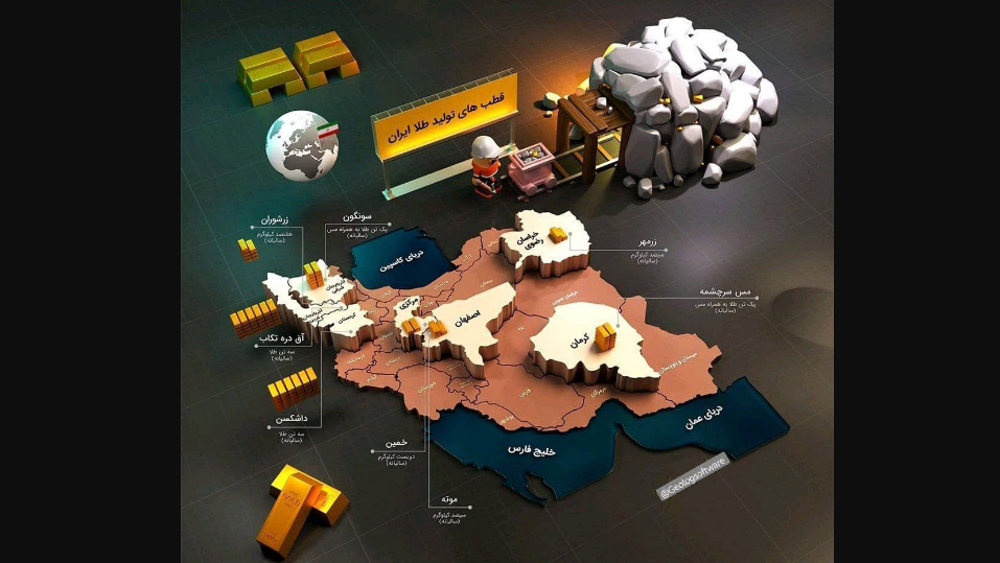
On Thursday during the fifth day of the Ten-Day Dawn celebrations, a new gold and copper mine entered production in Bajestan, eastern Iran.
Backed by private capital, the site has a nominal capacity of 1.2 million tonnes of ore. A gold concentrate production line, already 30 percent complete, is under construction nearby and is expected to come online in the near future.
The project comes at a time when gold’s economic and political significance has sharpened globally. Over the past three years, the price of gold has surged in international markets, moving from around $1,700 an ounce to levels approaching $5,000.
The rise has unfolded alongside an increasingly aggressive use of the US dollar as an instrument of political pressure, accelerating interest in gold as an alternative monetary anchor.
Gold occupies a distinctive place in the global economy. Unlike financial assets, it is tangible, portable and widely trusted, providing a sense of security and continuity when traditional markets falter.
That role is reflected in official reserves: the United States, Germany and Italy remain the largest holders, while since 2021 China and Russia have rapidly expanded their stocks through domestic production and sustained purchases.
For China and Russia, gold accumulation has been paired with investment in financial infrastructure designed to reduce exposure to dollar-based monetary systems.
This signals the emergence of an alternative financial architecture seen as a pathway toward greater monetary sovereignty, particularly by those seeking to minimize exposure to dollar-denominated sanctions and Western financial oversight.
For Iran, which operates under some of the most draconian American sanctions, the relevance is more immediate.
The most recent wave of unrest was triggered by sudden currency movements, as the rising dollar translated into higher food, fuel and housing costs, before protests spiraled into broader disorder and significant human and material damage.
In that context, gold functions as a store of value with direct social and monetary implications. Strengthening alternative reserves such as gold has become an economic priority rather than a theoretical policy option.
Based on a cabinet decision adopted in the current Persian calendar year, the import of standard gold bullion by foreign investors was declared free and permission was granted for these bullion trades to take place at Iran’s Currency and Gold Exchange Center.
The policy, approved in October, has enabled foreign investors to bring standard gold bars into the country and sell them through the exchange.
Ever since, more than $140 million in foreign investment has been channeled into the Iranian economy through the import of gold bullion and its sale at the exchange, the center’s spokesman Asghar Balsini said on Saturday.
Foreign investors have imported and sold 488 kg of standard gold bullion since the policy came into effect. In total, 21 foreign companies have participated, offering their gold at in-person auctions held by the exchange.
The proceeds from these sales have been reinvested in priority economic projects across the country, including petrochemicals, copper, steel and base oil.
Officials have described the initiative as a step towards attracting foreign capital, strengthening the market for standard gold and supporting sustainable economic growth.
Balsini said authorities expect continued implementation of the policy to increase foreign investor participation in other key infrastructure projects.
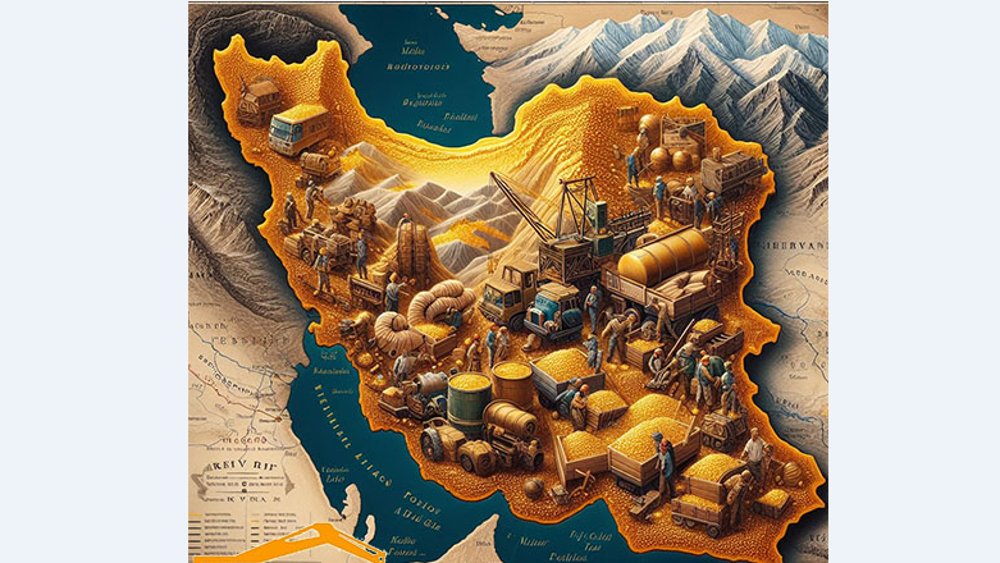
Iran’s relationship with gold is longstanding. Known locally as zar, the metal has been valued for thousands of years for its durability and resistance to corrosion. Archaeological evidence suggests gold was in use in Iran by the third millennium BC.
During the Median period, deposits were worked in the mountains around present-day Hamadan, alongside copper, iron and silver.
Under the Achaemenids, gold production and metalworking expanded, supported by a prosperous economy. It was during this period that Iran minted the world’s first gold coin.
Introduced by Darius the Great, the daric established gold coinage at a time when most currencies were based on silver or base metals.
By the Sassanid era, cities such as Ctesiphon were active centers for trade in gold, silver and other high-value materials.
In the twentieth century, Iran’s gold industry entered a new phase as social change and increased contact with Europe influenced jewelry design and production. This cultural and historical depth now intersects with a renewed push to develop Iran’s mining sector.
According to national mining statistics, around 350 million tonnes of gold-bearing ore have been identified across Iran. With an average grade of two grams per tonne and an estimated recovery rate of 85 percent, the country’s potential output is put at no less than 600 tonnes of gold.
From an economic perspective, gold mining compares favorably with other metallic resources. Copper and iron ore operations across Iran typically show high internal rates of return, and inactive mines in those sectors are now rare.
Gold has lagged despite comparable potential, largely due to gaps in processing capacity. That gap is now narrowing as technical expertise improves and recent projects demonstrate viable returns.
Established operations such as Mouteh and Zareh Shuran have been joined by newer entrants. Since 2019, a project known as Hirad Gold has been developed in South Khorasan province with private-sector participation.
The unit, with an annual capacity of about 200 kg, entered production in May 2023. Beyond direct employment, the project feeds into regional supply chains and local infrastructure.
Exploration has identified promising gold reserves in several provinces, including East and West Azarbaijan, Kordestan, Markazi, Isfahan, Sistan-Baluchestan and South Khorasan.
State-led planning combined with private investment is expected to expand extraction and production, reducing financial risk on both sides.
At the Mouteh mine in Isfahan, 24-carat gold bars in 500-gram and one-kilogram formats to international standards are produced, which are sold weekly on the exchange.
Despite this progress, large areas remain underdeveloped. South Khorasan and Sistan-Baluchestan stand out for their scale and relative neglect. Hirad is the largest defined gold zone in South Khorasan, and further exploration and development are under way within its wider license area.
Another eastern deposit, the Khounik gold mine, is undergoing advanced exploration, with investment from the Sadid Industrial Group tied to the construction of a plant designed to produce 200 kg of gold bars.
Investor interest has grown noticeably. Over the past two years, major Iranian mining groups have shown stronger appetite for gold projects than for copper or iron.
Gol Gohar mine’s involvement in the Siah Jangal gold mine in Sistan-Baluchestan is one example. In the same province, Impasco has identified significant copper and gold reserves at Janja, one of the country’s largest porphyry deposits.
A consortium led by the Mines and Metals Development Investment Company is now conducting technical studies for a processing plant following successful efforts to attract investment.
In short, gold’s presence through Iran’s economic life is resurfacing now as mines reopen, plants advance toward completion and investors return their focus to a resource that has shaped Iran for millennia.

After US policy whiplash, Iran sets the rules in Strait of Hormuz
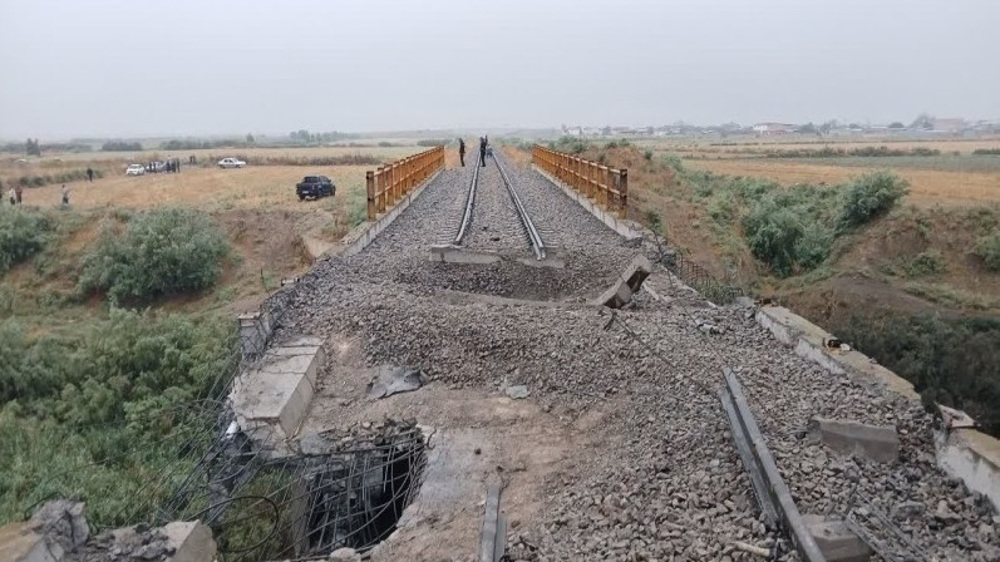
Iran files complaint with global rail body over US strikes on railway infrastructure
Trump's meltdown and America's war on Iran's Eurasian connectivity



VIDEO | Analyst: Strait of Hormuz remains at the center of US-Iran confrontation
US attacks vicinity of children's cancer hospital as fresh aggression reported across southern Iran
VIDEO | ‘Iran's military response is forcing a reassessment of US strategy in the region’
VIDEO | ‘Trump’s bullying tactics strengthen Iran’s resolve’
‘Firm response awaits UK’: Iran summons British ambassador over London's IRGC designation
VIDEO | Aid worker who organized World Cup screenings in Gaza killed in Israeli strike
VIDEO | India's education crisis sparks growing protest movement
VIDEO | How the latest US-Iran tensions are reshaping Lebanon's political landscape


 PressTV NEWSLETTER
now
PressTV NEWSLETTER
now
 This makes it easy to access the Press TV website
