Iran riots and info war: When the ‘dead’ came back to debunk their own death stories
By Yousef Ramazani
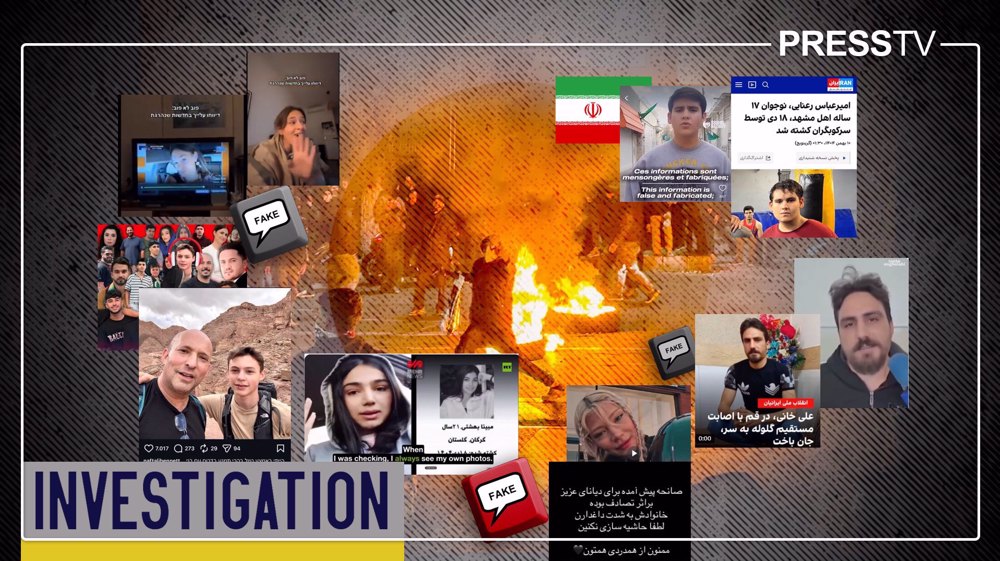
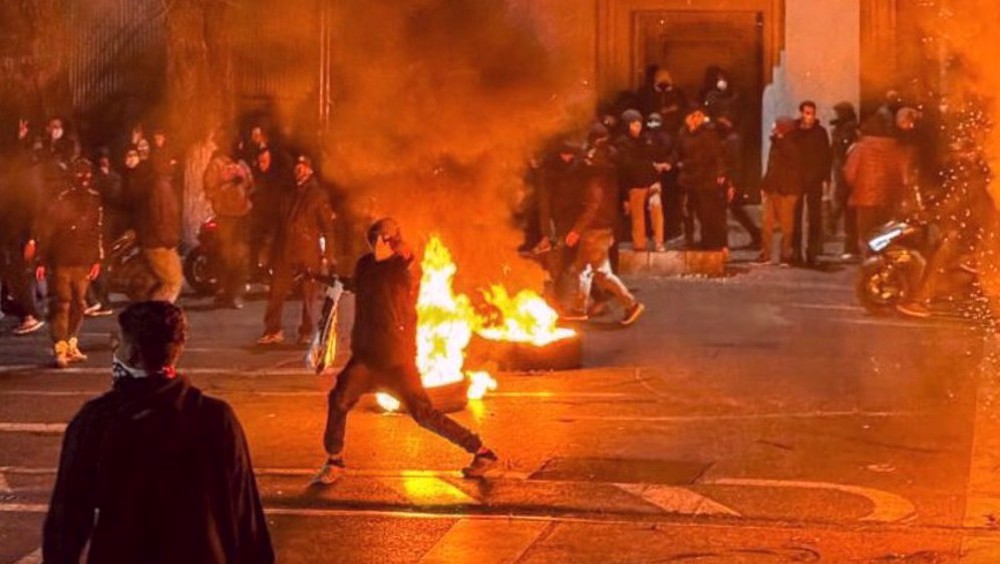
Amid the digital fog surrounding the recent foreign-engineered riots in Iran, a troubling pattern emerged: individuals reported “dead” were later found to be very much alive and healthy.
This revealed a systemic failure in verification and pointed to a deliberate campaign of narrative manipulation – an old tactic against the Islamic Republic of Iran.
Coverage of civil unrest often involves conflicting claims, but international reporting on Iran’s recent unrest exposed a persistent anomaly: premature or fabricated death declarations.
Across social media and major Western media outlets, names and faces of Iranian citizens, as well as those outside Iran, circulated widely as martyrs “killed” by Iranian security forces or detainees facing imminent execution.
Yet, case after case, these individuals reappeared – posting videos from home, giving interviews at work, or, in some cases, confirmed by families to have died of unrelated causes.
From Mobina Beheshti to Erfan Soltani, these instances reveal an information ecosystem where claims are amplified without scrutiny, geopolitical narratives override factual accuracy, and the real tragedies of foreign-backed terrorism become entangled with falsehoods – undermining credible journalism and exploiting the emotional weight of victimhood.
Case of Mobina Beheshti
One of the most prominent examples of this phenomenon was the case of Mobina Beheshti.
In early January 2026, her photograph and name began circulating widely on social media platforms like X and Instagram, shared by foreign-linked media accounts and hostile “opposition” pages bankrolled by foreign spy agencies.
She was portrayed as a 21-year-old “protester” killed by Iranian security forces during the unrest – peaceful economic protests that devolved into violent riots and terrorism – her image quickly becoming a symbol of alleged state brutality.
The narrative was simple, emotionally charged, and spread rapidly. It circulated at a dizzying pace across social media networks with gullible users accepting it as a true story.
However, on January 28, 2026, Beheshti herself posted a video online. Appearing healthy and unharmed, she expressed disbelief at reports of her “death” and urged people not to believe the false claims amplified by some foreign media outlets.
Her reappearance was a direct and personal rebuke to the propaganda networks that had circulated her story, exposing how easily unverified images can be weaponized to create a compelling yet entirely fictional casualty.
Iranian girl who was proclaimed dead in recent riots by Israeli-backed media releases video to debunk their lies.
— PressTV Extra (@PresstvExtra) January 29, 2026
Follow Press TV on Telegram: https://t.co/h0eMpifVIe pic.twitter.com/4phvQeJTLj
Cases of Amir Abbas Raynai and Ali Khani
The phenomenon of prematurely declaring casualties also involved Amir Abbas Raynai, a 17-year-old from the city of Mashhad, who was reported by outlets such as “Iran International” to have been killed by Iranian security forces during the “protests.”
This definitive narrative was shattered when Amir Abbas himself publicly reappeared.
In a direct video statement, he said, “I’m very much alive and healthy. Don’t believe in fake news and don’t spread it. My family gets worried.”
His message served as a blunt correction to the international rumor mill, highlighting the personal anguish and disruption these false reports cause families suddenly confronted with news of their child’s alleged murder.
Similarly, Ali Khani was listed among the dead by the same media outlets, only to later confirm he was alive – an occurrence commentators wryly described as the dead “coming back to life one by one.”
These cases reinforced a disturbing pattern in which names were pulled from circulating lists or local contexts and turned into global symbols of martyrdom without even the most basic verification, such as contacting the individual or their family.
❌ Iran Int’l: Amir Abbas Raynai, a 17-year-old youth from Mashhad, killed by Iranian security forces during protests.
— Matter of Fact (@FakeNewsDetctor) February 1, 2026
✅ Amir Abbas: I’m very much alive and healthy. Don’t believe in fake news and don’t spread it. My family gets worried.
BECAUSE FACTS MATTER! pic.twitter.com/kRb0S9hbiE
Noya Zion: Israeli woman mistaken for an Iranian 'victim'
The disinformation campaign extended beyond Iran’s borders, starkly illustrated by the case of Noya Zion, an Israeli woman whose viral video was trending for several days.
Israeli media outlets, including Channel 12, broadcast reports falsely identifying Zion – sometimes under the name “Sanaz Javaherian” – as a “protester” killed during the unrest.
Her photograph was presented as evidence of Iranian state violence. However, the rebuttal came from Zion herself, who posted a video from her home in the occupied Palestinian territories.
She mocked the Israeli media with a wry smile and informed the world that she was alive, had never been to Iran, and that the claims of her death were completely false.
This episode revealed a cross-border dimension to the disinformation campaign, where individuals with no connection to Iran’s events were digitally conscripted into the narrative, their identities repurposed to serve a geopolitical storyline that relies on constant reinforcement through new, emotionally charged examples.
Israeli woman Noya Zion was stunned to see her photo on TV falsely shown as a victim of recent unrest in Iran.
— PressTV Extra (@PresstvExtra) January 26, 2026
Follow: https://t.co/7Dg3b41hTx pic.twitter.com/eaRx3tMOvN
Misidentifying the former Israeli PM's son
The credulity and absurdity of the narrative machinery reached an almost satirical extreme when an image of the son of former Israeli Prime Minister Naftali Bennett was mistakenly included among photographs of alleged Iranian “protest victims” circulated by some Western and Persian-language media.
The error was so glaring that it sparked ironic online commentary offering “heartfelt condolences” to Bennett for his son’s “tragic loss” in the Iranian unrest.
This was not a simple case of misidentifying a similar-looking Iranian youth but of inserting a publicly recognizable figure from the Zionist entity into the catalogue of supposed Iranian repression.
The incident exposed the mechanical, often automated nature of much content aggregation, where images are sourced from social media without context or verification.
It demonstrated how the rush to accumulate and display evidence of victimhood can override even the most basic geographic and political realities, reducing a serious and tragic subject to a farcical mistake that ultimately undermined the credibility of the wider reporting ecosystem.
The son of former Israeli prime minister Naftali Bennett is the latest individual portrayed as a protester killed by Iranian security personnel.
— Press TV 🔻 (@PressTV) January 31, 2026
Follow https://t.co/B3zXG73Jym pic.twitter.com/13gjzlh402
Cases of Mohammad Rasoul Bayati and Reza Niknam
The propagation of false casualty claims during and after the recent foreign-backed riots in Iran often took the form of circulated lists, presenting names as definitive records of the dead.
Two such names were Mohammad Rasoul Bayati and Reza Niknam. Bayati, reportedly listed by outlets including Iran International, was later visited by a reporter at his gym.
On camera, a very much alive Bayati expressed frustration and surprise at seeing his own name among the deceased, confirming he was well and continuing his daily life.
Similarly, Reza Niknam posted a video on social media denying rumors that he had been shot or killed, explicitly stating he was safe and unharmed.
These cases reveal that the mechanism of list-making, while lending an air of solemn documentation, is highly vulnerable to error or manipulation, inflicting real-world consequences on the individuals falsely named and their families.

Ali Alipour: Misattributing a natural death
Not all false claims originated from pure fabrication; some arose from the misattribution of real deaths to protest violence.
Ali Alipour, head of a boxing committee in Pol-e Dokhtar, was reported by some media as having been detained and tortured to death during the unrest.
However, subsequent reports and his family confirmed that Alipour died of a heart condition on January 22, 2026. His death was unrelated to the protests, and he was laid to rest following a ceremony attended by his family and relatives.
This case highlights a critical failure in basic journalistic practice: conflating correlation with causation. In the heated atmosphere surrounding unrest coverage, any death can be prematurely ascribed to state violence without proper investigation, disrespecting the true circumstances and instrumentalizing personal tragedy for political narratives.
Saghar Etemadi and Diana Bahador: Digital manipulation and family refutations
The disinformation playbook during the recent engineered unrest evolved to include sophisticated digital forgery and exploitation of real accidents.
Saghar Etemadi was widely presented across social media as a “martyr” killed by state forces.
The Iranian judiciary issued formal denials, confirming she was injured and hospitalized in stable condition. Her mother and brother publicly pleaded for the lies to stop, with her mother stating, “My daughter is alive. Don’t bother us with your lies.”
Forensic analysis suggested that images promoting her “martyrdom” were artificially generated or manipulated using AI, marking a troubling new frontier in creating “false martyrs.”
In a similarly tragic case, Diana Bahador, daughter of a social media influencer, was reported by outlets like Manoto and IranWire as having been killed in the riots.
Her family clarified through her Instagram account that she had died in a traffic accident, pleading for an end to the false politicization of their personal loss.
These cases demonstrate how propaganda machinery can co-opt genuine injuries and accidents, distorting them to fit a preordained narrative of state-sponsored killing, often against the anguished protests of grieving families.
After falsely portraying a Turkish actress and an Israeli woman as 'Iranian women killed by security forces,' the anti-Iran propaganda machine is now fooling people into believing that a young Iranian woman who died in a traffic accident been killed by Iranian security personnel. pic.twitter.com/iGYspwLx08
— Press TV 🔻 (@PressTV) January 27, 2026
Erfan Soltani: From "imminent execution" to release on bail
The most thoroughly documented case of narrative construction – and subsequent collapse – was that of Erfan Soltani. In mid-January 2026, a wave of global media headlines, citing organizations such as Hengaw and Iran Human Rights, reported that Soltani had been swiftly sentenced to death and was facing imminent execution.
Major mainstream media outlets, including The Guardian, BBC, and Sky News, amplified these claims, which in turn prompted statements from Western politicians.
However, the Iranian judiciary consistently denied the death sentence, clarifying that the charges against Soltani did not warrant capital punishment.
The narrative ultimately unraveled on February 1, 2026, when Soltani was released on bail—a routine legal procedure entirely at odds with the portrayal of a state preparing for a summary execution.
The Soltani episode became a meta-case study, exposing the full chain of events: from initial sourcing by groups known for anti-Iranian narratives, to uncritical media amplification, to political exploitation, and finally to a factual resolution that revealed the earlier alarm as unfounded.
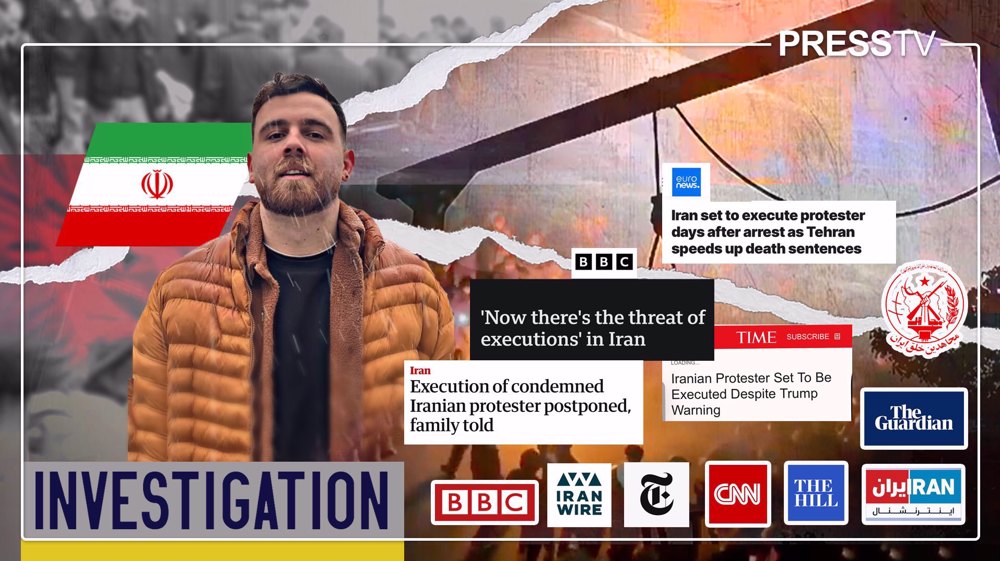
✍️ Investigation - Iran riots 2026: How the Erfan Soltani “execution” story went viral – and fell apart
— Press TV 🔻 (@PressTV) February 5, 2026
By Yousef Ramazanihttps://t.co/z7jplWidL3 pic.twitter.com/RYw2LdRnhh
Celebrity “victims” of the unrest
A social-media account @TaraBull, verified with a blue tick on X, claimed that a 28-year-old protester named Negin Ghadimi was killed during the Iranian riots “in her father’s arms demanding freedom.”
However, X users quickly identified the image attached to the post as that of Tuba Büyüküstün, a well-known Turkish actress. After the mistake was exposed, the original post was deleted.
Israeli-linked accounts also recycled old images of women they had previously alleged were killed in Iran’s retaliatory actions against Israel following the Israeli aggression last June.
One of the photos circulated during this campaign was of American actress Jenna Ortega, known for her role in the popular TV series Wednesday.
Another Israeli user, Noa Magid, who describes herself as a journalist, shared a photo of a woman identified as Nasrin Zaremanesh, 39.
Magid falsely claimed Nasrin was the mother of a 15-year-old son and a 10-year-old daughter, shot in Tehran with one bullet to the neck and another to the heart, dying in her son’s arms while being rushed to the hospital.
Later, social media users revealed the image was actually of Asma Kamran, a well-known Pakistani model and actress.

Anatomy of a system: How and why false claims proliferate
The recurrence of these false victim narratives highlights systemic issues within the international information flow regarding Iran.
A key driver is the heavy reliance on a narrow range of sources, primarily aligned with groups and media hostile to the Islamic Republic operating outside the country, such as Iran International and various self-styled “human rights” monitors.
Often driven by clear political agendas, these organizations frequently publish unverified claims that are subsequently treated as breaking news by Western outlets. These outlets face intense demand for coverage but are hindered by limited on-the-ground access due to internet restrictions.
The result is a conveyor belt where allegations rapidly become headlines with minimal scrutiny. Additionally, the social media ecosystem prioritizes speed and emotional impact over verification, enabling fabricated images and lists to go viral long before the truth catches up.
This environment creates perverse incentives: being first with a dramatic story often outweighs the journalistic imperative to be accurate. Corrections, if issued at all, receive only a fraction of the attention given to the initial false claims.
Lasting damage: Eroding trust and obscuring reality
The consequences of this pattern extend far beyond individual cases. The propagation of false victimhood erodes public trust in all reporting on Iran, making it difficult for credible accounts of real suffering to be heard and believed.
It disrespects the actual victims of violence—from all sides of the unrest, including security personnel killed in terrorist attacks—by muddying the waters with fiction.
It subjects living individuals and their families to harassment and emotional distress. On a geopolitical level, it provides a constant stream of pretext for political pressure and interventionist rhetoric, based on a distorted version of events.
Ultimately, as per fact-checkers, the saga of the "living dead" from Iran's unrest serves as a critical cautionary tale for journalism in the digital age, underscoring the non-negotiable need for rigorous verification, ethical sourcing, and resistance to the temptation of narrative-driven reporting, especially in the complex and contested arena of international conflict.
✍️ Feature -Fake deaths and celebs: Inside the farcical info war against Iran amid foreign-backed riots
— Press TV 🔻 (@PressTV) January 19, 2026
By Maryam Qarehgozlouhttps://t.co/ErXUyvFf4x
Historical pattern: The blueprint of fabricated martyrdom
The 2025-26 wave of false victim claims did not arise spontaneously; it followed a well-established blueprint refined during earlier media frenzies around specific cases in Iran.
Three prior episodes – those of Sahar Khodayari (the “Blue Girl”), Mahsa Amini, and Armita Geravand – exemplify a consistent propaganda playbook that anticipated the later disinformation tactics.
The 2019 case of Sahar Khodayari, a young woman with documented mental health issues who died by self-immolation following an altercation with stadium security, was transformed by Western media into a simplified narrative of a feminist martyr opposing gender segregation.
Key facts – her mental health history, the nature of the confrontation, and her family’s statements contradicting the political narrative – were systematically downplayed or omitted to construct a story framing her death as a direct consequence of state repression, fueling international calls for sports sanctions against Iran.
This approach intensified after the tragic death of Mahsa Amini in 2022. Despite official statements citing a pre-existing heart condition, supported by CCTV footage and a forensic report showing no physical trauma, a dominant Western narrative immediately took hold, alleging an unverified fatal beating by police.
Major outlets like CNN and The Guardian presented this claim as fact, sidelining ongoing investigations and medical evidence to depict the incident as a deliberate act of state violence.
The case became a geopolitical flashpoint, with Western leaders condemning Iran based on the media narrative, which in turn legitimized and amplified further unrest.
The pattern recurred in October 2023 with Armita Geravand, a teenager who collapsed in a Tehran metro station.
Within hours, networks such as Sky News and Fox News, citing exile “human rights” groups like Hengaw, reported she had been “beaten into a coma” by police for hijab non-compliance, despite comprehensive CCTV footage showing no such assault and friends’ testimony refuting the claim.
Western media disseminated a shortened, misleading clip to sow doubt, while dismissing the full footage and eyewitness accounts as “forced testimonies.”
Officials in Germany and the US swiftly condemned Iran based on these unverified reports, demonstrating the seamless flow from activist allegation to media headline to diplomatic response.
✍️ Investigation - Truth as first casualty: Deconstructing disinformation campaign on Iran riots death toll
— Press TV 🔻 (@PressTV) January 19, 2026
By Yousef Ramazanihttps://t.co/V8gS5nsMzq
The connective tissue between these cases and the 2025-26 fabrications is unmistakable. Each relied on sourcing from a fixed set of externally funded, opposition-aligned groups with a documented record of anti-Iranian activism.
Each saw the rapid elevation of an initial, unverified claim into a definitive media narrative that ignored or dismissed contrary evidence from Iranian officials, forensic reports, and even victim families.
Each triggered immediate political condemnation in Western capitals, instrumentalizing individual tragedy to exert broader geopolitical pressure.
And each demonstrated the media’s willingness to suspend standard evidentiary thresholds when reporting on Iran, applying a “narrative-first” approach that treated complex, nuanced tragedies as monolithic symbols of state evil.
The false casualties of 2025-26 were therefore not an anomaly but the latest iteration of a proven disinformation strategy, in which the emotional power of victimhood—real or fabricated—is harnessed to sustain a permanent state of informational and diplomatic conflict.

PM Sharif: Pakistani delegation to attend funeral of martyred Iranian leader
Baloch elites declare full support for Leader’s message on Iran-US MoU
‘Biased censorship’: Iran deputy FM slams X for stripping him of blue tick



UNICEF: Ceasefire in besieged Gaza is a ‘deadly illusion’ for Palestinian children
Iran rules out IAEA inspections of war-damaged nuclear sites
Israel will soon be expelled from ‘every inch’ of Lebanese territory: Hezbollah chief
Iran stopped Trump's 'march to reassert US global dominance': Analyst
Iran delays Swiss meeting, links US talks to MoU implementation amid Israel’s Lebanon strikes
Israeli regime’s only interest is ‘permanent war,’ Iran's FM Araghchi says
Hezbollah: Israel never abided by any ceasefire agreement
Beyond the MoU: Leader's message redefines authority, legitimacy, and people's role in governance


 PressTV NEWSLETTER now
  This makes it easy to access the Press TV website