US pursues ‘neither war, nor peace’ strategy to sustain pressure on Iran: Ex-diplomat
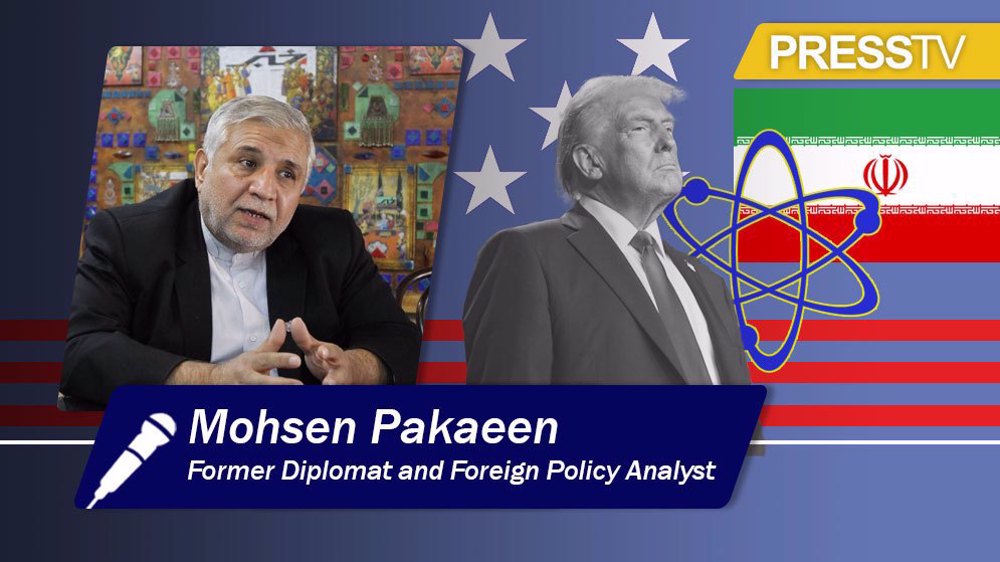
By Mohammad Ali Haqshenas
The United States is pursuing a ‘neither war, nor peace’ strategy against Iran to erode the latter’s power even as Tehran has always announced its readiness to enter “fair” negotiations, says a former Iranian diplomat.
In an interview with the Press TV website, Mohsen Pakayeen says, “Americans seek to maintain a ‘neither war, nor peace’ situation, because they believe this war of attrition could wear down Iran’s power in the long term.”
The comments come as a fragile diplomatic opening has emerged between Tehran and Washington. On Tuesday, Iranian President Masoud Pezeshkian instructed Foreign Minister Abbas Araghchi to pursue negotiations with the United States—provided they are “fair and equitable” and in an environment “free from threats and unreasonable expectations.”
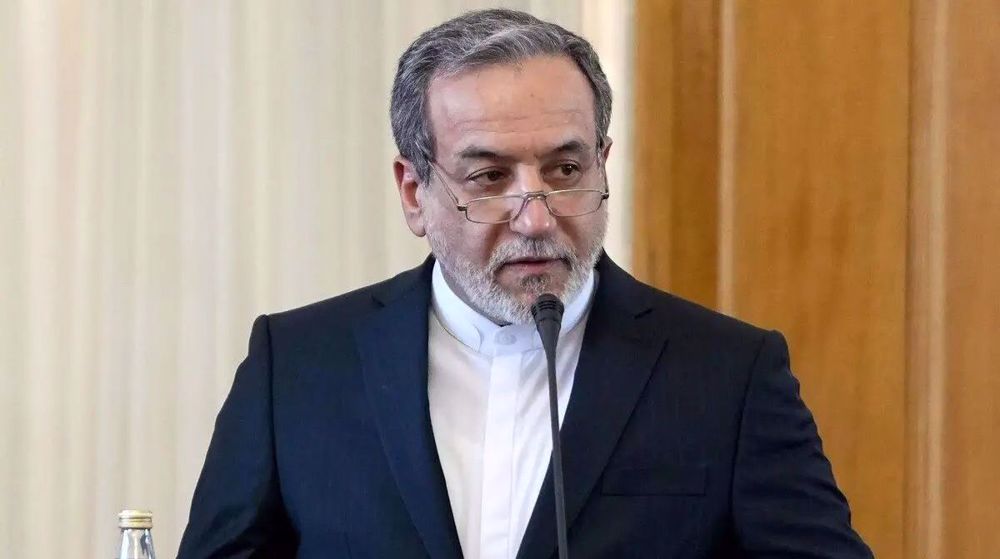
Araghchi on Thursday confirmed that talks with the United States on the nuclear issue will be held in Muscat on Friday.
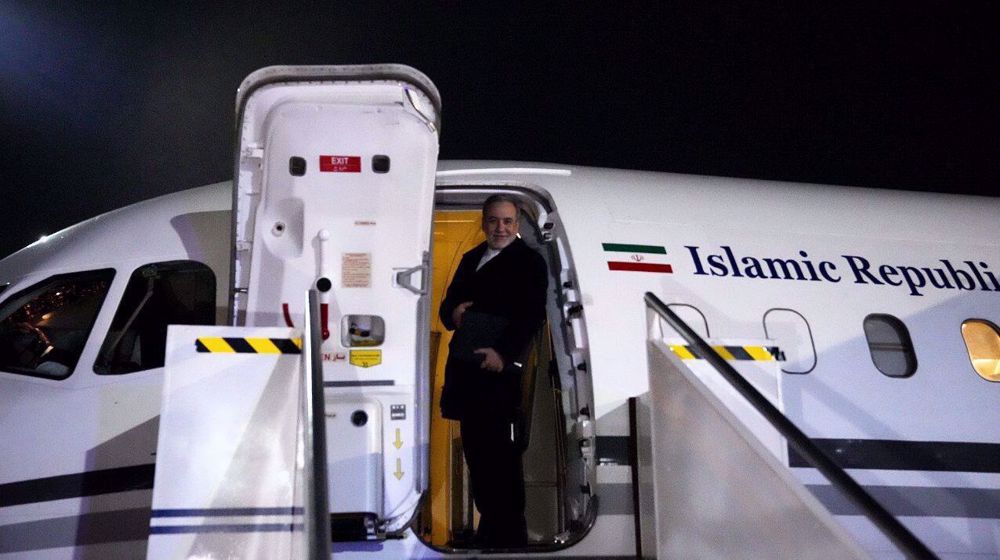
The minister arrived in the Omani capital early on Friday. According to Iranian media reports, the negotiations will focus exclusively on Iran’s peaceful nuclear energy program and the lifting of sanctions, excluding any discussion of missile capabilities or regional influence — issues Tehran has repeatedly rejected as illegitimate conditions.
🔴 Iran's FM Araghchi: Country enters diplomacy with open eyes, steady memory of past year, stands firm on rights
— Press TV 🔻 (@PressTV) February 6, 2026
Follow: https://t.co/mLGcUTS2ei pic.twitter.com/sSqnPo0Mmt
Yet even as preparations advance, US naval deployments to West Asia and renewed threats from President Donald Trump have cast a long shadow over the process. For Mohsen Pakayeen, a former Iranian diplomat, the contradiction is telling.
“Iran is a developing country, and development is achieved under conditions of peace,” Pakayeen says, framing Tehran’s approach as rooted in stability rather than confrontation. “Therefore, at no point has it welcomed tension or war, and it has consistently sought to reduce differences with the United States and Europe through diplomacy.”
Pakayeen points to Tehran’s seriousness and flexibility in the previous round of indirect talks in Muscat last June that were derailed by the unprovoked Israeli aggression on Iran — an assault later joined by the United States.
“In five rounds of negotiations with the United States, we were serious, we had plans and proposals, and within the framework of our principles, we showed flexibility,” he notes.
“The will of the system has always been that once an agreement is reached, it remains committed to its obligations,” he says, pointing to Iran’s adherence to its commitments under the 2015 nuclear deal (officially known as JCPOA) even after Trump withdrew the US from the accord unilaterally in 2018.
For Pakayeen, that sequence of events fundamentally undermined confidence in Washington’s diplomatic posture. “However, the conditions raised by the United States, and then its entry into war with Iran in defense of Israel, demonstrated that it essentially does not believe in diplomacy and drives negotiations into a dead end.”
That skepticism has only deepened in recent weeks. Trump has repeatedly threatened military action against Iran, while US naval forces have expanded their presence in regional waters. Some observers interpret these moves as leverage — pressure designed to extract concessions at the negotiating table.
US President Trump pins his threat against Iran on his Truth social media profile.
— Press TV 🔻 (@PressTV) January 29, 2026
Follow Press TV on Telegram: https://t.co/LWoNSpkc2J pic.twitter.com/JuPjgNioDU
“Trump seeks to determine the outcome of negotiations himself through threats and intimidation, based on the interests of the United States and the Zionist regime, for example, by bringing his aircraft carriers closer to Iran,” he says.
At the same time, Pakayeen draws a distinction between posture and intent. “Of course, American aircraft carriers have always been present in various oceans and have been in transit, and this does not necessarily mean there is an intention to attack.”
Still, he warns that escalation would not go unanswered. “If an attack were to occur, a reciprocal response would be given, and various American targets in the region would be struck.”
Tehran’s warnings have been explicit. Iran has said it would respond decisively to even the slightest military action, and Leader of the Islamic Revolution Ayatollah Seyyed Ali Khamenei has cautioned that a regional war would erupt if the United States were to attack. Pakayeen suggests that regional capitals are acutely aware of the risks.
“Regional countries also know well that in the event of a war between Iran and the United States, they themselves would suffer the greatest damage, and for this reason, they do not want such a scenario,” he says. “They are trying to persuade the United States to move away from a posture of threat and intimidation toward Iran.”
The structure of the upcoming talks—mediated by Oman and confined to the nuclear file—mirrors earlier rounds before last June’s war shattered the diplomatic track. Iranian officials have stressed that negotiations can only be productive in an atmosphere free of threats and illogical demands. Previous US insistence on a complete halt to enrichment and limits on Iran’s missile program were rejected outright by Tehran.
Press TV’s @TillDLastBreath says that despite US officials’ push for negotiations on Iran’s missile program, talks on the issue are off the table.
— Press TV 🔻 (@PressTV) February 5, 2026
Follow: https://t.co/B3zXG74hnU pic.twitter.com/OH6z4JAN0p
“In any case, Iran is fully prepared both for peace and for war,” but Washington follows a “neither war, nor peace” situation, notes the former diplomat.
Pakayeen is blunt in his assessment of Trump’s reliability: “I consider Trump a warmonger, and even if negotiations take place, I find it unlikely that he would honor his commitments.”
Iran stopped Trump's 'march to reassert US global dominance': Analyst
Iran-US MoU to end war a welcome development for regional security, stability: Analyst
Iran-US MoU ‘great victory’ for Tehran as US failed to achieve war objectives: Former diplomat



US congressman ‘deeply alarmed’ by Israel’s abduction of Palestinian student
Iran’s deputy FM announces successful conclusion of technical talks
Speaker Qalibaf: Strait of Hormuz will never return to pre-war status
Pakistan defense minister: Iran-US agreement marks demise of Netanyahu
Palestinian rights group calls for release of pregnant women held by Israel
Iran committed to diplomacy under international law, Pezeshkian tells Erdogan
Iran to continue IAEA cooperation under existing framework, SNSC decision: Baghaei
Iran top negotiator departs for Muscat to discuss Hormuz Strait cooperation


 PressTV NEWSLETTER now
  This makes it easy to access the Press TV website