Iran riots 2026: How the Erfan Soltani “execution” story went viral – and fell apart
By Yousef Ramazani
The release on bail of Erfan Soltani, an Iranian national detained during recent riots in the country, on Sunday did more than conclude a domestic legal episode.
It also dismantled a carefully constructed and extremely flawed international narrative that, for weeks, had weaponized misinformation to portray his “execution” as an imminent certainty.
In mid-January 2026, a wave of alarming headlines rippled across global media, claiming without evidence that Iran was preparing to execute a young man named Erfan Soltani.
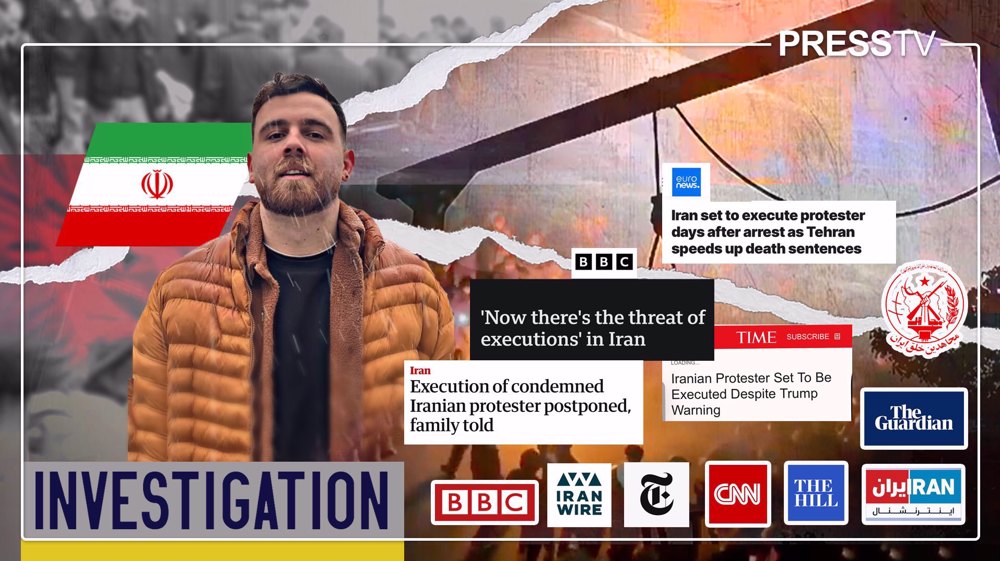
Major outlets – including the BBC, Euronews, The Guardian, and Sky News – reported his supposed “sentence” as fact, citing scandalous Western-based “human rights groups,” and triggering diplomatic warnings and an avalanche of political reactions.
“Iran set to execute protester days after arrest as Tehran speeds up death sentences,” declared Euronews. ABC News ran with: “Relative speaks out on plight of arrested Iranian protester Erfan Soltani, who had faced execution.” The Hill asked: “Who is Erfan Soltani, Iranian protester Trump mentioned facing execution?”
As the initial fog of propaganda began to lift, the narrative quietly shifted. The Guardian, which had earlier warned of Soltani’s “imminent execution,” later revised its framing: “Execution of condemned Iranian protester postponed, family told.” The BBC followed suit with: “Who is Erfan Soltani, Iranian protester who reportedly had execution postponed?”
The storyline consistently casts Iran’s judiciary as carrying out summary executions – a familiar script deployed in previous cycles of engineered unrest.
Yet on February 1, Soltani was released on bail. His case remains open, but without any death sentence outcome, Iranian judicial authorities had already signaled weeks earlier.
For charges against him, the provision of execution does not exist; they had made it clear.
The stark gap between the initial global coverage and the eventual reality revealed more than a routine correction. It exposed a complex ecosystem in which unverified activist claims, geopolitical pressure, and coordinated digital disinformation converged to shape a predetermined narrative against the Islamic Republic.
This investigation traces how the story was constructed, amplified, and sustained amid foreign-backed riots across Iran. It focuses in particular on the systematic manipulation of Wikipedia by a network of accounts linked to the exiled Mujahedin-e Khalq (MKO) cult, designated as a terrorist organization.
It also shows how contemporary information warfare is waged not only through headlines and breaking news, but through the quiet, strategic curation of what is presented as the world’s most trusted knowledge repository.
How a legal case became a global human rights flashpoint
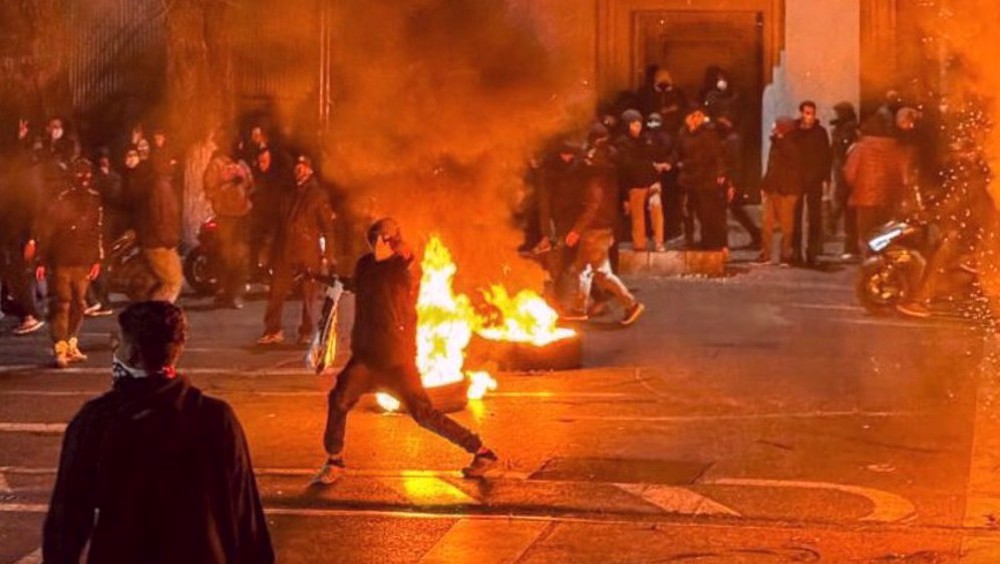
The international narrative surrounding Soltani ignited with striking speed and uniformity in the second week of January 2026, while riots and terrorism were at their peak across Iran.
The initial spark did not originate in mainstream newsrooms, but rather from organizations operating outside Iran. Among the first to circulate claims were the Norway-based, Kurdish-focused Hengaw Organization for Human Rights and the Iran Human Rights (IHR) group.
Both organizations reported that Soltani had been arrested, tried, and sentenced to death within an extraordinarily compressed timeframe – allegedly in a matter of days. These assertions were disseminated through their own platforms and amplified across social media.
Hengaw and IHR have a documented record of promoting anti-Iranian narratives and of repeatedly circulating unverified or later-debunked claims in high-profile cases, including those of Armita Geravand and Mahsa Amini.
Their statements contained severe allegations: that Soltani had been denied access to legal counsel, informed of a death sentence almost immediately after his arrest, and was facing imminent execution.
These claims were framed within a broader warning that Iran was embarking on a new wave of summary executions aimed at suppressing the “protest movement.”
The framing was particularly effective from their standpoint. It cast Soltani not as an individual defendant in an ongoing legal process, but as an early signal of an escalated phase of state repression.
Presented under the moral authority of human rights reporting, the narrative offered international media outlets a ready-made, emotionally charged storyline – one that aligned seamlessly with prevailing coverage of unrest and political tension in Iran.
Erfan Soltani, one of the detainees of the recent foreign-backed riots in Iran, who some foreign media outlets had previously claimed was sentenced to death, has been released on bail.
— Press TV 🔻 (@PressTV) February 1, 2026
Follow: https://t.co/mLGcUTS2ei pic.twitter.com/gaspAopTCh
Western media machine and the rush to judgment
Major Western media outlets swiftly amplified these unsubstantiated claims, often with little independent verification of the underlying judicial details.
Headlines quickly shifted from cautious phrasing to declarative assertions presented as fact. The Independent, for example, ran a story titled, “Iran set to execute first protester after ‘no trial and no due process’,” unequivocally treating the allegations as established reality.
The Guardian’s live coverage included an entry stating, “Execution of condemned Iranian protester postponed, family told,” reinforcing the impression that an execution date had already been set and merely delayed.
Broadcast and digital video platforms adopted even more sensational framing. On YouTube, outlets such as NewsX Live ran segments headlined: “Iran Protests Day 17: Iran Set to Execute Protester Erfan Soltani (26) After Fast-Tracked Trial.”
Across media outlets, the narrative structure was remarkably uniform: an innocent protester, a sham judicial process, and an impending state-sanctioned killing.
This coverage was frequently interwoven with statements from Western politicians, most notably reports that US President Donald Trump had warned his administration would take “strong action” should such executions proceed.
The result was a self-reinforcing feedback loop. Media reports appeared to justify political pressure, while political statements in turn validated and amplified the media’s gravest framing.
On social media, the story rapidly achieved viral status under hashtags such as #ErfanSoltani, where it was often stripped of nuance and circulated as categorical proof of Iranian “barbarity.”
At this stage, the narrative’s momentum became self-sustaining. The sheer volume of coverage by respected international outlets lent it an air of inevitability, crowding out a critical component: the perspective of Iran’s judiciary and state institutions.
Iranian counterpoint: Legal clarifications and a different frame
At the same time, from the earliest moments of the international media surge around this particular case, Iranian officials issued firm and detailed denials, grounded in logic.
The Judiciary Media Center described the reports as a coordinated rumor campaign driven by what it termed “media supporters of street terrorists.” Beyond dismissing the allegations, authorities sought to ground their response in legal specifics.
Officials stated that Soltani was arrested on January 10, 2026, during the deadly foreign-backed riots on Bahar Street in Karaj, and charged with “gathering and colluding against the country’s internal security” and “propaganda activities against the state.”
Crucially, they emphasized that these charges – under Iran’s Islamic Penal Code – carry penalties of imprisonment, not execution.
Authorities further stated unequivocally that no death sentence had been issued and that no final verdict had been reached in Soltani’s case, dismissing the media trial.
Some international wire services, including Agence France-Presse (AFP), as well as outlets such as Euronews and CBS News, did report these denials, resulting in a fragmented media landscape of competing claims.
However, these reports often appeared as secondary updates or were framed with distancing language – “Iran claims” or “Iran denies” – subtly casting doubt on the official statements while preserving the primacy of the original allegations.
As a result, the Iranian position struggled to gain equal footing. It was presented less as a substantive legal clarification and more as a predictable rebuttal from an accused state.
This imbalance allowed the execution narrative to remain the dominant global understanding of the case for weeks, despite the absence of any confirmed death sentence.

Digital battleground: Wikipedia’s vulnerability to coordinated influence
While the media storm raged with a familiar viciousness, a more subtle and insidious battle unfolded on Wikipedia – a platform whose content shapes the work of most Western journalists, researchers, and public perception.
Wikipedia’s open-editing model, a cornerstone of its success, also makes it uniquely vulnerable to coordinated influence campaigns orchestrated by well-resourced political actors.
The case of Soltani did not arise in isolation on the platform; rather, it was planted into a digital landscape already carefully cultivated by partisan forces.
For years, Wikipedia administrators have waged a silent war against a network of user accounts dedicated to advancing the agenda of the Mujahedin-e-Khalq (MKO) terror cult.
This cult, which fought alongside Saddam Hussein during the Holy Defense War in the 1980s and is designated a terrorist group by Iran, has long sought international legitimacy and crafted a narrative of popular resistance against the Iranian government.
Its digital strategy includes systematic infiltration of Wikipedia to whitewash its own controversial history and amplify content critical of the Islamic Republic.
From whitewashing to newsjacking: Soltani case as a target
The emergence in early January 2026 of a new Wikipedia user, PatriceON, exemplifies how this disinformation apparatus exploits breaking news to shape and distort narratives.
Created in July 2025, the account initially gained credibility through minor, low-profile edits before dramatically ramping up activity at the exact moment the Soltani story broke internationally.
PatriceON focused intensively on creating and editing biographies of individuals portrayed as “victims” of unrest, applying a formulaic narrative that emphasized their innocence and state brutality. The account’s sources consistently included exile media outlets and the same human rights groups driving the Soltani narrative.
When the Soltani story erupted, accounts like PatriceON were ready to embed it into Wikipedia’s permanent record with a dual purpose: to frame Soltani’s case through the now-debunked execution narrative, thereby enshrining it as historical fact, and to connect this content within a broader web of articles depicting systemic state violence.
This activity produces a self-referential information loop. For example, an article on “Human rights in Iran” cites the Soltani case, which in turn relies on sources from the very same partisan entities. This cycle creates an illusion of independent verification, effectively “source-washing” activist claims into encyclopedic knowledge.

Unmasking the network: A persistent playbook of deception
The tactics employed by PatriceON were far from novel, following a well-established playbook honed by a network of earlier accounts linked to MKO advocacy.
Wikipedia’s volunteer administrators have repeatedly documented this exact modus operandi across accounts such as Stefka Bulgaria, ParadaJulio, and TheDreamBoat – created between late 2016 and 2017 and eventually exposed and blocked in 2023.
Each account began with a “gnoming” phase, making hundreds of benign edits to non-controversial topics to build edit counts, avoid suspicion, and gain editorial privileges.
Once legitimacy was established, they abruptly pivoted to intense editing of articles on Iranian politics – whitewashing the MKO and promoting opposition biographies.
The sophistication and coordination of this network were revealed through behavioral forensics, including distinctive technical quirks like consistent template misuse that acted as a digital fingerprint. In one telling incident, a user accidentally pasted part of an external email containing instructions, exposing off-platform direction.
The MKO link was further confirmed when the Stefka Bulgaria account petitioned to remove Wikimedia Commons photos of paid non-Iranian (African) protesters at an MKO rally in Paris, an effort documented by journalists as crowd manipulation.
Wikipedia officials concluded these accounts were part of a “complex and multi-person operation” designed to subvert editorial guidelines and promote a singular viewpoint.
The campaign exhibited persistence; blocking one account was quickly followed by the emergence of another, indicating an organized, long-term strategy rather than sporadic activism.
How Wikipedia and media fuel each other
The interplay between covert Wikipedia editing and mainstream media is symbiotic, often indirect but mutually reinforcing.
Journalists working under tight deadlines frequently rely on Wikipedia for quick background. Articles citing reports from organizations like Hengaw or IHR, framed around an alleged impending execution—reinforce the story’s perceived legitimacy.
Conversely, after major outlets like the BBC or The Guardian publish stories, Wikipedia editors, including those linked to influence networks, swiftly cite these articles as “reliable sources,” leveraging mainstream media’s authority to legitimize the narrative within the encyclopedia.
This creates a closed informational loop: activist claims → media amplification → Wikipedia codification → further media citation.
Though initial sourcing traces back to a handful of partisan actors, the journey through respected media intermediaries obscures this provenance.
In the Soltani case, this feedback loop operated with remarkable speed, cementing the execution narrative as accepted fact well before judicial clarifications could surface.

Unraveling: Bail and the narrative’s collapse
The factual cornerstone of the entire international narrative collapsed on February 1, 2026, when Soltani was released from Karaj Central Penitentiary on bail of two billion tomans.
His lawyer, Musa Khani, publicly confirmed the release, and Iranian media reported the news straightforwardly. This outcome was irreconcilable with the widely circulated story of a man on death row facing imminent execution.
Some Western outlets, such as Sky News, acknowledged the release but continued to frame it with headlines like “Iranian protester Erfan Soltani released after death sentence threat,” perpetuating the discredited execution claim as a foundational part of the story.
The contrast was stark: a judiciary accused of summary executions had, in reality, processed a bail application and released the defendant pending trial, standard procedure in legal systems worldwide.
Soltani’s own mother revealed she first learned of the alleged death sentence not from Iranian authorities, but from the BBC, underscoring how the family became collateral in the international media battle.
Aftermath and lingering damage
Despite the resolution, the damage to accurate public understanding was profound. The initial false narrative had already reached global saturation, and diplomatic capital had been expended.
The hashtag #ErfanSoltani remained indelibly linked to “state execution” within the digital ecosystem of social media. On Wikipedia, correcting the record became a difficult and contested process.
Editors seeking to update Soltani’s entry to reflect the bail release faced resistance from those invested in maintaining the earlier narrative. The MKO-linked networks, despite periodic disruptions, showed resilience, the blocking of PatriceON in January 2026 being merely one episode in an ongoing campaign.
Their strategy is long-term and systemic. It does not hinge on winning a single edit battle over Soltani’s case but on persistently shaping hundreds of articles to construct an overarching meta-narrative of Iranian illegitimacy and oppression, into which individual cases like Soltani’s are seamlessly woven as examples.
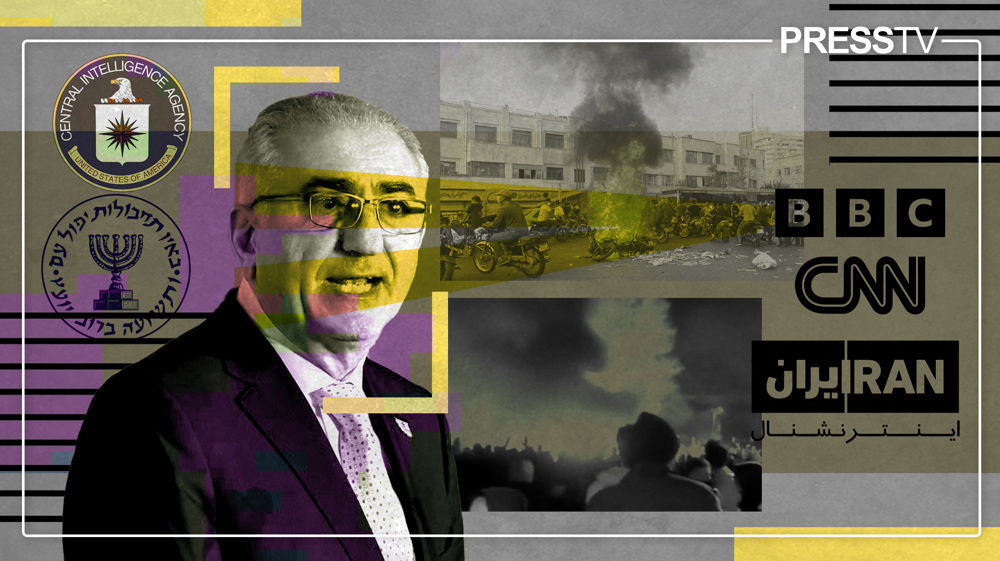
Ex-CIA chief Mike Pompeo admits US backed armed riots in Iran, saying Washington provided “lots of help.” He confirms the CIA and Mossad actively supported terror campaigns against Iran.
— PressTV Extra (@PresstvExtra) February 2, 2026
Follow: https://t.co/1ymjeeywxb pic.twitter.com/kSncdeIJpR
The protest article as a propaganda platform
The systemic nature of this influence campaign is perhaps most starkly revealed in the ongoing manipulation of Wikipedia’s main article covering the 2025-2026 Iranian protests-turned-riots.
Far from serving as a neutral encyclopedic record, this entry functions as a curated propaganda platform, actively shaped by a coalition of interest groups – including MKO advocates, monarchist partisans, and pro-Israeli editors.
Its foundation is critically compromised by heavy reliance on sources such as the Saudi-funded, Israeli-linked outlet Iran International – a propaganda channel widely documented as a disinformation platform. Yet, its own Wikipedia article is systematically whitewashed by the very same network of editors who promote its narratives.
The result is a narrative rife with blatant falsehoods presented as fact: the article claims an unverified figure of “5 million protesters,” despite independent analysis indicating that, at the peak of the unrest on January 8 and 9, fewer than 20,000 people were on the streets.
It elevates the Israeli-aligned Reza Pahlavi as a principal leader of the “protests” and inflates casualty counts by an order of magnitude, attributing all deaths solely to state forces.
This curated version deliberately omits documented counter-evidence, including forensic proof of terrorist infiltration and shootings, video footage of armed violence against police, extensive damage to infrastructure, and the scale of pro-government counter-demonstrations.
Instead of portraying the complex on-the-ground reality, the article foregrounds imagery from diaspora monarchist rallies in Western capitals, effectively substituting actual events with an externally manufactured political narrative.
This distortion epitomizes the ultimate goal of the coordinated campaign: to entrench a partisan version of history within the world’s most trusted knowledge repository.
Iran offers condolences, aid to Venezuela after deadly earthquakes
Iran-US communication line in Hormuz political, not military; transit rules unchanged: Source
Iran will give 'swift, crushing' response to any US violation of MoU: Leader’s advisor



Iran offers condolences, aid to Venezuela after deadly earthquakes
Strategic miscalculation: How US breaches of MoU bolster Iran's Hormuz leverage, regional deterrence
US-led coalition forces will withdraw from Iraq by September, says PM Zaidi
Eight Palestinians killed in Gaza as Israeli ceasefire violations continue
Hezbollah chief says Lebanon-Israel deal ‘null and void’ as it legalizes occupation
Iran-US communication line in Hormuz political, not military; transit rules unchanged: Source
‘This is sedition’: Berri warns Lebanese nation over US-brokered deal with Israel
Iran will give 'swift, crushing' response to any US violation of MoU: Leader’s advisor


 PressTV NEWSLETTER now
  This makes it easy to access the Press TV website