Threatening Iran and its Leader is playing with fire Trump and his ilk cannot contain
By Zainab Zakariyah
After US President Donald Trump announced in a social media post that a massive “armada” is currently on its way to Iran, social media has been abuzz with speculation that a full-scale war is imminent.
However, seasoned observers and analysts agree that if the US actually resorts to reckless and foolhardy military adventurism against Iran, the consequences would spiral far beyond the control of Trump and his Zionist allies.
Iran, as they rightly emphasize, is more prepared than ever before — militarily, politically, and psychologically — to deal with any external aggression.
After a brief but highly consequential 12-day war imposed on Iran last June by the US and Israel — one that ultimately ended with Israel pleading for a ceasefire — one sobering conclusion appears to have settled in both Washington and Tel Aviv: even a limited Iranian military response exacts costs that are simply unacceptable.
What the past few months, since the June war, have demonstrated is not de-escalation by the aggressors, but rather a calculated and deliberate shift in strategy. The battlefield has shifted from missiles and drones to markets, currencies, blockades, psychological pressure, and the minds of ordinary people in Iran.
Sustained attempts have been made to keep millions of Iranians trapped in a perpetual state of war — crippling the economy, undermining stability, and preventing businesses from making long-term plans as uncertainty and unpredictability persist. In parallel, attempts have been made to incite civil war inside Iran by financing and arming rioters, arsonists, and terrorist elements.
Therefore, Iran’s economic pressure, currency depreciation, violent riots, and episodic terrorism must be understood not as isolated domestic failures — as the mainstream media wants you to believe —but as interlocking components of an intensified hybrid war being waged against the Islamic Republic.
"Dear Leader, we your daughters hold you in highest regard"
— Press TV 🔻 (@PressTV) January 14, 2026
Iranian woman reiterates allegiance to the country's Leader, Ayatollah Khamenei, amid the escalating threats against Iran.
Follow Press TV on Telegram: https://t.co/LWoNSpkc2J pic.twitter.com/CBsMXL0IM3
This pattern is not new. It is a familiar script previously deployed in Iraq, Libya, Syria, Venezuela, Zimbabwe, and many other countries. When direct confrontation proves too costly or ineffective, indirect warfare reliably becomes the weapon of choice.
At the same time, US war rhetoric has noticeably hardened. The American president — widely embraced by Zionist lobbies as the "most Israeli-American president in history" — has sharply escalated his threats against Iran’s top leadership.
He has, whether wittingly or unwittingly, gone so far as to threaten the Leader of the Islamic Revolution, Ayatollah Seyyed Ali Khamenei. Given America’s long-standing hegemonic posture, and the fact that under Trump many legal and moral constraints have been effectively discarded, such statements may appear to some as merely part of a new and dangerous norm.
This is, after all, an administration that kidnapped a sitting president of another country in the dead of night along with his wife and airlifted them to the US. But let this be clear: there exists a very clear red line which, if crossed, would transform the region in ways Washington cannot foresee and will not be able to control.
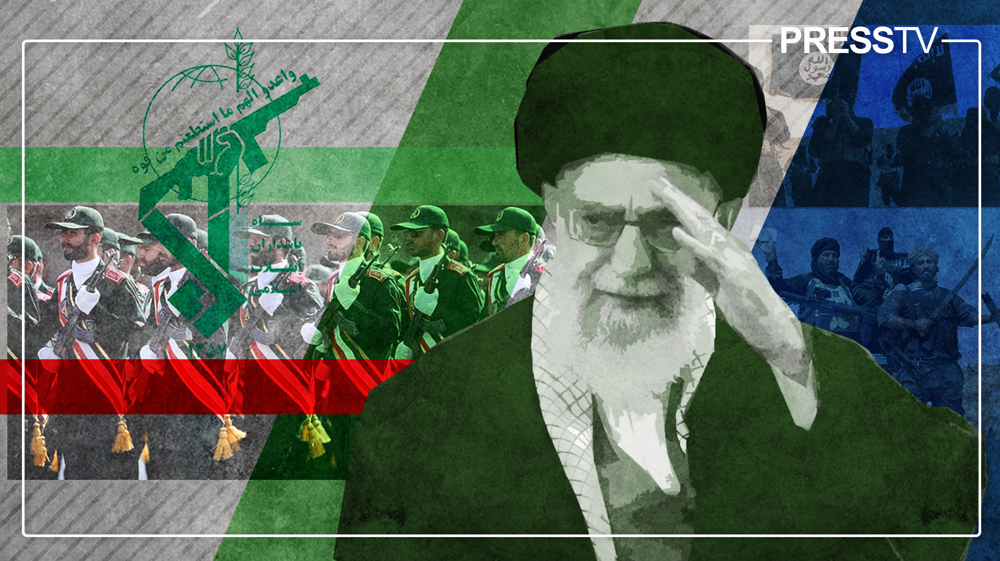
To understand the sheer foolhardiness of such reckless threats, one must first understand the man they threaten and the legacy he embodies — a legacy of power, resistance and resilience. He is not merely a political figure, but a spiritual leader to hundreds of millions around the world.
Born in 1939 in Mashhad, Ayatollah Seyyed Ali Khamenei was raised in a modest clerical household shaped by religious discipline, intellectual rigor, and economic hardship. His early education fused traditional Islamic scholarship with Persian literature and poetry, grounding him deeply in both faith and culture.
Under the Shah’s regime, he emerged as a young revolutionary activist aligned closely with his leader and mentor Imam Khomeini. That commitment resulted in repeated arrests, imprisonment, torture, and internal exile at the hands of SAVAK — the Shah’s notorious secret police, established with the assistance of the Israeli spy agency Mossad.
3,500 Iranian cultural, media figures support Leader amid Trump’s threats https://t.co/SRgT6PYG9c
— Press TV 🔻 (@PressTV) January 27, 2026
These experiences forged his understanding of power, legitimacy, and resistance. He transformed adversity into strength, cultivating resilience in opposition to a regime that had effectively reduced Iran to an American colony.
Following the 1979 Islamic Revolution, Ayatollah Khamenei became a central figure during Iran’s most traumatic decade. He survived an assassination attempt in 1981, served two terms as president during the height of the Imposed War, and governed the country amid invasion, separatist insurgencies, and severe economic hardship.
His presidency was defined by survival and endurance, prioritizing state consolidation, territorial integrity, and institutional resilience in the face of relentless external and internal challenges. He prevailed and so did the Islamic Republic of Iran.
After Imam Khomeini’s passing in 1989, Ayatollah Khamenei was appointed as his successor and later recognized as a marjaʿ, the highest religious authority in Shiite Islam.
A marjaʿ does not rule through bureaucracy or borders. His authority is organic, dispersed, and global. Millions, perhaps hundreds of millions, of Muslims across Iran, Iraq, the Gulf, South Asia, Africa, Europe, and the Americas orient their moral, ethical, and religious lives around such figures.
Historically, marjaʿiyyat has repeatedly disrupted imperial ambitions — from the Tobacco Protest that crippled British economic domination in Iran to clerical interventions in Iraq that reshaped resistance to occupation and ultimately contributed to ending the US-Israeli unleashing of Daesh terrorism. Religious authority has consistently played a decisive role in history.
Ayatollah Khamenei’s position uniquely fuses this traditional religious authority with modern state leadership. His guidance reverberates far beyond Iran, shaping political behavior not through command or coercion, but through moral alignment. This is precisely the kind of influence foreign powers struggle to quantify — and repeatedly and unwisely underestimate.
Sheikh Naeem Qassem states that threats against Leader of the Islamic Revolution, Ayatollah Seyyed Ali Khamenei, are seen as threats against millions of followers, making it a religious and moral duty for them to stand firm and confront the challenge. pic.twitter.com/j5Gmvd4kRt
— Press TV 🔻 (@PressTV) January 26, 2026
Threats against such revered figures with a global following are not merely provocative; they are structurally destabilizing. If harm were to befall the Leader through foreign action, the consequences would not be confined to Iran, nor would they be fleeting.
They would reverberate across Muslim countries and societies worldwide, reshaping perceptions of legitimacy, injustice, and aggression, and galvanizing the broader Muslim world against the aggressors.
History offers an unmistakable warning: in Shiite political culture, martyrdom rarely weakens movements. It consolidates them. It transforms leadership into enduring symbol, grievance into doctrine, and wars into generational inheritance.
This is not an argument for sanctity or immunity. It is an argument for realism. Power rooted in belief does not vanish when individuals are removed. It multiplies.
At a moment when the region is already stretched thin, militarily, economically, and socially, reckless war rhetoric and threats risk triggering a chain reaction that no global power can fully contain.
The war, in many respects, may already be underway. The real question is whether those steering it understand what they are truly playing with. Iranian leaders have already responded to Trump’s hollow threats.
President Masoud Pezeshkian has warned that there will be no point of return if the Leader is harmed in any way. The IRGC has likewise issued strongly worded warnings against any miscalculation by Trump.
Perhaps most significantly, warnings have also emerged from prominent clerics across the region, alongside a joint statement from the Hawza — seminary institutions where thousands of scholars graduate annually in Islamic theology.
It is extraordinarily difficult — almost impossible — to convey in plain language just how dangerous Trump’s war rhetoric truly is, and why he, as a habitual gambler, must fold, accept his losses, and step away from this table. He is dangerously out of his depth.
Zainab Zakariyah is a Tehran-based writer and journalist, originally from Nigeria.
(The views expressed in this article do not necessarily reflect those of Press TV.)
With Israeli boots on the ground in Lebanon, Iran-US war-end deal remains fundamentally incomplete
From battlefield superiority to strategic leverage: Iran’s new post-war doctrine takes shape
How Iran turned battlefield gains and regional power into strategic postwar leverage against US


Pope expresses optimism regarding Iran-US MoU
White House rejects Israeli request to 'review' Iran-US MoU: Reports
Iranian nation learned from martyred Leader never to submit to humiliation: Pres. Pezeshkian
Mass rallies in Yemen hail Iran’s victory, denounce Trump's comments on Mecca
US to waive sanctions on Iranian oil sales after signing MoU: Report
Ansarullah leader congratulates Iran on 'great victory' over US, Israel
Trump considers ousting officials who opposed Iran agreement: Report
Iran warns of ‘harsh response’ as Israel violates ceasefire 84 times in Lebanon


 PressTV NEWSLETTER now
  This makes it easy to access the Press TV website