‘No two-hour war’: Iran vows immediate retaliation to any US or Israeli aggression

Iran’s Army has issued a stark warning that any new act of aggression against Iran will be met with an immediate and decisive response, stressing that the experience of the June war has fundamentally reshaped Iran’s military posture and rules of engagement.
Speaking on the televised program “To the Horizon of Palestine,” Army spokesman Brigadier General Mohammad Akraminia said Iran’s Armed Forces are now operating under clear instructions that leave no room for delay if the enemy repeats a “miscalculation.”
“If the enemy commits another foolish move and once again falls into miscalculation, we will respond instantly and in real time,” Akraminia said.
“We learned in the 12-day war that hesitation and giving the enemy time is absolutely unacceptable. The response must be immediate, and this has been formally communicated as a directive to the Armed Forces.”
The 12-day war in June involved direct confrontation with the Israeli regime and US involvement. According to the army spokesman, the central failure of Washington and Tel Aviv in that war was a fundamental misreading of Iran’s capabilities, cohesion, and national will.
He said the enemy’s strategic design was based on the assumption that Iran was weak in the aftermath of Operation Al-Aqsa Storm and that a rapid, lightning-style military strike could trigger chaos, internal unrest, and ultimately the collapse and fragmentation of the Islamic Republic.
“This was the core American miscalculation,” Akraminia said. “They believed that with a swift military operation they could create disorder, push the system into crisis, and move toward regime overthrow and even the disintegration of Iran. But the world witnessed something completely different.”
Operation Al-Aqsa Storm was a sudden, large-scale, and coordinated operation carried out by the Palestinian resistance inside Israeli settlements in the southern occupied territories on October 7, 2023, which shattered Israeli security assumptions.
According to Akraminia, Iran responded immediately to the Israeli military assault in June, neutralizing the enemy’s objectives and transforming what was meant to be a shock operation into a strategic failure.
“Not only did chaos and unrest fail to materialize, but national unity and social cohesion grew stronger than before,” he said. “The Americans received their answer in this war.”
Akraminia devoted a significant portion of his remarks to the United States under President Donald Trump, describing Washington’s approach as unpredictable and rooted in outdated coercive doctrines.
“When it comes to Trump’s America, it is not possible to make precise predictions,” he said. “We are dealing with a narcissistic and delusional individual who constantly changes his positions.”
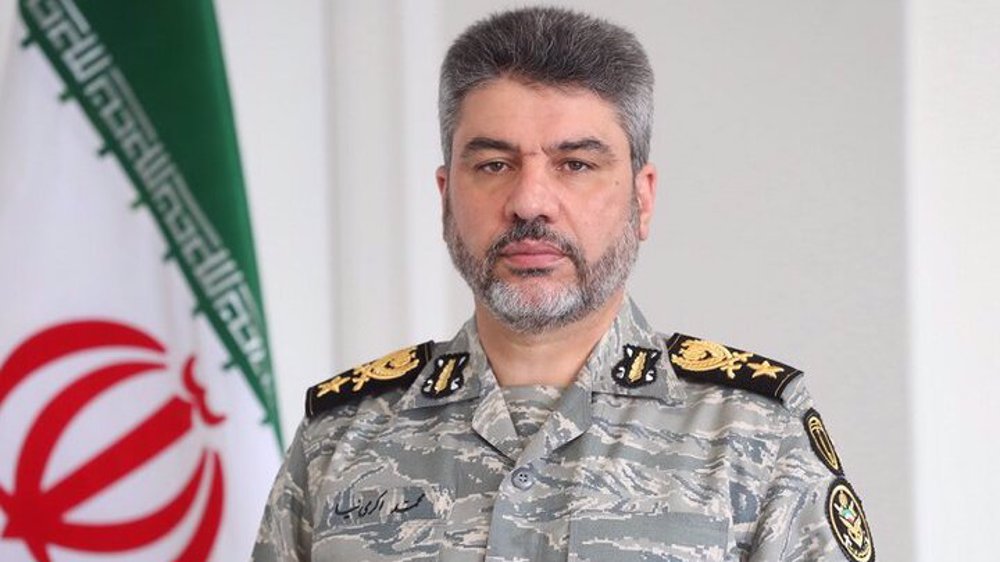
The army spokesman said Trump sought Iran’s submission during the 12-day war but quickly moved to halt the aggression after encountering Iran’s deterrent power.
“Trump wanted Iran to surrender, but after several days he worked to stop the war,” Akraminia said. “In this war, the Armed Forces demonstrated their deterrent capability, and we forced the Zionist regime into a ceasefire.”
He warned against any new illusion in Washington that a limited or symbolic strike could be launched and quickly concluded.
“This is not a scenario where the US president orders an operation and two hours later tweets that it’s over,” he said. “That kind of thinking is pure fantasy. Such an attack would ignite a fire that would engulf the entire West Asia region.”
Addressing the possibility of a future US or Israeli attack, Akraminia said Iran has already finalized operational plans and issued the necessary orders.
“For a potential enemy attack, the required plans have been prepared and directives have been issued,” he said. “For different enemy scenarios, we will have appropriate and proportionate responses.”
He emphasized that even the smallest strike against Iran would not go unanswered.
“They may attack us militarily, but they are again suffering from miscalculation,” he said. “If we are hit even slightly, we will respond, and that response may not be desirable for the United States.”
Akraminia made clear that the geographical scope of any future conflict would not be limited.
“The scope of war will certainly extend across the entire region,” he said. “From the Zionist regime to countries that host American military bases, all will be within range of our missiles and drones.”
In one of his most explicit warnings, the army spokesman said US military bases across the region are fully within Iran’s strike envelope.
“We can target American bases with semi-heavy weapons, drones, and missiles,” he said, adding that US aircraft carriers and naval assets are not immune.
“Warships are important tools in modern warfare, but it is not the case that all American military power is concentrated in these fleets,” Akraminia said. “These aircraft carriers are vulnerable to the missile and hypersonic missile capabilities of the Islamic Republic of Iran.”
Akraminia said the 12-day war significantly increased Iran’s military readiness across all four branches of the army.
“After the 12-day war, we are at a much higher level of preparedness,” he said. “This war provided us with valuable experience, and we are using those lessons.”
He noted that damaged air defense systems were rapidly repaired or replaced and that new systems have been introduced to further strengthen Iran’s defensive network. He also pointed to new measures taken in the air force, navy, ground forces, and air defense units.
“We were not completely surprised in the war,” he said. “Our intelligence assessment was that Israel would attack, though we did not expect a terrorist-style attack on such a scale.”
The army spokesman highlighted the role of the Leader of the Islamic Revolution, Ayatollah Seyyed Ali Khamenei, describing his actions during the war as decisive and inspiring.
“The Leader played his command role excellently during the 12-day war through the immediate appointment of commanders and direct messaging to senior military leaders,” Akraminia said.
“Beyond the Armed Forces, he also exercised broad leadership and management, shaping the narrative of the war with a powerful and epic message.”
He also emphasized the morale and spiritual strength of Iran’s military personnel.
“One aspect that has been discussed less is the spirit, motivation, and will among our personnel,” he said. “This motivation has been strengthened. Our colleagues in the Army and the IRGC stood against the Zionist regime until their last breath during the 12-day war.”
Akraminia said that if war is imposed again, Iranian forces are ready to avenge the martyrs of the June war.
“The Army of the Islamic Republic of Iran is a people’s army, formed from the heart of the nation,” he said. “Its duty is to defend the people and the country.”
Akraminia stressed that strengthening deterrence is not a choice but a necessity in today’s world.
“One of the key lessons of the 12-day war is that we must enhance our deterrence and preserve national cohesion and self-confidence,” he said.
“We must also stand firm in other domains of warfare, including cognitive and psychological warfare, where the enemy seeks to strike us.”
He added that when diplomacy reaches its limits, the responsibility shifts to soldiers and, increasingly, to those engaged in “soft war.”
“In international relations, when the diplomat’s work ends, the soldier’s work begins,” Akraminia said. “Alongside diplomats and soldiers, soft-war officers also play a decisive role.”
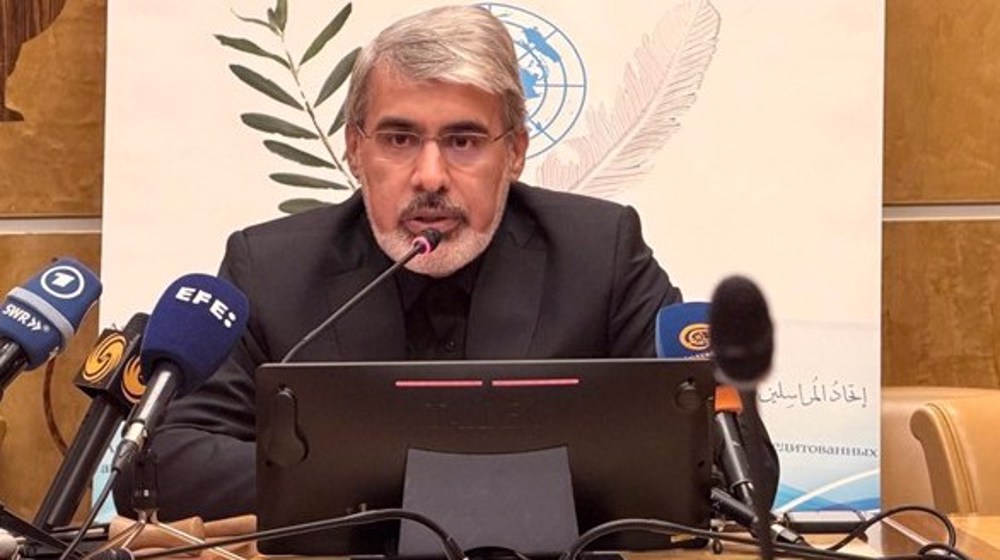
Attacks on Lebanon 'red line'; Iran to respond to Israeli violations: Senior diplomat
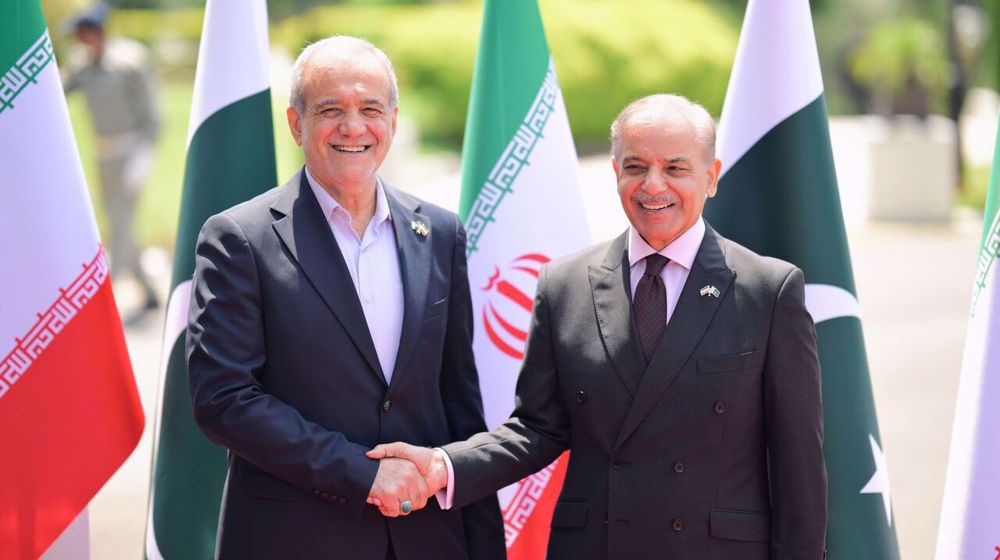
Iran's defense capabilities 'non-negotiable,' President Pezeshkian says
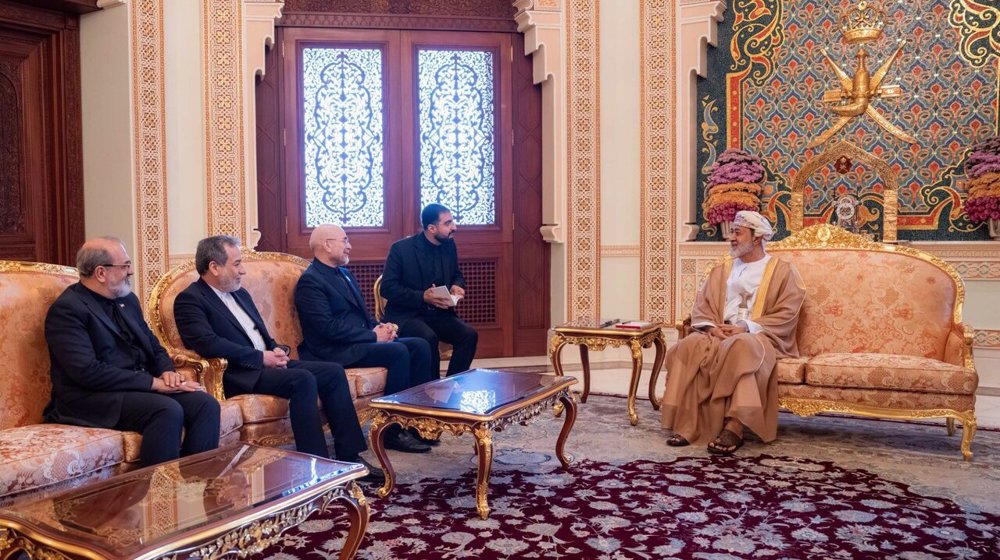
Iran, Oman agree to form joint committee on future administration of Hormuz Strait



Hamas praises Iran’s unwavering support for Palestinian people
Iran's Qalibaf arrives in Baku to attend, address PUIC meeting
Report: Israeli forces deployed to Somaliland after recognition of breakaway territory
Attacks on Lebanon 'red line'; Iran to respond to Israeli violations: Senior diplomat
US Senate approves resolution challenging Trump's authority to wage war on Iran
Iran, Pakistan forge blueprint for Islamic economic integration
Palestine decries vandalization of Ibrahimi Mosque by Israel
Ex-PM admits Israel smuggled Starlinks to Iran during January riots


 PressTV NEWSLETTER now
  This makes it easy to access the Press TV website