Netanyahu joins familiar circle of war at heart of Trump’s Gaza plan
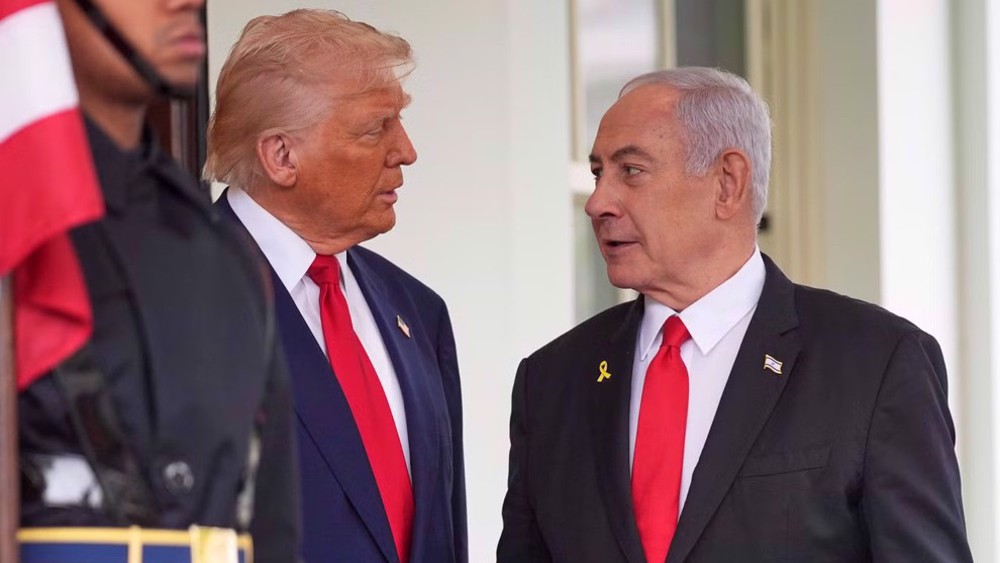
Israeli prime minister Benjamin Netanyahu has “accepted” an invitation from US President Donald Trump to join his self-styled “Board of Peace,” a move that has intensified global criticism of a body widely seen as compromised, coercive and deeply entangled in the devastation of Gaza.
Netanyahu’s office confirmed the decision on Wednesday, despite the Israeli leader being the subject of an International Criminal Court (ICC) arrest warrant for war crimes committed during Israel’s ongoing assault on Gaza.
At the core of the controversy is the board’s founding executive committee, which holds real decision-making power over Gaza’s future.
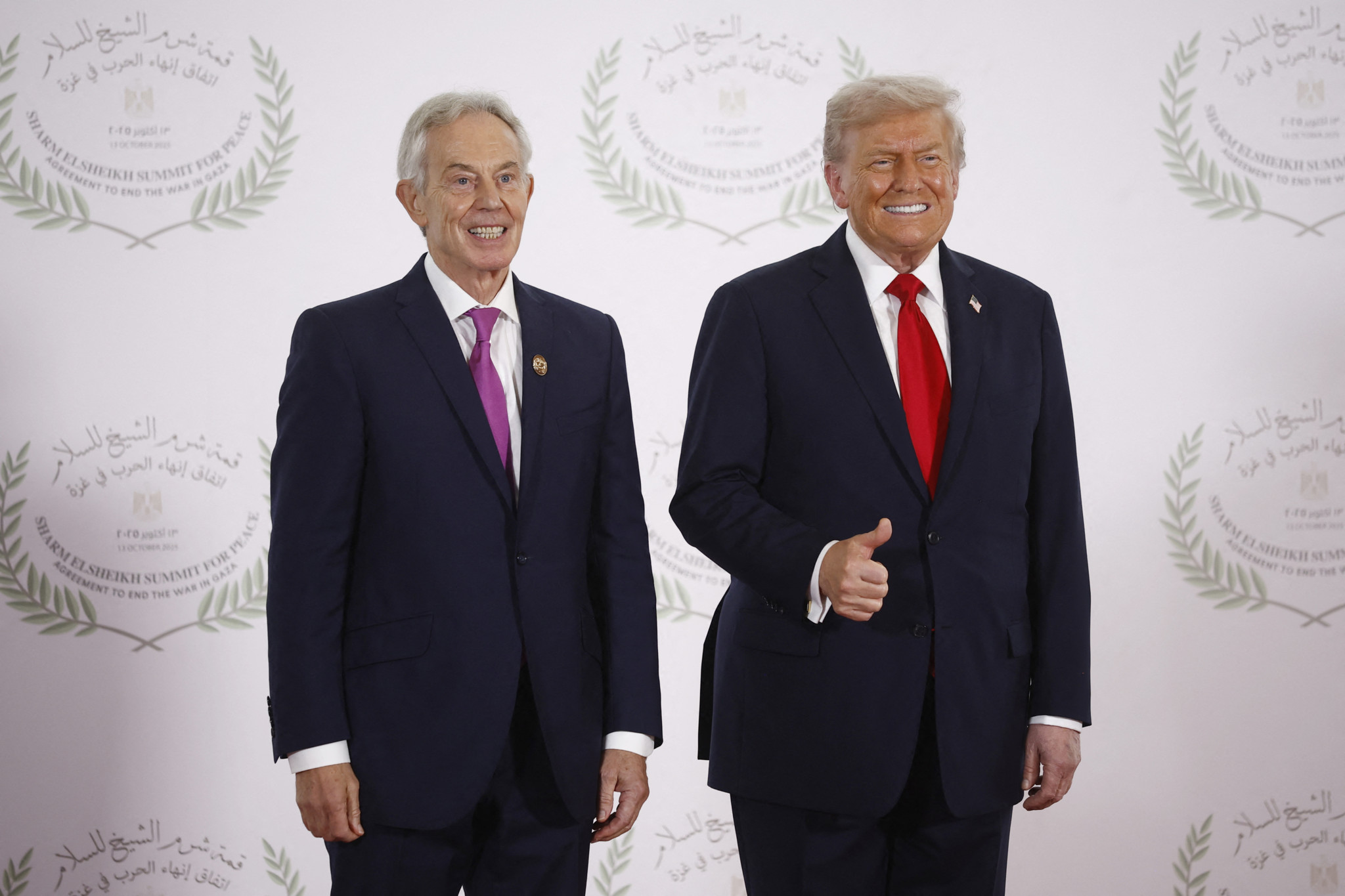
Among its most prominent members are Jared Kushner, Trump’s son-in-law; former British prime minister Tony Blair; US Secretary of State Marco Rubio; Trump envoy Steve Witkoff; and Wall Street financier Marc Rowan, CEO of Apollo Global Management.
The so-called Board of Peace was announced by the White House in October as part of Trump’s 20-point plan for Gaza, nominally linked to the second phase of the ceasefire agreement with Hamas.
While initially framed as a mechanism to oversee Gaza’s reconstruction, governance and security, Trump has since indicated the board could assume a global role, potentially rivaling or sidelining the United Nations.
According to drafts of the board’s charter reviewed by international media, participation comes at a steep price: up to $1 billion for a permanent seat, an arrangement diplomats and analysts have described as extortionist and unprecedented in modern multilateral diplomacy.
At least 60 world leaders were invited. However, enthusiasm has waned rapidly.
Sweden has formally declined to participate under the current framework, while other countries, including the United Kingdom and the European Union, have acknowledged receiving invitations but stopped short of committing.
Saudi Arabia has conspicuously stayed out. Several governments are reportedly reconsidering their involvement amid concerns that the board is little more than a US-controlled political vehicle designed to legitimize Israeli dominance in Gaza.
Netanyahu himself has voiced objections — not to the board’s legitimacy, but to its composition. “We have some disagreements with our friends in the United States regarding the formation of the advisory council that will accompany the peace process in Gaza,” he said, referring to the newly announced Gaza Executive Board, a subordinate body tasked with administering the Strip.
Netanyahu has vowed to block any role for Turkey and Qatar, insisting that soldiers from both countries “will not be present in the Strip.”
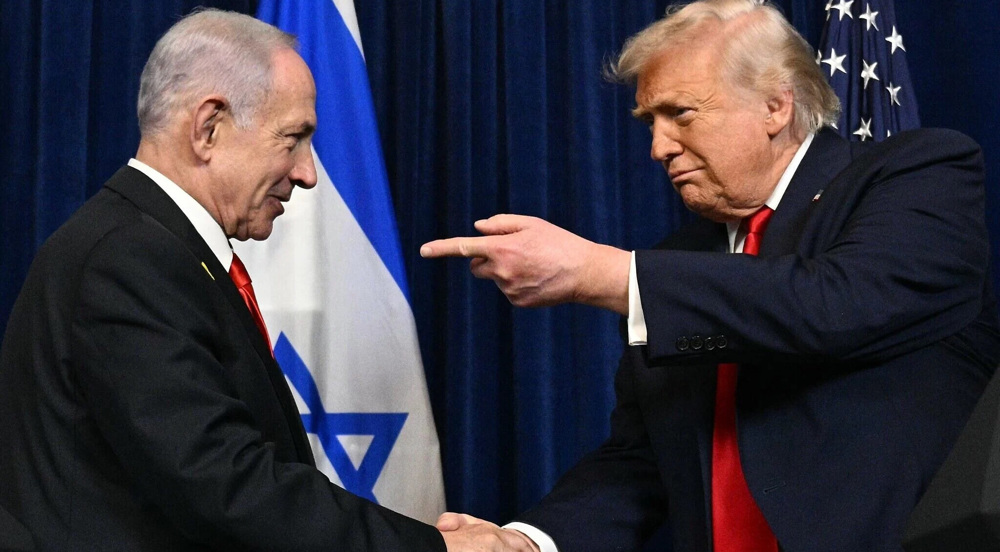
Despite this public friction, Netanyahu reaffirmed his loyalty to Trump, calling him Israel’s “greatest friend in the White House,” and stressing that “disagreements” would not affect bilateral relations.
The Gaza Executive Board — stacked with figures approved by Washington — has drawn particular outrage. While it includes regional officials from Turkey, Qatar and Egypt, their role is widely viewed as cosmetic.
Real authority lies with the Board of Peace’s founding executive committee, dominated by figures who have consistently denied or downplayed Israel’s atrocities in Gaza.
The inclusion of Blair, a key architect of the Iraq War, has been especially contentious. The British government has quietly distanced itself from his role, emphasizing that he represents no official UK position.
Critics also point to the United States’ own record in Gaza, particularly its backing of so-called humanitarian aid mechanisms that have proven deadly.
Israeli-backed aid distribution sites, supported politically and logistically by Washington, have become lethal chokepoints where hundreds — and by some counts thousands — of Palestinians have been killed by Israeli fire while seeking food.
Human rights groups have described these schemes as “aid traps,” emblematic of US complicity in Gaza’s destruction.
Netanyahu has used his acceptance speech to double down on maximalist demands. “The second stage is simple: Hamas will be disarmed, and Gaza will be demilitarized,” he said, pledging to achieve this “by the easy way or the hard way,” while omitting any reference to Israel’s obligation to withdraw its forces or end the siege.
Even Israel’s military establishment has expressed unease. According to Haaretz, senior officers fear Trump’s plan lacks enforcement mechanisms and fails to address who would actually control Gaza or protect border communities.

Displaced Lebanese heading home despite Israel’s refusal to halt aggression

Lebanese speaker thanks Iran for including halt to Israeli attacks as part of deal with US

Israel continues to raid southern Lebanon in open defiance of Iran-US deal



Eight killed in US Air Force B-52 Stratofortress bomber crash
Quds commander: Imposed war discredited US, accelerated collapse of Israel
June 15: Iran-US MoU to end imposed war is widely welcomed as US lifts naval blockade
Iran’s army: Any violation of MoU will be met with swift response
Exclusive: Iranian oil tankers, cargo vessels sail through as US naval blockade officially lifted
Iran-US MoU ‘great victory’ for Tehran as US failed to achieve war objectives: Former diplomat
Iran says talks with US to start right after signing of MoU in Switzerland
UK courts whitewash Israeli genocide in Gaza: Palestine Action terror ban upheld



 PressTV NEWSLETTER now
  This makes it easy to access the Press TV website