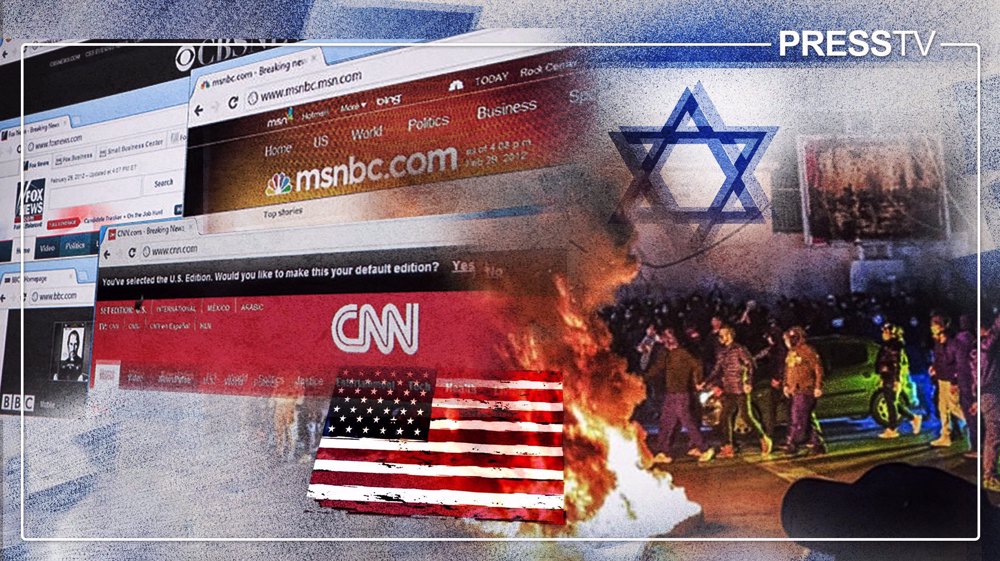
Manufacturing consent: How foreign-backed Iran riots were reframed for Western consumption
By Richard Sudan
Before Iran had even hit the headlines, you could already see the script being loaded into the teleprompter by the power-hungry war-mongers.
First came the soft focus, usual Western media framing: “Peaceful protesters” versus “the regime.” Then the numbers start doing backflips.
Then the experts arrived, usually the same conveyor belt of exiled political operators, Washington think-tanks, and so-called “human rights monitors” offering figures that can’t be independently verified during an internet blackout.
I’m old enough to have seen this narrative play out with Iraq, Libya, Syria and also Venezuela.
And finally, once the emotional temperature is high enough, the policy conclusion is offered. The Iranian people are suffering, say Western media, and therefore force is justified.
At this point, we cross into truly insane logic. The Iranian people, dealing with an economic stranglehold created by sanctions, must be bombed by the same people imposing the sanctions.
This is the unspoken but unmistakable conclusion always lurking at the centre of so-called impartial Western coverage. Because if the West really cared about the Iranian people, they’d have lifted the sanctions long ago. It’s not rocket science.
Hardship is not treated by the West, however, as a reason to lift sanctions or use diplomacy. It’s framed as proof that a country is broken unless external powers intervene. Economic pain becomes evidence. Civil unrest becomes permission.
The irony, of course, is that Iran is home to a rich civilization, thousands of years old, which has made immeasurable contributions to the world, predating the birth of Western nations.
The idea that the same powers in the West that have always undermined Iran’s sovereignty, now suddenly care about the human rights of Iranians, is utterly absurd.
And it isn’t analysis. It’s not even poor analysis. It’s narrative engineering.
Perhaps the most powerful example of this was by the BBC. During its flagship show, Newsnight, the BBC rolled footage of protestors rallying in support of the Islamic Republic and the government while suggesting they were opposition.
From “let’s help the protesters” to “this is a religious war”
— Press TV 🔻 (@PressTV) January 17, 2026
Lindsey Graham can’t keep his story straight — too busy advancing an Israeli-assigned mission: Regime change in Iran.
Worth noting: One of the largest Jewish communities in the region lives in Iran. pic.twitter.com/zsPlFs5oQm
There were protests initially in Iran. That much is not in dispute. Some of them are rooted in real economic concerns. But even Western business reporting acknowledges that sanctions are a major accelerator of that pressure, especially since the US reimposed sweeping measures after unilaterally leaving the nuclear deal in 2018.
Inflation, currency collapse, and shortages are not occurring in a vacuum. They are the outcomes of sustained economic warfare. We’ve seen this tactic repeated so many times in the past.
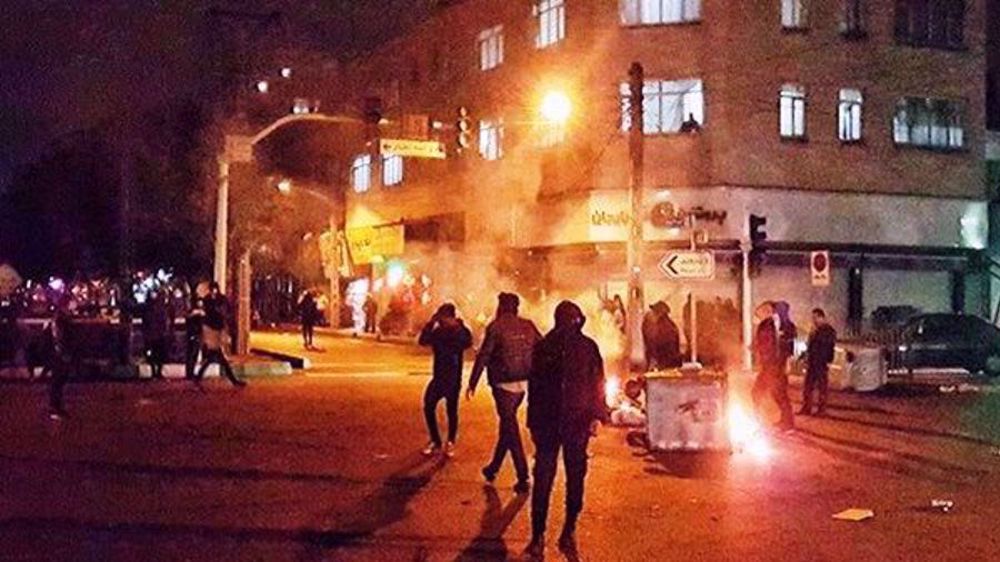
But here’s what also got buried under the peaceful protest headlines. When the unrest turned into arson, armed clashes, attacks on police stations, destruction of infrastructure, or killings of civilians, those details became background noise, if mentioned at all. And that’s because in large part the unrest was fueled by outside actors, including Israel. Israeli media even admitted it.
American activist Shaun King, author at the North Star, is one of the journalists who documented Israeli media openly talking up Israel’s role in attempting to destabilise Iran.
Therefore, it doesn’t take a genius to know that the mosques torched in different cities of Iran were not done by Iranians.
As Ali Abunimah posted on X, referring to the mystery of how some of the “activists” received outside help, he observed that “truth hides in plain sight”.
Everything we have seen over the last few weeks has been a deliberate attempt to turn what began as protests about the economy into a so-called “regime change” operation. And it failed, like so many times in the past, including in June last year.
Information warfare thrives on numbers. Big numbers. Shocking numbers. Numbers that travel faster than context ever could.
Unverifiable claims, tens of thousands killed, mass executions imminent, circulate freely in moments where verification is hardest.
Internet shutdowns, communication blackouts, and information fog are not treated as reasons for caution. They are treated as opportunities. The absence of certainty essentially becomes a blank canvas.
Big numbers are not always the truth. Sometimes they are leverage.
And once those numbers are established in the public imagination, the next stage follows naturally. This time, however, it failed.
Here is a look at how netizens and public figures are pushing back against coordinated attempts to mislead international opinion about Iran @ScarboroughNow @goddek @Persianserene1 @scotthortonshow @Milyas_K @Emeliarjl
— Press TV 🔻 (@PressTV) January 17, 2026
Follow Press TV on Telegram: https://t.co/LWoNSpkc2J pic.twitter.com/fnbyK49Yv0
And I would say the majority of the public did not fall for it.
Amid the violent unrest, large pro-government rallies were held in Tehran and other cities. Millions of people marched in support of the state and against what they described as American and Israeli interference in Iran’s internal matters.
This vital context, however, is always dropped by the likes of the BBC.
These rallies were real, documented events. Yet images and footage from such gatherings circulated widely online and in commentary spaces, presenting them as evidence of “anti-regime” rebellion.
The images became evidence for a narrative they did not belong to. That sleight of hand matters more than it might appear.
Western audiences are conditioned to associate foreign interference with elections in Europe or North America. Elsewhere, it is treated as paranoia. But the infrastructure for external influence is openly documented: funding streams, training programmes, media amplification networks, and political lobbying all operate across borders.
During the unrest, Israeli-linked accounts associated with Mossad published Farsi-language messages directly addressing Iranian rioters, claiming solidarity and signalling involvement.
An Israeli minister later publicly stated that agents were operating inside Iran. Former US Secretary of State Mike Pompeo also confirmed it. These were not Iranian accusations or state media claims. They were admissions.
Yet this dimension rarely appears in mainstream Western reporting. When it does, it is downplayed or framed as Hollywood bravado. The idea that foreign intelligence services might exploit unrest is treated as implausible even when foreign officials say it outright.
Audiences are taught consistently that some populations can only be helped through force. That their suffering is evidence of moral failure rather than policy consequence. That bombs can arrive wearing the mask of concern.
The question is not whether protests happened. They did.
The question is whether we will continue to accept being fed a pack of lies by a system that cares nothing for the human rights of the Global South, and is motivated only by a lust for oil, natural resources, and geopolitical control.
Richard Sudan is a London-based journalist and writer.
(The views expressed in this article do not necessarily reflect those of Press TV)

Key Parliament commission hails Leader’s MoU message, says continued victories hinges on unity
Iran delays Swiss meeting, links US talks to MoU implementation amid Israel’s Lebanon strikes

Iran rules out IAEA inspections of war-damaged nuclear sites


Hezbollah foils Israeli infiltration attempt by leading invading forces into 'killing zone'
Iran condemns French FM's meddlesome remarks as 'height of hypocrisy, duplicity'
US emerged from war ‘desperate, defeated': Leader's advisor
US intl. warns: Netanyahu may sabotage Iran-US MoU to prolong aggression
‘Hand on trigger’: Army stresses readiness to defend Iran against any violation
Key Parliament commission hails Leader’s MoU message, says continued victories hinges on unity
UK PM advised to prepare for 'dignified, orderly exit'
UNICEF: Ceasefire in besieged Gaza is a ‘deadly illusion’ for Palestinian children



 PressTV NEWSLETTER now
  This makes it easy to access the Press TV website