Pezeshkian promises to permanently end rent-seeking and corruption in foreign exchange distribution
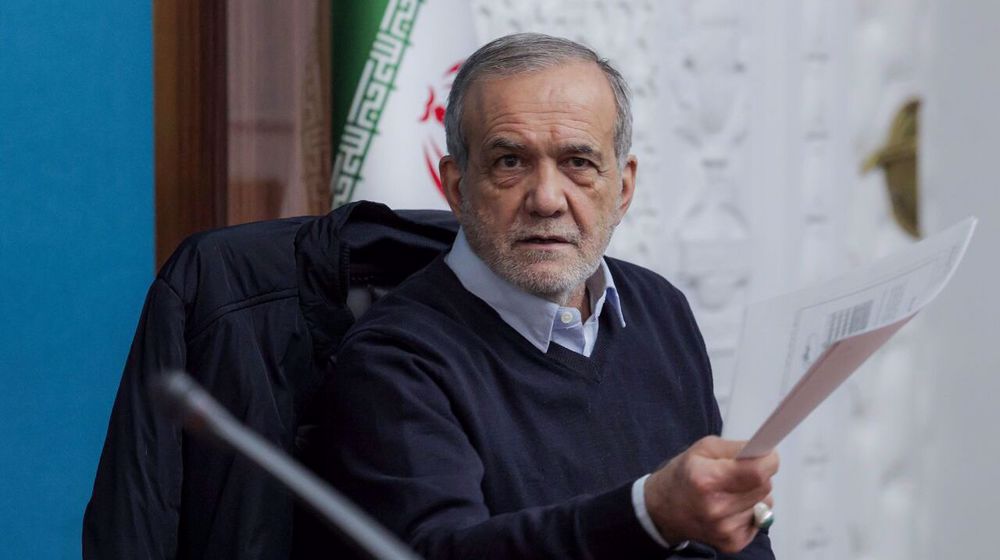
Iranian President Masoud Pezeshkian has said that his government is determined to definitively resolve the longstanding issues of rent-seeking (economic rent), corruption, and mismanagement in the allocation and distribution of the country's foreign exchange resources.
Speaking during a coordination meeting focused on bolstering collaboration among governmental institutions to reform the subsidy system, particularly in the provision, production, and distribution of agricultural products and essential goods, Pezeshkian emphasized the government’s confidence in the plan's rapid implementation on Thursday.
"We intend to solve the issue of foreign exchange rents and corruption in the distribution of foreign exchange resources once and for all," the president stated.
"We are confident that by implementing this plan in the short term, in addition to restoring stability to the market, we will witness an increase in the purchasing power of the people, especially those in the lower income deciles," he added.
The meeting brought together heads and representatives from key organizations, including the Executive Headquarters of Imam's Directive (Setad), the Imam Khomeini Relief Committee, the Mostazafan Foundation, the Welfare Organization of Iran, and the Iran Chamber of Cooperatives.
Participants reaffirmed their commitment to ensuring food security, achieving self-sufficiency in strategic agricultural products, and guaranteeing the supply of basic goods to citizens.
Discussions also covered strategies for enhanced interaction, division of labor, and joint investment in major national projects across sectors such as industry, agriculture, healthcare, and energy.
Emphasis was placed on linking the capacities and facilities of these institutions with government initiatives to improve the quality and speed of public services.
Pezeshkian expressed appreciation for the dedication of governmental bodies in supporting the government’s efforts to better serve the people and advance key national projects.
He affirmed the government's readiness to facilitate cooperation wherever institutional will, capability, and capacity exist.
The president's remarks align with the government's ongoing subsidy overhaul, which includes shifting away from preferential (subsidized) foreign exchange rates for imports of essential goods. This multi-rate system has long been criticized for creating opportunities for intermediaries to profit through rent-seeking and corruption, often failing to deliver benefits to end consumers amid high inflation and economic pressures.
The president further highlighted the government’s resolve to boost domestic production of raw materials in the industrial and agricultural sectors.
“By achieving this goal with the participation of academics, while reducing the country's dependence on imports, an important part of the nation's foreign exchange resources will also be preserved and strengthened," he said.
During the session, officials presented and reviewed reports on the distribution of commodity certificates across provinces, with particular attention to support for lower-income groups covered by welfare organizations.
Pezeshkian stressed the importance of assessing public satisfaction with the plan and monitoring its direct impact on livelihoods.

Hezbollah congratulates Iran on 'great achievement' of imposing end to aggression
Senior cleric: Lebanon govt. should review its stances, improve ties with Iran
Iran says end of Israeli war on Lebanon ‘inseparable’ part of understanding with US



UN: Israel continues to violate Lebanon airspace in defiance of Iran-US MoU
VIDEO | Activists protest Israeli, US arms manufacturers at Paris defense expo
VIDEO | UK Court of Appeal upholds government ban on Palestine Action
Iran ranks among world’s top 14 nations in AI knowledge creation
US emergency oil stockpile sinks to four-decade low in wake of war on Iran
Iran: US responsible for ensuring complete cessation of Israeli attacks on Lebanon
VIDEO | Spain’s monarchy under fire as mass rally demands republican rupture
VIDEO | Protesters rally in London over “Great Israeli Real Estate” event


 PressTV NEWSLETTER
now
PressTV NEWSLETTER
now
 This makes it easy to access the Press TV website
