US says will assert control over Venezuela’s oil sales, proceeds ‘indefinitely’

The United States has openly said that it will take indefinite control of Venezuela’s oil sales and proceeds, a controversial move condemned by UN experts as illegal exploitation and widely seen as a blatant act of economic political domination following the abduction of the South American country’s president.
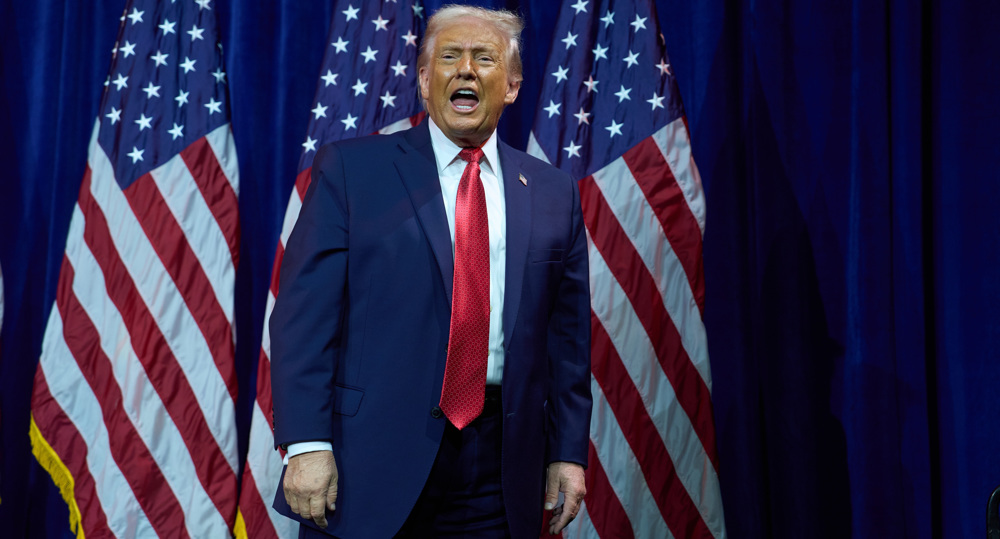
The administration of US President Donald Trump announced on Wednesday that Washington would control Venezuelan oil sales “indefinitely” and decide how the proceeds are spent, effectively asserting authority over the country after kidnapping President Nicolas Maduro.
In a statement, the US Department of Energy said it had already “begun marketing” Venezuelan oil globally, with all revenues placed in “US-controlled accounts at globally recognized banks.”
According to the White House, the money would be distributed “at the discretion of the US government” and “for the benefit of the American people and the Venezuelan people,” with initial sales of “approximately 30–50 million barrels” starting immediately and continuing “indefinitely.”
Trump personally reinforced the coercive nature of the scheme, claiming Venezuela had agreed to spend the proceeds exclusively in the United States.
“I have just been informed that Venezuela is going to be purchasing ONLY American Made Products, with the money they receive from our new Oil Deal,” he wrote on his platform, Truth Social.
He added that this would include “American Agricultural Products, and American Made Medicines, Medical Devices, and Equipment to improve Venezuela’s Electric Grid and Energy Facilities.”
The announcement follows Maduro’s abduction on Saturday in violation of international law, and Trump’s own claim that Caracas would hand over 30–50 million barrels of oil to Washington as the US plans to “run” the South American country.
These steps are part of a months-long US pressure campaign against Maduro, who faces drug trafficking charges in New York that he strongly denies.
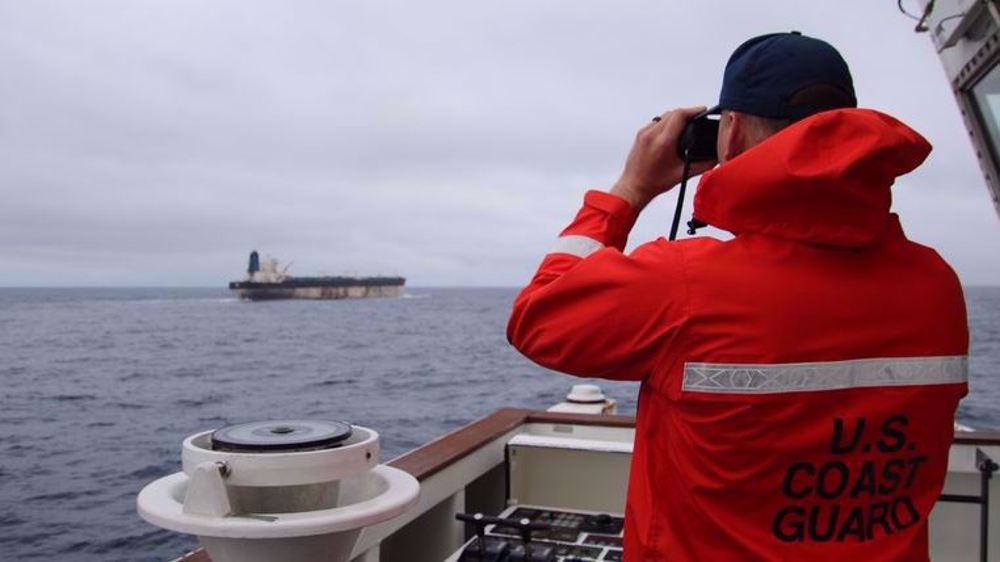
The campaign has included a partial naval blockade and the seizure of vessels accused of breaching US sanctions. On Wednesday alone, US special forces seized two Venezuela-linked ships, including a Russian-flagged vessel in the North Atlantic.
As senior officials briefed lawmakers, Republicans largely backed the operation, while Democrats raised concerns about its duration, cost, potential troop deployments, and Venezuelan reactions.
Senator Elizabeth Warren denounced the briefing as “worse” than expected, saying, “Oil company executives seem to know more about Trump’s secret plan to ‘run’ Venezuela than the American people. We need public Senate hearings NOW.”
Secretary of State Marco Rubio outlined a three-phase plan beginning with oil sales whose revenues Washington will control “in a way that benefits the Venezuelan people, not corruption, not the regime.”
The second phase would open Venezuela to US and allied companies and push a US-managed “reconciliation” process, including amnesties and prisoner releases, followed by a final “transition.”
Analysts warn this resembles a revival of the pre-1970s concessionary system. Gregory Brew of Eurasia Group said it points to “a return to the concessionary system” in which “producer states own the oil but it is Western firms that manage production and marketing, ultimately retain the bulk of the profits.”
UN experts have warned that US plans to “run” Venezuela and exploit its oil violate “the right of peoples to self-determination and their associated sovereignty over natural resources,” stressing that Venezuela’s reserves “must not be cynically exploited through thinly veiled pretexts to legitimize military aggression, foreign occupation, or regime-change strategies.”
Inside Venezuela, the situation remains unstable. Vice President Delcy Rodríguez, sworn in after Maduro’s abduction, insists “there is no foreign agent governing Venezuela.”
Analysts say authorities have not openly responded to US demands, suggesting acceptance under duress or outright coercion, while internal divisions and the stance of the powerful military could still disrupt Washington’s plans.
Caracas has time and again firmly denied any connection to drug trafficking and maintained that Washington aimed to overthrow the Venezuelan president in a bid to take control of the nation’s vast oil reserves.
With Israeli boots on the ground in Lebanon, Iran-US war-end deal remains fundamentally incomplete
Trump publicly slams Netanyahu over 'vicious' Beirut strike at G7

Iran-US MoU ends imposed war and inflicts humiliating defeat on US-Israeli war machine



Pope expresses optimism regarding Iran-US MoU
White House rejects Israeli request to 'review' Iran-US MoU: Reports
Iranian nation learned from martyred Leader never to submit to humiliation: Pres. Pezeshkian
Mass rallies in Yemen hail Iran’s victory, denounce Trump's comments on Mecca
US to waive sanctions on Iranian oil sales after signing MoU: Report
Ansarullah leader congratulates Iran on 'great victory' over US, Israel
Trump considers ousting officials who opposed Iran agreement: Report
Iran warns of ‘harsh response’ as Israel violates ceasefire 84 times in Lebanon


 PressTV NEWSLETTER now
  This makes it easy to access the Press TV website