US fixates on Venezuela’s oil after kidnapping President Maduro
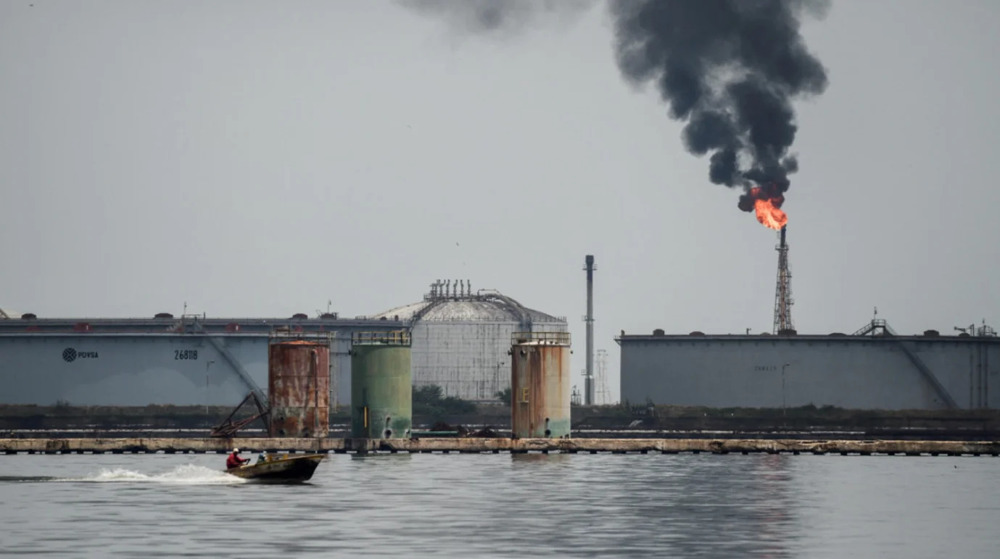
The United States has openly linked its military actions against Venezuela to control over the South American country’s vast oil reserves after kidnapping President Nicolas Maduro.
US Ambassador to the United Nations Mike Waltz said Monday that Washington would not allow its “enemies” to control major oil reserves, explicitly citing those in Venezuela under Maduro.
“We're not going to allow the Western Hemisphere to be used as a base of operation for our nation's adversaries,” said Waltz, less than two hours before Maduro’s first court appearance in New York.
“You cannot continue to have the largest energy reserves in the world under the control of adversaries of the United States, under the control of illegitimate leaders, and not benefiting the people of Venezuela,” the US envoy added.
According to Sami al-Arian, director of the Center for Islam and Global Affairs (CIGA) at Istanbul Zaim University, the US attack and abduction was "a declaration, made through aggression, that sovereignty in the Western Hemisphere is a mirage subject to US intervention - and that international law is an instrument reserved for adversaries and weak states, not an obligation that applies to great powers or empire".
Waltz denied that the US is occupying Venezuela, even after US President Donald Trump said his administration would be “running” Venezuela.
“There is no war against Venezuela or its people. We are not occupying a country,” Waltz claimed during his speech at the UN Security Council.
Venezuela’s UN ambassador, Samuel Moncada, called the action “an illegitimate armed attack lacking any legal justification.”
Trump has brazenly claimed that Venezuela had “stolen” oil from an industry the US had built “with American talent, drive and skill”, calling it “one of the largest thefts of American property in the history of our country”.
To understand Trump’s actions in Venezuela, Arian says, one must situate them within a larger pattern of imperialism.
"Declared in 1823 by the fifth US president, James Monroe, the Monroe Doctrine sought to establish the Western Hemisphere as a US sphere of control," he wrote in the Middle East Eye.
"Over time, it evolved into a doctrine of hemispheric enforcement: the US would determine which governments were deemed 'legitimate', which were 'dangerous' and subject to sanctioning or replacement, and which resources were 'strategic' and could thus be acquired by hook or crook," he added.
Venezuela sits atop more than 300 billion barrels of oil, the largest proven crude reserves in the world, but it’s not just about oil.
Venezuela’s Orinoco mining belt is rich in gold and other precious metals. With more than 8,000 tonnes of gold, the country holds one of the largest reserves in the world.
Trump's “anti-narcotics” or “anti-corruption” pretexts cited for the intervention carry a hidden purpose - in this case, handing him and the heads of multinational corporations the power to decide who controls concessions, who commands trading routes, and who gets to monetize what lies beneath the ground.
Venezuela also holds billions of tonnes of iron ore and significant deposits of rare earth elements, nickel, copper and phosphates. These resources are critical inputs for modern technology and industrial production, including steel, which is essential for manufacturing military hardware.
In geopolitical competition, control of heavy-industry resources often determines the balance of power.
In the weeks and months preceding the attack, the US tightened the screws on Venezuela in ways that revealed its strategic purpose. Last month, the US imposed a naval blockade that disrupted tanker flows, seized cargoes, and halved oil exports.
What Washington demonstrated was not simply that sanctions inflict harm, but that sanctions, blockades and seizures are deployed as preparatory fire for regime change.
What Washington has sought to reverse is not only where Venezuela’s oil flows, but what that oil is used to build at home.
Following Hugo Chavez’s election as president in 1998, Venezuela redirected oil revenues towards large-scale social programs designed to address decades of extreme inequality.
In the years that followed, poverty was cut by more than half, extreme poverty fell sharply, and access to healthcare, education, housing and food subsidies expanded dramatically.
It was precisely this model that US policy sought to dismantle, beginning with targeted financial measures in the mid-2000s, and escalating after 2015 into sweeping oil, banking and trade sanctions.
The humanitarian deterioration that followed was the direct consequence of a deliberate reversal of social gains through externally imposed economic strangulation, aimed not at reforming governance, but at forcing regime collapse by making the existing system economically unviable.
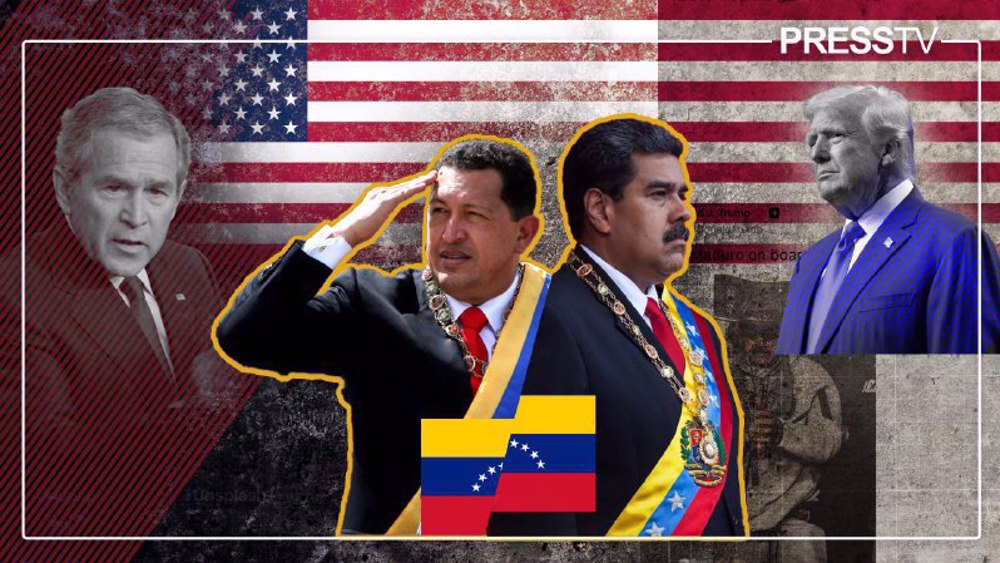
US energy, hedge funds reap windfall after Maduro abduction
American energy companies and hedge funds surged Monday following the US military’s abduction of Maduro and Trump's pledge to “run” the South American country and control its vast oil wealth.
The MSCI US Energy index jumped 2.8 percent, with Chevron leading oil producers up six percent, ConocoPhillips 3.3 percent, and Exxon Mobil 2.4 percent, while oil-field services giant Halliburton soared 10 percent.
Analysts noted that US firms stand to gain not only from the removal of Maduro but also from billions of dollars in contracts supplying equipment and services to Venezuela’s oil industry, a sector largely dominated by US companies before former Venezuelan president Hugo Chavez’s partial nationalization in 2007.
By contrast, European energy firms like BP and Shell remained mostly flat, and Saudi Aramco saw slight losses.
Analysts also warned that if US-backed exploitation of Venezuela’s oil succeeds, OPEC countries, including Russia and Saudi Arabia, could face “serious competition.”
Leader’s strategic vision leverages Iran’s post-war ascendancy to reshape regional power dynamics
Cuba blasts Rubio for lying about US fuel blockade
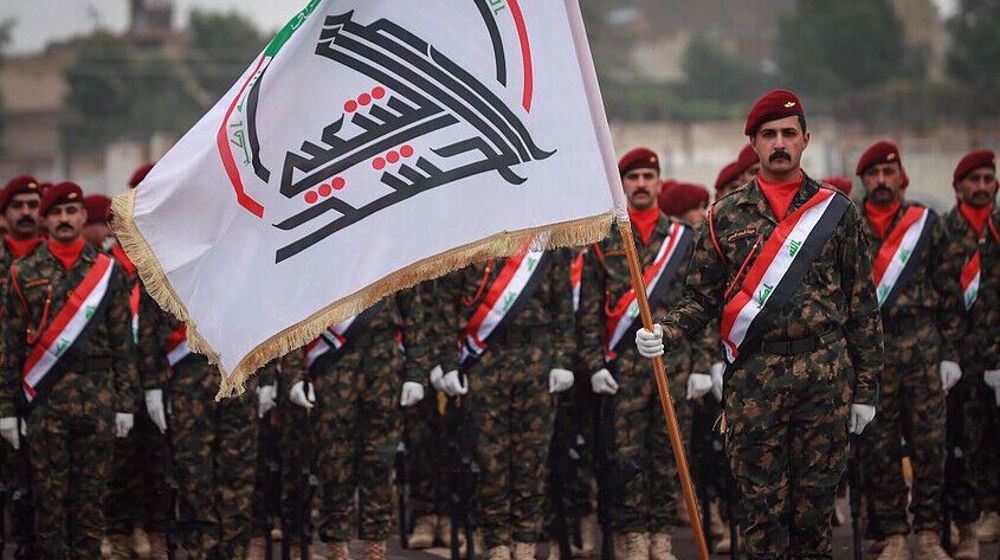
US views PMU resistance fighters as obstacle to its objectives in Iraq: Politician


Iran def. minister warns of 'heavy, regretful' response to any violation of US MoU
“This is how we protect our land": parl. speaker hails Iran's World Cup defense amid US threats
Iran hold Belgium to goalless draw as World Cup campaign gains momentum
Leave southern Lebanon or be kicked out: IRGC Quds Force chief warns Israel
VIDEO | Trump’s derogatory comments about PM Giorgia Meloni spark political backlash in Italy
VIDEO | Anti-fascist rally held in Bogotá ahead of presidential election
VIDEO | Gaza's hospital power shortages leave patients at risk
VIDEO | Yemenis call Iran–US MOU victory for resistance


 PressTV NEWSLETTER
now
PressTV NEWSLETTER
now
 This makes it easy to access the Press TV website
