US ‘regime change’ plot in Venezuela: From 2002 Chavez coup to 2026 Maduro kidnapping
By Ivan Kesic
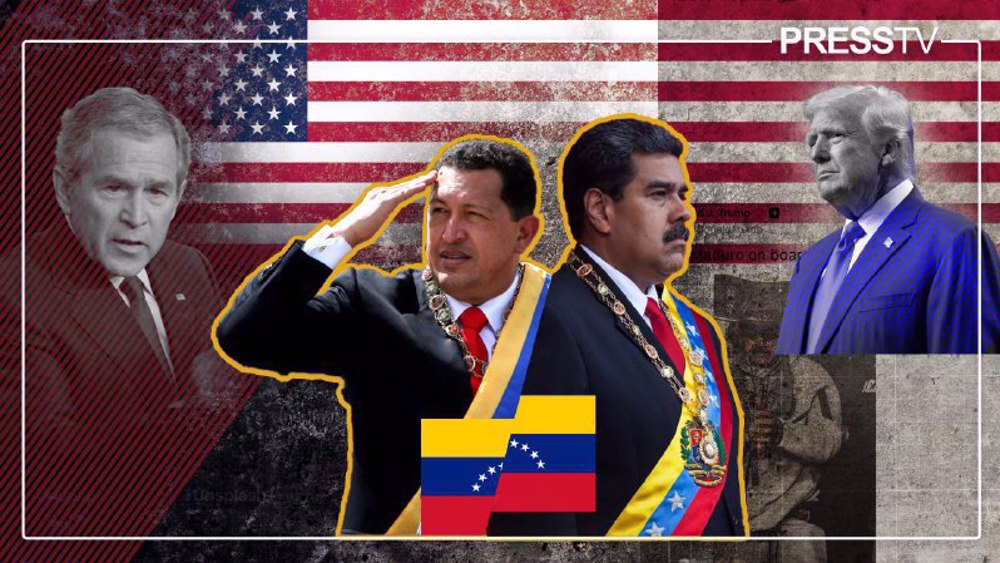
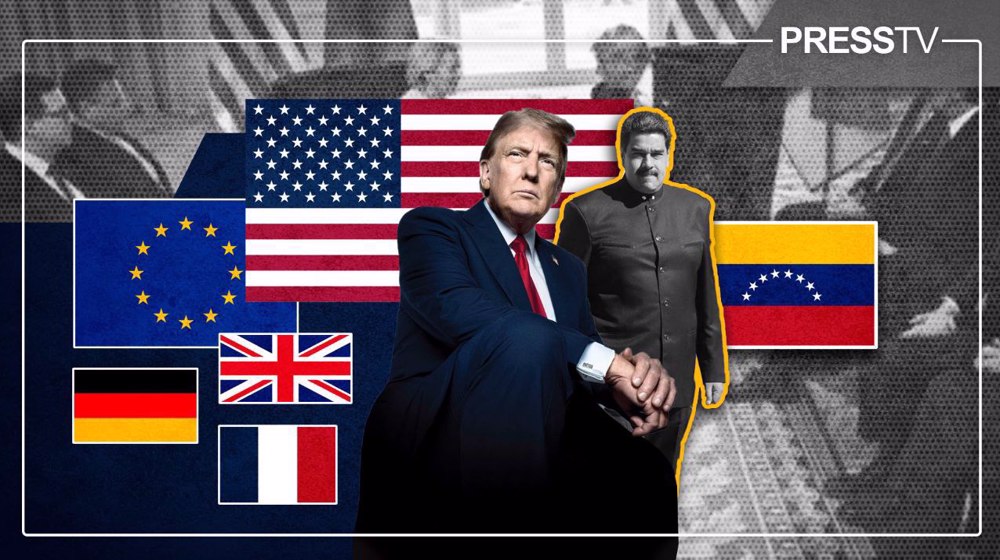
The pre-dawn hours of January 3, 2026, shattered the last vestiges of the post-Cold War world order as US special forces conducted a military raid on Caracas that culminated in the kidnapping of Venezuela’s elected president, Nicolás Maduro Moros.
The kidnapping of Maduro and his wife coincided with a series of missile and drone strikes on military and civilian infrastructure in the Venezuelan capital, resulting in at least 40 fatalities.
Ordered directly by US President Donald Trump, it marked the end of the 25-year-old campaign by the United States to overthrow the Bolivarian Revolution and reassert colonial control over the Latin American country's vast hydrocarbon wealth.
Framed by Washington as a "law enforcement action" against alleged “narco-terrorism,” the unprecedented aggression, according to observers, represented an act of state terrorism without parallel in modern hemispheric relations, constituting a flagrant violation of the United Nations Charter, the principle of sovereign immunity, and the right of nations to self-determination.
However, this is not the first time Washington has forcibly intervened in Caracas to entrench its influence. The pattern dates back to the failed 2002 coup against President Hugo Chávez, which revealed Washington’s willingness to employ covert and illegal means to pursue regime change.
Furthermore, examining the evolution of US policy from covert subversion to overt economic strangulation through illegal unilateral sanctions reveals a calculated hybrid war designed to immiserate the Venezuelan people into surrender and submission.
Also, situating Maduro’s extra-judicial kidnapping within the long, grim continuum of US interventions across Latin America—from Panama and Haiti to Chile and Brazil—exposes an imperial doctrine that prioritizes resource extraction and geopolitical dominance over democracy and international law.
Analysts have described it as a declaration of a dangerous new precedent, signaling that American hegemony now asserts the right to physically seize any foreign leader it unilaterally deems illegitimate.
US kidnapping of Venezuela’s president ‘clear instance of state terrorism’: FM https://t.co/ruugz0I8vc
— Press TV 🔻 (@PressTV) January 4, 2026
From covert coup to overt kidnapping
The kidnapping of President Maduro finds its direct precursor in the events of April 11-13, 2002, when the United States backed an illegal coup d’état that temporarily deposed President Hugo Chávez.
The trigger for American hostility was not human rights or governance, as analysts assert, but control over the country's vast resources, especially oil. Chávez’s enactment of the 2001 Organic Hydrocarbons Law, which reclaimed Venezuela’s oil resources from transnational corporations and dedicated revenues to social missions for the country’s poor.
This democratic assertion of resource control posed an unacceptable challenge to US economic interests and the neoliberal model, which is centered on the 'my way or the highway' doctrine.
Declassified documents have since confirmed that senior US officials, including Assistant Secretary of State for Western Hemisphere Affairs Otto Reich—a figure with deep ties to Cold War contra-insurgency networks—were not only aware of the coup plot but actively collaborated with its civilian and military architects.
During the brief, 47-hour tenure of the illegally installed pro-US businessman Pedro Carmona, who immediately dissolved the National Assembly and the Supreme Court, the Bush administration swiftly moved to recognize the illegitimate regime, exposing its preference for a pliant dictatorship over a sovereign democracy.
Although a popular uprising restored Chávez to power, the 2002 coup established a critical precedent: the United States had demonstrated its intent and capability to orchestrate the forcible, extra-constitutional removal of a democratically-elected Venezuelan president.
The methods were initially indirect, relying on domestic proxies and media manipulation, but the objective of physical detention and "regime change" plot was clear.
The failure of this operation did not lead to a recalibration of US policy towards respect for Venezuelan democracy. Instead, it catalyzed a more comprehensive and ruthless strategy.
The temporary detention of Chávez served as a trial run, proving that the concept of kidnapping a Venezuelan head of state was already operational within US foreign policy circles.
The kidnapping of Maduro, therefore, is viewed by analysts not as a spontaneous escalation but as the realization of a "regime-change" blueprint that has been in the works for nearly a quarter-century, shedding its earlier reliance on plausible deniability for the blunt instrument of direct military force.
✍️ Feature - European leaders – touchy about Ukraine – cheer US ‘regime change’ war on Venezuela
— Press TV 🔻 (@PressTV) January 5, 2026
By Maryam Qarehgozlouhttps://t.co/9c3Oq5g83O
US hybrid war and economic siege against Venezuela
Following the failed 2002 coup, US strategy transitioned from a singular focus on decapitation to a multidimensional hybrid war designed to systematically dismantle the Venezuelan state, economy, and social fabric, creating the conditions for either internal collapse or justified external intervention.
This policy, sustained across successive US administrations regardless of political parties and ideologies, weaponized finance, diplomacy, information, and law to wage what former UN Special Rapporteur Alfred de Zayas termed “economic warfare.”
The foundation was laid with the 2015 executive order by President Barack Obama, which fraudulently declared Venezuela “an unusual and extraordinary threat to the national security and foreign policy of the United States.”
This legal argument provided the pretext for an ever-tightening web of unilateral coercive measures—illegal under international law and condemned repeatedly by the UN Human Rights Council—that froze Venezuela’s overseas assets, blocked its access to international credit and oil markets, and criminalized transactions for essential imports like food and medicine.
The objective was clear and categorical: to inflict maximum collective punishment on the Venezuelan population to erode public support for the elected government.
By 2018, the Trump administration escalated to full-scale embargoes on Venezuela’s oil and gold sectors, the South American country’s economic lifeblood, while the United Kingdom unlawfully seized Venezuelan gold reserves held at the Bank of England.
This economic strangulation was compounded by sophisticated “lawfare,” including the theatrical recognition in 2019 of an unknown opposition figure, Juan Guaidó, as “interim president”—a move supported by less than a third of the Venezuelan population but endorsed by the US and its satellites.
This was followed by the failed mercenary incursion known as "Operation Gideon" in 2020. Concurrently, a relentless global media campaign falsely attributed the ensuing humanitarian hardships, directly caused by US sanctions, to governmental mismanagement alone.
The hybrid war culminated in the politically motivated awarding of the 2025 Nobel Peace Prize to "opposition" leader María Corina Machado, a longtime beneficiary of US funding through the National Endowment for Democracy, in a transparent effort to morally legitimize the impending aggression.
Within this context, the criminal indictments against President Maduro for “narco-terrorism” were never credible judicial instruments; they were geopolitical tools, crafted to dehumanize and criminalize a foreign leader in the public eye, constructing a retroactive legal fig leaf for an act of kidnapping, according to many political analysts and legal experts who spoke to Press TV.
The military raid of January 2026 was, therefore, the final kinetic phase of this long war, deployed when the slow-motion asphyxiation of sanctions failed to achieve its ultimate goal of unconditional surrender.
🇻🇪 Venezuela’s regime-change bid: failure in 2012, renewed in 2026. The fate of this latest operation now hangs in the balance.
— Press TV 🔻 (@PressTV) January 4, 2026
Follow: https://t.co/mLGcUTS2ei pic.twitter.com/4XCYvoD4fU
US history of 'regime change' interventions in Latin America
The kidnapping of President Maduro, while unprecedented in its brazenness against a South American head of state, is deeply rooted in a long and consistent pattern of US interventionism in Latin America, where the forcible removal of leaders has been a recurrent instrument of policy.
The most direct historical analogue is the 1989 US invasion of Panama, "Operation Just Cause," which resulted in the capture of de facto leader General Manuel Noriega.
The invasion, condemned by the UN General Assembly, established the precedent that the US could militarily invade a sovereign nation, cause hundreds of civilian casualties, and physically apprehend its leader to face trial under US law on charges of drug trafficking that Washington had ignored for years when Noriega served as a valued intelligence asset.
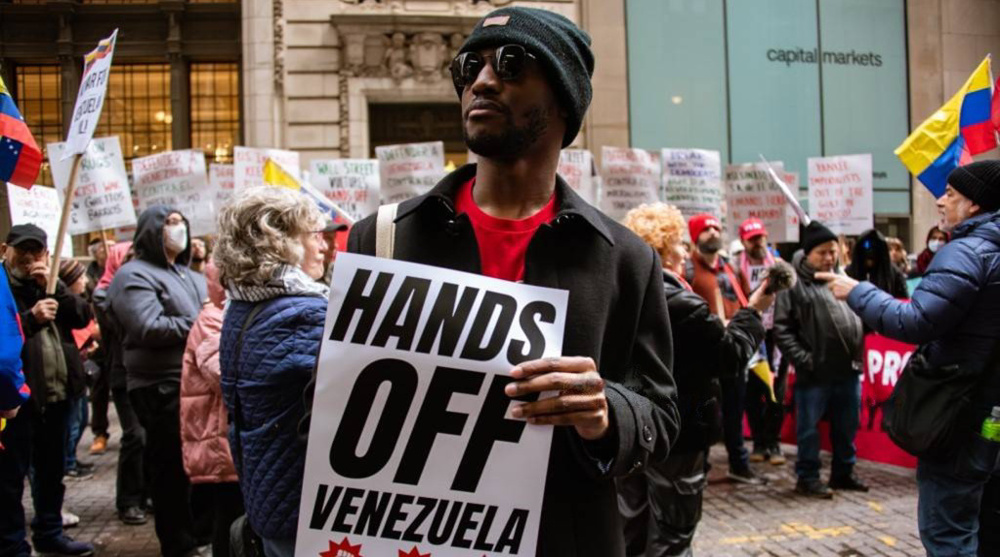
The operation was a naked demonstration that US domestic jurisdiction could be violently extended over foreign territory, a precedent chillingly cited by US officials in the aftermath of the latest aggression that shook the world and triggered worldwide protests.
Similarly, the 2004 removal of Haiti’s twice-democratically elected President Jean-Bertrand Aristide follows a congruent pattern. Aristide has consistently maintained that he was kidnapped by US forces, forced onto an aircraft, and flown into exile in the Central African Republic.
While US officials claimed he resigned voluntarily, the outcome was identical: a president unacceptable to Washington was physically exiled, and a more compliant order was installed.
This event echoed earlier US transgressions in Haiti, including a brutal 19-year military occupation in the early 20th century.
Beyond direct captures, the US record is a litany of covert interventions that removed legitimate governments.
The CIA-engineered 1954 coup in Guatemala overthrew the democratically elected Jacobo Árbenz to protect the profits of the United Fruit Company, initiating decades of genocidal civil war.
In Chile, US economic sabotage and political warfare facilitated the 1973 military coup against President Salvador Allende, ushering in the Pinochet dictatorship.
In Brazil, US support was instrumental in the 1964 military coup that began a 20-year authoritarian regime.
Even in cases where the US did not directly pull the trigger, its influence proved decisive in legitimizing the illegal removal of leaders.
The 2009 military coup in Honduras, which saw President Manuel Zelaya seized by soldiers and flown out of the country in his pajamas, was effectively sanctioned by Washington’s critical refusal to label it a “coup” and its subsequent recognition of elections held under the coup regime.
This historical continuum, from Guatemala in 1954 to Honduras in 2009, reveals an immutable doctrine: leaders in Latin America who assert national sovereignty, control over natural resources, or independent foreign policies risk being labeled as criminals, terrorists, or dictators by Washington, making them targets for removal through coups, exile, or, as now established, direct kidnapping.
The kidnapping of President Maduro is thus the latest and most extreme manifestation of this enduring imperial right, asserted by the United States over what it has long considered its “backyard.”
Former Venezuelan diplomat Jesus Rodriguez says the United States abducted Nicolas Maduro while he was negotiating with Donald Trump.
— Press TV 🔻 (@PressTV) January 5, 2026
Follow: https://t.co/mLGcUTSA3Q pic.twitter.com/eiNge7SV6K
Sovereignty, immunity, and the dismantling of international law
The brazen act of kidnapping of President Maduro transcends bilateral matters and strikes at the foundational pillars of the post-1945 international legal order.
The United Nations Charter, Article 2(4), explicitly prohibits “the threat or use of force against the territorial integrity or political independence of any state.”
The US operation, conducted without a UN Security Council mandate, without any declaration of war, and without any credible claim of self-defense against an imminent armed attack, constitutes a textbook violation of this supreme jus cogens norm.
Furthermore, the principle of sovereign equality of states, a cornerstone of the UN system, is rendered absurd by the act of one state militarily abducting the elected leader of another.
Equally grave is the violation of the customary international law doctrine of head-of-state immunity.
This legal principle, essential for stable diplomatic relations, holds that sitting heads of state enjoy absolute immunity from the jurisdiction of foreign domestic courts for the duration of their tenure.
The US attempt to circumvent this by levelling criminal charges—all of which are politically motivated and entirely unfounded—represents a dangerous form of legal nihilism, according to legal experts.
It weaponizes domestic judiciary systems as tools of foreign policy, effectively declaring that any nation with sufficient military power can unilaterally strip a foreign leader of immunity by issuing an indictment.
If this “Caracas precedent” is allowed to stand, it universalizes a law of the jungle, where the powerful can kidnap the leaders of the weak based on unilateral accusation, say experts.
It invites reciprocal actions by other major powers, potentially plunging international diplomacy into an era of chaos and tit-for-tat abductions.
The muted response from much of the international community, driven by fear of US economic and military retaliation, underscores the crisis of a multilateral system held hostage by a hegemon.
The precedent now looms over every country pursuing an independent path, announcing that national sovereignty is conditional upon the acquiescence of Washington.
Huge crowds of pro-government supporters marched through the streets of Caracas on Sunday, a day after US forces carried out airstrikes on the Venezuelan capital.
— PressTV Extra (@PresstvExtra) January 5, 2026
Follow: https://t.co/7Dg3b41PJ5 pic.twitter.com/skIrc0K5GO
Defense of Venezuela as the defense of a multipolar world
The kidnapping of President Nicolás Maduro, analysts told Press TV, is not merely an attack on Venezuela but a declarative act against the very concept of a rules-based international order.
They say it exposes the fundamental hypocrisy of a US foreign policy that rhetorically champions democracy and law while routinely employing coups, sanctions, and military force to subvert both.
This event is the culmination of a twenty-five-year hybrid war launched not because Venezuela lacked democracy, but because it exercised it to reclaim its resources for its people.
The accusations of “narco-terrorism,” which have not been substantiated with any evidence, serve only as a cynical smokescreen for the operation’s true objective: the final, forceful pacification of a rebellious nation and the unfettered opening of its oil reserves to foreign corporate control.
Activists in Venezuela and elsewhere stress that the path forward demands more than statements of concern. They say it requires the global community, particularly the countries of Latin America, Africa, and Asia, which have historically suffered under imperial domination, to collectively reject this precedent through decisive diplomatic, political, and economic measures.
"The struggle for Venezuela’s sovereignty has become the frontline in a broader struggle for a genuinely multipolar world, where international law governs the strong as well as the weak, and where nations have the inalienable right to determine their own destinies free from the threat of kidnapping, coercion, or regime change," Dave Smith, a Sydney-based commentator, told the Press TV website.
"The alternative is the acceptance of a new age of imperial prerogative, where the fate of leaders and nations is determined not by their own citizens, but by the special forces and legal fictions of a hegemonic power."
Progress made toward ending war, Lebanon ceasefire remains key test: Iran FM
Leader’s strategic vision leverages Iran’s post-war ascendancy to reshape regional power dynamics
Cuba blasts Rubio for lying about US fuel blockade


Progress made toward ending war, Lebanon ceasefire remains key test: Iran FM
Iran def. minister warns of 'heavy, regretful' response to any violation of US MoU
“This is how we protect our land": parl. speaker hails Iran's World Cup defense amid US threats
Iran hold Belgium to goalless draw as World Cup campaign gains momentum
Leave southern Lebanon or be kicked out: IRGC Quds Force chief warns Israel
VIDEO | Trump’s derogatory comments about PM Giorgia Meloni spark political backlash in Italy
VIDEO | Anti-fascist rally held in Bogotá ahead of presidential election
VIDEO | Gaza's hospital power shortages leave patients at risk


 PressTV NEWSLETTER
now
PressTV NEWSLETTER
now
 This makes it easy to access the Press TV website
