Official: Iran’s nuclear industry advances despite sanctions, assassinations, bombing

Head of the Atomic Energy Organization of Iran (AEOI) says the country’s nuclear industry has not only withstood decades of sanctions, industrial sabotage, assassinations of scientists, and even direct attacks on nuclear facilities, but has also continued to advance and now plays a leading role in improving public health.
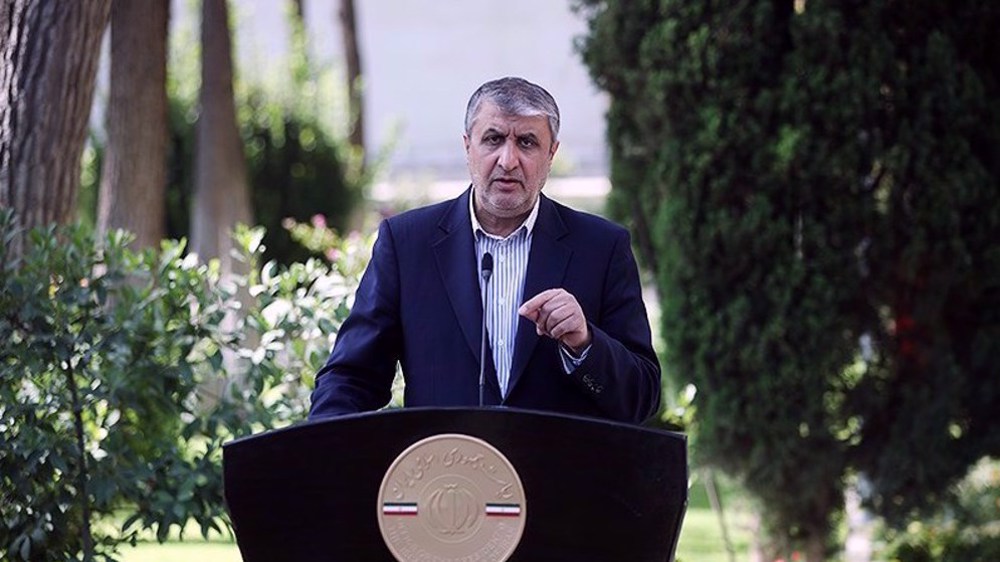
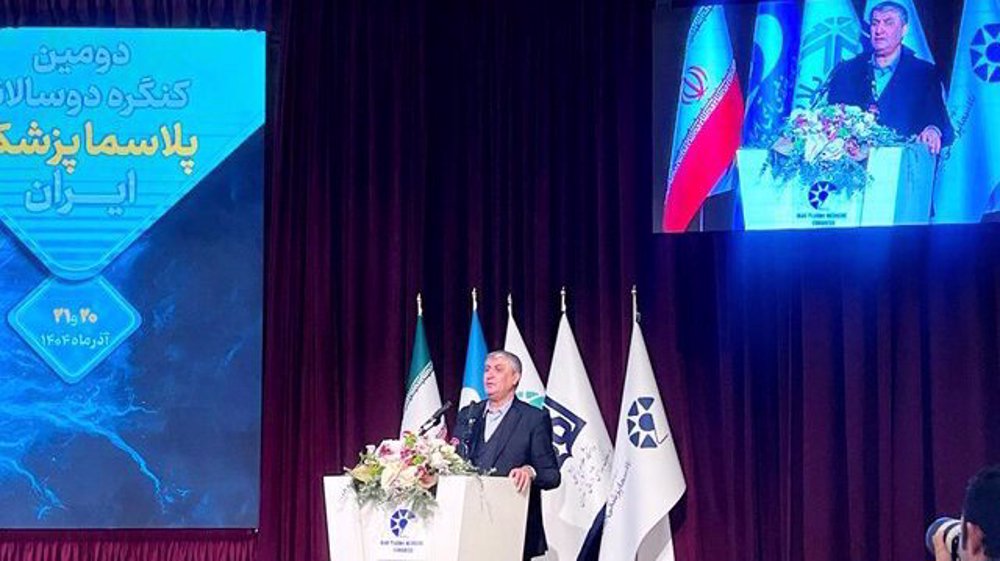
Speaking on Thursday at the inauguration of outpatient and inpatient units of a clinic at Isfahan University of Medical Sciences, Mohammad Eslami emphasized that the AEOI’s highest capacities are now dedicated to health, treatment, and medical services.
“The Atomic Energy Organization of Iran has placed its highest level of capability and capacity at the service of the country’s health and medical sectors,” he said.
Eslami underlined that nuclear medicine is fundamentally based on uranium enrichment, explaining that without enrichment it would not be possible to produce fuel, conduct irradiation, or perform isotopic separation despite explicit statements by Iran’s adversaries that Iran should not have the right to enrichment.
The United States has repeatedly stated that Iran must not be allowed to enrich uranium on its own soil, even as Iran insists that its enrichment activities are intended solely for peaceful purposes.
Eslami added that years of sanctions, psychological operations, misuse of international institutions, and intense pressure to halt Iran’s progress are well documented.
According to the nuclear chief, dominant powers employed all available tools to prevent the formation of Iran’s nuclear industry—one of the country’s most advanced and power-generating sectors—and pursued the same approach in other high-tech fields such as information technology and biotechnology.
Eslami said restrictions on these technologies were imposed not for ideological reasons, but because of Iran’s sensitive geopolitical position, valuable resources, talented human capital, and mobilizing ideology.
“Their official documents explicitly state that this nation must not be equipped with advanced technologies, because then it would not be controllable,” he said.
Referring to statements by Israeli officials, Eslami said the regime’s prime minister has repeatedly admitted that, despite using all available tools, they have failed to stop Iran.
Eslami noted that industrial sabotage against Iran’s nuclear program began more than 25 years ago, including sophisticated tampering with imported components, which Iranian experts were able to detect using intelligent control systems.
He said adversaries later turned to espionage, infiltration, assassinations of scientists, and ultimately missile and air attacks on nuclear facilities.
“Even after using the world’s most powerful bombs and 22 years of military preparation, they failed to halt this industry, which remains active and leading,” he noted.
On June 13, Israel launched an unprovoked war against Iran, assassinating high-ranking military commanders, nuclear scientists, and civilians.
More than a week later, the United States entered the war by bombing three Iranian nuclear sites in a grave violation of the United Nations Charter, international law, and the Nuclear Non-Proliferation Treaty (NPT).
On June 24, Iran, through its successful retaliatory operations against both the Israeli regime and the US, managed to impose a halt to the aggression.
Eslami also referred to the new US National Security Strategy, which highlights nuclear technology, artificial intelligence, and quantum science as key pillars of American progress, including the deployment of small modular nuclear reactors at military bases.
“If these technologies are essential for the United States, they cannot be considered illegitimate for Iran,” he said.
He added that the document also signals a retreat from reliance on international organizations, reflecting a weakening of the international system—one reason, he said, attacks on Iran’s registered nuclear facilities go uncondemned.
Elsewhere in his remarks, Eslami announced the inauguration of one of the country’s largest plasmapheresis centers in Isfahan, launched in cooperation with the Plasma Technology Development Company and Isfahan University of Medical Sciences.
He said plasma technology has applications in health, industry, the environment, and agriculture, and that Isfahan has the potential to become a national leader in this field.
“These capacities belong to the Iranian people,” Eslami said. “Relying on indigenous knowledge and the determination of our youth, the country’s path of progress will continue with strength.”

Iran slams EU over new ‘immoral and unlawful’ sanctions amid US-Israeli aggression

Iran urges UNICEF to take action against ‘barbaric’ US-Israeli attacks on schools

Tehran gives heroic sendoff to martyrs of US-Israeli aggression in massive rally



US-Israeli war of aggression on Iran meant to reshape region: Omani FM
True Promise 4: Iran and resistance axis ops. against US-Israeli assets on Mar. 12
Pentagon estimates $11.3 billion spent in first six days of war on Iran
‘Martyrs’ blood to be avenged’: Snippets from Ayatollah Mojtaba Khamenei’s first message
IRGC launches new wave of heavy missiles on US-Israeli targets
Araghchi: UNESCO silence on Israel’s bombing of Iran’s landmarks ‘unacceptable’
In first address, Iran’s new Leader stresses defense, need to keep Hormuz closed
Inside Iran’s leadership transition: How the mantle passed to Ayatollah Mojtaba Khamenei





 PressTV NEWSLETTER now
 This makes it easy to access the Press TV website