Fourteen Palestinians, including children, die in Gaza amid freezing temperatures
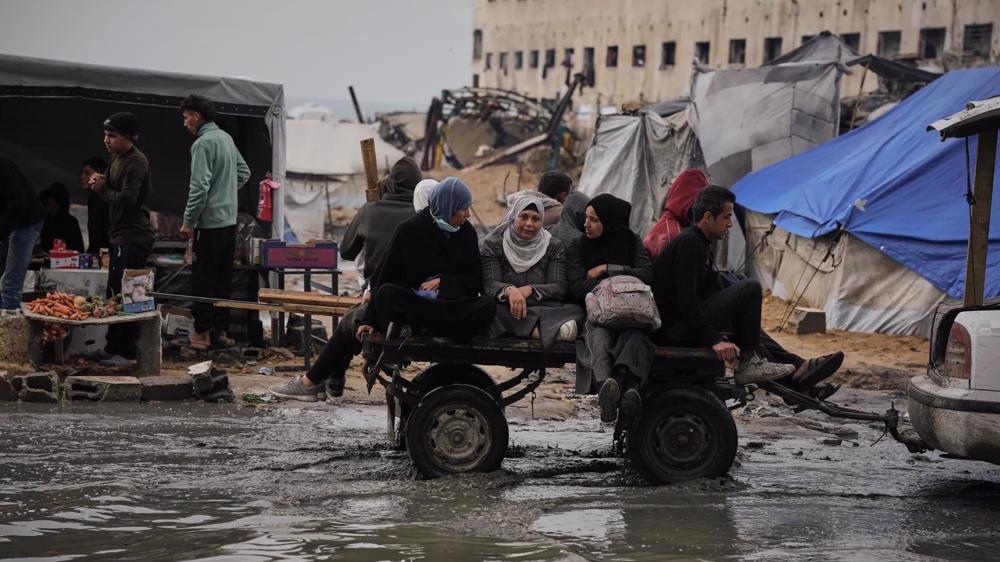
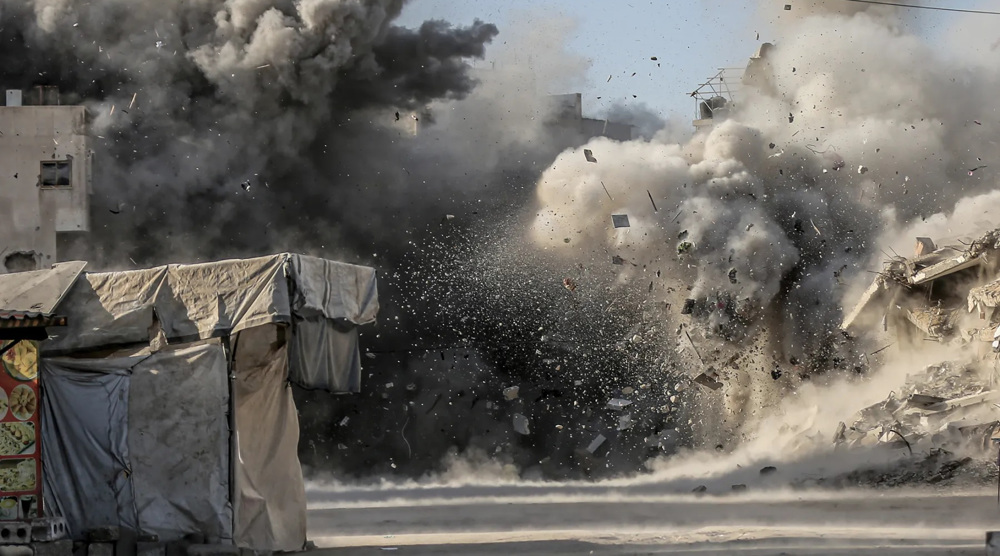
At least 14 Palestinians have lost their lives and several have been injured in less than 24 hours as a winter storm and severe cold are sweeping across the Gaza Strip, causing multiple collapses of buildings and structures in several regions.
Civil defense and ambulance services reported that six people died overnight into Friday when a house sheltering a family in the Bir al-Naaja area in northern Gaza collapsed during the storm.
The moment the Abu Safiya family’s house collapsed due to the heavy rains over the Gaza Strip.
— Palestine Highlights (@PalHighlight) December 13, 2025
Follow: https://t.co/v6VYZYiuxb pic.twitter.com/zhDSKSE027
Two more people died after a wall gave way and fell onto tents in the al-Rimal neighborhood of Gaza City in the afternoon, while another person died after a structural collapse in Shati refugee camp.
A newborn in al-Mawasi in southern Gaza also succumbed to the freezing temperatures.
Amid the world’s inaction, a newborn girl has died from the extreme cold in Gaza.
— Palestine Highlights (@PalHighlight) December 12, 2025
Follow: https://t.co/v6VYZYhWHD pic.twitter.com/hLddrIQaD7
Meanwhile, two children died in Gaza City due to the extreme cold, while another child died a day earlier in Khan Younis under similar conditions.
In addition, one resident died after a residential building collapsed, with rescue teams still searching for missing individuals beneath the debris.
Civil defense crews reported that around 15 houses have collapsed across the Gaza Strip so far, including recent incidents in the al-Karama and Sheikh Radwan neighborhoods in Gaza City.
Teams continue to address the aftermath of the collapses and search for survivors under challenging weather conditions.
Medical personnel in Gaza are reporting an alarming increase in fatalities associated with exposure.
A source from al-Shifa Hospital said nine-year-old Hadeel al-Masri passed away in a shelter located west of Gaza City, while infant Taim al-Khawaja lost his life in the Shati camp.
In Khan Younis, eight-month-old Rahaf Abu Jazar died when rainwater flooded her family’s tent.

Dr. Rik Peeperkorn, the World Health Organization’s (WHO) representative in the occupied Palestinian territory, reported that 18 out of 36 hospitals and 43 percent of primary healthcare centers in Gaza were operating at reduced capacity.
Despite facing immense challenges, Shifa Hospital in Gaza City has resumed operations as a partially functioning tertiary care facility, with several services now back in operation.
“On the other hand, there was no MRI available in Gaza and only two CT scanners to cover a population of over two million,” Peeperkorn said.
He continued, “There was also a severe shortage of essential medicines and medical supplies needed for, among other things, heart disease treatment, kidney transplantation and hemodialysis, and intensive care surgery. Although approval rates for supplies had improved, the process of getting medicines and medical equipment into Gaza remained unnecessarily slow and complex.”
Peeperkorn raised concerns that during the winter months, combined with inadequate shelter conditions, children under the age of five would be especially vulnerable to acute respiratory infections like pneumonia, as well as diarrheal illnesses.
He highlighted the critical shortages of medicines, surgical equipment, and medical imaging tools.
Peeperkorn emphasized that over a quarter of the 70,000 injured Gazans would require lifelong assistive devices. Additionally, he noted that, according to UNICEF, 82 children had lost their lives since October 10.

Israel using sexual violence as weapon against Palestinians: Report

Israeli attacks kill three Palestinians across Gaza

‘West Bank under siege’ due to simultaneous Israeli raids and settler attacks



Europe braces for hard winter as gas supplies dwindle
Saudi Arabia, Qatar and Jordan condemn Israeli incursions into Syria
Shiraz performs over 16,100 organ transplants, records 43.5 donors per million
Iran says ‘no technical talks’ with US scheduled for this week in Doha
North Korea says Japan turning into 'war nation', slams joint war game with US
China imposes export controls on 40 Japanese entities amid tensions with Tokyo
Pezeshkian: Iran to recover $6 billion in frozen funds under Islamabad MoU
Israel rebrands Gaza displacement scheme amid global outrage: Report









 PressTV NEWSLETTER now
  This makes it easy to access the Press TV website