Iran’s first portable CNC milling machine marks big industrial and tech breakthrough

By Ivan Kesic
In a landmark achievement for Iran's industrial sector, engineers at the National Iranian Copper Industries Company (NICICO) have successfully manufactured the country's first indigenously produced portable CNC milling machine, marking a major leap in technological self-sufficiency.
Born from necessity within the demanding environment of the Sarcheshmeh Copper Complex, this sophisticated machine was developed to perform precision repairs on massive industrial gear without requiring disassembly, a process that would have been prohibitively expensive and time-consuming.
The successful localization of this advanced technology, achieved through reverse engineering and proprietary software modeling, has not only saved billions of tomans and curtailed significant foreign currency outflow but has also fostered a deep sense of confidence in Iranian engineering capabilities.
This achievement places Iran among a select group of nations capable of producing such specialized equipment, showcasing the country’s ability to meet its own complex industrial demands while competing in a high-tech global market long dominated by Western and Asian powers.
The story of this machine transcends technical innovation; it is a testament to national resilience, creativity, and the strategic pursuit of industrial independence.
Portable CNC milling machines
A portable CNC milling machine is a compact, mobile, and often modular computer-controlled tool designed for precision milling, drilling, and engraving directly on workpieces that are too large, delicate, or complex to move to traditional stationary CNC machines.
Essentially, it brings the precision and capabilities of a factory workshop directly to the job site. Unlike massive, fixed machines anchored to factory floors, portable CNC mills are defined by their mobility and adaptability.
They are significantly smaller and lighter, often transportable by a small team or on a cart, and use powerful clamps, vacuum plates, or electromagnetic bases to securely attach themselves directly to the workpiece for repair or modification.
At its core, any CNC mill follows digitally programmed instructions to control cutting tool movements, removing material with extreme accuracy to create specific shapes, slots, or surfaces. The portable variant applies this principle in challenging field conditions.
Common applications include critical industries where downtime can be catastrophic – machining a new sealing surface on a massive pump at a power plant, repairing threads on a ship’s propeller in dry dock, or performing delicate modifications on an aircraft wing directly in the hangar.
The advantages are substantial: eliminating exorbitant transport costs for multi-ton components, reducing repair downtime from weeks to hours, and achieving precision tolerances often within microns, even in harsh, unpredictable environments such as mines or construction sites.
Far more than just a tool, the portable CNC milling machine is a strategic asset for any advanced industrial economy.

Significance of Iran's production of these machines
Iran’s entry into the production of portable CNC milling machines carries profound significance, which includes immediate economic benefits, long-term strategic sovereignty, and a powerful boost to national pride. The project, initiated at the Sarcheshmeh Copper Complex, arose from a critical need.
A vital ball mill, essential for crushing copper ore, suffered damage to its massive gears. Traditional repair methods proved inadequate and disassembling and shipping these colossal components to a foreign specialist would have been both prohibitively expensive and resulted in months of debilitating production downtime.
Confronted with this challenge, Iranian engineers embarked on a mission of self-reliance, dedicating months of around-the-clock work on design and calculations.
The result was an engineering marvel boasting a movement accuracy of 0.01 mm, a portable device capable of mounting directly onto the curved surface of the damaged gear and performing on-site machining with computer-guided precision.
This achievement was the product of reverse engineering, advanced software modeling, and the generation of proprietary G-Code. More than a solution to an immediate problem, the machine now serves as a permanent, versatile tool for maintaining large equipment within NICICO and beyond.
Engineer Karamipour, head of the construction workshop, rightly emphasized the profound economic impact, noting that the project saved billions of tomans and prevented a significant outflow of foreign currency, directly strengthening the national economy.
This success is part of a broader ecosystem of Iranian technological advancement. The country already boasts a solid foundation of machine-tool manufacturers, including established firms like Machine Sazi Tabriz Co. (MST) and pioneering groups such as 01CNC Group, alongside specialized companies like Fara Control Toos Co. and Niroo Sazan Sabalan Co., producers of CNC gate mills and other precision machinery.
What sets the NICICO project apart is its focus on portability and in-situ repair—a complex challenge that demands overcoming unique obstacles related to stability and precision in field conditions.
This accomplishment marks a critical step beyond mere manufacturing toward high-level innovation and problem-solving. It proves that Iranian engineers are not merely assemblers of technology but original designers and developers, transforming a dire operational challenge into a symbol of industrial self-sufficiency and a model for other industries across the nation.

Other countries producing similar machines
The global production of portable CNC milling machines is a highly specialized field, concentrated within a select group of technologically advanced nations.
Industry analysis reveals that roughly 10 to 15 countries are actively engaged in the design and manufacture of these sophisticated machines, with the global market structured into distinct tiers based on market dominance, technological expertise, and production volume.
At the top tier are major industrial powers renowned for their engineering excellence. The United States is a global leader, home to innovative companies such as Enerpac and Haas. Germany stands as a bastion of high-precision engineering with firms like ALFING and Maurer.
The United Kingdom boasts specialists like Metal Removal, while Switzerland is known for ultra-precision modular systems from companies like FIBRO. Japan, with industrial giants such as DMG MORI and Makino, also ranks among the elite producers of compact and modular CNC solutions.
The second tier comprises nations with significant manufacturing capabilities and competitive offerings. China is a formidable force, producing a large volume of affordable and increasingly advanced portable mills through companies like JOYSUNG and SJR Machinery.
Italy and Spain occupy strong niches, particularly in marine and energy sector solutions, represented by firms like Sir Meccanica and Lagun. South Korea, with major machine tool builder Doosan, and Canada, with specialized engineering firms, also make meaningful contributions to the global supply chain.
The third tier includes countries with niche or component manufacturing capabilities, such as France, India, Australia, Austria, and the Czech Republic. Here, smaller firms often assemble specialized machines or produce critical components that feed into the global market.
By successfully developing its own functional portable CNC milling machine, Iran has positioned itself within this global landscape. While countries like the US, Germany, Japan, and China dominate global production, Iran’s achievement underscores the skill and determination of its engineering community.
It signals that Iran can localize critical technology, freeing its foundational industries from dependence on foreign supply chains and empowering them to maintain complex machinery with confidence and pride.

Explainer: How Iran uses its nuclear technology to prevent metabolic disorders in newborns
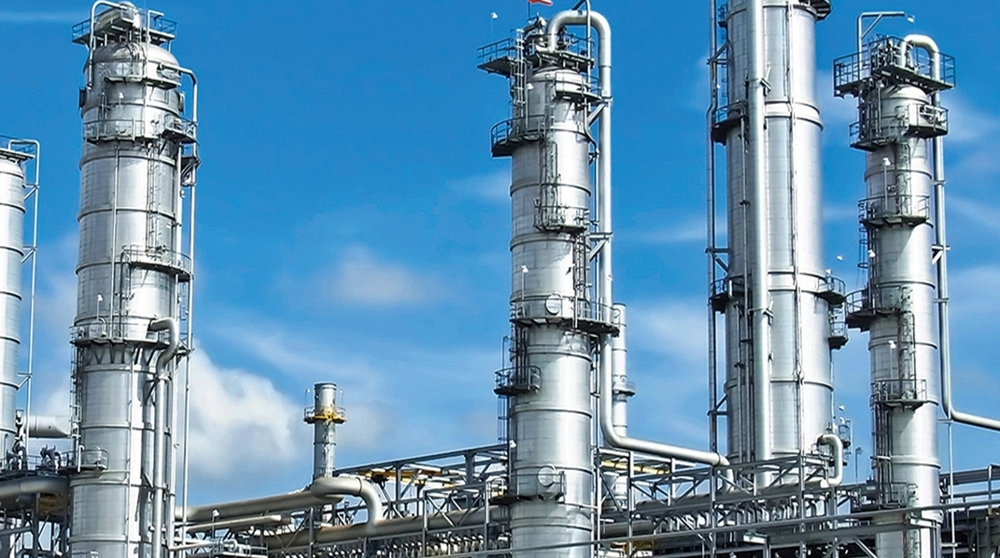
Iran develops homegrown ultrasonic flare gas meter without reverse engineering
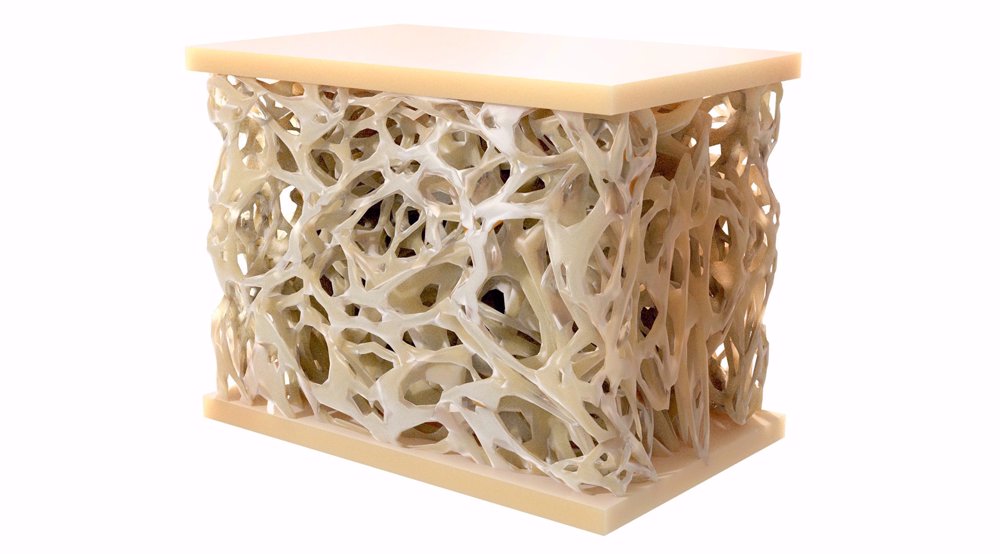
Iran develops next-generation nanotech bone graft for faster bone regeneration



Hezbollah says it launched 19 operations against Israeli targets in 24 hours
US senator torches Hegseth’s ‘amateur hour’ amid disastrous war on Iran
Massive explosion hits Israeli arms facility in Beit Shemesh
Iran condemns Israel’s terrorist assassination of senior Hamas commander
US lets waiver allowing purchases of stranded Russian oil expire
Hezbollah: Qassam commander's martyrdom shows Israel respects no agreement
Iran’s parliament speaker: ‘Future belongs to Global South’
US respects human rights as long as Israel is not implicated: Iran’s deputy FM




 PressTV NEWSLETTER now
  This makes it easy to access the Press TV website