AI-driven campaign promoted subversion during Israeli-American war on Iran: Research

An academic research has revealed how an AI-driven campaign sought to promote subversive activity in Iran during the unprovoked and illegal Israeli-American war that targeted the country in June.
The results of the research, which was carried out by Clemson University, South Carolina, were published by The Citzen Lab, an interdisciplinary research center at the Munk School of Global Affairs & Public Policy, University of Toronto, on Thursday.
It defined the campaign that was launched in 2003 as an externally orchestrated plot, describing the Israeli regime as the prime suspect behind its operation, but also pointing to likely American involvement.
The highly coordinated network featured over 50 fake accounts on X, former Twitter, designed to incite Iranians to take subversive action against the country’s Islamic establishment.
The campaign’s activity intensified after January, with agitation peaking during the June 13-25 war that claimed the lives of at least 925 Iranians, and targeted the Islamic Republic’s nuclear, military, and civilian facilities.
It sought to incite unrest during the immediate aftermath of various Israeli attacks, including one that targeted the capital Tehran’s Evin Prison, which claimed the lives of at least 80 people.
Analysis indicated that the network was likely operated by an Israeli regime agency or a closely supervised subcontractor, leveraging cutting-edge artificial intelligence to fabricate videos, images, and narratives of chaos.
The accounts would publish AI-generated videos and try their utmost to come across as original by tagging various anti-Iran media outlets.
Coordinated posts urged citizens to “free the prisoners” after the attack on Evin Prison, while falsely assuring them that the area was safe.
The researchers called this a rare “kinetic influence operation,” deploying AI deception to push its subversive agenda.
By June 15, fabricated posts claimed economic collapse and corruption, urging citizens to withdraw cash and foment distrust towards their Islamic establishment.
From June 20 to 22, the network pushed nightly protests under the hashtag #8OClockCry, calling for anti-Iran chants.
Deepfakes and recycled videos were edited to simulate protests, chants, and unrest, demonstrating the professional and coordinated nature of the campaign.
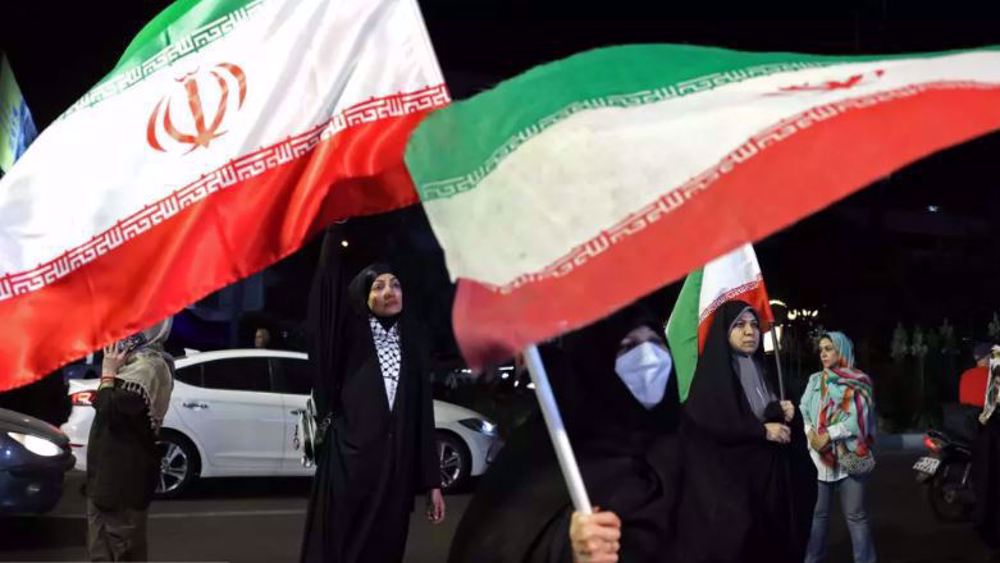
Commenting on the research, however, observers billed the drive as one that had abjectly backfired, citing the Iranian nation’s rallying strongly behind the country’s leadership and Armed Forces during the 12-day period, while maintaining their own national cohesion.
This is not the first time, when the Israeli regime has been implicated in subversive campaigning targeting the Iranian nation.

Throughout the warfare, the regime would also rely heavily on a network of operatives seeking to help it advance its anti-Iranian and divisive agendas.
The agents were strongly confronted by the Iranian Intelligence Ministry, which helped round up numerous people on Tel Aviv’s payroll.

Text of Iran-US deal ‘reached’, Pakistan working to ‘finalize next steps’: PM Sharif

Iran’s top diplomat says MoU with US ‘has never been closer’
Claims of US, Iran signing deal in Gevena on Sunday ‘not true’: Report


FM outlines contours of proposed MoU, says diplomacy’s role is to consolidate battlefield gains
June 12: Iran says MoU with US nearing completion, while reaffirming red lines and military readines
US spy chief reveals declassified files exposing US-backed overseas biolab network
UK judge brands Palestine Action activists ‘terrorists’ for storming Israeli weapons company
Israel intensifies airstrikes and home demolitions across Gaza
Iraq thwarts assassination plot against National Security Service chief
Text of Iran-US deal ‘reached’, Pakistan working to ‘finalize next steps’: PM Sharif
Iran’s top diplomat says MoU with US ‘has never been closer’

 PressTV NEWSLETTER now
  This makes it easy to access the Press TV website